TRENDING
Grapes Health Benefits: Red, Green and Black Compared

9 min read
Last updated November 10, 2026
Grapes are a sweet, hydrating snack with potassium, vitamin C and plant compounds called polyphenols. Red, green and black grapes have similar basic nutrition, with darker grapes carrying more colorful pigments.
University of Minnesota Extension reports about 104 calories in one cup of red or green grapes. That cup also holds about 288 milligrams of potassium.
This guide compares red, green and black grapes and explains the resveratrol research. It also shares tips for buying, storing and serving grapes safely.
Key Takeaways
- One cup of grapes has about 104 calories.
- Grapes provide potassium, vitamin C and polyphenols.
- Red and black grapes contain more anthocyanin pigments than green.
- Resveratrol research in people has been disappointing so far.
- Cut grapes for young children, and keep them away from dogs.
Jump to a section
- Nutrition
- Red vs green vs black
- Plant compounds
- Resveratrol facts
- Buying and storing
- Washing
- Ways to enjoy
- Kids and choking
- Dogs
- Frequently asked questions
Grape Nutrition
University of Minnesota Extension lists these values for one cup of red or green grapes.
| Nutrient | Amount per cup |
|---|---|
| Calories | About 104 |
| Carbohydrate | About 27 grams |
| Fiber | About 1 gram |
| Potassium | About 288 mg |
| Protein | About 1 gram |
| Fat | Less than 1 gram |
The Extension page also notes that grapes are packed with vitamin C. Grapes are mostly water, so they help with hydration too.
104 caloriesIn one cup of red or green grapes, according to University of Minnesota Extension.
Red vs Green vs Black Grapes
| Type | Flavor | What stands out |
|---|---|---|
| Green | Crisp and tart to sweet | Bright, refreshing snack |
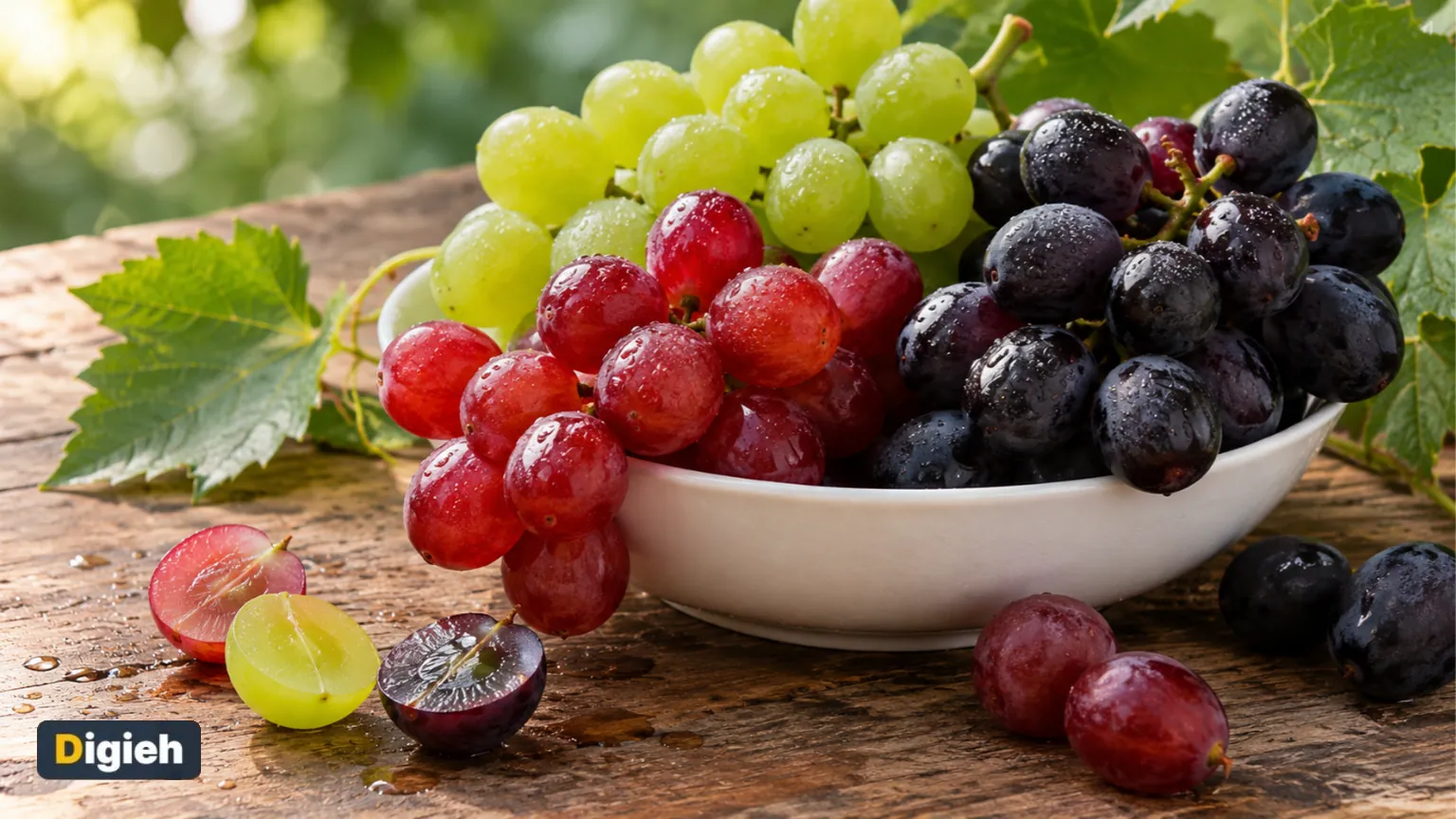
| Red | Sweet and juicy | Contains red pigments called anthocyanins |
| Black or purple | Rich and very sweet | Most anthocyanin pigments |
| Concord | Bold, grapey flavor | Native to North America |
University of Minnesota Extension notes that Concord grapes are the only variety native to North America. They are used for juice, jelly and fresh eating.
All grape colors make a healthy snack. Choose the ones you enjoy most and mix colors for variety.
Cotton candy grapes and other specialty varieties taste extra sweet. They are bred for flavor, not artificially flavored.
Muscadine grapes grow in the southern United States and have thick skins. They are often used for jelly and juice.
Table grapes, the kind you snack on, are different from wine grapes. Wine grapes are smaller, with thicker skins and more seeds.
Quick tip. Freeze grapes for a cold, candy-like treat. University of Minnesota Extension suggests frozen grapes as a sweet snack.
Plant Compounds in Grapes
Grapes contain polyphenols, a large family of plant compounds. Darker grapes get their color from anthocyanins, a type of polyphenol.
Researchers study polyphenols for possible heart and brain benefits. Most studies look at whole diets, so grapes are best enjoyed as one part of a varied, plant-rich eating pattern.
Other colorful fruits share similar compounds. See our guides to cranberries and pomegranates.
Which grapes do you buy most often?
- Green
- Red
- Black or purple
- Not sure
What About Resveratrol?
Resveratrol is a compound found in grape skins, red wine, peanuts and berries. It became famous after lab and animal studies suggested health benefits.
Human results have been disappointing. Harvard Health describes a 2014 study of about 800 older adults in Italy whose diets were rich in resveratrol.
Researchers found that resveratrol levels were not linked to heart disease, cancer or lifespan. Harvard notes that the animal studies used doses far higher than any normal diet.
| Claim | What evidence shows |
|---|---|
| Resveratrol makes red wine healthy | Human studies do not support this |
| Grapes add years to your life | No proof from human studies |
| Supplements copy grape benefits | Long-term effects are unknown |
Enjoy grapes for their taste and nutrients, not as a cure. If you drink wine, Harvard advises moderation, and our guide to medicines and alcohol explains key cautions.
Grapes vs Grapefruit
Grapes and grapefruit are very different fruits. Grapefruit can interact with many medicines, but regular grapes are not known for that problem.
Learn about the real interaction risk in our guide to grapefruit and medicine interactions.
How to Buy and Store Grapes
University of Minnesota Extension advises choosing plump, firm grapes firmly attached to the stem.
- Look for plump grapes with no wrinkles.
- Check that grapes are firmly attached to green stems.
- Avoid soft, leaking or moldy grapes.
- A light white powder called bloom is natural and fine.
The Extension says to store grapes in a bag or container in the fridge for about a week.
Overripe grapes on the counter attract pests. See our tips on how to get rid of fruit flies.
How to Wash Grapes
University of Minnesota Extension recommends washing grapes right before eating, not before storing.
- Place grapes in a colander.
- Rinse under cool running water.
- Gently rub the grapes with your hands.
- Pat dry with a clean towel.
Our guide on how to wash fruits and vegetables has more tips.
Easy Ways to Enjoy Grapes
- Freeze grapes for a cold snack.
- Add halved grapes to chicken or pasta salad.
- Pair grapes with cheese and whole grain crackers.
- Toss grapes into yogurt or oatmeal.
- Roast grapes with a little olive oil to serve over toast.
University of Minnesota Extension suggests mixing chilled grapes into chicken, seafood or pasta salads. Grapes add sweetness and crunch.
Grapes pair well with crisp apples on a fruit plate. See our guide to the best apples for baking and eating.
Grapes and Blood Sugar
Grapes contain natural sugar and little fiber, so portion size matters for people watching blood sugar. Pairing grapes with protein, like cheese or nuts, can help keep energy steady and make the snack more filling.
Whole grapes are a better choice than grape juice. Juice lacks fiber and is easy to overdo.
For more fiber, add high-fiber fruits too. See our list of high fiber fruits and vegetables.
Raisins Are Dried Grapes
Raisins are grapes with most of their water removed. That concentrates their sugar, calories and some nutrients into a small package.
| Feature | Fresh grapes | Raisins |
|---|---|---|
| Water content | High | Low |
| Calories per handful | Lower | Much higher |
| Portability | Good | Excellent |
| Best use | Fresh snacks and salads | Baking, oatmeal, trail mix |
A small box of raisins is a handy snack, but portions add up quickly. Raisins are also a choking risk for very young children and toxic to dogs.
Free updates
Join the Digieh list
Be the first to know when our weekly brief launches.
No spam. Unsubscribe anytime. Read our Privacy Policy.
Whole Grapes vs Grape Juice
Grape juice keeps some of the vitamins and plant compounds from grapes, but it loses most of the fiber. It is also easy to drink a lot of sugar quickly.
- Choose whole grapes most of the time.
- If you drink juice, pick 100 percent juice with no added sugar.
- Keep juice portions small.
- Dilute juice with water or sparkling water for kids.
Seedless vs Seeded Grapes
Most grapes sold in stores today are seedless. Seeded varieties, like some Concord grapes, often have a stronger flavor.
Grape seeds are safe for most adults to swallow or chew. Remove seeds for young children along with cutting the grapes.
Myths About Grapes
| Myth | Fact |
|---|---|
| Red wine is as healthy as grapes | Whole grapes have no alcohol and more fiber |
| The white film means pesticides | The powder is a natural bloom |
| Green grapes have no nutrients | All grapes provide potassium and vitamin C |
| Grape seed supplements are proven | Evidence in people is limited |
Simple, whole fruit is still the best way to enjoy grapes. Supplements and juices do not offer the same package of nutrients.
Roasted Grapes
Roasting grapes concentrates their sweetness and softens their skins. They make an elegant topping for toast, yogurt or roasted chicken.
- Toss grapes with a little olive oil and a pinch of salt.
- Spread them on a baking sheet.
- Roast until the skins blister and juices bubble.
- Serve warm or at room temperature.
Grapes in Winter
Grapes grown in the United States peak in late summer and fall. In winter, stores often carry imported grapes from the Southern Hemisphere.
Winter grapes can still be sweet and crisp. Check for firm, plump fruit and green stems, just as you would in summer.
- Add grapes to winter salads with nuts and greens.
- Serve grapes on holiday cheese boards.
- Freeze grapes to chill drinks instead of ice cubes.
- Roast grapes as a warm side for pork or chicken.
Saving Money on Grapes
- Buy grapes by the pound when they are on sale.
- Choose loose grapes so you can pick firm bunches.
- Freeze extra grapes before they soften.
- Use soft grapes in smoothies or sauces.
Grapes often go on sale during peak season. Freezing extras means you can enjoy them for weeks, and frozen grapes make a refreshing treat for kids. Just cut them first for small children.
Grapes for Young Children
Whole grapes are a choking hazard for young children. The CDC lists uncut grapes among foods to avoid for babies and toddlers.
The CDC explains that cutting food into smaller pieces helps prevent choking. Many parents cut grapes lengthwise into quarters for small children.
Choking safety. Always supervise young children while they eat. Never give whole grapes to babies or toddlers.
Keep Grapes Away From Dogs
Grapes and raisins can be toxic to dogs and may cause kidney problems. The ASPCA Animal Poison Control Center has studied the toxic component in grapes and raisins.
Keep grapes and raisins out of reach of pets. Call your veterinarian right away if your dog eats any.
Be careful with foods that hide raisins, like trail mix, cookies and breads. Ask guests not to share these snacks with your dog.
During the holidays, fruitcakes and festive breads are a common source of raisins. Store treats on high shelves or in closed containers.
Grapes and Potassium
A cup of grapes adds a useful amount of potassium. Potassium supports healthy blood pressure and muscle function.
See our list of potassium rich fruits and vegetables for more ideas.
Your Grape Checklist
- Pick plump grapes on green stems
- Store in the fridge up to a week
- Wash just before eating
- Cut grapes for young kids
- Keep grapes away from dogs
- Choose whole grapes over juice
Try this today. Wash a bunch of grapes, pat them dry and freeze them on a tray for an easy dessert.
Test Yourself
How should you serve grapes to a toddler?
- Whole
- Cut into small pieces
- Frozen whole
The CDC lists uncut grapes as a choking hazard for young children.
Frequently Asked Questions
Are red grapes healthier than green?
Red grapes have more anthocyanin pigments. Both are healthy.
How many calories are in a cup of grapes?
About 104 calories.
Does resveratrol in grapes help you live longer?
Human studies have not shown that.
Are grapes safe for dogs?
No. Grapes and raisins can be toxic to dogs.
Conclusion
Grapes are a sweet, hydrating fruit with potassium, vitamin C and colorful plant compounds. Red, green and black grapes all make healthy snacks.
Enjoy them whole, cut them for little kids and keep them away from pets.
Found this useful?
Editor’s Note
This guide is accurate as of November 10, 2026. It draws on University of Minnesota Extension, the CDC, Harvard Health and the ASPCA.
Ask your doctor about portion sizes if you manage blood sugar.
Spot an error in this article? Please contact us at support@digieh.com or read our Corrections Policy.
Keep exploring
Your next read is waiting
 1MedicinesDaily Aspirin: Who Should Take It and Why9 min read
 2Fruits & VegetablesIron Rich Vegetables for Vegetarians and Better Absorption9 min read
 3FashionHow to Clean White Sneakers So They Shine9 min read
 4AI & TechClaude Fable 5.2 and Mythos 5.2: What Changed4 min read
 5Finance & MarketsAnthropic IPO Explained: Date, Ticker and Key Numbers5 min read
 6Science & DiscoveriesQuadrantid Meteor Shower 2027: Best Time to Watch9 min read