TRENDING
How to Layer Necklaces Without Tangles or Clutter

9 min read
Last updated November 10, 2026
Layering necklaces looks effortless when the lengths are spaced well. The simple rule is to keep about two inches between each chain.
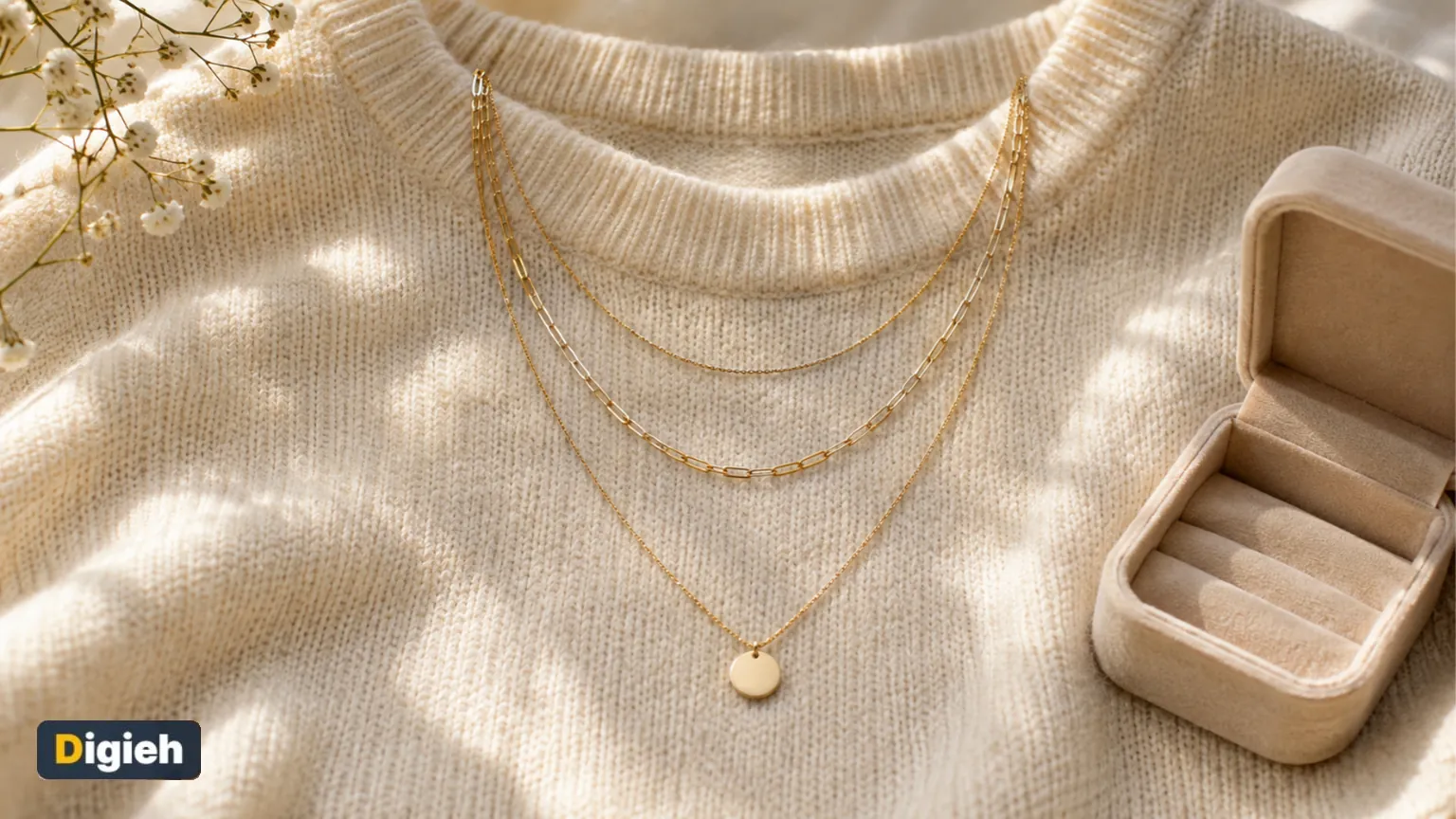
Start with two or three necklaces of different lengths and weights. Mix one delicate chain, one medium piece and one longer statement or pendant.
This guide covers necklace lengths, how to match neckline and metals, and how to stop chains from tangling. It also explains what jewelry stamps mean.
Key Takeaways
- Space layered necklaces about two inches apart.
- Mix chain weights, with the lightest on top and the heaviest at the bottom.
- Match your layers to your neckline.
- Use a necklace spacer or clasp connector to prevent tangles.
- Keep jewelry away from young children, who may mouth or swallow it.
Jump to a section
- Necklace lengths
- Layering rules
- Neckline guide
- Mixing metals
- Stop tangles
- Easy combinations
- Jewelry stamps
- Care and storage
- Safety
- Frequently asked questions
Know Your Necklace Lengths
Standard necklace lengths make layering easier to plan. Where each one falls depends on your neck size and height.
| Length | Name | Where it usually falls |
|---|---|---|
| 14 to 16 inches | Choker | Around the base of the neck |
| 16 to 18 inches | Princess | Near the collarbone |
| 20 to 24 inches | Matinee | Above the bust |
| 28 to 36 inches | Opera | At or below the bust |
| 36 inches and longer | Rope | Low, can be doubled |
Measure a necklace you love to find your favorite length. Lay it flat and measure from end to end, including the clasp.
2 inchesA common spacing rule between layered necklaces, so each piece shows clearly.
Basic Layering Rules
- Start with your shortest and lightest chain.
- Add a medium chain about two inches longer.
- Finish with a longer piece or pendant at the bottom.
- Keep the heaviest or boldest piece lowest.
- Limit yourself to three or four necklaces at first.
Odd numbers often look more natural than even ones. Three is a good starting point for most outfits and most body types.
Vary textures for interest. Pair a smooth chain with a beaded strand or a paperclip chain with a fine cable chain.
Quick tip. Put each necklace on in order from shortest to longest. It is easier to adjust spacing as you go.
Match Layers to Your Neckline
| Neckline | Best layering approach |
|---|---|
| Crew neck | Longer layers that fall below the neckline |
| V-neck | Layers that echo the V, ending with a pendant |
| Scoop neck | Short and medium chains that sit inside the opening |
| Turtleneck | Long chains or a single long pendant over the top |
| Button-down shirt | Delicate chains peeking out at the collar |
| Strapless or off-shoulder | Choker plus one fine chain |
Necklaces should not compete with busy patterns. Let them shine against solid colors and simple fabrics.
Turtlenecks and sweaters are great canvases in winter. See our ideas for winter work outfits for women.
Mixing Metals
Mixing gold and silver used to be a fashion rule-breaker. Today it is a popular, modern look.
- Repeat each metal at least twice so it looks intentional.
- Use a mixed-metal piece to tie the look together.
- Keep finishes similar, such as all shiny or all matte.
- Match your rings or watch to one of the metals.
Some people find certain metals flatter their skin tone. Our guide to seasonal color analysis explains warm and cool undertones.
How many necklaces do you usually wear at once?
- Just one
- Two or three
- Four or more
- Not sure
How to Stop Necklaces From Tangling
Tangling is the biggest complaint about layered necklaces. A few tricks make a big difference.
| Fix | How it helps |
|---|---|
| Necklace spacer clasp | Holds several chains apart at the back |
| Different chain weights | Heavier chains hang straighter |
| Pendants on lower layers | Weight keeps chains from twisting |
| Fewer chains | Less movement means fewer knots |
| Put on in order | Shortest first, longest last |
Necklace spacers, also called layering clasps, connect multiple chains with one closure. They save time and keep chains in place.
To untangle a knot, lay the chain flat and use two pins to gently tease the loops apart. A drop of baby powder can help reduce friction.
Easy Layered Combinations
Everyday Minimal
A fine chain, a small pendant and a slightly longer paperclip chain. This works with tees, sweaters and button-downs.
Office Polished
A short pearl strand with a medium gold chain. It looks elegant but not loud.
Evening Statement
A sparkly choker, a medium chain and a long pendant. Perfect for parties and our New Year’s Eve outfit ideas.
Boho Casual
Beaded strands with a long chain and a charm. It pairs well with loose knits and dresses.
Dressing up for the season? See our holiday party outfit ideas for more styling tips.
Understanding Jewelry Stamps
Knowing what stamps mean helps you buy wisely. The FTC explains that a karat mark tells you how much pure gold is in the piece.
| Term or stamp | What it means |
|---|---|
| 24K | Pure gold |
| 18K or 14K | 18 or 14 parts gold out of 24 |
| Gold plated | A thin gold layer that eventually wears away |
| Gold filled | A layer of at least 10K gold bonded to a base metal |
| Vermeil | Sterling silver coated or plated with gold |
| 925 or sterling | 92.5 percent pure silver |
The FTC says gold plating eventually wears away, depending on how often you wear it and how thick it is. Gold-filled pieces usually last longer.
The FTC also advises looking for a trademark next to the karat mark. It says not to buy gold jewelry without one.
Smart Jewelry Shopping Tips
The FTC suggests comparing several sellers on quality, price and service. It also advises checking a seller’s reputation by searching its name with “complaint” or “review.”
- Set your budget before you shop.
- Ask the seller to write down important details.
- Confirm the return policy before you pay.
- Check the receipt for the details you relied on.
The FTC notes that when shopping online, you should confirm a street address or phone number. Read the full advice on buying jewelry.
Common Layering Mistakes
| Mistake | Fix |
|---|---|
| Chains all the same length | Space them about two inches apart |
| Too many statement pieces | Pick one focal necklace |
| Clashing with a busy top | Wear layers over solid colors |
| Heavy piece on top | Put the heaviest piece lowest |
| Ignoring the neckline | Match layers to the shape of the top |
Step back and look in a full-length mirror before you leave. If one necklace catches your eye first, the balance is usually right.
Layering Necklaces for Men
Layered chains are popular for men too. Keep the look simple with two chains of different lengths.
- Pair a fine chain with a slightly thicker one.
- Add a small pendant or tag to the longer chain.
- Choose one metal for a cleaner look.
- Wear layers over a plain tee or open-collar shirt.
Thicker chains make a bolder statement. Thinner chains feel more understated for work or dinner. Start subtle and build up as you get comfortable with the look.
Free updates
Join the Digieh list
Be the first to know when our weekly brief launches.
No spam. Unsubscribe anytime. Read our Privacy Policy.
Layering on a Budget
You do not need expensive pieces to layer well. A mix of affordable chains and one special necklace works beautifully.
- Start with one quality chain you wear daily.
- Add inexpensive plated pieces for variety.
- Shop secondhand for vintage chains.
- Turn a long chain into two layers by doubling it.
Remember that plated pieces wear faster with daily use. Save them for occasional outfits to make them last.
Layering for the Season
Winter outfits change how necklaces look. Heavy knits and high necklines call for longer, bolder layers.
In spring and summer, delicate chains shine against bare skin and light fabrics. Shorter layers work well with open necklines.
Holiday season is a great time to add sparkle. A crystal pendant or a shimmering chain catches the light at parties and dinners.
Fall outfits pair well with warm metals like gold and bronze. Cool winter whites and grays look striking with silver and pearls.
Change your layers as your wardrobe changes. A quick swap keeps the same chains feeling fresh and new all year long, at no cost.
Care and Storage
- Store necklaces hanging or laid flat to prevent knots.
- Keep each chain in its own pouch or compartment.
- Put jewelry on after lotion, perfume and hairspray.
- Remove necklaces before swimming, showering or exercising.
- Wipe pieces with a soft cloth after wearing.
Plated jewelry needs extra care, since water and chemicals can wear the plating faster. Store silver in an airtight bag to slow tarnish.
Drinking straws make easy travel holders. Thread a chain through a straw and close the clasp to keep it tangle-free.
Safety for Kids
CPSC staff note that young children often mouth objects and may swallow them. They report that jewelry items are among the most commonly swallowed items by young children.
Some cheap metal jewelry has been found to contain lead or cadmium. Keep adult jewelry out of reach and do not let children suck or chew on any jewelry.
- Store jewelry in a closed box up high.
- Avoid giving young children metal costume jewelry.
- Remove long necklaces before playing with babies.
- Seek medical help right away if a child swallows jewelry.
Swallowed jewelry. If a child swallows jewelry or a small magnet, call a doctor or Poison Control right away. Call 911 if the child has trouble breathing.
Skin Sensitivity
Some people get itchy, red skin from certain metals, especially nickel. Look for nickel-free labels if you have sensitive skin.
Higher-karat gold and sterling silver may be gentler for some people. Stop wearing any piece that causes a rash and talk to a doctor if it does not clear.
Layering With Other Accessories
Necklaces work best when other accessories stay balanced. If you wear big earrings, keep necklace layers simpler.
A brooch or scarf can replace necklaces on some days. See how to wear a brooch and how to style a scarf.
Planning a ring to match? Our guide on how to find your ring size helps you get it right.
Building a Necklace Collection
A small set of versatile pieces covers most outfits. Start with basics, then add statement pieces over time.
- A fine everyday chain
- A small pendant
- A medium textured chain
- A pearl strand
- One long statement necklace
These basics fit perfectly into a capsule wardrobe. Layered necklace sets also make thoughtful gifts for coworkers.
Your Layering Checklist
- Space chains about two inches apart
- Mix weights and textures
- Match layers to your neckline
- Repeat each metal twice
- Use a spacer clasp for tangles
- Store chains separately
Try this today. Lay out three necklaces of different lengths. Try them on together and adjust until the spacing looks even.
Test Yourself
What does a 925 stamp usually mean?
- Gold plated
- 14K gold
- Sterling silver
The FTC explains that sterling silver contains 92.5 percent pure silver and may be marked 925.
Frequently Asked Questions
How far apart should layered necklaces be?
About two inches between each chain is a good rule.
How do I keep layered necklaces from tangling?
Use a spacer clasp and vary chain weights.
Can I mix gold and silver necklaces?
Yes. Repeat each metal so the look feels planned.
How many necklaces should I layer?
Two to four works for most outfits.
Conclusion
Layering necklaces is all about spacing, balance and a little practice. Start with three chains of different lengths and build from there.
Store your pieces carefully, keep them away from little hands and enjoy experimenting.
Found this useful?
Editor’s Note
This guide is accurate as of November 10, 2026. Jewelry terms and shopping tips draw on FTC consumer guidance, and safety notes draw on CPSC staff research.
Follow care instructions from your jeweler.
Spot an error in this article? Please contact us at support@digieh.com or read our Corrections Policy.
Keep exploring
Your next read is waiting
 1FashionHow to Style a Long Coat Every Day9 min read
 2MedicinesVitamin B12 Deficiency Signs and Who Needs Supplements9 min read
 3Fruits & VegetablesWinter Squash Types: How to Pick and Cook9 min read
 4AI & TechHow to Use AI for Smarter Holiday Shopping9 min read
 5Science & DiscoveriesQuadrantid Meteor Shower 2027: Best Time to Watch9 min read
 6Travel & TourismHow to Pack a Carry-On for a Week9 min read