TRENDING
How to Hem Pants Without Sewing in Minutes

9 min read
Last updated November 10, 2026
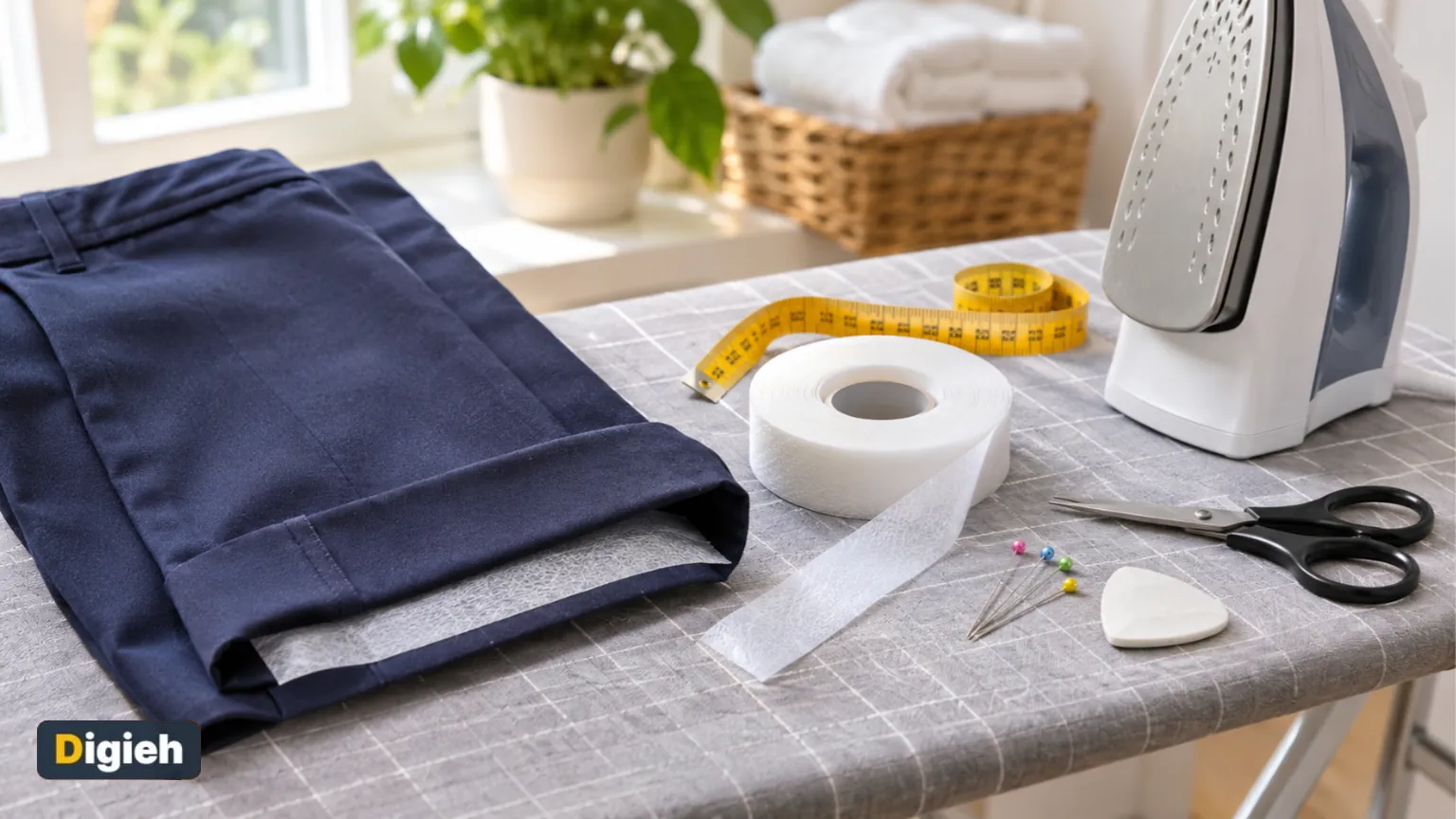
You can hem pants without sewing in about 20 minutes using iron-on hem tape, also called fusible web. All you need is the tape, an iron, scissors and a measuring tape.
The University of Kentucky Cooperative Extension Service explains that fusible web can hold a hem in place instead of thread. It works well on many cotton, blend and lightweight fabrics.
This guide walks you through measuring, marking and fusing a clean hem. It also covers quick fixes, the best fabrics and when to see a tailor.
Key Takeaways
- Try pants on with the shoes you plan to wear before marking.
- Most pants need a hem about 1.5 to 2 inches deep.
- Always test hem tape on a fabric scrap first.
- Use a press cloth so the hem edge does not leave a mark.
- Check the care label, since some fabrics cannot take high heat.
Jump to a section
- Supplies
- Choose the length
- Measure and mark
- Hem with iron-on tape
- Best fabrics
- Other no-sew options
- Jeans
- Common mistakes
- When to see a tailor
- Frequently asked questions
Supplies You Need
| Supply | Why you need it |
|---|---|
| Iron-on hem tape or fusible web | Bonds the hem without thread |
| Iron | Melts the adhesive in the tape |
| Ironing board | Gives you a flat, heat-safe surface |
| Press cloth or brown paper | Protects fabric from shine and marks |
| Measuring tape and ruler | Keeps the hem even |
| Pins or clips | Hold the fold in place |
| Fabric chalk | Marks the new length |
| Sharp scissors | Trims extra fabric |
Hem tape comes in different widths and weights. Lighter tapes suit thin fabrics, while heavier tapes hold denim and thick cotton better.
1.5 to 2 inRecommended hem depth for pants, according to the University of Kentucky Extension hem guide.
Choose the Right Length
Pant length depends on the style and the shoes you wear. A small change makes a big difference in how pants look.
| Length style | Where it falls | Good for |
|---|---|---|
| No break | Just touches the top of the shoe | Slim and cropped pants |
| Slight break | Rests lightly on the shoe | Most dress and work pants |
| Full break | Folds once over the shoe | Classic, relaxed looks |
| Cropped | Ends at or above the ankle | Wide-leg and summer styles |
Wide-leg pants often look best slightly longer, especially with heels. See our tips on how to style wide-leg jeans.
Quick tip. If you wear the same pants with flats and heels, hem them for the shoes you wear most often.
Measure and Mark the Hem
The University of Kentucky guide advises hanging a garment overnight so it can settle before marking. Then try it on with the undergarments and shoes you plan to wear.
- Put on the pants and the shoes you will wear with them.
- Stand straight and have a helper pin the new length.
- Place pins a few inches apart, parallel to the floor.
- Take off the pants and check both legs match.
- Mark the new hemline with chalk.
Working alone? The guide notes that marking without a helper is harder and less accurate. Compare against a pair of pants that already fits well.
Measure from the inseam to the hemline on both legs. Small differences between legs are common, so mark each one separately.
Check the length in a full-length mirror from the front, side and back. Walk a few steps and sit down to see how the pants move.
Pants made of wool or knit may stretch slightly over the day. Hem them a touch shorter if the fabric tends to drop.
How to Hem Pants With Iron-On Tape
These steps follow the fused hem method from the University of Kentucky Cooperative Extension Service. Always read your hem tape package directions too.
- Turn the pants inside out.
- Fold the fabric up along your chalk line and press the fold with the iron.
- Measure the hem depth and trim extra fabric below it.
- Cut a strip of hem tape for each leg.
- Place the tape between the hem and the pant leg, just short of the raw edge.
- Cover with a damp press cloth.
- Press firmly with the iron for the time listed on the package.
- Let it cool completely before moving the fabric.
The guide advises placing the strip about a quarter inch short of the hem edge. This keeps adhesive from seeping out onto your iron or fabric.
Test first. The University of Kentucky guide says to always test fusible web on a scrap of the same fabric. Some fabrics scorch, pucker or show the tape through.
Pressing for a Clean Finish
Pressing makes the difference between a homemade look and a polished one. The University of Kentucky guide suggests pressing with brown paper between the hem and the garment.
The paper keeps the hem edge from leaving a visible line on the outside. New Mexico State University Extension adds that a press cloth helps prevent shine on the right side.
NMSU also advises lifting and lowering the iron instead of sliding it. Sliding can stretch fabric and shift the hem.
Our guide on how to iron a shirt covers heat settings and press cloths in more detail.
How do you usually shorten pants?
- Sew them myself
- Hem tape or no-sew
- Take them to a tailor
- Not sure
Best Fabrics for No-Sew Hems
| Fabric | How hem tape works |
|---|---|
| Cotton and cotton blends | Works very well |
| Lightweight knits | The UKY guide says fused hems suit many lightweight knits |
| Denim | Works with heavy-duty tape |
| Polyester | Works with low heat and a press cloth |
| Wool | Use low heat and steam with a press cloth |
| Silk and delicate fabrics | Test carefully, may show through |
| Leather or vinyl | Do not iron, use another method |
Check the care label before you press. The FTC says care labels must warn against ironing when ironing would harm the product.
Other No-Sew Hem Options
- Fabric glue made for clothing
- Double-sided fashion tape for a temporary fix
- Hem clips that fold the fabric under
- Cuffing or rolling the hem
Fashion tape is great for one event but wears off quickly. Fabric glue lasts longer but can stiffen the fabric.
A neat cuff can look intentional on casual pants and jeans. Fold twice and press for a clean finish. Keep both cuffs the same width so the legs look balanced.
How to Hem Jeans Without Sewing
Jeans are thick, so you need heavy-duty hem tape and extra pressing time. Denim also frays, so trim neatly.
- Mark the new length with the shoes you wear most.
- Leave about one and a half inches for the fold.
- Trim extra fabric and fold the hem up.
- Fuse with heavy-duty tape using firm pressure.
- Press again from the outside with a press cloth.
For a raw-hem look, simply cut at the length you want and wash the jeans. The edge will fray softly over time.
Free updates
Join the Digieh list
Be the first to know when our weekly brief launches.
No spam. Unsubscribe anytime. Read our Privacy Policy.
Washing No-Sew Hems
Most hem tapes are designed to survive washing. Check the package for limits on hot water and drying.
- Wait at least a day before the first wash if the package suggests it.
- Wash inside out in cool or warm water.
- Air dry or use low heat in the dryer.
- Re-press with an iron if an edge starts to lift.
High heat can loosen tape and shrink some fabrics. If clothes shrink, see our tips on how to unshrink a sweater.
Hemming Kids Pants
Kids grow fast, so a no-sew hem is a smart choice. You can let it down later when they need more length.
- Leave extra fabric inside the hem instead of trimming it.
- Use a lighter tape that is easier to remove.
- Consider hem clips for a fully temporary fix.
- Re-measure every few months.
When it is time to lengthen, warm the hem with an iron and gently peel it apart. Press out the old fold line with steam.
Emergency Fixes on the Go
A hem can come loose at the worst moment. A few small items can save the day.
- Double-sided fashion tape
- Safety pins placed on the inside
- A small travel sewing kit
- Binder clips for a quick hold
These are temporary solutions. Fix the hem properly with tape or thread once you get home.
Removing Hem Tape
Sometimes you need to undo a no-sew hem. Heat softens the adhesive so you can separate the layers.
- Cover the hem with a damp press cloth.
- Press with a warm iron for several seconds.
- Gently peel the hem apart while it is warm.
- Remove leftover adhesive with more heat and a cloth.
Some residue may remain. Test any adhesive remover on a hidden spot first.
Skirts, Dresses and Curtains
The same method works on straight skirts, simple dresses and even curtains. Flared skirts need more care because the hem edge is wider than the fold.
The University of Kentucky guide notes that a flared skirt needs pins placed closer together when marking. Take your time to keep the line even.
Common Mistakes
| Mistake | How to avoid it |
|---|---|
| Measuring without shoes | Try pants on with your usual shoes |
| Skipping the test scrap | Test tape on extra fabric first |
| Iron too hot | Match heat to the fabric |
| Moving fabric while warm | Let the bond cool fully |
| Tape too close to the edge | Keep it slightly short of the raw edge |
| Uneven legs | Measure and mark each leg separately |
When to See a Tailor
- Dress pants with a cuff or special finish
- Expensive or delicate fabrics
- Pants that need tapering as well as shortening
- Hems that need to be lengthened
- Jeans where you want to keep the original hem
A tailor can also adjust the waist and fit for a more polished look. Our guide on how to dress for your body shape helps you know what to ask for.
Fit Tips for Better Looking Pants
The right hem makes even inexpensive pants look polished. It pairs well with smart choices in fit and color.
Thrifted pants often just need a hem to look custom. Learn how to thrift shop like a pro.
Well-fitted pants are the backbone of a good wardrobe. See our capsule wardrobe guide, plus outfit ideas for men and women at work.
Your No-Sew Hem Checklist
- Try pants on with your shoes
- Mark each leg evenly
- Test the tape on a scrap
- Use a press cloth
- Let the hem cool fully
- Wash gently
Try this today. Pull out one pair of pants that is too long. Mark the length with your favorite shoes on, and hem it tonight.
Test Yourself
What should you do before using hem tape on new pants?
- Wash them in hot water
- Test the tape on a fabric scrap
- Iron them on the highest heat
The University of Kentucky guide says to always test fusible web on a scrap of the same fabric.
Frequently Asked Questions
Does hem tape last through washing?
Most do. Wash gently and re-press if an edge lifts.
Can I hem jeans without sewing?
Yes. Use heavy-duty hem tape and press firmly.
How deep should a pant hem be?
About 1.5 to 2 inches for most pants.
Can hem tape be removed?
Often yes, with heat, but it may leave residue.
Conclusion
Hemming pants without sewing is quick and simple with iron-on tape. Measure carefully, test first and press well for a clean result.
Save delicate or expensive pants for a tailor, and enjoy pants that finally fit.
Found this useful?
Editor’s Note
This guide is accurate as of November 10, 2026. It draws on the University of Kentucky Cooperative Extension Service, New Mexico State University Extension and the FTC.
Always follow your hem tape and garment care instructions.
Spot an error in this article? Please contact us at support@digieh.com or read our Corrections Policy.
Keep exploring
Your next read is waiting
 1Fruits & VegetablesDoes Celery Juice Work? What the Science Says9 min read
 2FashionHow to Style a Long Coat Every Day9 min read
 3MedicinesHow SSRI Antidepressants Work: Sertraline and More Facts9 min read
 4AI & TechHow to Use AI for Smarter Holiday Shopping9 min read
 5Finance & MarketsAnthropic IPO Explained: Date, Ticker and Key Numbers5 min read
 6Travel & TourismHow to Pack a Carry-On for a Week9 min read