TRENDING
Kitten Checklist: Everything You Need Before Day One
Kitten checklist: must-have supplies, how to kitten-proof your home, a first day plan and a first-year vet timeline. What to do before your kitten arrives.

7 min read
Last updated November 20, 2026
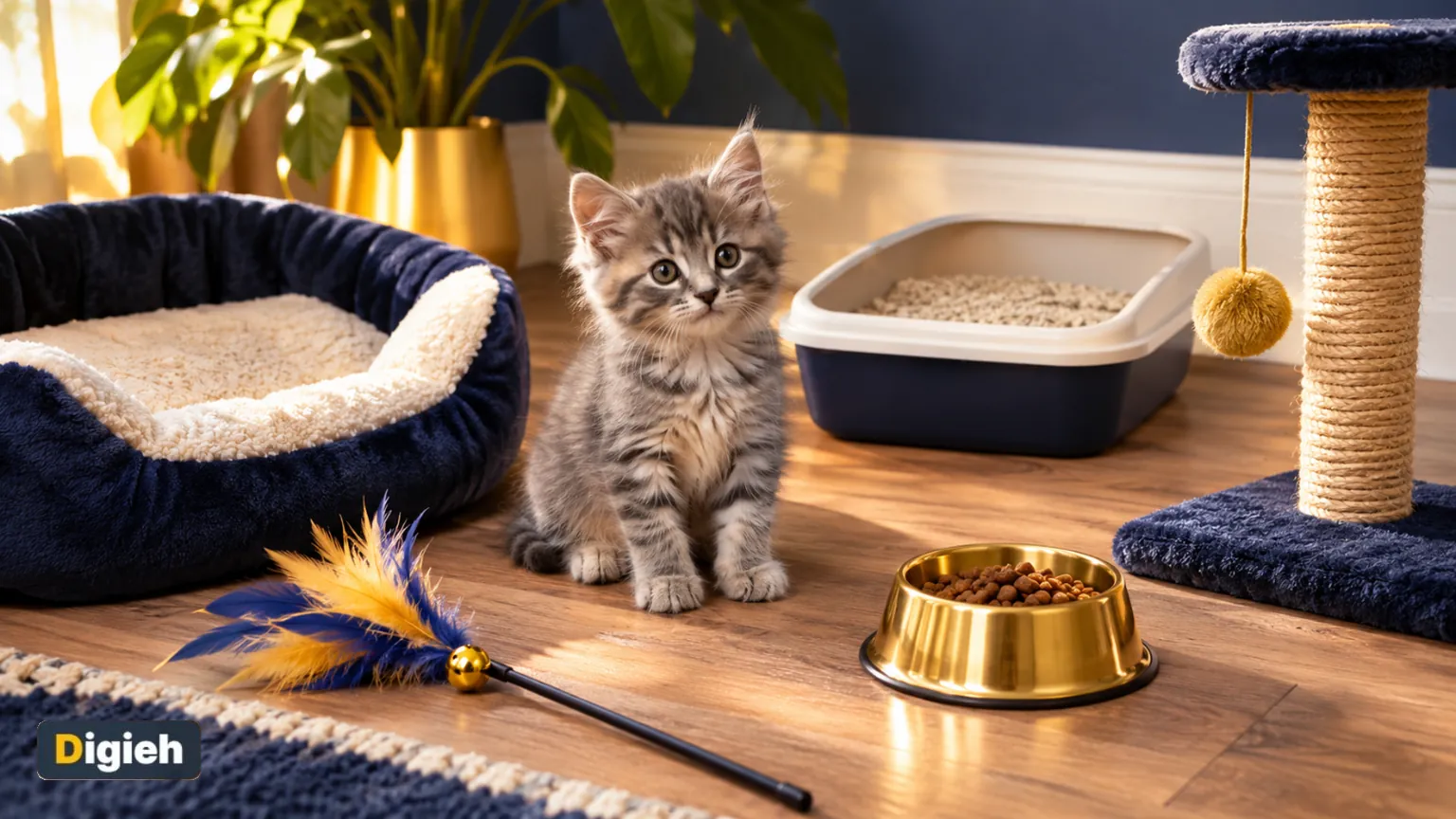
Before your kitten comes home, get a carrier, kitten food, bowls, a litter box and a scratching post. Also book a vet visit for the first week.
Kitten-proofing matters just as much. Lilies, dropped pills and dangling cords are the big dangers in most homes.
Key Takeaways.
- Book a vet visit within the first week at home.
- Have one litter box per cat, plus one extra.
- Remove lilies, which can cause kidney failure in cats.
- Plan spay or neuter by about 5 months of age.
Jump to a section
- Supplies checklist
- Kitten-proof your home
- The first day
- First-year vet plan
- Kitten food
- Litter box setup
- Meeting other pets
- Handling and play
- When to call the vet
- Room by room
- Nails and grooming
- Indoor fun
- Picking a carrier
- Frequently asked questions
- Conclusion
New Kitten Supplies Checklist
| Item | Must-have or later | Why it matters |
|---|---|---|
| Carrier | Must-have | Safe rides home and to the vet |
| Kitten food | Must-have | Kittens need food made for growth |
| Food and water bowls | Must-have | Shallow bowls are easiest |
| Litter box and litter | Must-have | One per cat plus one extra |
| Scratching post | Must-have | Saves your furniture |
| Small nail trimmer | Must-have | Short nails mean fewer scratches |
| Bed and blanket | Nice to have | Many kittens pick their own spot |
| Toys and puzzle feeder | Nice to have | Play burns energy |
| Toothbrush and dental gel | Later | Start gently once settled |
| Tracking collar | Optional | A microchip does not track location |
Source: based on the American Animal Hospital Association (AAHA) kitten checklist.
Make each litter box one and a half times your cat’s length. Pick posts at least 3 feet high, advises the animal hospital association.
Kitten-Proof Your Home
- Remove lilies and other toxic plants.
- Store medicines behind closed doors.
- Pick up any dropped pill right away.
- Tie up blind and curtain cords.
- Put away string, hair ties and rubber bands.
- Check window screens are secure.
- Close toilet lids, washer and dryer doors.
Even small amounts of lily can cause kidney failure in cats, warns the animal hospital association. Check other plants on this toxic plant list.
1 weekBook your kitten’s first vet visit within this time after bringing it home, per the animal hospital association.
Your Kitten’s First Day
- Set up one quiet room with food, water, litter and a bed.
- Let the kitten come out of the carrier on its own.
- Show it the litter box after meals and naps.
- Keep other pets apart for the first days.
- Play gently with a wand toy, not your hands.
Good to know. Many kittens hide at first. Give it a few days in one room before opening up the whole house.
What are you most excited about with a new kitten?
- Playtime
- Cuddles
- Naming it
- Not sure
Your Kitten’s First-Year Vet Plan
| When | What to do |
|---|---|
| First week home | Full checkup, worm and flea check, start vaccines |
| Next few months | Vaccine boosters as your vet schedules them |
| First visit or soon after | Microchip for permanent identification |
| By about 5 months | Spay or neuter, as many vets advise |
| After that | Yearly checkups and booster renewals |
Source: the association’s first-year guide and new kitten checklist.
Core vaccines protect against panleukopenia, calicivirus and rhinotracheitis. Your vet sets the booster timing, says the association’s guide.
Keep your kitten safe in cold months with our winter pet safety tips. Hosting a holiday meal? Check foods pets should avoid.
Have a dog too? Our pet hair guide keeps the couch clean for both.
Choosing and Feeding Kitten Food
Kittens grow fast and need food made for growth. Look for a label that says it is complete and balanced for kittens or for all life stages.
- Ask the shelter or breeder what the kitten eats now, and start with that.
- Switch foods slowly over about a week if you want to change.
- Measure portions instead of filling the bowl all day.
- Offer fresh water in a clean bowl at all times.
- Use puzzle feeders to slow fast eaters and add fun.
The animal hospital association suggests measured portions to keep cats lean. Ask your vet how much your kitten needs as it grows.
Setting Up the Litter Box
- Place boxes in quiet spots, away from food and water.
- Start with unscented, clumping litter, which most cats accept.
- Scoop at least once a day.
- Show the kitten the box after meals, naps and play.
- Never punish accidents. Clean them with an enzyme cleaner instead.
Plastic storage bins make good large boxes, as long as the kitten can climb in, notes the association’s checklist.
Introducing a Kitten to Other Pets
- Keep the kitten in its own room for the first days.
- Swap bedding so pets learn each other’s smell first.
- Let them see each other through a gate or cracked door.
- Keep first meetings short and supervised.
- Give older pets extra attention so they do not feel replaced.
Go slowly. Some pets accept a kitten in days, while others need a few weeks.
Free updates
Join the Digieh list
Be the first to know when our weekly brief launches.
No spam. Unsubscribe anytime. Read our Privacy Policy.
Handling and Play
Gentle handling helps kittens grow into calm, friendly cats. Touch paws, ears and mouth briefly each day so vet visits and nail trims are easier later.
Kittens need several short play sessions a day. Wand toys keep hands out of reach, so your kitten does not learn to bite or scratch fingers.
When to Call the Vet Right Away
- Not eating for a day.
- Vomiting or diarrhea that keeps going.
- Trouble breathing or sneezing with thick discharge.
- Very tired, weak or hiding and not moving.
- Straining in the litter box with little or no urine.
- Swallowed string, thread or a hair tie.
Kittens are small and can get sick quickly. When in doubt, call your vet or an emergency clinic.
Kitten-Proofing Room by Room
| Room | Main hazards | Quick fix |
|---|---|---|
| Kitchen | Hot stove, open trash, string from food packs | Lidded trash can, keep counters clear |
| Living room | Cords, blind strings, small toys | Cord covers, tie up blind cords |
| Bathroom | Medicines, open toilet, hair ties | Close the lid, store pills in cabinets |
| Laundry | Open washer and dryer | Keep doors shut, check inside before use |
| Bedroom | Recliners, under-bed gaps | Check before closing or reclining |
Source: based on the hazards listed in the animal hospital association checklist.
Nail Trims and Grooming
Start nail trims early, while your kitten is small. Trim only the clear tip and avoid the pink area, which has blood vessels.
- Trim one or two nails at a time if your kitten wriggles.
- Give a treat after each short session.
- Brush long-haired kittens a few times a week.
- Begin tooth brushing slowly with a pet toothpaste.
A small nail trimmer made for cats is easier to control than human clippers, the checklist suggests.
Indoor Fun and Enrichment
Indoor kittens need ways to climb, hide and hunt. A bored kitten is more likely to scratch furniture or chew cords.
- A tall cat tree or wall shelves for climbing.
- Cardboard boxes and paper bags with handles removed.
- A window perch to watch birds.
- Toys that roll, crinkle or dangle.
- Rotate toys weekly so they stay new.
Picking the Right Carrier
A good carrier makes vet trips calmer. Choose one with a top opening or a removable lid, so the vet can examine your kitten inside it.
Leave the carrier open at home with a soft blanket inside. When it becomes a normal napping spot, your kitten will walk in on its own.
Try this today. Walk through your home at kitten height today and remove one hazard you find.
Test Yourself
Which common flower is especially dangerous to cats?
- Lily
- Rose
- Sunflower
Lilies can cause kidney failure in cats even with small exposure.
Frequently Asked Questions
What do I need before bringing a kitten home?
A carrier, kitten food, bowls, a litter box, a scratching post and a booked vet visit.
When should a kitten first see a vet?
Within the first week at home, or sooner if it seems unwell.
When should a kitten be spayed or neutered?
Many vets recommend it by about 5 months of age.
How many litter boxes does a kitten need?
One per cat plus one extra. So one kitten needs two boxes.
How do I introduce a kitten to my dog?
Start with smell swaps and short meetings through a gate, with your dog on a leash.
What should I feed a new kitten?
A complete kitten food, starting with what it already eats. Change foods slowly.
When can I trim my kitten’s nails?
Right away, a little at a time. Early practice makes trims easier for life.
Conclusion
A few basics, a safe room and an early vet visit set your kitten up well. Kitten-proofing protects it from the most common dangers.
Your next step is to buy the must-have items and book the first vet visit before day one.
Editor’s Note
This article is accurate as of November 20, 2026. Supplies and vet timing come from the American Animal Hospital Association. Plant safety comes from the American Society for the Prevention of Cruelty to Animals.
Spot an error in this article? Please contact us at support@digieh.com or read our Corrections Policy.
Keep exploring
Your next read is waiting
 1Beauty & Personal CareRetinol for Beginners: How to Start Without Irritation7 min read
 2TechnologyHandwritten Notes to Text: Digitize Pages in Minutes7 min read
 3HealthPrediabetes A1C Range: What Your Number Means Now8 min read
 4MarketingGoogle Business Profile Setup: Get Found Locally Free7 min read
 5Visas & PassportsETIAS Not Live Yet: What Travelers Need Now7 min read
 6Pets & AnimalsDog Separation Anxiety: Signs and How to Help5 min read
Found this useful?