TRENDING
How to Do a Jigsaw Puzzle Faster: Easy Tips

8 min read
Last updated November 6, 2026
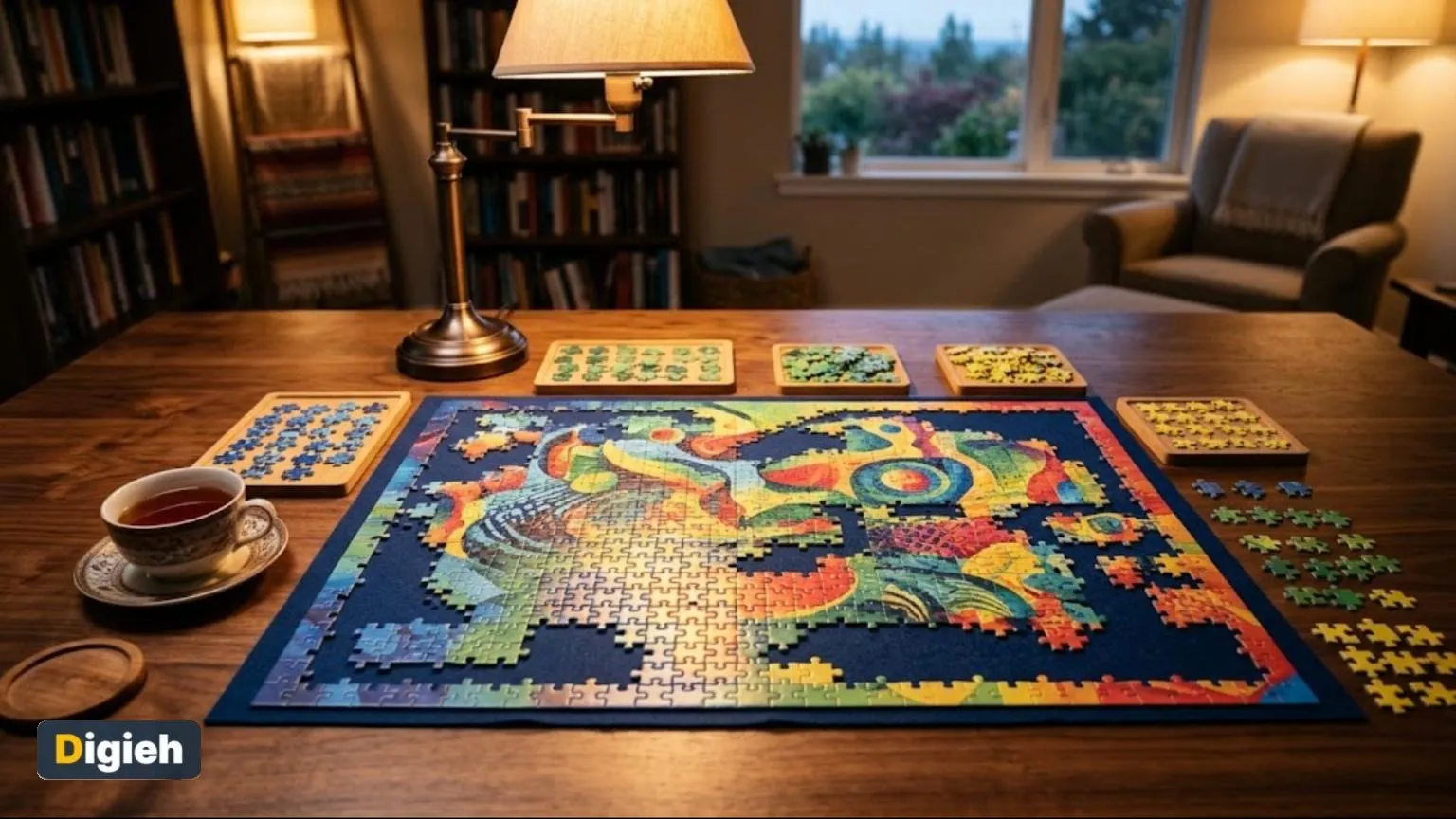
To do a jigsaw puzzle faster, flip all pieces face up and sort out the edge pieces first. Build the border, then group the rest by color and pattern. Work on one small section at a time and use the box picture as your guide.
Puzzles are a calm, screen-free hobby for cold nights. Smart sorting turns a big jumble into steady progress.
Key Takeaways
- Turn every piece face up first.
- Build the edge before the middle.
- Sort pieces by color and pattern.
- Finish small sections one at a time.
- Use good light and a flat surface.
On This Page
- Choose the Right Puzzle
- How to Do a Puzzle Step by Step
- Puzzle Sizes and Time
- Tips to Work Faster
- How to Save a Finished Puzzle
- Benefits of Doing Jigsaw Puzzles
- Picking a Puzzle by Piece Count
- Easy vs Hard Puzzle Images
- Set Up a Good Puzzle Space
- Sorting Strategies
- Work in Sections
- Avoid Common Puzzle Mistakes
- Puzzles for Kids
- Puzzle Swaps and Clubs
- Turn It Into a Family Tradition
- Missing a Piece?
Choose the Right Puzzle
Beginners do well with 300 to 500 pieces. Bright, varied pictures are easier than skies or oceans.
Many public libraries lend puzzles, so search your library on WorldCat.
Large pieces suit kids and anyone who wants a relaxed puzzle.
Pick a picture you love. You will look at it for hours, so choose something that makes you happy.
500Pieces is a great size for your first big puzzle.
How to Do a Puzzle Step by Step
1. Flip Every Piece
Turn all pieces face up on a large table or board.
2. Find the Edges
Pull out pieces with a flat side. Corners have two flat sides.
3. Build the Frame
Connect the edge pieces first. This gives you a clear outline.
Quick tip. Use muffin tins or paper plates to hold sorted pieces. They keep colors neat and portable.
4. Sort by Color
Group pieces by color, pattern or texture into trays or bowls.
5. Fill in Sections
Work on bold areas like text, faces or objects first. Leave plain areas for last.
What puzzle size do you enjoy most?
- Under 500
- 500
- 1000
- 2000 or more
Puzzle Sizes and Time
| Pieces | Typical Time for Beginners |
|---|---|
| 300 | 2 to 4 hours |
| 500 | 4 to 8 hours |
| 1000 | 10 to 20 hours |
| 2000 | 30 hours or more |
Use this calculator to estimate your puzzle time.
Puzzle time estimator
Good to know. This estimate assumes about 60 pieces an hour. Plain skies and water take longer.
- Puzzle
- Large flat table or board
- Sorting trays
- Good lamp
- Puzzle mat for storage
- Puzzle glue (optional)
Tips to Work Faster
Sort plain pieces by shape when colors look the same. Look at the tabs and blanks.
The Centers for Disease Control and Prevention (CDC) shares healthy ways to manage stress.
Take short breaks. Fresh eyes spot matches you missed.
Use bright, even light. A desk lamp helps in the evening.
How to Save a Finished Puzzle
Slide the puzzle onto a board and brush on puzzle glue. Let it dry fully.
Frame it as wall art or roll it up with a puzzle mat for storage.
Make It a Group Activity
Set up a puzzle table during family gatherings. Guests can add a few pieces as they pass.
The National Institute on Aging explains how activities support brain health.
Pick a picture with many sections so several people can work at once.
Add to calendar
Benefits of Doing Jigsaw Puzzles
Jigsaw puzzles are more than a way to pass time. They offer real benefits for people of all ages.
Puzzles exercise your attention to shape, color and detail. They also build patience as you work through a big project.
Many people find puzzles calming. Focusing on one piece at a time can help you unwind after a busy day.
Puzzles bring families together too. Everyone can add a few pieces, whatever their age.
Picking a Puzzle by Piece Count
The number of pieces shapes how hard and long a puzzle will be. Choose one that fits your time and skill.
| Pieces | Good For | Rough Time |
|---|---|---|
| 24 to 100 | Young kids | Under an hour |
| 300 | Beginners and casual puzzlers | A few hours |
| 500 | A relaxing weekend project | Several hours |
| 1000 | Experienced puzzlers | Many hours over several days |
| 2000 or more | Puzzle fans who love a challenge | Weeks |
These times vary a lot by image and experience. Start smaller and work your way up.
Easy vs Hard Puzzle Images
The image matters as much as the piece count. Some pictures are far harder than others.
Easier Images
Look for bold colors, clear shapes and lots of different areas. Cartoons, maps and busy collages are often easier.
Harder Images
Large areas of one color, like sky or water, are tough. Repeating patterns and blurry photos also add challenge.
Gradient puzzles fade from one color to another. They are among the hardest to finish.
Set Up a Good Puzzle Space
A dedicated spot makes puzzles easier and more fun. It also keeps pieces from getting lost.
- Use a large, flat table with good lighting.
- Cover the table with a felt mat or a large sheet of cardboard.
- Keep sorting trays or small bowls nearby.
- Choose a spot away from pets and small children.
- Use a lamp to reduce eye strain.
A puzzle mat that rolls up lets you put a puzzle away mid-project. It keeps pieces in place.
Sorting Strategies
Good sorting saves lots of time. Try a few methods and see what works best.
- By color. Group pieces with similar colors.
- By pattern. Sort stripes, text and textures together.
- By shape. Group pieces by their knob and hole pattern.
- By section. Put pieces that belong to one part of the image together.
Shape sorting helps a lot with single-color areas. Look at how many tabs and blanks each piece has.
Free updates
Join the Digieh list
Be the first to know when our weekly brief launches.
No spam. Unsubscribe anytime. Read our Privacy Policy.
Work in Sections
Once the border is done, build small sections. Pick distinct areas of the image first.
Look for text, faces, bright objects or strong lines. These parts are easier to piece together.
Build each section separately, then move it into place. The puzzle comes together like islands joining.
Avoid Common Puzzle Mistakes
A few habits can slow you down. Avoid these common errors.
- Forcing pieces that do not quite fit
- Working in poor light
- Not checking the box image often
- Trying to finish in one sitting
- Leaving pieces where pets can reach them
If you feel stuck, take a break. Fresh eyes often spot matches you missed.
Puzzles for Kids
Puzzles help young kids learn shapes, colors and problem solving. Pick the right type for their age.
Wooden puzzles with large pieces suit toddlers. Floor puzzles with big pieces are great for preschoolers.
Older kids can try 100 to 300 pieces. Let them choose a picture they love.
Keep small pieces away from children under 3. They can be a choking hazard.
Puzzle Swaps and Clubs
Puzzles can get expensive if you buy many. Swapping saves money.
Trade finished puzzles with friends or neighbors. Some libraries let you borrow puzzles like books.
Many towns have puzzle clubs that meet to swap and share. Check community boards or local social groups.
Before swapping, count the pieces or note any missing ones. Be honest with the next owner.
Turn It Into a Family Tradition
Many families start a puzzle on Thanksgiving or New Year’s Day. Everyone adds pieces over the holidays.
Leave the puzzle out in a shared space. People can drop by and add a few pieces when they have a minute.
Missing a Piece?
Few things are more frustrating than a missing piece at the end. Check a few spots before you give up.
Look under the table, inside the box and in the folds of your mat. Check pockets, sleeves and nearby furniture.
Some puzzle makers will send a replacement piece if you contact them. Keep the box, since it often shows the puzzle number.
Puzzle Mistakes to Avoid
A few habits can make puzzles frustrating. Watch out for these common mistakes.
- Working on a table that is too small
- Leaving pieces where pets can reach them
- Ignoring the picture on the box
- Forcing pieces that do not fit
Choose a flat space where the puzzle can stay for a few days. A large board makes it easy to move.
Make Puzzles a Group Activity
Puzzles are a great way to spend time together. Everyone can help in their own way.
Let one person sort edges while another groups colors. Play calm music and keep snacks nearby.
Save Finished Puzzles
Glue a favorite finished puzzle and frame it as wall art. It makes a fun reminder of time spent together.
You can also swap finished puzzles with friends to try new ones for free.
Try this today. Sort the edge pieces of your next puzzle into one pile tonight. Build the frame before anything else.
Test Yourself
How many flat sides does a corner piece have?
- One
- Two
- Three
Corners have two flat sides.
Which areas should you leave for last?
- Plain sky or water
- Bold text
- The edges
Plain areas are hardest, so save them for the end.
Frequently Asked Questions
Should I always start with the edges?
Most people do. It gives a clear frame to build in.
What size puzzle is best for beginners?
Start with 300 to 500 pieces.
Are puzzles good for the brain?
Many people find they boost focus and relax the mind.
How do I store an unfinished puzzle?
Use a puzzle mat or board you can roll up or slide away.
How many pieces should a beginner puzzle have?
Start with about 300 to 500 pieces. Then work up to 1,000.
What makes a puzzle hard?
Large single-color areas, repeating patterns and blurry images make puzzles harder.
How do I sort puzzle pieces?
Sort by color, pattern, shape or section of the image.
Where can I get puzzles for free?
Swap with friends or check whether your local library lends puzzles.
Wrapping Up
Pick a 500-piece puzzle and start sorting this weekend. Each piece brings a small win.
Pair puzzle night with our list of Netflix Christmas movies. Plan a cozy gathering with our guide to host Thanksgiving.
Found this useful?
Editor’s Note
This guide is accurate as of November 6, 2026. Puzzle times vary by picture and skill.
Spot an error in this article? Please contact us at support@digieh.com or read our Corrections Policy.
Keep exploring
Your next read is waiting
 1HealthBritish Doctor With Ebola Treated at London Hospital4 min read
 2Beauty & Personal CareSimple Skincare Routine for Oily Skin8 min read
 3BusinessHow to Work From Home Productively8 min read
 4Finance & MarketsHow to Teach Kids About Money: Simple Lessons8 min read
 5SportsJump Rope Workout for Beginners: Easy Plan8 min read
 6AI & TechGemini Omni 1.2 Flash Is Faster and Cheaper4 min read