TRENDING
How to Learn Guitar as a Beginner: Easy Steps

8 min read
Last updated November 6, 2026
To learn guitar as a beginner, start with an acoustic guitar that fits your size and keep it in tune. Learn four easy chords like G, C, D and E minor. Practice 15 minutes a day and switch between chords slowly until it feels smooth.
Playing guitar is a fun skill you can learn at any age. Short daily practice beats long weekly sessions.
Key Takeaways
- Choose a guitar that feels comfortable.
- Tune before every practice.
- Learn four basic chords first.
- Practice a little every day.
- Expect sore fingertips for the first few weeks.
On This Page
- Choose Your First Guitar
- What You Need
- How to Learn Guitar Step by Step
- Easy Chords to Learn First
- Tips to Keep Going
- Acoustic vs Electric vs Classical
- Budget and Buying Tips
- Build a Simple Practice Routine
- Warm Up Your Hands
- Read Chord Charts and Tabs
- Easy Songs for Beginners
- Take Care of Your Guitar
- Protect Your Hearing
- Stay Motivated
Choose Your First Guitar
Acoustic guitars need no amp and are easy to pick up. Electric guitars have thinner strings that press down more easily.
Pick a size that fits your body. Smaller guitars suit kids and small hands.
4Easy chords open the door to thousands of popular songs.
What You Need
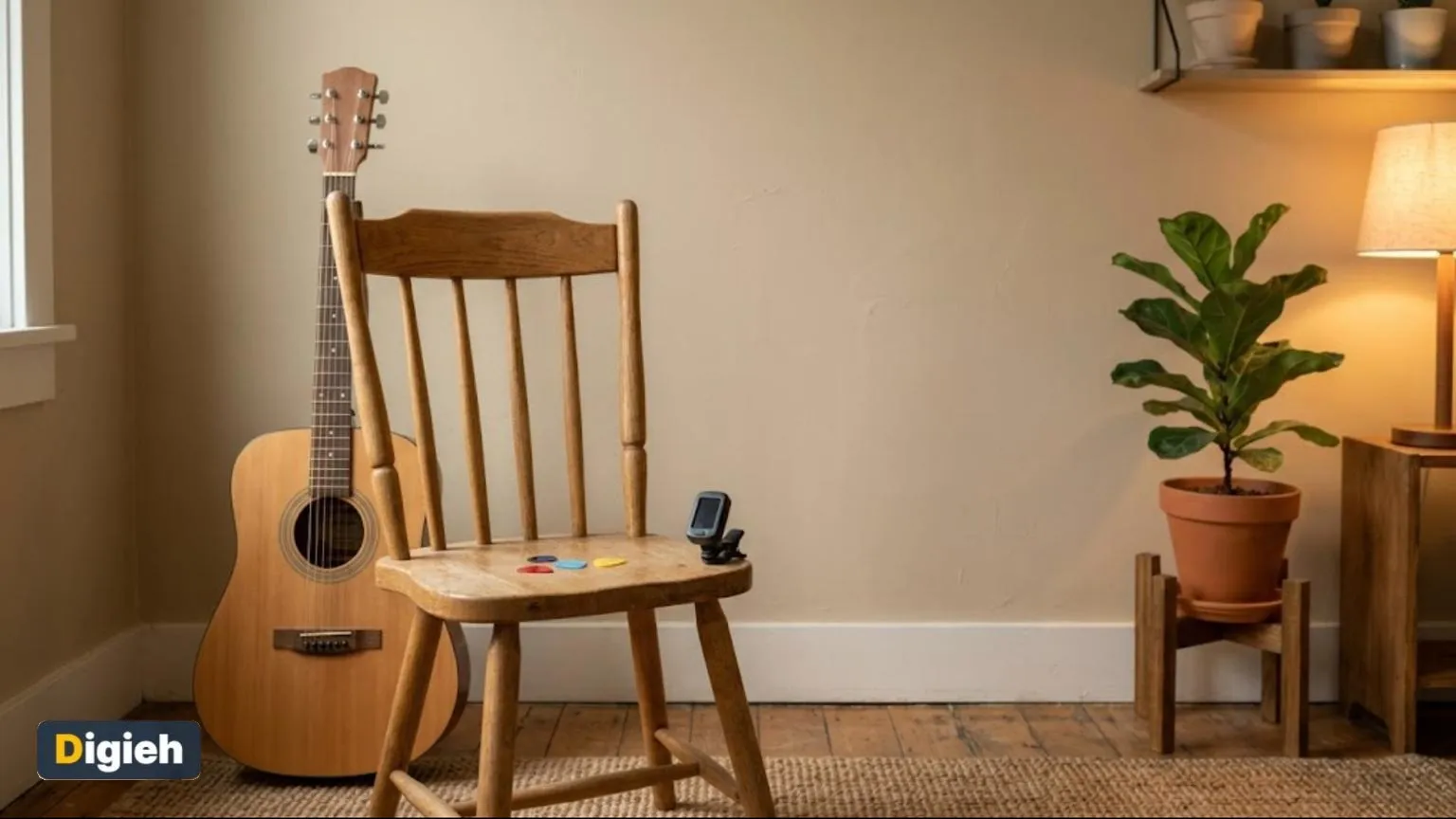
Get a clip-on tuner or a free tuning app. Add a few medium picks.
A strap and a soft case protect your guitar and make practice easier.
- Beginner guitar
- Clip-on tuner or tuning app
- Medium picks
- Strap
- Soft case
- Chord chart
How to Learn Guitar Step by Step
Free lessons from JustinGuitar start with simple chords.
1. Learn the Parts
Know the neck, frets, strings and tuning pegs. It makes lessons easier to follow.
2. Tune Your Guitar
Standard tuning from the thickest string is E, A, D, G, B and E.
3. Hold It the Right Way
Sit up straight and rest the guitar on your leg. Keep your wrist relaxed.
Quick tip. Keep your thumb behind the neck, not over the top. It helps your fingers reach the strings.
4. Learn Your First Chords
Press just behind the frets with your fingertips. Strum slowly and listen for clear notes.
5. Practice Chord Changes
Switch between two chords for one minute. Speed comes with time.
Which guitar would you start with?
- Acoustic
- Electric
- Classical
- Not sure yet
Easy Chords to Learn First
| Chord | Why Learn It |
|---|---|
| G major | Used in thousands of songs |
| C major | Pairs well with G |
| D major | Easy three-finger shape |
| E minor | Only two fingers needed |
Use this calculator to track your practice time.
Guitar practice tracker
Good to know. New strings stretch and slip out of tune for a few days. Tune often at first.
Tips to Keep Going
Learn a simple song you love early on. It keeps practice fun.
The Centers for Disease Control and Prevention (CDC) explains how to protect your hearing from loud sound.
Use free video lessons and chord apps. Record yourself to hear your progress.
Take short breaks if your fingers hurt. Calluses form in a few weeks.
Common Beginner Mistakes
Do not press the strings too hard. Light, firm pressure gives a clean sound.
Avoid skipping basics to play fast songs. Strong habits now save frustration later.
Learn Simple Strumming
Start with steady down strums on each beat. Count one, two, three, four out loud.
Fender Play offers guided lessons for beginners.
Then add up strums between beats. A steady rhythm matters more than speed.
Add to calendar
Acoustic vs Electric vs Classical
The type of guitar you choose shapes how you learn. Each one has its own feel and sound.
| Type | Strings | Feel | Best For |
|---|---|---|---|
| Steel-string acoustic | Steel | Bright sound, firmer strings | Folk, pop and singer-songwriter styles |
| Classical | Nylon | Soft strings, wide neck | Classical, flamenco and gentle fingers |
| Electric | Light steel | Thin strings, easy to press | Rock, blues and many modern styles |
Nylon strings are the gentlest on new fingertips. Electric guitars also feel easy because the strings are thin and low.
Think about the music you love most. You will practice more if your guitar sounds like your favorite songs.
Budget and Buying Tips
You do not need an expensive guitar to start. A good beginner guitar should be easy to play and stay in tune.
- Visit a music store and hold a few guitars.
- Ask staff to check that the strings sit close to the neck.
- Consider a beginner bundle with a tuner and case.
- Look at used guitars from trusted sellers.
- Avoid very cheap toy guitars that will not stay in tune.
Strings that sit too high make pressing hard. A music shop can adjust this for a small fee.
Build a Simple Practice Routine
Short, regular practice beats long, rare sessions. Even 15 minutes a day builds real progress.
| Time | Activity |
|---|---|
| 2 minutes | Tune the guitar |
| 3 minutes | Warm up with finger stretches and simple picking |
| 5 minutes | Practice chord changes |
| 5 minutes | Play a song or strumming pattern |
Practice at the same time each day. A routine turns practice into a habit.
Keep your guitar on a stand where you can see it. You are more likely to pick it up.
Warm Up Your Hands
Warming up helps your fingers move more freely. It also lowers the risk of strain.
- Open and close your hands a few times.
- Gently stretch each finger.
- Play each string slowly, one at a time.
- Walk your fingers up and down one string, one fret at a time.
Stop if you feel sharp pain. Mild soreness in the fingertips is normal at first.
Free updates
Join the Digieh list
Be the first to know when our weekly brief launches.
No spam. Unsubscribe anytime. Read our Privacy Policy.
Read Chord Charts and Tabs
Guitar music often uses chord charts and tabs instead of standard notation. They are easy to learn.
Chord Charts
A chord chart shows the guitar neck from the front. Dots show where to place your fingers.
Tabs
Tablature, often called tabs, uses six lines for the six strings. Numbers show which fret to press.
Many free songs online use tabs. Start with simple songs that use only a few chords.
Easy Songs for Beginners
Many popular songs use just three or four chords. They are perfect first songs.
Look for songs that use G, C, D and E minor. These chords appear in thousands of songs.
Search online for “easy guitar songs” with chord charts. Pick a song you know well so you can hear mistakes.
Holiday songs also work well for practice. Many use simple, repeating chords.
Take Care of Your Guitar
Good care keeps your guitar sounding its best.
- Wipe the strings and neck with a dry cloth after playing.
- Store the guitar in a case or on a stand.
- Keep it away from heaters, windows and damp basements.
- Change the strings every few months, or when they sound dull.
- Wash your hands before playing to keep the strings clean.
Sudden changes in temperature and humidity can harm wood guitars. A room humidifier can help in dry winter months.
Protect Your Hearing
Electric guitars and amplifiers can get very loud. Long exposure to loud sound can damage hearing.
Keep the volume at a comfortable level. Use headphones with a safe volume limit for late-night practice.
Wear earplugs when playing with a band or at loud events. Musician earplugs lower volume while keeping sound clear.
Stay Motivated
Learning guitar takes patience. Everyone goes through slow weeks.
Set small goals, like playing one full song by the end of the month. Celebrate each win.
Play with friends or join a local group. Making music with others is fun and keeps you going.
Record yourself every few weeks. Listening back shows how much you have improved. Save the recordings so you can compare your playing over the months.
Guitar Practice Mistakes to Avoid
Many beginners slow their progress with a few common habits. Fixing them early makes learning easier.
- Practicing for hours once a week instead of a little each day
- Playing too fast before learning a song slowly
- Ignoring a guitar that is out of tune
- Pressing strings much harder than needed
Short daily practice works better than long, rare sessions. Even 15 minutes a day can build real skill.
Play Music With Others
Playing with other people makes learning more fun. It also helps you keep time and listen better.
Join a beginner group at a local music store or community center. Many offer casual jam nights for new players.
Play simple songs with friends or family members who sing. Sharing music builds confidence fast.
Record Your Progress
Record a short video of yourself playing every month. Watching old clips shows how much you have improved.
Share your recordings with a teacher or friend for helpful tips.
Try this today. Learn the E minor chord today. It uses just two fingers, so you can strum along within minutes.
Test Yourself
Which chord needs only two fingers?
- G major
- E minor
- C major
E minor is one of the easiest first chords.
What is standard tuning from the thickest string?
- E A D G B E
- A B C D E F
- G C E A D B
Standard tuning runs E, A, D, G, B, E.
Frequently Asked Questions
How long does it take to learn guitar?
Most beginners play simple songs within one to three months.
Is acoustic or electric better for beginners?
Both work. Pick the style of music you love.
Why do my fingers hurt?
Fingertips get sore until calluses form. This is normal.
Can I learn guitar online for free?
Yes. Many free videos and apps teach the basics.
Which guitar is easiest on the fingers?
Classical guitars with nylon strings are the gentlest. Electric guitars also feel easy.
How long should I practice each day?
Even 15 minutes a day builds steady progress.
What are guitar tabs?
Tabs use six lines for the strings. Numbers show which fret to press.
How often should I change guitar strings?
Every few months, or when they sound dull.
Wrapping Up
Tune up and practice four chords for 15 minutes today. Every guitarist started with that first strum.
Play along to holiday films from our list of Netflix Christmas movies. Pick a fun gift idea with our Black Friday guide.
Found this useful?
Editor’s Note
This guide is accurate as of November 6, 2026. Learning speed differs for every person.
Spot an error in this article? Please contact us at support@digieh.com or read our Corrections Policy.
Keep exploring
Your next read is waiting
 1AI & TechHow to Use AI to Write Emails: Easy Steps8 min read
 2BusinessHow to Write a Cover Letter: Simple Guide8 min read
 3NewsHow 840,000 Trees Brought Tapirs Back to Brazil4 min read
 4Finance & MarketsWhy the Gold Price Soared Back Above $4,1004 min read
 5EntertainmentHow to Start Drawing as a Beginner8 min read
 6Food & LifestyleWhy 4 Irish Beaches Are Among Europe’s Best4 min read