TRENDING
How to Hang Christmas Lights Safely This Year

10 min read
Last updated November 8, 2026
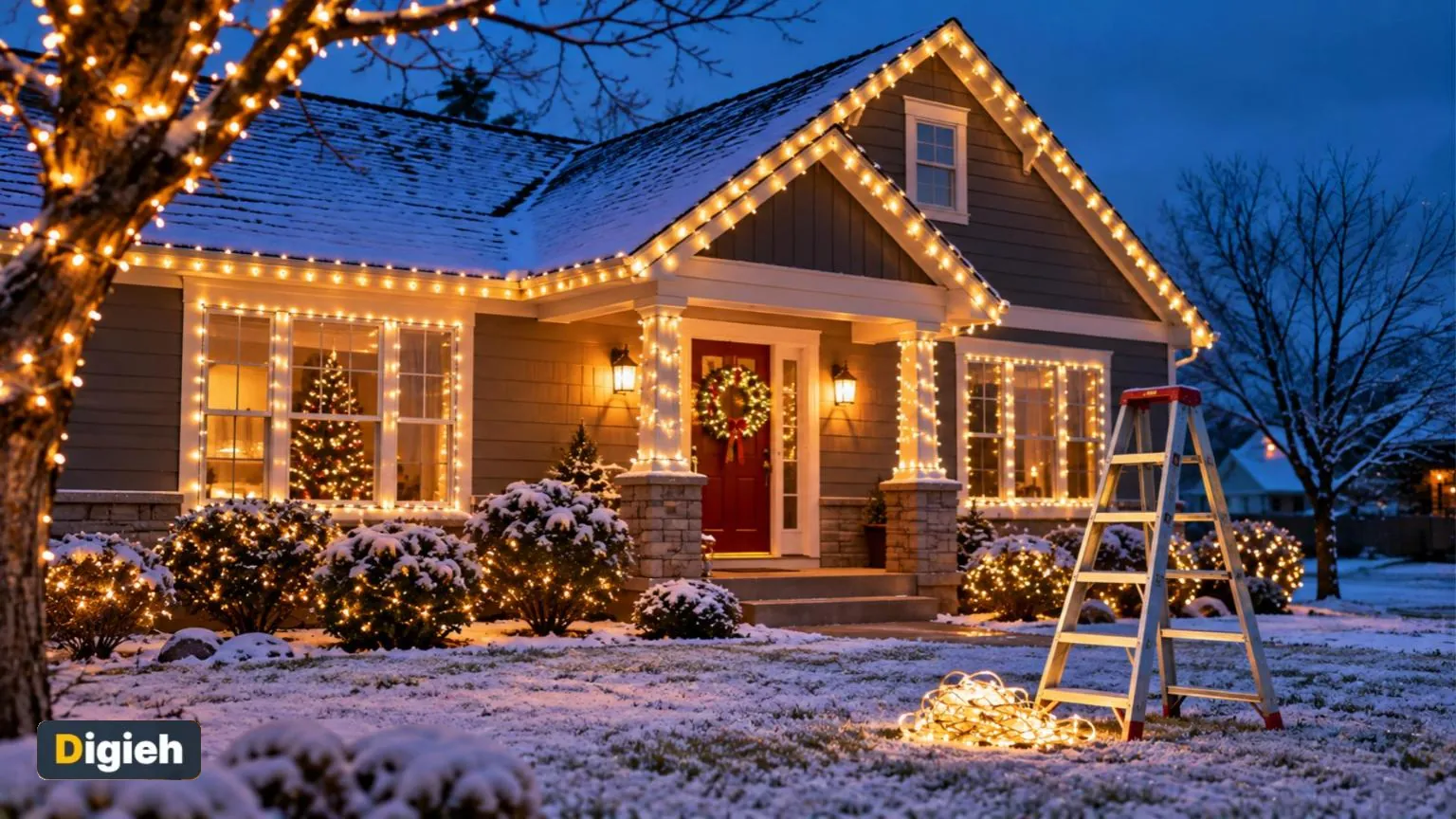
To hang Christmas lights safely, inspect every strand first and use a sturdy ladder with a helper. Then plug outdoor lights into protected outdoor outlets. Choose light-emitting diode (LED) strings when you can, since they run cooler and use far less power.
A little planning prevents falls, shocks and fires. It also gives you a brighter display with less frustration.
This guide walks you through planning, safe hanging steps and ways to keep your energy bill low.
Key Takeaways
- Inspect lights for frayed wires or cracked sockets before hanging.
- Do not connect more than three incandescent strands together.
- Use a helper and avoid overreaching on ladders.
- Turn lights off when you sleep or leave home.
- LED strings can cut lighting costs dramatically.
160Estimated decorating-related injuries per day during the holiday season, per federal safety data.
Why Safety Matters
Decorating injuries are more common than many people think. About 160 decorating-related injuries happen each day during the holiday season. That figure comes from the Consumer Product Safety Commission (CPSC), as Spectrum News reported in January 2026.
In the 2023 season, close to 15,000 people went to emergency rooms for decorating injuries. Almost half of those injuries came from falls.
Fire is another risk. The Electrical Safety Foundation International (ESFI) says decorations account for one in four holiday fires, in its holiday safety release.
What kind of Christmas lights do you use?
- All LED
- Mostly incandescent
- A mix of both
- Not sure
Plan Your Display First
Walk around your home in daylight and decide where the lights will go. Measure the roofline, windows and bushes so you buy the right lengths.
Find your outdoor outlets and note how far each one is from your display. That helps you plan cords and avoid overloading a single outlet.
Sketch a quick map on paper or your phone. It saves trips up and down the ladder later.
Decide on a color scheme too. Warm white feels classic, while multicolor strands feel playful and nostalgic.
Plan your timing as well. Hanging lights on a mild, dry weekend is safer than waiting for the first icy day.
Choose the Right Lights
Indoor Versus Outdoor
Check the package to make sure lights are rated for outdoor use before hanging them outside. Indoor lights are not built to handle rain and snow.
Look for a Testing Lab Mark
The safety foundation recommends only using lights approved by a nationally recognized testing laboratory. Look for the mark on the box or tag.
LED or Incandescent?
LED lights run cooler and use much less energy. The safety foundation notes that LEDs run cooler, which lowers fire risk on trees and around decorations.
Quick tip. Label each strand with masking tape when you take it down. Next year you will know exactly where it goes.
Popular Light Styles
Mini lights. Small and versatile, mini lights work well on bushes, railings and trees.
Large bulbs. Bigger retro-style bulbs create a bold, classic look along rooflines. They use more power than minis, especially in incandescent versions.
Net lights. These pre-spaced grids drape over shrubs in seconds. They are a big time saver for beginners.
Icicle lights. Dangling strands along gutters mimic falling icicles. Space the clips evenly for a neat look.
Projectors. Kiplinger notes that laser projections can light a large area from one plug, without ladder work. They make a quick option for busy families.
Inspect Before You Hang
Plug in each strand on the ground before you climb anywhere. It is much easier to find a dead section at eye level.
The safety foundation advises checking every decoration for cracked or frayed sockets and loose or bare wires. Throw away any strand with damaged insulation.
Replace burned-out bulbs with the correct type and wattage. A bulb that does not match can overheat.
Good to know. Unplug lights by pulling the plug, not the cord. Tugging cords can loosen wires over time.
Ladder Safety Comes First
Falls are the biggest decorating danger. A doctor quoted by Spectrum News said overreaching is the most common mistake people make.
Pick the right ladder. Use a ladder tall enough that you do not stand on the top steps.
Set it on firm, level ground. Avoid icy or soft spots, and clear snow first.
Have a helper. Someone should hold the ladder and pass up lights.
Keep three points of contact. Keep two hands and a foot, or two feet and a hand, on the ladder at all times.
Move the ladder often. Climb down and shift it instead of leaning out to reach.
Watch for power lines. Keep ladders and lights well away from overhead lines.
- Test every strand on the ground
- Use outdoor-rated lights outside
- Have a helper hold the ladder
- Use plastic clips, not nails
- Plug into GFCI outdoor outlets
- Set a timer to turn lights off
Step-by-Step Hanging Guide
Step 1. Start at the outlet
Begin near your power source so the plug end reaches the outlet without extra cords.
Step 2. Use plastic clips
Plastic light clips attach to gutters and shingles without damaging them. Avoid nails and staples, which can pierce wires.
Step 3. Work in sections
Hang one section at a time, then test it before moving on. This keeps problems small and easy to fix.
Step 4. Keep cords tidy
Run cords along edges and away from walkways. Do not pinch cords in doors or windows, the safety foundation warns.
Step 5. Plug in safely
Plug outdoor lights into outdoor outlets with a Ground Fault Circuit Interrupter (GFCI). These outlets cut power if they sense a problem, which helps prevent shocks.
What should you use to attach lights to gutters?
- Nails
- Plastic light clips
- Staples
Plastic clips hold lights without piercing wires.
Decorating Ideas by Area
Roofline
Outlining the roof gives your home a crisp, classic glow. Use gutter clips and keep the strand straight for a clean look.
Windows and Doors
Frame windows and doors with lights for a cozy welcome. Adhesive hooks work well on trim without damaging paint.
Trees and Bushes
Wrap tree trunks and lower branches for a dramatic effect. Net lights make bushes look full with little effort.
Walkways
Stake lights along paths to guide guests safely to your door. Keep cords off the walking surface to prevent tripping.
Do Not Overload Circuits
Too many lights on one outlet can overheat. The safety foundation advises against plugging too many decorations into a single outlet.
Do not connect more than three strands of incandescent lights together, the foundation says. LED strings often allow more, but check the package for the maker’s limit.
Use extension cords rated for outdoor use and for the power your lights need. Match the cord’s rating to the load.
Save Money With LEDs
LED lights cost a bit more upfront but save money every season. A 100-bulb LED mini string draws about 4 to 7 watts. An incandescent string draws 40 to 50 watts, Kiplinger reports in its November 2026 guide.
Kiplinger estimates that ten LED strings running six hours a night cost about $1.50 to $2.60 for the season. That assumes 17 cents per kilowatt-hour. The same display with incandescent bulbs costs about $15 to $18.
Use the calculator below to estimate your own display cost.
Christmas light cost calculator
Check the watts on your light package or tag.
More Ways to Save
Use a timer. Kiplinger suggests running lights four to six hours a night, from dusk to about 11 p.m.
Try smart plugs. Outdoor smart plugs let you control lights from your phone.
Add reflective decor. Metallic ornaments and shiny bows add sparkle without extra power.
How many incandescent strands can you safely connect together?
- Ten
- As many as fit
- No more than three
The safety foundation advises no more than three incandescent strands.
Free updates
Join the Digieh list
Be the first to know when our weekly brief launches.
No spam. Unsubscribe anytime. Read our Privacy Policy.
Buying Lights on a Budget
Holiday lights do not have to strain your budget. Buy a few quality strands each year instead of a full display at once.
After-holiday sales often offer big discounts on lights and clips. Stock up in late December for next season. Store them carefully so they last for years.
Check your utility company for rebates or recycling programs that swap old incandescent strands for LEDs. Our guide to holiday decorating on a budget shares more money-saving ideas.
Wondering when to start? See our tips on the best time to put up Christmas decorations.
Indoor Lights and Trees
Indoor lights need care too. Keep trees and lit decorations away from heat sources like fireplaces, candles and space heaters.
A real tree should stay well watered, since dry needles catch fire easily. Our real vs fake Christmas tree guide explains the trade-offs.
Turn off indoor and outdoor lights before you leave home or go to bed, the safety foundation advises. A timer makes this easy.
Using extra heat this season? Follow our space heater safety tips and keep decorations far from heaters.
Add to calendar
Kids and Pets Around Lights
Curious kids and pets love shiny lights, but cords and bulbs can be hazards. Keep strands out of reach of small hands and chewing puppies.
Tuck cords behind furniture and use cord covers along floors. Pets that chew cords can get shocked, so watch them closely during the first few days.
Choose shatterproof bulbs for low branches and porch railings. Glass bulbs break easily if a tail or toy knocks them.
Be a Good Neighbor
Bright displays are fun, but consider neighbors too. Aim spotlights and projectors at your own house, not into nearby windows.
Use a timer so lights switch off at a reasonable hour. That saves energy and keeps the street peaceful.
Some neighborhoods have rules about decorations. Check with your homeowners association before you plan a huge display.
Weather and Outdoor Displays
Snow, ice and wind can stress outdoor lights. Secure strands firmly so they do not blow loose and dangle near walkways.
After a storm, check for sagging or damaged strands before turning lights back on. Replace anything that looks frayed or wet inside.
Keep connections off the ground and away from puddles. Wrapping plug connections in outdoor-rated covers adds protection.
Fixing Common Light Problems
Half the strand is dark. One loose or burned-out bulb can break the circuit on older strands. Check each bulb in the dark section and push it firmly into its socket.
The whole strand will not light. Check the fuse in the plug, since many strands have small replaceable fuses. Also test the outlet with another device.
The outlet keeps shutting off. A protected outdoor outlet trips when it senses a problem, often from moisture. Dry the connections and reduce the number of strands on that outlet.
Lights flicker. Loose connections or worn sockets can cause flicker. If it continues, replace the strand.
Taking Lights Down Safely
Removal carries the same risks as hanging. The Consumer Product Safety Commission notes that decorating hazards also apply when taking decorations down.
Pick a dry, calm day and use the same ladder safety steps. Never yank strands off the roof, which can damage gutters and bulbs.
Wrap each strand around a piece of cardboard or a reel to prevent tangles. Our guide on how to store holiday decorations has more tips.
Try this today. Plug in each strand from last year on the floor. Toss any with frayed wires and make a shopping list for replacements.
Frequently Asked Questions
How many strands of Christmas lights can I connect?
The safety foundation says no more than three strands of incandescent lights. For LEDs, check the package limit.
Should I use nails to hang Christmas lights?
No. Use plastic clips, since nails and staples can damage wires.
Do LED Christmas lights save money?
Yes. Kiplinger estimates a ten-strand LED display costs a few dollars a season compared with about $15 to $18 for incandescent.
Is it safe to leave Christmas lights on overnight?
The safety foundation advises turning decorations off before bed or when you leave home.
What is the safest way to use a ladder for lights?
Use a helper, set the ladder on firm ground and avoid overreaching.
Conclusion
Hanging Christmas lights safely starts with good planning and careful ladder use. Inspect every strand, use plastic clips and plug outdoor lights into protected outlets.
Switch to LEDs and a timer to save money, and turn lights off at night. Your home will shine brightly all season without unnecessary risk.
Found this useful?
Editor’s Note
This guide is accurate as of November 8, 2026. Injury data comes from federal safety officials via Spectrum News. Safety tips come from an electrical safety group, and cost estimates come from Kiplinger.
Spot an error in this article? Please contact us at support@digieh.com or read our Corrections Policy.
Keep exploring
Your next read is waiting
 1Food & LifestyleEasy Chicken Pot Pie Recipe for Cozy Dinners9 min read
 2HealthWinter Asthma Triggers and Proven Ways to Cope10 min read
 3Finance & Markets529 Plan Basics: Essential 2027 Limits for Parents9 min read
 4SportsVital Sledding Safety Tips Every Parent Should Know10 min read
 5TechnologySpeed Up a Slow Computer With Proven Fixes10 min read
 6EntertainmentWhite Elephant Gift Ideas Everyone Will Fight Over10 min read