TRENDING
Cold Weather Car Battery Tips That Prevent Breakdowns

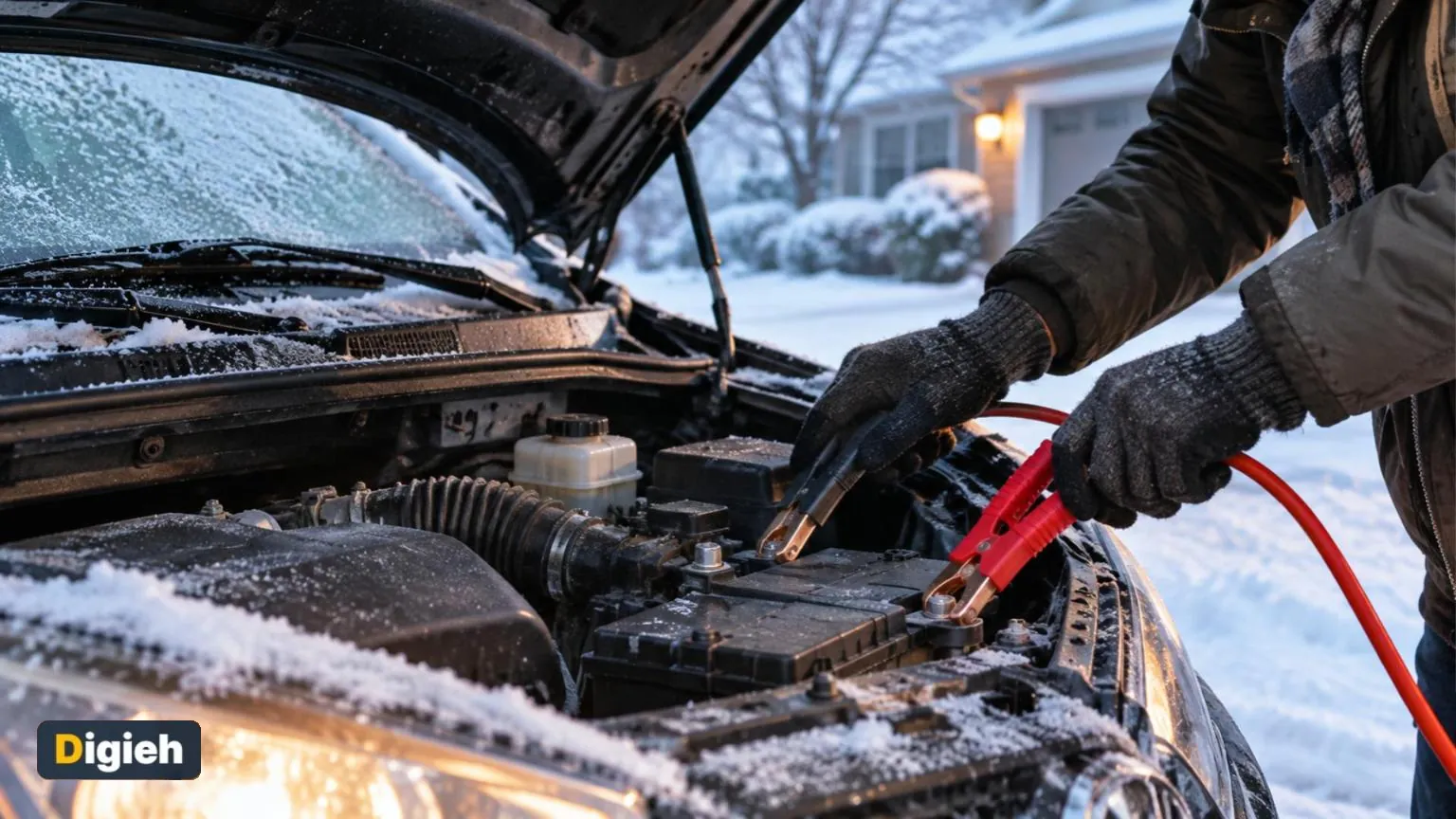
10 min read
Last updated November 8, 2026
Cold weather is hard on car batteries. Low temperatures slow the chemical reaction inside the battery. It delivers less power right when your engine needs more to start.
A battery can lose about 35 percent of its strength at 32 degrees and about 60 percent at 0 degrees. That is why an older battery that seemed fine in fall may fail on the first frigid morning.
This guide explains the warning signs, simple ways to protect your battery and how to jump-start a car safely.
Key Takeaways
- Cold weather cuts battery strength sharply.
- Most car batteries last about three to five years.
- Dim lights and slow cranking are early warning signs.
- Have your battery tested before winter.
- Keep jumper cables in your car all season.
60 percentHow much strength a car battery can lose at 0 degrees, according to AAA.
Why Batteries Struggle in Winter
A car battery makes electricity through a chemical reaction. Cold temperatures slow that reaction, so the battery cannot deliver as much power.
At the same time, a cold engine is harder to turn over. Thick oil and stiff parts mean the starter needs more current.
A battery loses about 35 percent of its strength at 32 degrees. At 0 degrees, the loss climbs to about 60 percent. That data appears on an American Automobile Association (AAA) Minneapolis club page.
Starting a car in the cold can also require up to twice the normal current.
The National Highway Traffic Safety Administration (NHTSA) agrees that cold temperatures reduce battery power, in its winter driving tips. Gas and diesel engines need extra battery power to start in winter.
Has your car battery ever died in cold weather?
- Yes, more than once
- Yes, once
- Never
- Not sure
Warning Signs of a Weak Battery
The AAA guide lists several clues that your battery may not survive winter.
Age. The battery is more than three years old.
Dim lights. Headlights look dim or yellowish, or dome lights flicker.
Weak horn. The horn sounds quieter than usual.
Electronics act up. The radio, heated seats or phone charger do not work normally.
Bad smell or damage. You notice a rotten egg smell, swelling, cracks or heavy corrosion.
Slow cranking. The engine turns over slowly or clicks when you turn the key.
If you notice any of these signs, get the battery tested soon. A dead battery on a cold morning is far more stressful than a quick check now.
Quick tip. Before you start the car on a cold morning, turn off the heater fan and headlights. The battery can then focus on starting the engine.
How Long Do Car Batteries Last?
Most car batteries last about three to five years, the AAA guide says. Growing electronic demands in newer vehicles may push that closer to three years.
Climate matters too. AAA Northeast reports an average life of three to five years in its region, in its winter battery guide. It also advises yearly checks as batteries age.
Write the installation date on a note in your glove box. That way, you always know when your battery is getting older.
Good to know. A battery can test fine in summer and still fail in winter. Cold exposes weaknesses heat can hide.
Test Before It Fails
The best time to test a battery is before winter starts. Many auto parts stores and repair shops offer quick tests.
NHTSA suggests having a mechanic check the battery, charging system and belts before winter. A full check can catch a weak alternator or loose belt that drains the battery.
AAA Northeast also advises testing after a stretch of harsh weather. Repeated cold snaps take a toll.
Do not judge a battery by looks alone. Corrosion by itself is not proof of a bad battery. An Interstate Batteries representative told AAA Northeast that only a tester can find problems.
- Check the battery age
- Get a battery test before winter
- Inspect terminals for corrosion
- Pack jumper cables or a jump starter
- Park in a garage when possible
- Turn off accessories before shutting down
Battery, Starter or Alternator?
Not every no-start problem is the battery. A few clues can help you and your mechanic narrow it down.
Clicking with no crank. A rapid clicking sound often points to a weak battery or poor connection.
Lights work but the engine will not turn. The starter motor may be the problem.
The car dies while driving. A failing alternator may not be charging the battery.
The battery keeps dying after a jump. Either the battery cannot hold a charge or something is draining it.
A shop can test all three parts quickly. That saves you from replacing a good battery by mistake.
Choosing a Replacement Battery
When it is time for a new battery, check your owner’s manual for the right size and type. A battery that does not fit correctly can shift and get damaged.
Look at the cold cranking amps (CCA) rating. This number shows how much power the battery can deliver in freezing weather.
AAA Northeast suggests a quality battery with the highest cold cranking amps rating for your car. It should meet or exceed the maker’s specifications. Higher numbers give you more starting power on frigid mornings.
Other Things to Compare
Warranty. Longer warranties often signal a sturdier battery.
Freshness. Batteries lose charge on the shelf. Ask for a recently made one.
Type. Many newer cars with start-stop systems need a special battery type. Follow your manual.
What does a cold cranking amps rating tell you?
- The battery’s weight
- How much power it delivers in freezing weather
- The battery’s price
Higher cold cranking amps mean more starting power in the cold.
Simple Ways to Protect Your Battery
Park in a garage. A garage keeps the battery a little warmer than parking outside overnight.
Limit short trips. Short drives may not give the alternator enough time to recharge the battery.
Turn off accessories before shutting down. Switch off lights, heat and the radio before you turn off the car. The next start then has more power available.
Unplug devices. Phone chargers and dash cams can slowly drain power when the car sits.
Keep terminals clean and tight. Loose or dirty connections make it harder for power to flow.
If you rarely drive in winter, ask a mechanic about a battery maintainer. It can keep the battery topped up while the car sits.
How to Jump-Start a Car Safely
Always read your owner’s manual first, since some cars have special jump-start points. If you are unsure, call roadside assistance.
Step 1. Park and prepare
Park the working car close but not touching the dead car. Turn off both engines and all accessories, and set the parking brakes.
Step 2. Connect the red clamps
Attach one red clamp to the positive terminal on the dead battery. Attach the other red clamp to the positive terminal on the good battery.
Step 3. Connect the black clamps
Attach one black clamp to the negative terminal on the good battery. Attach the last black clamp to an unpainted metal part of the dead car’s engine block, away from the battery.
Step 4. Start the cars
Start the working car and let it run for a few minutes. Then try starting the dead car.
Step 5. Remove the cables in reverse order
Once the dead car starts, remove the clamps in the reverse order you attached them. Keep the clamps from touching each other.
Drive the jump-started car for at least a short trip so the battery can recharge. If it will not hold a charge, have it tested or replaced.
Where should the last black clamp go when jump-starting?
- The good battery’s positive terminal
- The dead battery’s negative terminal
- Unpainted metal on the dead car’s engine
Grounding away from the battery lowers the risk of sparks near it.
Free updates
Join the Digieh list
Be the first to know when our weekly brief launches.
No spam. Unsubscribe anytime. Read our Privacy Policy.
Tips for Frigid Mornings
On very cold days, give your car every advantage before you turn the key. Small steps add up.
Turn off the headlights, heater fan, radio and seat heaters before starting. Let the battery focus on the engine.
Turn the key and crank for no more than a few seconds at a time. If the engine does not start, wait a minute before trying again so the battery can recover.
Once the engine runs, let it settle for a moment, then drive gently. Driving warms the engine and recharges the battery faster than long idling.
Portable Jump Starters
A portable jump starter lets you start your car without a second vehicle. These compact battery packs are handy on lonely roads or in parking garages.
Keep it charged and store it in the cabin rather than the trunk in extreme cold. Follow the maker’s directions closely.
Many models also charge phones, which helps if you get stuck. Cold drains phone and laptop batteries too, so see our tips to extend laptop battery life. Add one to your winter car emergency kit.
Winter Car Care Beyond the Battery
Your battery is only one part of winter readiness. NHTSA shares several other checks worth doing before snow arrives.
Tires. Tire pressure drops as temperatures fall. Inflate tires to the pressure listed on the driver’s door frame label, not the number on the tire.
Wipers and fluid. Fill the washer reservoir with winter fluid that has de-icer, and replace worn wiper blades.
Lights. Check headlights, brake lights, turn signals and flashers so other drivers can see you in snow.
Coolant. Make sure the coolant level and type are right, and look for leaks.
Fuel. Keep your gas tank close to full. That helps if you get stuck and need to stay warm.
Myths About Car Batteries
Myth One
Idling the car recharges a weak battery quickly. Idling helps a little, but a proper drive or a charger does much more.
Myth Two
A battery that starts the car is fine. A weak battery can start the car on mild days and fail on the first freezing morning.
Myth Three
All batteries are the same. Size, type and cold cranking amps vary, so match the battery to your vehicle.
Electric and Hybrid Vehicles
Cold weather affects electric vehicles too. NHTSA notes that electric and hybrid cars may have a shorter driving range in the cold.
The agency suggests plugging in electric vehicles overnight in winter. This helps keep the battery in its best temperature range.
Electric vehicles also have a small 12-volt battery that runs accessories. It can fail in the cold just like a regular car battery.
Add to calendar
Stay Safe If Your Car Will Not Start
A dead battery in freezing weather can be dangerous. Stay calm and think about safety first.
If you are stranded, stay with your car and call for help. Keep warm with blankets and extra layers from your emergency kit.
Never run the engine in a closed garage. Stuck in snow with the engine running? Clear the tailpipe and crack a window, as our guide to carbon monoxide poisoning signs explains.
Check storm alerts before long drives with our guide to winter storm watch vs warning.
Try this today. Pop the hood and look for the date sticker on your battery. If it is over three years old, schedule a test this week.
Frequently Asked Questions
Why does my car battery die in cold weather?
Cold slows the battery’s chemical reaction, so it delivers less power while the engine needs more to start.
How long does a car battery last?
Most car batteries last about three to five years.
What are signs of a weak car battery?
Slow cranking, dim lights, a weak horn and electronics that act up are common signs.
What does cold cranking amps mean?
Cold cranking amps show how much power a battery can deliver in freezing temperatures.
Can I jump-start a car myself?
Yes, with jumper cables and a working car. Follow your owner’s manual and connect cables in the right order.
Conclusion
Cold weather can drain even a healthy battery, and older batteries often fail first. Watch for warning signs, get your battery tested before winter and keep jumper cables handy.
A little preparation now can save you from a stressful, frozen morning later.
Found this useful?
Editor’s Note
This guide is accurate as of November 8, 2026. Battery data comes from AAA clubs and federal highway safety officials. Always follow your vehicle owner’s manual.
Spot an error in this article? Please contact us at support@digieh.com or read our Corrections Policy.
Keep exploring
Your next read is waiting
 1Food & LifestyleEasy Cornbread Recipe That Turns Out Perfectly Moist9 min read
 2Finance & MarketsWhen to Book Christmas Flights Before Prices Jump10 min read
 3NewsWhat Day Is Christmas 2026? The Simple Answer9 min read
 4HealthStrep Throat Signs and Smart Steps to Recover10 min read
 5EntertainmentWhite Elephant Gift Ideas Everyone Will Fight Over10 min read
 6TechnologyHidden iPhone Features That You Should Try Now9 min read