TRENDING
How to Insulate Windows for Winter on a Budget

8 min read
Last updated November 9, 2026
To insulate windows for winter, first find the drafts, then seal gaps with caulk and weatherstripping. Add clear plastic window film for extra protection and hang thermal curtains at night.
These low-cost fixes keep warm air in and cold air out. This guide covers each method, what it costs, how long it lasts and which ones work best for renters.
Key Takeaways
- Find drafts first with your hand, a candle-free smoke test or a strip of tissue.
- Use caulk for gaps that do not move and weatherstripping for parts that open.
- Plastic window film creates an insulating air pocket.
- Thermal curtains and cellular shades cut heat loss at night.
- Most fixes are cheap, quick and renter-friendly.
Inside this guide
- Why windows lose heat
- How to find drafts
- Methods compared
- Caulking gaps
- Weatherstripping
- Plastic window film
- Curtains and shades
- Renter-friendly tips
- Frequently asked questions
Why Windows Lose Heat
Windows lose heat in two main ways. Warm air leaks out through gaps around the frame, and heat passes straight through the glass.
Older single-pane windows lose the most. Even newer windows can develop leaks as caulk dries and weatherstripping wears out.
Sealing leaks pays off. ENERGY STAR estimates the savings from sealing air leaks and adding insulation. Homeowners save an average of 15 percent on heating and cooling.
15%Average savings on heating and cooling from sealing air leaks and adding insulation, according to ENERGY STAR.
How to Find Window Drafts
Before you buy supplies, find exactly where the cold air gets in. Check on a cold, windy day for the best results.
- Hold the back of your hand near the frame, sash and sill to feel for cold air.
- Hold a strip of tissue or a light ribbon near edges and watch for movement.
- Look for daylight around the frame when the room is dark.
- Close the window on a sheet of paper and pull it, since easy sliding means a loose seal.
Avoid using lit candles or incense to test for drafts. An open flame near curtains is a fire risk.
Which room in your home feels the most drafty?
- Living room
- Bedroom
- Kitchen
- Not sure
Tools and Supplies
- Caulk and a caulk gun
- Foam or V-strip weatherstripping
- A window insulation film kit
- A hair dryer for shrinking film
- Scissors, a putty knife and painter tape
- Thermal curtains or cellular shades
- A draft snake or rolled towel
Most of these supplies cost little at a hardware store. Buy one extra roll of tape, since it often runs out mid-project.
Window Insulation Methods Compared
| Method | Best for | Cost | Lasts |
|---|---|---|---|
| Caulk | Gaps around fixed frames and trim | Low | Several years |
| Weatherstripping | Moving parts of windows | Low | 1 to several years |
| Plastic window film | Single-pane or very drafty windows | Low | One winter |
| Thermal curtains | Heat loss through glass at night | Medium | Many years |
| Cellular shades | Everyday insulation with a clean look | Medium to high | Many years |
| Draft snakes | Gaps along the bottom sill | Very low | Many years |
Combining two or three methods gives the best results. For example, seal gaps with caulk, add film and close curtains at night.
How to Caulk Window Gaps
Caulk fills cracks and gaps in parts of the window that do not move. It works well around the outside trim and where the frame meets the wall.
- Choose a caulk labeled for windows and doors, indoor or outdoor as needed.
- Scrape away old, cracked caulk with a putty knife.
- Clean and dry the surface.
- Cut the tube tip at an angle and load it in a caulk gun.
- Run a steady bead along the gap, holding the gun at an angle.
- Smooth it with a damp finger or a caulk tool.
- Let it cure as the label directs.
Outdoor caulking works best on dry days above the temperature listed on the tube. In very cold weather, focus on indoor gaps and save outdoor work for a mild day.
Pro tip. Run painter tape along both sides of the gap before caulking. Pull it off while the caulk is wet for a clean, straight line.
How to Weatherstrip Windows
Weatherstripping seals the parts of a window that open and close. It comes in several types.
| Type | Where to use it |
|---|---|
| Self-stick foam tape | Window sashes and frames with small gaps |
| V-strip or tension seal | Sides of double-hung and sliding windows |
| Rubber or vinyl tubing | Larger, uneven gaps |
- Clean the surface with soap and water, then let it dry.
- Measure the length you need and cut the strip.
- Peel and press it firmly in place.
- Close the window to check that it still locks easily.
Replace worn weatherstripping when it cracks, flattens or peels. Fresh strips make an instant difference.
How to Install Plastic Window Film
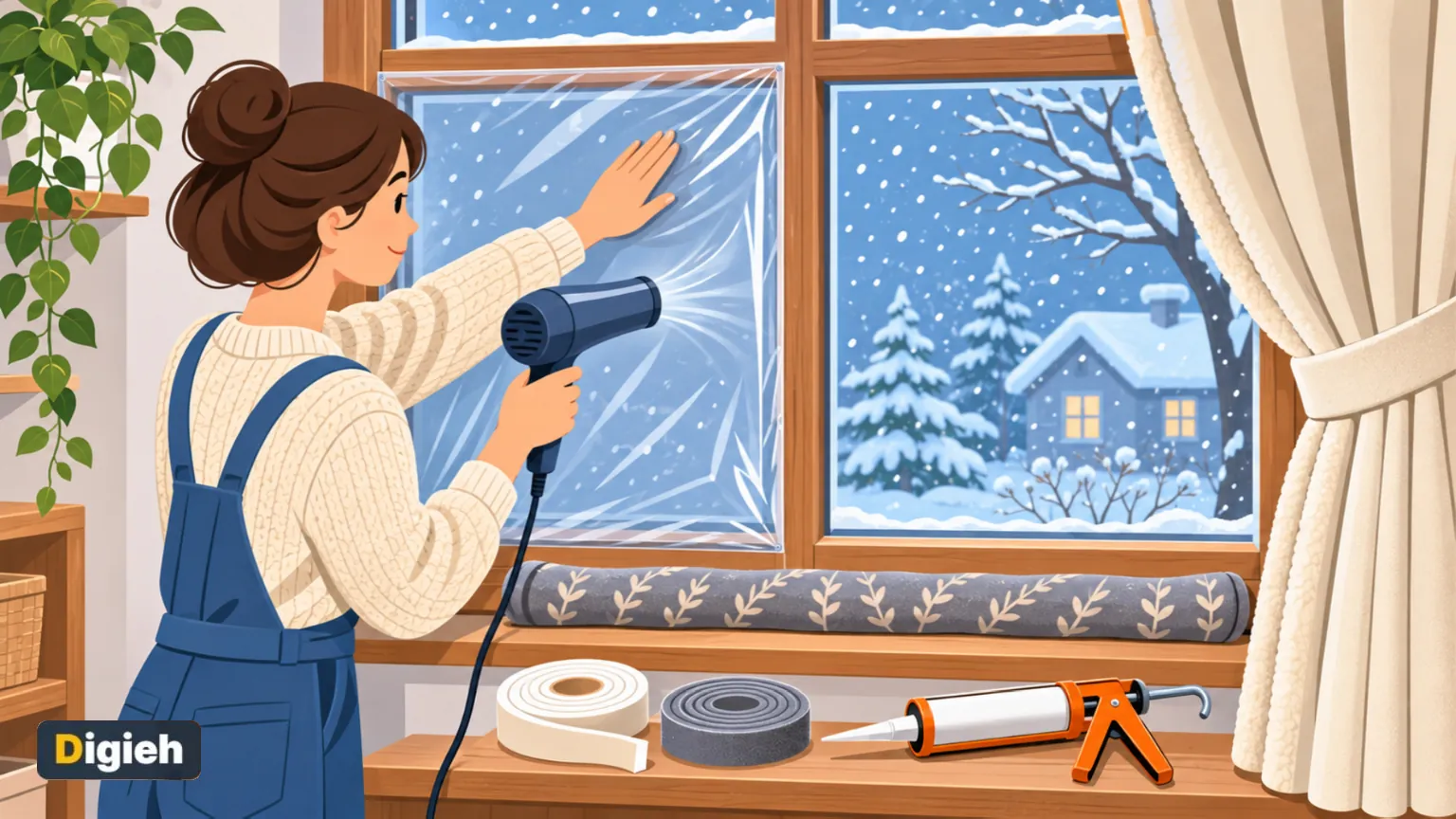
Window insulation kits use clear plastic film and double-sided tape. The film traps a layer of still air that acts like extra glass.
- Clean the window frame or trim and let it dry.
- Apply the double-sided tape around the frame.
- Cut the film a little larger than the window.
- Press the film onto the tape, starting at the top.
- Use a hair dryer to shrink the film until it is tight and clear.
- Trim the extra film with scissors.
Film works best on windows you do not need to open all winter. Remove it carefully in spring to avoid pulling off paint.
Thermal Curtains and Cellular Shades
Curtains and shades help with heat that passes through the glass. Close them at night and on cloudy days.
- Choose curtains with a thick, insulated lining.
- Hang them close to the wall and let them reach the floor.
- Use a cornice or wraparound rod to block air at the top and sides.
- Cellular shades trap air in honeycomb pockets for steady insulation.
Open curtains on sunny days to let free solar heat in. Close them as soon as the sun goes down.
Do Not Forget the Sill
Cold air often sneaks in along the bottom of the window. A draft snake or a rolled towel blocks it fast.
You can make a draft snake by filling a fabric tube with rice or dried beans. It is a fun, simple project for a winter afternoon.
Keep draft snakes away from heaters, and lift them out of the way before opening windows. Wash the fabric covers every now and then to remove dust.
Free updates
Join the Digieh list
Be the first to know when our weekly brief launches.
No spam. Unsubscribe anytime. Read our Privacy Policy.
Tips for Different Window Types
Double-hung windows
Check where the two sashes meet in the middle. A V-strip along the sides and a seal at the meeting rail stop most drafts.
Sliding windows
Clean the tracks, since dirt keeps the window from closing tightly. Add foam tape along the edge where the sash meets the frame.
Casement windows
These crank open like a door. Weatherstrip the frame where the sash presses closed, and tighten the latch.
Basement windows
These are often old and leaky. Plastic film and foam tape are easy fixes, but keep any egress window able to open for safety.
Check Your Doors Too
Doors leak heat just like windows. Fixing both gives you the biggest comfort boost.
- Add a door sweep to close the gap at the bottom.
- Replace worn weatherstripping around the frame.
- Use a draft snake on doors you rarely open.
Renter-Friendly Window Tips
Renters can still stop drafts without making permanent changes. Choose removable options and ask your landlord first if unsure.
- Use removable foam tape instead of caulk.
- Install plastic film kits that peel off cleanly.
- Hang thermal curtains on tension rods.
- Place draft snakes along sills and doors.
- Report broken seals or cracked glass to your landlord.
Cold, drafty windows can also stress indoor plants. See our tips on winter houseplant care.
Watch for Condensation
Sealing drafts can raise indoor humidity. Some condensation on cold glass is normal, but heavy, constant moisture can lead to mold.
- Wipe away water on windows each morning.
- Run bathroom and kitchen fans while showering and cooking.
- Keep humidifiers at moderate settings.
- Open curtains during the day to let glass warm up.
Learn how to balance moisture in our guide on how to use a humidifier safely.
When to Replace Windows
Sometimes fixes are not enough. Consider new windows if you see rotting frames, cracked glass or fog trapped between double panes.
Look for ENERGY STAR certified windows rated for your climate. Ask about local rebates, since many utilities offer them.
Pair With Other Winter Savings
Sealed windows work best alongside smart heating habits. See the best smart thermostat settings for winter and more ways to lower your heating bill.
A tight, warm home also lowers the risk of frozen pipes. Read what to do when pipes freeze, and get ready with our power outage preparedness guide.
Your Window Insulation Checklist
- Find drafts on a cold, windy day
- Caulk fixed gaps
- Weatherstrip moving parts
- Add plastic film to drafty windows
- Close thermal curtains at night
- Block the sill with a draft snake
Test Yourself
Which product seals parts of a window that open and close?
- Caulk
- Weatherstripping
- Paint
Weatherstripping flexes with moving parts, while caulk is for fixed gaps.
How does plastic window film help?
- It heats the glass
- It blocks all light
- It traps an insulating layer of air
The still air between film and glass slows heat loss.
Frequently Asked Questions
Does bubble wrap work on windows?
It can help a little on rarely used windows, but it blocks the view.
How much does it cost to insulate a window?
Often just a few dollars per window for tape, caulk or film.
Can I insulate windows from the outside?
Yes. Exterior caulking helps, ideally on a mild, dry day.
Is window film see-through?
Yes. Once shrunk tight, it is clear.
Conclusion
Insulating windows is one of the easiest ways to warm up a drafty home. Find the leaks, seal them with caulk and weatherstripping, add film and close thermal curtains at night.
These simple steps cost little and can make your home cozier all winter.
Found this useful?
Editor’s Note
This guide is accurate as of November 9, 2026. Savings figures come from ENERGY STAR.
Follow product labels for temperatures and curing times.
Spot an error in this article? Please contact us at support@digieh.com or read our Corrections Policy.
Keep exploring
Your next read is waiting
 1Food & LifestyleEasy Lasagna Recipe: Classic, Cheesy and Make-Ahead8 min read
 2FashionHow to Waterproof Boots for Winter, Step by Step8 min read
 3Finance & MarketsHow Certificates of Deposit Work: A Beginner Guide8 min read
 4MedicinesGeneric vs. Brand-Name Medicines: Are They the Same?8 min read
 5Travel & TourismREAL ID Explained: What You Need to Fly in 20268 min read
 6TechnologyBest Smart Thermostat Settings for Winter to Save Money8 min read