TRENDING
How to Do an Easy At-Home Facial in 8 Simple Steps
Learn how to do an easy at-home facial in 8 simple steps. Cleanse, exfoliate, mask and moisturize for glowing skin before holiday events, plus common mistakes.

8 min read
Last updated November 6, 2026
To do an easy at-home facial, start by cleansing your face with a gentle cleanser. Exfoliate lightly, then apply a hydrating mask for 10 to 15 minutes. Finish with a serum and a rich moisturizer to lock in moisture.
A home facial is a simple way to relax and refresh your skin before holiday events. It costs far less than a spa visit.
Patch test any new product on a small area first. Stop using it if you notice burning, redness or swelling.
Key Takeaways
- Start with clean hands and a clean face.
- Exfoliate gently, no more than once or twice a week.
- Hydrating masks help dry winter skin.
- Seal everything in with a good moisturizer.
- Patch test new products before using them.
On This Page
- What You Need
- How to Do an At-Home Facial Step by Step
- Choose the Right Mask
- Tips for Glowing Skin
- Common Mistakes to Avoid
- Are Facial Tools Worth It?
- Physical vs Chemical Exfoliants
- Patch Test New Products
- Give Yourself a Facial Massage
- Facials for Different Seasons
- Create a Spa Atmosphere
- Care for Your Lips and Eyes
- When to See a Dermatologist
- Build a Simple Weekly Skin Routine
What You Need
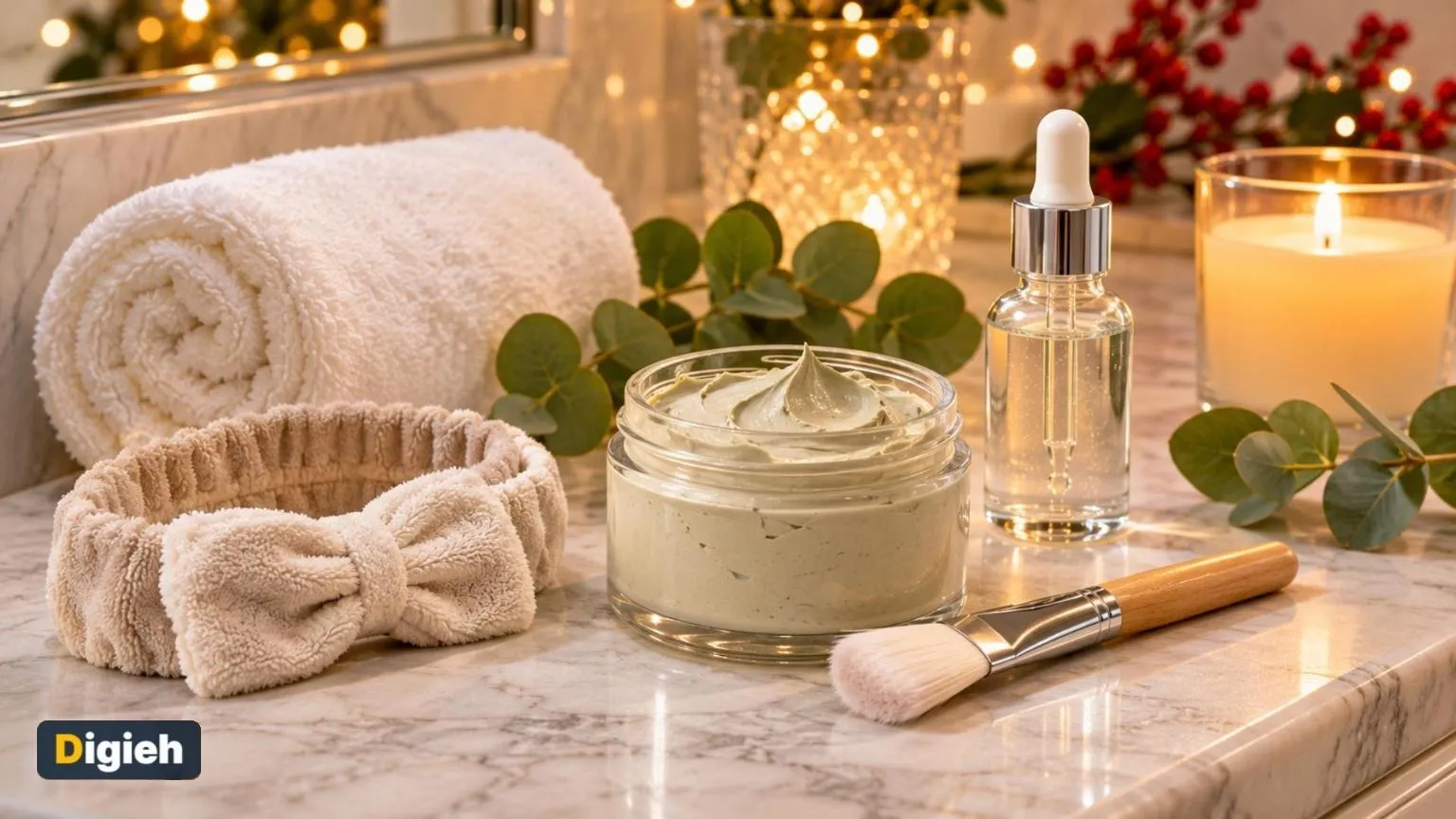
Gather a gentle cleanser, an exfoliant and a face mask. You also need a soft towel, a serum and a moisturizer.
A headband keeps hair off your face. Soft music and a candle make it feel like a spa.
30 minTime for a relaxing at-home facial, start to finish.
How to Do an At-Home Facial Step by Step
1. Cleanse
Wash your face with lukewarm water and a gentle cleanser. Pat dry with a clean towel.
2. Steam Gently
Drape a warm, damp towel over your face for a minute or two. It helps your skin feel soft.
3. Exfoliate
Use a gentle scrub or a mild chemical exfoliant. Skip this step if your skin feels irritated.
Quick tip. Chill a spoon in the fridge and press it gently under your eyes after your facial. It feels cool and refreshing.
4. Apply a Mask
Spread a thin, even layer of mask over your face. Avoid the eye area.
5. Relax
Leave the mask on for 10 to 15 minutes, or as the label says. Put your feet up and breathe deeply.
6. Rinse
Rinse with lukewarm water and pat your skin dry.
What is your favorite face mask type?
- Clay
- Sheet
- Cream
- Not sure
7. Add Serum
Press a few drops of hydrating serum into your skin. Look for ingredients like hyaluronic acid.
8. Moisturize
Finish with a rich moisturizer. Add sunscreen if you do your facial in the morning.
Use this timer helper to plan your facial.
Facial time planner
Good to know. This adds about 5 minutes to cleanse and 10 minutes to rinse, apply serum and moisturize.
Choose the Right Mask
The American Academy of Dermatology (AAD) explains whether facial masks really work.
| Skin type | Mask to try |
|---|---|
| Dry | Cream or hydrating gel mask |
| Oily | Clay mask |
| Combination | Clay on the T-zone, hydrating mask on cheeks |
| Sensitive | Fragrance-free calming mask |
| Dull | Gentle brightening mask |
- Gentle cleanser
- Mild exfoliant
- Face mask for your skin type
- Soft towel and headband
- Hydrating serum
- Rich moisturizer
Tips for Glowing Skin
Drink water and get good sleep before a big event. Rest shows on your skin.
Use a humidifier at night to ease dry winter air. Layer products from thinnest to thickest.
Common Mistakes to Avoid
Do not scrub too hard or exfoliate every day. It can damage your skin barrier.
The academy explains how to exfoliate safely at home.
Avoid hot water, which strips natural oils. Never leave a clay mask on until it cracks and hurts.
The academy shares more skin care basics.
Add to calendar
Are Facial Tools Worth It?
Stores sell many tools for at-home facials. Some are helpful, while others are mostly for fun.
| Tool | What It Does | Notes |
|---|---|---|
| Facial roller | Feels cool and relaxing | Benefits are mostly about comfort |
| Soft cleansing brush | Helps lift dirt and makeup | Can irritate if used too often |
| Gua sha stone | Used for gentle massage | Use light pressure only |
| Facial steamer | Adds warm moisture | A warm towel works almost as well |
You do not need any tools for a good facial. Clean hands and gentle products are enough.
Clean every tool after each use. Dirty tools can spread bacteria to your skin and cause breakouts.
Physical vs Chemical Exfoliants
Exfoliants remove dead skin cells. There are two main types.
Physical Exfoliants
These use tiny grains or a soft brush to buff skin. Choose very fine, smooth grains and use light pressure.
Chemical Exfoliants
These use gentle acids to loosen dead skin. Common types include lactic acid and salicylic acid.
Start slowly with any exfoliant. Use it once a week, then see how your skin responds.
Never use a physical and chemical exfoliant on the same day. Doing both can irritate your skin.
Patch Test New Products
New products can cause reactions in some people. A patch test helps you check first.
Apply a small amount to the inside of your arm or behind your ear. Wait a day or two.
If you see redness, itching or swelling, do not use the product on your face. Choose a gentler option instead.
Give Yourself a Facial Massage
A gentle facial massage feels relaxing. It can also help products spread evenly.
- Warm a few drops of oil or moisturizer between your hands.
- Use your fingertips to make small upward circles on your cheeks.
- Glide your fingers from the center of your forehead outward.
- Gently press along your jawline toward your ears.
- Finish by lightly tapping around your eyes with your ring finger.
Use light pressure and never pull or tug your skin. A few minutes is plenty.
Facials for Different Seasons
Your skin needs change through the year. Adjust your facial routine with the weather.
In winter, focus on hydration. Choose cream masks and add a rich moisturizer.
In summer, choose lighter products. Clay masks can help control oil, and sunscreen matters even more.
Free updates
Join the Digieh list
Be the first to know when our weekly brief launches.
No spam. Unsubscribe anytime. Read our Privacy Policy.
Create a Spa Atmosphere
A relaxing setting makes an at-home facial feel special. Small touches add a lot.
- Dim the lights or use battery candles.
- Play calm music or nature sounds.
- Warm a towel in the dryer for a cozy wrap.
- Sip a cup of herbal tea.
- Put your phone on silent.
Invite a friend or partner for a spa night. It can be a fun way to relax together.
Use separate towels and tools for each person. Sharing can spread bacteria between skin.
Care for Your Lips and Eyes
The skin on your lips and around your eyes is thin and delicate. Give it gentle care during your facial.
Apply a thick lip balm while your mask sets. Gently remove dry flakes with a soft, damp cloth.
Use a light eye cream and pat it on with your ring finger. Avoid rubbing the delicate skin.
The academy shares tips for healing dry, chapped lips.
When to See a Dermatologist
At-home facials help with everyday skin care. Some problems need a doctor.
See a dermatologist if you have painful acne, a rash that will not go away or a mole that changes. They can recommend treatments that fit your skin.
Build a Simple Weekly Skin Routine
A weekly facial works best alongside a simple daily routine. Consistency matters more than fancy products.
- Morning. Gentle cleanser, moisturizer and sunscreen.
- Evening. Remove makeup, cleanse and moisturize.
- Once a week. Exfoliate gently and use a mask.
Keep your routine short and easy to follow. Add new products one at a time so you can tell what works for your skin.
Make Your At-Home Facial a Relaxing Ritual
An at-home facial can be a calming break from a busy week. Treat it as time just for you.
Choose a quiet time when you will not be interrupted. Play soft music and put your phone on silent.
Use a clean towel and wash your hands before you start. Clean tools help protect your skin from germs.
Facial Habits for Healthy Skin
Good skin is built through daily habits, not just weekly treatments. Simple steps make a real difference.
- Wash your face gently in the morning and at night.
- Use a moisturizer that suits your skin type.
- Wear sunscreen every day, even when it is cloudy.
- Change your pillowcase often.
- Avoid touching your face throughout the day.
Be patient when trying new products. Skin often needs a few weeks to show results.
Choose Products for Your Skin Type
Oily skin often does well with light, gel-based products. Dry skin usually prefers richer creams that lock in moisture.
Sensitive skin needs gentle, fragrance-free products. If you are unsure of your skin type, a dermatologist can help.
Try one new product at a time so you can tell what works.
Try this today. Wash your face, apply a hydrating mask for 10 minutes, then moisturize. Notice how your skin feels tomorrow.
Test Yourself
How often should you exfoliate?
- Every day
- Twice a day
- Once or twice a week
Over-exfoliating can damage your skin barrier.
Which mask suits oily skin?
- Clay mask
- Heavy cream mask
- Oil mask
Clay helps absorb extra oil.
Frequently Asked Questions
How often should I do an at-home facial?
Once a week is enough for most people.
Can I use kitchen ingredients?
Some people use honey or oats, but patch test first. Avoid lemon and baking soda on skin.
What mask is best for dry skin?
Try a cream or hydrating gel mask.
Should I steam my face?
A warm towel is gentle. Skip strong steam if you have sensitive skin.
Do I need special tools for an at-home facial?
No. Clean hands and gentle products are enough. Tools are optional.
Should I use physical or chemical exfoliants?
Either can work. Start slowly and never use both on the same day.
Why should I patch test new products?
A patch test shows whether a product irritates your skin before you use it on your face.
Can I do a facial in winter?
Yes. Focus on hydrating masks and rich moisturizers in cold weather.
Wrapping Up
Set aside 30 minutes this weekend for a home facial. Your skin will look fresh for the holidays.
Complete your look with our holiday makeup ideas. Care for your hands with our winter nail care tips.
Found this useful?
Editor’s Note
This guide is accurate as of November 6, 2026. It is general information. See a dermatologist for ongoing skin problems.
Spot an error in this article? Please contact us at support@digieh.com or read our Corrections Policy.
Keep exploring
Your next read is waiting
 1HealthFungal Nail Infection: Signs, Treatment and Healing Time7 min read
 2Pets & AnimalsKennel Cough in Dogs: Signs, Treatment and Recovery7 min read
 3Home & KitchenFridge Without Power: How Long Food Stays Safe7 min read
 4Beauty & Personal CareDandruff vs Dry Scalp: Signs, Causes and Treatment7 min read
 5MedicinesIs Sugar an Electrolyte? The Simple Science Answer7 min read
 6HealthIngrown Toenail: Home Care, Prevention and Warning Signs7 min read