TRENDING
How Long Do Thanksgiving Leftovers Last? Safety Guide

8 min read
Last updated November 10, 2026
Thanksgiving leftovers last 3 to 4 days in the refrigerator, according to the USDA. Chill them within 2 hours of cooking. Freeze anything you will not eat by day four.
That simple rule covers turkey, stuffing, mashed potatoes, gravy and most side dishes. Pumpkin and pecan pie follow the same fridge limit.
This guide gives you a dish by dish chart and safe cooling and reheating steps. It also lists the signs that mean you should call a doctor.
Key Takeaways
- Most cooked leftovers keep 3 to 4 days in a fridge set at 40°F or colder.
- Get food into the fridge within 2 hours, or within 1 hour above 90°F.
- Reheat leftovers until they reach 165°F on a food thermometer.
- Frozen leftovers stay safe, but taste best within a few months.
- Smell and looks cannot tell you if food is safe, so go by the calendar.
Jump to a section
- How long each dish lasts
- The 2-hour rule
- How to cool and store leftovers
- Freezing Thanksgiving leftovers
- How to reheat safely
- A simple leftover plan
- Common leftover myths
- When to get help
- Frequently asked questions
Health note. This article shares general food safety information, not medical advice. If you feel very sick after eating, contact a doctor.
How Long Each Thanksgiving Dish Lasts
The USDA says leftovers keep 3 to 4 days in the refrigerator. That clock starts on the day you cook, not the day you open the container.
The federal cold food storage chart gives freezer times for several holiday foods. Here is how the main dishes compare.
| Dish | Refrigerator | Freezer for best quality |
|---|---|---|
| Cooked turkey | 3 to 4 days | 2 to 6 months |
| Stuffing, cooked separately | 3 to 4 days | 3 to 4 months |
| Gravy | 3 to 4 days | 3 to 4 months |
| Mashed potatoes and side dishes | 3 to 4 days | 3 to 4 months |
| Egg casseroles | 3 to 4 days | 2 to 3 months |
| Pumpkin or pecan pie | 3 to 4 days | 1 to 2 months |
If you cooked on Thursday, plan to finish or freeze leftovers by Monday. Write the date on each container so nobody has to guess.
3 to 4 daysHow long cooked leftovers keep in the refrigerator, per the USDA Food Safety and Inspection Service.
The 2-Hour Rule Everyone Forgets
Thanksgiving dinner often sits on the table for hours while people talk, watch football and go back for seconds. That is when most leftover trouble begins.
Germs grow fastest between 40°F and 140°F. FoodSafety.gov calls this range the temperature danger zone.
Perishable food should not sit out for more than 2 hours. If the room or car is above 90°F, the limit drops to 1 hour.
Food left out longer should go in the trash, even if it looks perfect. Reheating later does not undo every risk, because some germs leave toxins that heat cannot destroy.
Quick tip. Set a phone timer for 90 minutes when dinner is served. When it rings, start packing food away.
How long do your Thanksgiving leftovers usually last at home?
- Gone in two days
- About four days
- Almost a week
- Not sure
How to Cool and Store Leftovers the Right Way
A big pot of hot food cools slowly, even in a cold fridge. The center can stay warm for hours.
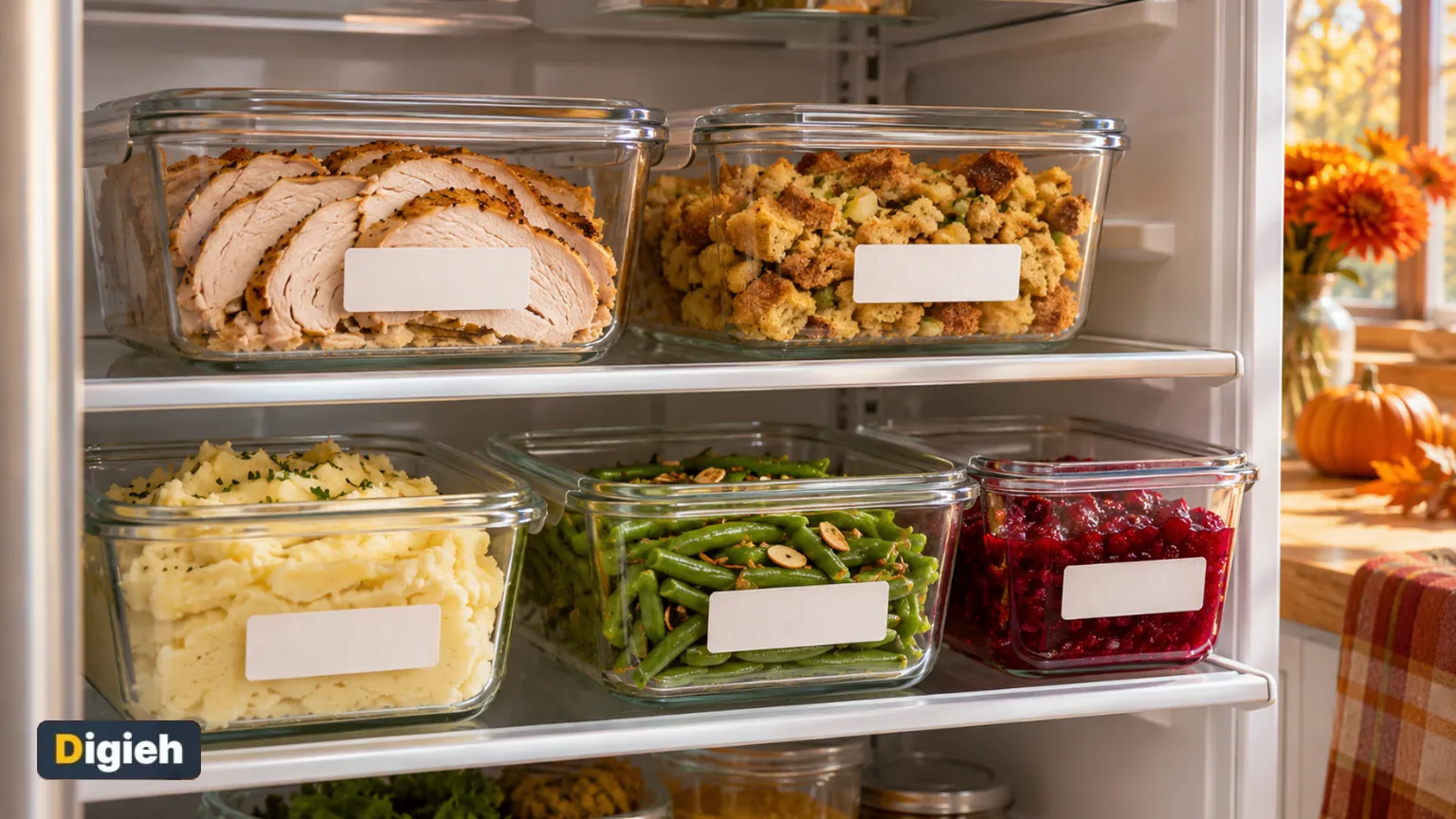
The USDA advises splitting large amounts into shallow containers so food chills quickly.
- Carve all meat off the turkey bone before storing it. Our guide on how to carve a turkey shows the easy way.
- Store stuffing apart from the turkey, never inside the bird.
- Spread food in shallow containers about two inches deep or less.
- Leave a little space between containers so cold air can move.
- Label each lid with the dish name and the date you cooked it.
- Keep the fridge at 40°F or colder and the freezer at 0°F.
You can put warm food straight into the fridge. You do not need to wait for it to cool on the counter first.
Make room before the meal. A quick tidy, like the steps in our fridge deep cleaning guide, frees shelves for leftovers.
Freezing Thanksgiving Leftovers
Freezing stops the 4-day clock. The USDA notes that frozen food stays safe indefinitely, though quality slowly fades.
Freeze leftovers as soon as you know you will not eat them in time. Do not wait until day four.
- Pack turkey in meal-sized portions, with a little gravy or broth to keep it moist.
- Use freezer bags and press out the air to prevent freezer burn.
- Freeze gravy in small containers or ice cube trays for quick use.
- Mashed potatoes freeze best when they contain butter or cream.
- Skip freezing salads with raw greens, since they turn soggy.
To thaw, move leftovers to the fridge the night before. Thawing in cold water or the microwave works too, but cook the food right away.
Good to know. Food thawed in the fridge can be refrozen safely. Food thawed in cold water or the microwave should be cooked before freezing again.
How to Reheat Leftovers Safely
The USDA says to reheat leftovers until they reach 165°F on a food thermometer. Gravy and sauces should come to a rolling boil.
| Method | Best for | Tip |
|---|---|---|
| Oven at 325°F | Turkey, stuffing, casseroles | Cover with foil and add a splash of broth |
| Stovetop | Gravy, soups, mashed potatoes | Stir often and bring sauces to a boil |
| Microwave | Single plates | Cover, stir halfway and let it stand |
| Air fryer | Stuffing and roasted vegetables | Use short bursts to avoid drying out |
Microwaves heat unevenly, so cold spots can hide in the middle. Check the thickest part of the food with a thermometer.
Avoid slow cookers for reheating. They warm food too slowly and keep it in the danger zone for too long.
A Simple Four-Day Leftover Plan
A plan keeps good food from going to waste and keeps your family safe. Here is an easy schedule after a Thursday dinner.
| Day | What to eat | What to do |
|---|---|---|
| Friday | Classic leftover plates | Portion and freeze extra turkey |
| Saturday | Turkey sandwiches and soup | Make broth from the carcass |
| Sunday | Casseroles or pot pie | Freeze any extra soup |
| Monday | Last fridge leftovers | Toss or freeze everything left |
Need ideas? Our Thanksgiving leftover recipes turn turkey, stuffing and potatoes into fresh new meals.
Add to calendar
Free updates
Join the Digieh list
Be the first to know when our weekly brief launches.
No spam. Unsubscribe anytime. Read our Privacy Policy.
Taking Leftovers Home Safely
Many hosts send guests home with plates of food. That is a kind gesture, but the drive home adds time outside the fridge.
The 2-hour limit still applies during the trip. A long drive in a warm car can use up that time fast.
- Pack to-go plates right after dinner, not at the end of the night.
- Use a cooler with ice packs for drives longer than an hour.
- Keep food in the cabin, not a hot trunk.
- Refrigerate everything as soon as you get home.
- Count the 4 days from the day the food was cooked, not the day you got it.
If you are the host, add a note with the cooking date to each plate. Your guests will know exactly when to finish or freeze it.
Smart Ways to Waste Less
Cooking a smaller turkey is the easiest way to avoid a mountain of leftovers. A good rule is to plan portions before you shop.
Share extra food with neighbors on the day itself, while it is still fresh. Turn bones and vegetable scraps into broth, which freezes well for winter soups.
Common Leftover Myths
Families pass down many kitchen habits that nobody ever checks. These myths cause the most trouble.
| Myth | Fact |
|---|---|
| If it smells fine, it is safe | Germs that cause illness often have no smell or taste |
| Hot food will ruin the fridge | Warm food can go straight into the fridge |
| Reheating kills everything | Some toxins survive heat |
| Leftovers last a week | Most last 3 to 4 days in the fridge |
| Freezing kills germs | Freezing pauses germs, it does not kill them |
When you are unsure, follow the simple saying used by food safety experts. When in doubt, throw it out.
When to Get Help
Most food poisoning is mild and passes in a day or two. Some cases need a doctor.
The CDC lists the common symptoms of food poisoning as diarrhea, stomach cramps, nausea, vomiting and fever. Symptoms can start within hours or take several days.
See a doctor if you notice any of these severe signs.
- Bloody diarrhea
- Diarrhea that lasts more than 3 days
- A fever above 102°F
- Vomiting so often you cannot keep liquids down
- Signs of dehydration, such as little urine, a dry mouth or dizziness when standing
Pregnant people should call a doctor for a fever with flu-like symptoms. Young children, older adults and people with weak immune systems should also get checked sooner.
Sip water often if you have diarrhea or vomiting. Losing fluids is the biggest risk for most people.
Your Leftover Safety Checklist
- Pack food away within 2 hours
- Use shallow containers
- Label every container with the date
- Keep the fridge at 40°F or colder
- Eat or freeze leftovers within 4 days
- Reheat to 165°F
- Throw out anything you are unsure about
Try this today. Put a cheap fridge thermometer on your shopping list. It costs little and shows whether your fridge is truly cold enough.
Test Yourself
How long do cooked Thanksgiving leftovers keep in the refrigerator?
- 1 to 2 days
- 3 to 4 days
- 7 to 10 days
The USDA says cooked leftovers keep 3 to 4 days in the fridge. Freeze them if you need more time.
What temperature should reheated leftovers reach?
- 120°F
- 140°F
- 165°F
Reheat leftovers to 165°F, measured with a food thermometer in the thickest part.
Frequently Asked Questions
Is turkey still good after 5 days?
The USDA advises eating cooked turkey within 3 to 4 days. After that, throw it out or freeze it earlier next time.
Can I eat leftovers that sat out overnight?
No. Perishable food left out for more than 2 hours should be thrown away, even if you reheat it.
How long does pumpkin pie last in the fridge?
Baked pumpkin pie lasts 3 to 4 days in the fridge and 1 to 2 months in the freezer.
Can I reheat leftovers more than once?
It is safest to reheat only the amount you will eat. Each round of cooling and reheating hurts quality.
Conclusion
Thanksgiving leftovers stay safe for 3 to 4 days when you chill them fast and keep the fridge cold. Freeze what you cannot finish and reheat everything to 165°F.
Before the big day, clear fridge space and stock shallow containers. Then try our leftover recipes to enjoy every last bite.
Found this useful?
Editor’s Note
This guide is accurate as of November 10, 2026. Storage times come from the USDA and FoodSafety.gov, and symptom guidance comes from the CDC.
This is general information, not medical advice. Talk to a health professional about your own situation.
Spot an error in this article? Please contact us at support@digieh.com or read our Corrections Policy.
Keep exploring
Your next read is waiting
 1MedicinesMedicines and Alcohol: Which Common Drugs Never Mix9 min read
 2Fruits & VegetablesClementine vs Mandarin vs Tangerine: What Is Different?9 min read
 3Science & DiscoveriesQuadrantid Meteor Shower 2027: Best Time to Watch9 min read
 4Finance & MarketsAnthropic IPO Explained: Date, Ticker and Key Numbers5 min read
 5FashionHow to Iron a Shirt Quickly and Perfectly9 min read
 6Travel & TourismHow to Pack a Carry-On for a Week9 min read