TRENDING
Holiday Road Trip Checklist: Smart Tips for Families

11 min read
Last updated November 8, 2026
Millions of families hit the road each holiday season. Long drives, winter weather and busy highways can turn a happy trip into a stressful one.
A little planning makes a big difference. A simple checklist helps you leave on time, stay safe and arrive in a good mood.
This guide walks you through every stage of the trip. It covers car prep, packing, route planning, kids, pets and what to do if you get stuck.
Key Takeaways
- Check your car a week before you leave, not the night before.
- Pack a winter emergency kit and keep it in the trunk.
- Share your route and arrival time with someone at home.
- Plan breaks every two hours to stay alert.
- Keep your gas tank at least half full in cold weather.
Half fullKeep your gas tank at least this full in winter, since a full tank helps prevent frozen fuel lines, according to Prince George’s County.
One Week Before You Leave
Starting early gives you time to fix problems. A worn tire or weak battery is much easier to handle at home than on the highway.
Get Your Car Checked
Book a quick inspection with your mechanic or check the basics yourself. Look at tire tread, tire pressure, brakes, wipers and lights.
Cold weather drains batteries faster. Our guide on cold weather car battery tips explains warning signs and simple fixes.
Top off fluids, including oil, coolant and windshield washer fluid. Choose a washer fluid rated for freezing temperatures.
Check the Weather Pattern
Look at long-range forecasts for your route. Snow in the mountains or ice in the plains may change your plans.
Our guide to winter storm watch versus warning explains what each alert means. A warning is a good reason to delay your trip.
Confirm Your Plans
Call the people you are visiting to confirm dates and arrival times. Ask about parking, especially if you are staying in a busy neighborhood.
If you need a hotel along the way, book it early. Holiday rooms fill up fast on popular routes.
How far are you driving for the holidays this year?
- Under two hours
- Two to six hours
- More than six hours
- Not sure
Build a Winter Emergency Kit
Every winter road trip needs an emergency kit. It can turn a scary breakdown into a manageable delay.
The Prince George’s County health department recommends jumper cables, flares, an ice scraper, water, snacks and a blanket. It also suggests a flashlight, extra gloves and a small shovel.
The Geico vehicle safety kit page adds a first aid kit, a tow rope and a basic tool kit. It suggests sand or cat litter to help tires grip on ice.
Extra Items for Snowy Routes
The Les Schwab winter safety kit guide suggests tire chains if your route crosses mountain passes. It also recommends reflective gear, a headlamp and waterproof gloves.
Pack a small tarp or piece of cardboard to kneel on. It keeps you dry if you need to install chains on wet pavement.
Our full guide to building a winter car emergency kit covers every item in detail.
- Jumper cables
- Ice scraper and snow brush
- Blanket and extra gloves
- Water and snacks
- Flashlight with batteries
- First aid kit
- Small shovel and sand
- Phone charger
Packing the Car Smart
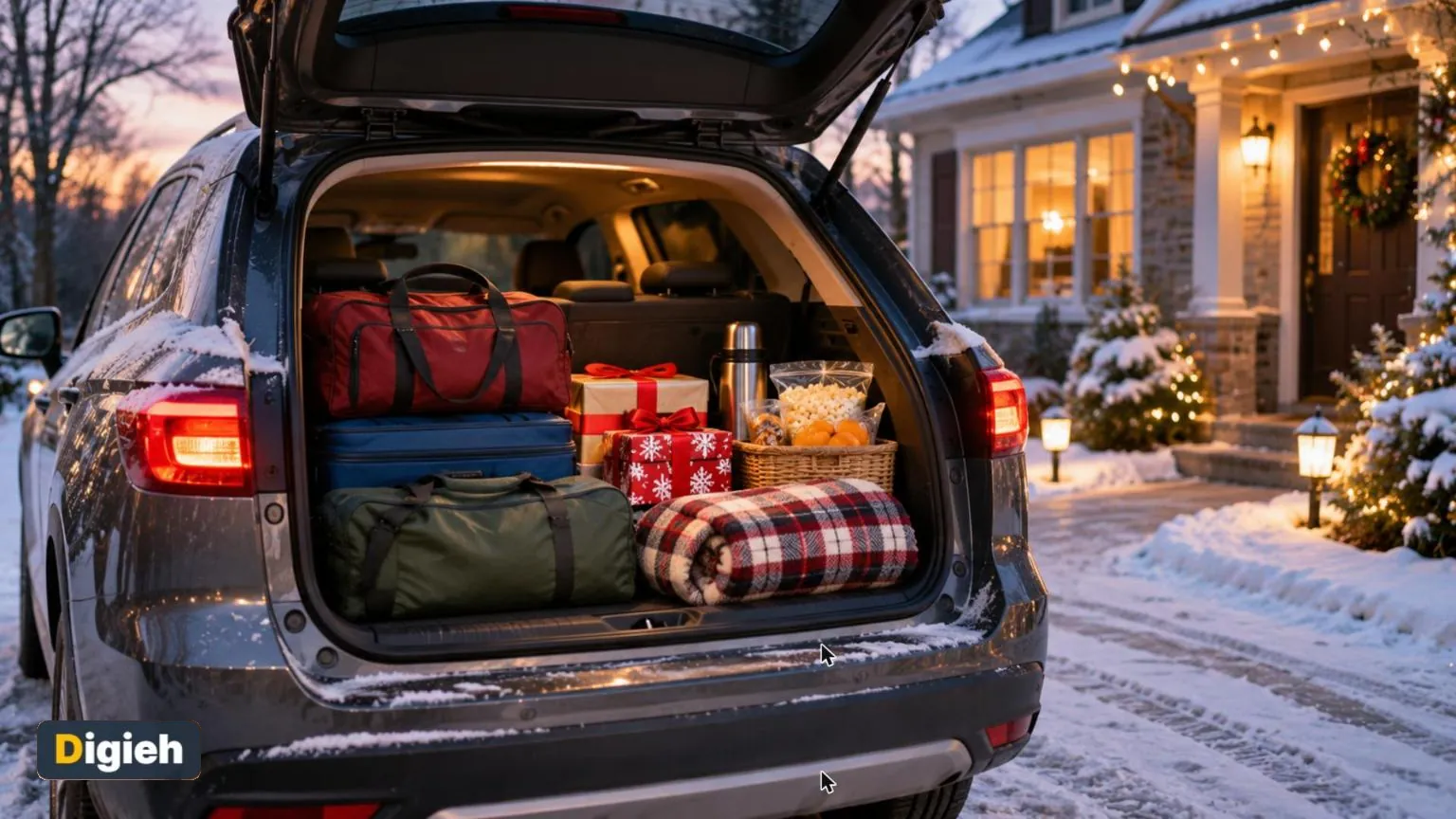
A well-packed car is safer and more comfortable. Heavy items belong low and toward the front of the trunk.
Keep the rear window and side mirrors clear. Stacking bags too high blocks your view of traffic behind you.
Use soft bags where you can, since they squeeze into tight spaces. Hard suitcases work best on the bottom layer.
Packing Gifts
Wrapped gifts can get crushed or damaged on a long drive. Pack them in a sturdy bin or box with soft items around them.
Some families ship gifts ahead or wrap them on arrival. This frees up space and keeps paper from tearing.
Keep valuable gifts out of sight when you stop. Cover them with a blanket or keep them in a locked trunk.
The Front Seat Bag
Keep a small bag within reach of the front seat. Fill it with phone chargers, tissues, hand wipes, sunglasses and medications.
Add a printed map or written directions too. Phone signals can drop in rural areas.
Quick tip. Take a photo of how your trunk is packed before you leave. Repacking after a stop becomes much faster.
Plan Your Route
Map your route before the day you leave. Look for road work, toll roads and areas with heavy holiday traffic.
Try leaving early in the morning or later in the evening. Avoiding peak hours can save a lot of time.
Our guide to the busiest Thanksgiving travel days explains when traffic tends to peak. Similar patterns often apply near Christmas.
Share Your Plans
The Prince George’s County guide urges drivers to share their route and expected arrival time. That way someone knows where to look if you are late.
Send a quick text when you stop for the night or reach your destination. It gives loved ones peace of mind.
Plan Your Stops
Schedule a break every two hours or about every hundred miles. Short stops help you stay alert and give everyone a chance to stretch.
Look up gas stations and rest areas along remote stretches. Some rural roads have long gaps between services.
Fuel and Driving Tips
Keep your gas tank at least half full in winter. The Prince George’s County guide notes that a full tank helps keep fuel lines from freezing.
A fuller tank also gives you a safety margin. If traffic stops for hours, you can run the engine for warmth.
Slow down on snow and ice. Leave extra space between your car and the vehicle ahead.
Staying Alert
Drowsy driving is a real danger on long trips. Switch drivers often if you can.
Pull over if you feel sleepy. Our guide on how to take a power nap explains how a short rest can restore focus.
Avoid heavy meals before driving. Light snacks and water keep energy steady.
Good to know. If snow blocks your exhaust pipe while the engine runs, carbon monoxide can build up inside the car. Clear the pipe before running the engine.
Driving After Dark
Winter days are short, so many holiday drives end in darkness. Clean your headlights and windshield before sunset.
Watch for deer and other wildlife near wooded roads, especially at dusk. Slow down where signs warn of animal crossings.
Black ice is harder to see at night. Bridges and shaded curves freeze first, so ease off the gas when you reach them.
Keeping the Peace in the Car
Hours in a small space can test anyone’s patience. Agree on a few ground rules before you pull out of the driveway.
Take turns choosing music or podcasts. A shared playlist built ahead of time gives everyone a voice.
Plan a fun stop halfway through the drive. A favorite diner, a scenic overlook or a holiday light display gives everyone something to look forward to.
Children make road trips more fun and more challenging. Planning ahead keeps everyone happy.
Pack a bag of small toys, books and games. Rotate new items every hour to keep interest fresh.
Download movies, music and audiobooks before you leave. Do not rely on mobile data in rural areas.
Snacks and Meals
Pack easy snacks like crackers, cheese sticks, fruit and granola bars. Avoid sticky or messy foods that stain seats.
Bring a small cooler for drinks and lunch. Stopping at a park for a picnic can be cheaper and calmer than a restaurant.
Car Seats and Safety
Make sure car seats are installed correctly before you leave. Bulky winter coats can make harnesses too loose.
Remove thick jackets before buckling kids in. Lay a blanket over them for warmth instead.
The Les Schwab guide suggests a spare diaper and a deck of cards for long delays. Small extras like these help during traffic jams.
Why should kids remove bulky coats before buckling into car seats?
- Coats get dirty
- Coats can make harnesses too loose
- Coats make kids too warm
Thick coats compress in a crash, leaving the harness loose. Use a blanket over the child instead.
Free updates
Join the Digieh list
Be the first to know when our weekly brief launches.
No spam. Unsubscribe anytime. Read our Privacy Policy.
Traveling With Pets
Pets need their own packing list. Bring food, water, a bowl, a leash, waste bags and any medications.
The Les Schwab guide recommends a collapsible water bowl and a spare leash. Treats help keep pets calm during stops.
Never leave pets alone in a cold car. Our guide to winter pet safety tips explains how cold affects animals.
Staying Healthy on the Road
Long drives can leave you stiff and tired. Stretch your legs at every stop.
Drink water regularly, even if it means more bathroom breaks. Dehydration can cause headaches and fatigue.
Our guide to staying healthy during holiday travel shares more tips for avoiding colds and staying energized.
Road trip fuel cost estimator
Double the result for a round trip.
If You Get Stuck in Snow
Getting stranded is rare, but it pays to know what to do. Stay with your car unless help is close and visible.
Run the engine for short periods to stay warm. Make sure the exhaust pipe is clear of snow to prevent carbon monoxide buildup.
Turn on hazard lights or tie a bright cloth to the antenna. This helps rescuers spot you.
Stay Warm and Visible
Use blankets, extra clothes and hand warmers from your kit. Move your arms and legs to keep blood flowing.
Call for help if you have a signal. Share your location and stay calm while you wait.
What should you do first if you get stranded in snow?
- Stay with your car
- Walk to find help
- Keep the engine running nonstop
Your car offers shelter and is easier for rescuers to spot. Run the engine only in short bursts.
Saving Money on the Drive
Fuel and food costs add up quickly. Use a gas price app to find cheaper stations along your route.
Pack your own meals and snacks when possible. Even one packed lunch can save a family a good amount.
Our guide to saving money on holiday travel shares more ways to stretch your budget.
Being a Good Houseguest
Arriving after a long drive can feel chaotic. A little thought makes the visit smoother for your hosts.
Bring a small thank you gift, like a baked treat or a plant. Offer to help with meals, dishes or errands during your stay.
Keep your bags tidy and your parking spot out of the way. Ask about house routines, such as quiet hours or shoes off at the door.
The Night Before You Leave
Pack the car the night before if weather allows. Leave room for last-minute items like the cooler and front seat bag.
Charge every phone, tablet and power bank. Set out clothes and coats by the door.
Get a good night of sleep. Starting a long drive well rested is one of the best safety steps you can take.
Planning the Drive Home
The return trip deserves the same care as the drive out. Many people feel tired after days of celebrating, so plan an easy pace.
Check the forecast again before you leave. Weather can change a lot over a single week in winter.
Restock your snack bag and refill washer fluid before the drive. Repack gifts you received in sturdy boxes so they survive the trip.
Consider leaving a day later than the crowds. Roads are often much calmer once the main holiday rush finally ends.
Once home, unpack the emergency kit and replace anything you used. Your kit will be ready for the next winter trip.
Try this today. Open your trunk and check what is already in your emergency kit. Write down two items to add before your trip.
Frequently Asked Questions
What should I pack for a winter road trip?
Pack an emergency kit with a blanket, water, snacks, a flashlight, jumper cables and an ice scraper. Add warm clothes, chargers and any medications.
How often should I stop on a long drive?
Plan a break every two hours or about every hundred miles. Stop sooner if you feel tired.
Should I keep my gas tank full in winter?
Yes, keeping it at least half full is a good habit. It helps prevent frozen fuel lines and keeps you warm if stuck.
How do I keep kids busy on a road trip?
Pack new toys, books and downloaded shows. Rotate activities and plan stops at parks or rest areas.
What should I do if I get stranded in snow?
Stay with your car, keep the exhaust pipe clear and run the engine for short periods. Call for help and make your car visible.
Conclusion
A holiday road trip can be one of the best parts of the season. With a checked car, a packed kit and a clear plan, you can relax and enjoy the ride.
Start your checklist a week early and share your route with someone at home. Small steps now prevent big problems later.
Buckle up, drive carefully and enjoy the time with the people you love.
Found this useful?
Editor’s Note
This article is accurate as of November 8, 2026. It draws on winter travel guidance from a county health department, an auto insurer and a tire retailer.
Spot an error in this article? Please contact us at support@digieh.com or read our Corrections Policy.
Keep exploring
Your next read is waiting
 1SportsBudget Home Gym Setup: Simple Guide for Beginners11 min read
 2Finance & MarketsSinking Funds Explained: A Smart Way to Save10 min read
 3HealthDry Cracked Hands in Winter: Easy Proven Fixes11 min read
 4Food & LifestyleSmart Ways to Prevent Ice Dams This Winter10 min read
 5BusinessHow to Avoid Burnout at Work: Proven Tips10 min read
 6EntertainmentYour Nutcracker Ballet Guide: Magical Tips for First-Timers10 min read