TRENDING
Winter Houseplant Care: How to Keep Indoor Plants Alive

8 min read
Last updated November 9, 2026
Winter is hard on houseplants. Days are short, indoor heat dries the air, and cold windows can chill leaves overnight.
The good news is that most plants only need a few changes to get through the season. This guide covers light, watering, humidity, placement and pests, so your plants reach spring healthy.
Key Takeaways
- Most houseplants grow slowly in winter, so they need less water.
- Check the soil before watering and wait until it feels dry.
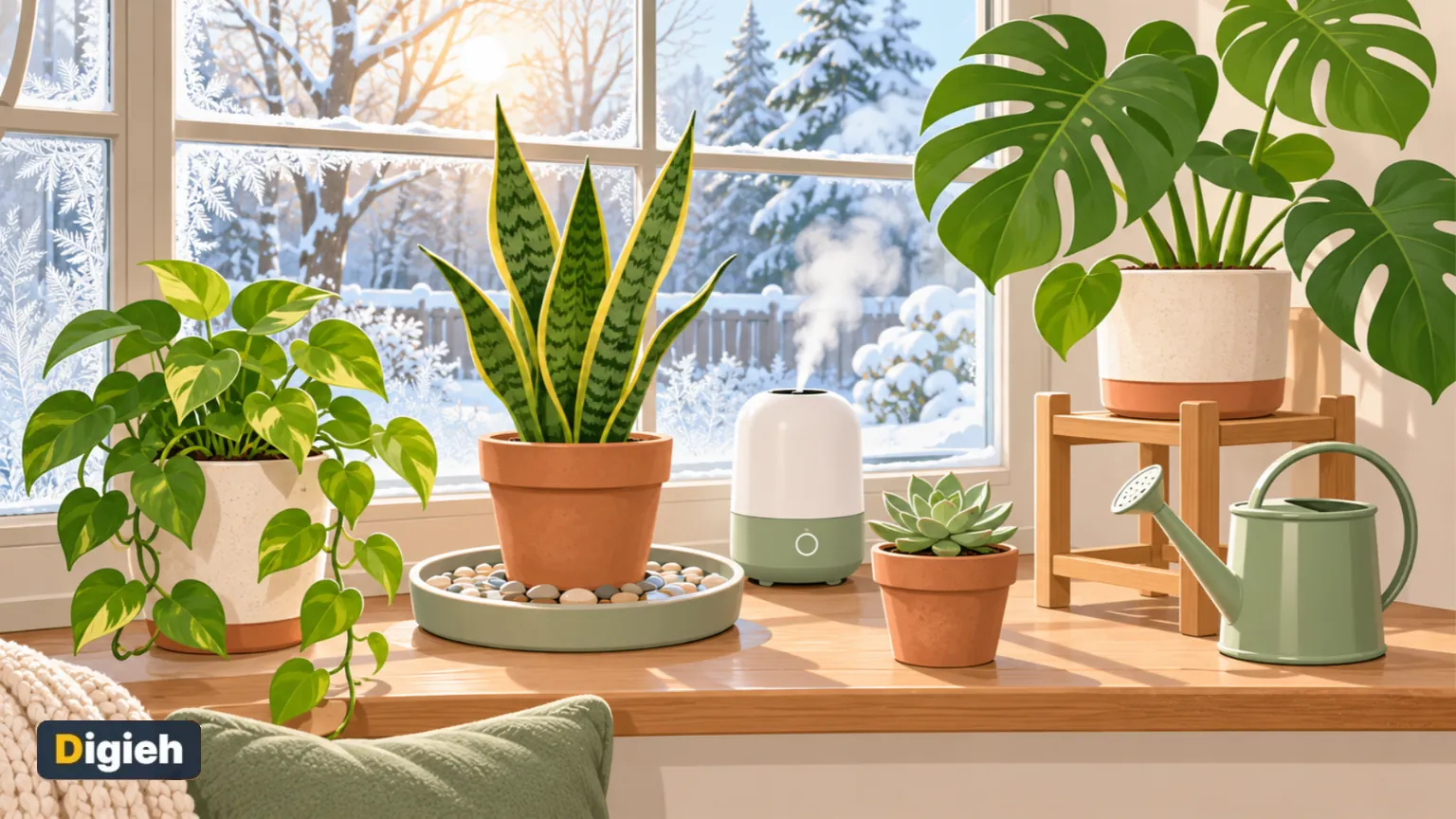
- Raise humidity with a humidifier, pebble trays or by grouping plants.
- Keep plants away from drafts, heaters and very cold glass.
- Skip fertilizer and repotting until spring.
Inside this guide
- Why plants slow down
- Watering in winter
- Getting enough light
- Raising humidity
- Where to put plants
- Fertilizer and repotting
- Pest checks
- Troubleshooting
- Frequently asked questions
Why Houseplants Slow Down in Winter
Plants run on light. When days get shorter, most houseplants slow their growth and use less water and food.
Debra Heleba, a community horticulture program manager at University of Vermont Extension, explains this in her winter houseplant guide. Some plants rest more deeply than others.
- Alocasias and caladiums may drop leaves, which is normal.
- Cacti and succulents often go into a deep rest.
- Tropical foliage plants keep their leaves but grow very little.
Knowing this helps you avoid the most common winter mistake. That mistake is treating a resting plant like a summer plant.
How many houseplants do you have?
- One to three
- Four to ten
- More than ten
- Not sure, I lost count
How to Water Houseplants in Winter
Overwatering kills more houseplants in winter than anything else. Slow-growing plants cannot use much water, so wet soil sits around the roots and can cause rot.
Check before you water
- Push your finger into the soil about an inch deep.
- Or push a wooden chopstick into the pot and pull it out.
- If soil sticks to the stick, wait a few more days.
- A simple moisture meter can also help.
Water only when the soil feels truly dry. For many plants, that means watering every two to three weeks instead of every week.
Water the right way
- Use room-temperature water, since cold water can shock roots.
- Water slowly until a little drains from the bottom.
- Empty the saucer after 15 minutes so roots do not sit in water.
- Water in the morning so leaves dry before the cooler night.
1 inchCheck the soil about one inch deep before you water a houseplant in winter.
How to Give Plants Enough Light
Winter sun is weaker and lower in the sky. A spot that worked in summer may be too dark now.
- Move plants closer to your brightest window, usually one facing south or west.
- Rotate pots a quarter turn each week so all sides get light.
- Wipe dust off leaves with a damp cloth so they can absorb more light.
- Pull back curtains during the day.
Try a grow light
If your home is dark, a simple, energy-efficient grow light can help. Place it a short distance above your plants and run it for part of the day on a timer.
Watch your plants for clues. Long, stretched stems and pale leaves often mean a plant wants more light.
How to Raise Humidity
Indoor heating dries the air, and tropical plants feel it first. Brown, crispy leaf tips are a common sign.
| Method | How it works | Cost |
|---|---|---|
| Humidifier | Adds moisture to the air in the room | Moderate |
| Pebble tray | Water evaporates around the pot | Low |
| Grouping plants | Plants release moisture that helps their neighbors | Free |
| Bathroom or kitchen | These rooms are often more humid | Free |
To make a pebble tray, fill a shallow tray with pebbles. Add water until it sits just below the tops of the stones. Set the pot on the pebbles so it does not sit in water.
Misting feels helpful but only raises humidity for a few minutes. A humidifier or pebble tray works better.
Where to Put Houseplants in Winter
Steady temperatures keep plants happy. The Vermont guide warns against three spots in particular.
- Drafty doors and windows. Cold blasts can damage leaves.
- Heat sources. Vents, radiators and wood stoves dry plants out fast.
- Right against the glass. Windows can get very cold at night.
Pull plants back a few inches from the window on cold nights. Never let leaves touch frosty glass.
Sealing drafts helps both you and your plants. See our guide on how to insulate windows for winter.
Keep your thermostat steady as well. Our tips on smart thermostat settings for winter can help you avoid big temperature swings.
Fertilizer and Repotting
Most houseplants do not need fertilizer in winter. They are not growing much, so extra food can build up in the soil and burn the roots.
Wait until spring to repot as well. Repotting stresses a plant, and a resting plant recovers slowly.
The exception is a plant that is actively growing or blooming under good light. In that case, a light feeding can help.
Keep an Eye Out for Pests
Dry indoor air can invite some pests. The Vermont guide suggests checking plants while you clean their leaves.
| Pest | What to look for |
|---|---|
| Spider mites | Fine webbing under leaves |
| Aphids | Sticky residue on leaves |
| Mealybugs | White, cottony clumps |
| Scale | Small bumps on stems |
| Fungus gnats | Tiny flies near wet soil |
Fungus gnats love soggy soil. Letting the soil dry between waterings and using yellow sticky traps can help.
Isolate any plant with pests so the problem does not spread. Wipe leaves or rinse them gently in a lukewarm shower, letting the pot drain fully afterward.
Troubleshooting Winter Problems
| Problem | Likely cause | Fix |
|---|---|---|
| Yellow lower leaves | Too much water | Let soil dry out more |
| Brown, crispy tips | Dry air | Add a humidifier or pebble tray |
| Leggy, pale growth | Not enough light | Move closer to a window or add a grow light |
| Sudden leaf drop | Cold draft or move | Find a steadier spot |
| Mushy stems | Root rot | Cut back water and check the roots |
Some leaf loss is normal in winter. Focus on new growth in spring as the real sign of health.
Free updates
Join the Digieh list
Be the first to know when our weekly brief launches.
No spam. Unsubscribe anytime. Read our Privacy Policy.
How to Clean Houseplant Leaves
Dust blocks light from reaching the leaf. In winter, when light is already scarce, clean leaves make a real difference.
- Support each leaf with one hand.
- Wipe the top and bottom gently with a soft, damp cloth.
- Use lukewarm water only, with no leaf shine products.
- For small or fuzzy leaves, use a soft paintbrush instead.
- Let leaves dry before moving plants back to a cool window.
Cleaning also gives you a close look at each plant. It is the perfect time to spot pests early.
Winter Care for Succulents and Cacti
Succulents and cacti need the most light and the least water of any common houseplant. In winter, many go almost fully dormant.
- Give them your sunniest window.
- Water only about once a month, or when the soil is bone dry.
- Keep them on the cool side, away from heaters.
- Watch for stretched, leaning growth, a sign they need more light.
A cool, bright, dry winter can even help some cacti bloom in spring. Resist the urge to water them often.
Houseplants, Pets and Kids
Plants often move to new spots in winter, sometimes within reach of pets and small children. Some popular houseplants can upset the stomach or irritate the mouth if chewed.
Check whether your plants are safe before you place them on low tables or floors. When in doubt, move them to a high shelf or a room pets cannot reach.
Going Away in Winter
Holiday travel can leave plants alone for a week or more. A few simple steps help them cope.
- Water well a day before you leave, then let the pots drain.
- Group plants together in a bright room away from heaters.
- Set the thermostat no lower than a comfortable indoor level for plants.
- Ask a friend to check on thirsty plants if you will be gone long.
Because plants use less water in winter, most will be fine for a week or two. Tropical plants in small pots dry out fastest.
Move plants back to their usual spots when you get home. Check the soil first, and water only the pots that feel dry.
Looking for another winter hobby by the window? Try our winter bird feeding guide.
Easy Plants for Winter Beginners
Some houseplants handle low light and dry air better than others. They make great choices for winter.
- Snake plant, which tolerates low light and little water
- Pothos, which forgives missed waterings
- ZZ plant, which stores water in its thick stems
- Cast iron plant, known for being nearly impossible to kill
- Spider plant, which adapts to many conditions
Holiday plants need special care too. Read our poinsettia care tips to keep yours colorful.
Signs Your Plant Is Doing Well
A healthy plant in winter does not need to grow fast. Look for these quieter signs instead.
- Leaves stay firm and keep their color.
- Stems stand up without drooping.
- Soil dries out within a week or two after watering.
- No webbing, sticky spots or tiny flies appear.
- A new leaf shows up now and then.
If your plants show most of these signs, your winter routine is working. Keep it steady until spring arrives.
A Simple Winter Plant Routine
| How often | Task |
|---|---|
| Every few days | Check soil moisture |
| Weekly | Rotate pots and check for pests |
| Every two weeks | Wipe dust off leaves |
| Monthly | Refill pebble trays and clean the humidifier |
| Early spring | Repot and start fertilizing again |
Test Yourself
What is the most common winter houseplant mistake?
- Overwatering
- Too much fertilizer in summer
- Using clay pots
Resting plants use little water, so wet soil can rot their roots.
When should you repot most houseplants?
- In midwinter
- Right after the holidays
- In spring
Plants recover faster from repotting when they start growing again in spring.
Frequently Asked Questions
How often should I water houseplants in winter?
Only when the top inch of soil feels dry.
Should I mist my plants in winter?
Misting helps only briefly. A humidifier works better.
Is it normal for leaves to drop in winter?
A few, yes. Sudden heavy loss points to a problem.
Can houseplants stay near a cold window?
Pull them back from the glass on cold nights.
Conclusion
Winter houseplant care comes down to doing less, but doing it well. Water less, give more light, add humidity and keep plants away from drafts and heaters.
Hold off on fertilizer and repotting until spring. With these simple steps, your plants will be ready to grow again when the days get longer.
Found this useful?
Editor’s Note
This guide is accurate as of November 9, 2026. It draws on winter houseplant guidance from University of Vermont Extension.
Spot an error in this article? Please contact us at support@digieh.com or read our Corrections Policy.
Keep exploring
Your next read is waiting
 1Food & LifestyleEasy Lasagna Recipe: Classic, Cheesy and Make-Ahead8 min read
 2Science & DiscoveriesWinter Bird Feeding Guide: Best Foods, Feeders and Tips8 min read
 3MedicinesDo Antibiotics Cure Colds or Flu? What You Need to Know8 min read
 4HealthEczema in Winter: How to Calm Dry, Itchy Skin8 min read
 5EntertainmentChristmas Traditions Around the World: 15 Festive Customs8 min read
 6SportsKyle Larson Wins the 2026 NASCAR Cup Series Championship3 min read