TRENDING
Desk Stretches to Ease Neck and Back Stiffness

7 min read
Last updated November 17, 2026
Simple desk stretches for your neck, shoulders, wrists and hips can ease stiffness from long hours of sitting. Hold each stretch gently for 15 to 30 seconds, and take a short movement break about every 20 minutes.
You do not need equipment or a gym. This guide covers ten easy stretches you can do at your desk, plus setup tips and a quick routine.
Key Takeaways
- Take a short movement break about every 20 minutes.
- Hold most stretches for 15 to 30 seconds without bouncing.
- Stretch gently, and never push into pain.
- Combine stretching with a good desk setup.
- See a professional if pain, numbness or tingling persists.
Jump to a section
- Why desk workers get stiff
- Neck and shoulder stretches
- Wrist and hand stretches
- Back, hip and leg stretches
- A five-minute desk routine
- Build more movement into your day
- When to Get Help
Why Desk Workers Get Stiff
Sitting still for hours keeps the same muscles in one position. Over time, that can leave your neck, back and hips feeling tight.
Mayo Clinic notes that sitting in one position for hours is hard on the body, even with good ergonomics. It suggests getting up and walking around often.
Short breaks add up
Colorado State University recommends an active micro break every 20 minutes. A micro break can last from a few seconds to a couple of minutes.
That might mean standing up, rolling your shoulders or doing one quick stretch. Small, frequent breaks beat one long break at lunch.
Good to know. Stretching helps, but it does not replace a good workstation. Colorado State calls fitting the job to the person the most effective way to prevent strain.
Neck and Shoulder Stretches
These stretches target the areas that tighten most when you lean toward a screen. Move slowly and breathe deeply.
1. Chin tuck
Sit tall and gently pull your head straight back, so your ears line up over your shoulders. UC Davis physical therapists suggest holding for 10 seconds and repeating 5 times.
2. Side neck stretch
Tilt one ear toward the same shoulder until you feel a gentle stretch. Hold, then switch sides.
3. Shoulder rolls
Roll your shoulders forward in slow circles, then backward. Do about ten in each direction.
4. Shoulder blade squeeze
Squeeze your shoulder blades together and down, then relax. UC Davis suggests 10 repetitions.
5. Chest opener
Clasp your hands behind your back or hold the back of your chair. Gently pull your shoulders back and down to open your chest.
Quick tip. Set a repeating reminder on your phone or computer. A gentle nudge every 20 minutes makes the habit stick.
Where do you feel stiff most after a long day at your desk?
- Neck and shoulders
- Lower back
- Wrists and hands
- Not sure
Wrist and Hand Stretches
Typing and using a mouse keep your hands busy all day. These stretches give them a quick reset.
6. Wrist flexor stretch
Hold one arm out, palm up, with the elbow straight. Use your other hand to gently bend the fingers down and back.
UC Davis suggests holding for 30 seconds and repeating twice on each hand.
7. Wrist extensor stretch
Hold one arm out, palm down. Gently bend the wrist down with your other hand, then switch.
8. Finger spreads
Spread your fingers wide, then make a loose fist. Colorado State suggests repeating this several times.
| Stretch | Hold or reps | Source |
|---|---|---|
| Chin tuck | 10 seconds, 5 times | UC Davis |
| Shoulder blade squeeze | 10 repetitions | UC Davis |
| Wrist stretches | 30 seconds, twice per hand | UC Davis |
| Most other stretches | 15 to 30 seconds | Colorado State |
| Calf raises | 10 to 15 repetitions | Colorado State |
Back, Hip and Leg Stretches
Sitting tightens the hips and the backs of the legs. You can do these moves at or beside your chair.
9. Seated figure-four stretch
Cross one ankle over the opposite knee. Keep your back straight and lean forward slightly until you feel it in your hip.
UC Davis suggests holding this stretch for 30 seconds, twice on each side.
10. Seated hamstring stretch
Extend one leg with your heel on the floor. Lean forward from your hips, keeping your back straight.
Bonus moves when you stand
- Hip flexor stretch, stepping one leg back beside your chair
- Calf raises, rising onto your toes and lowering slowly
- Gentle backbend over your chair back, supporting your spine
Colorado State suggests 10 to 15 slow calf raises. They get blood moving after long periods of sitting.
A Five-Minute Desk Routine
Put a few stretches together for a quick reset. Do this routine once in the morning and once in the afternoon.
- Chin tucks, 5 slow repetitions.
- Side neck stretch, 15 seconds each side.
- Shoulder rolls, 10 forward and 10 back.
- Chest opener, 20 seconds.
- Wrist stretches, 30 seconds per position on each hand.
- Seated figure-four, 30 seconds each side.
- Calf raises, 10 to 15 repetitions.
Pair the routine with a short walk at lunch. Our guide on starting walking for fitness makes it easy to build that habit.
Make it a habit
Link the routine to something you already do, like opening your email or finishing a meeting. That cue makes it easier to remember.
Keep the moves gentle on busy days. Even one or two stretches are better than none at all.
Rest your eyes too
Colorado State also mentions the 20-20-20 rule. Every 20 minutes, look at something 20 feet away for 20 seconds.
Free updates
Join the Digieh list
Be the first to know when our weekly brief launches.
No spam. Unsubscribe anytime. Read our Privacy Policy.
Build More Movement Into Your Day
Stretching works best alongside regular movement. Mayo Clinic suggests standing for some tasks when you can.
- Stand up for phone calls or short video meetings.
- Walk to a colleague’s desk instead of sending a message.
- Use a smaller water glass, so you refill it more often.
- Take the stairs for short trips between floors.
- Suggest a walking meeting for one-on-one chats.
Each small move breaks up long stretches of sitting. Over a day, these habits add up to real activity.
Common stretching mistakes
- Bouncing in and out of a stretch
- Holding your breath while stretching
- Pushing until it hurts
- Stretching only once at the end of the day
- Twisting quickly instead of moving slowly
Colorado State advises stretching slowly, without bouncing, and easing deeper only as far as feels comfortable. Breathe deeply throughout each hold.
Set Up Your Desk to Prevent Stiffness
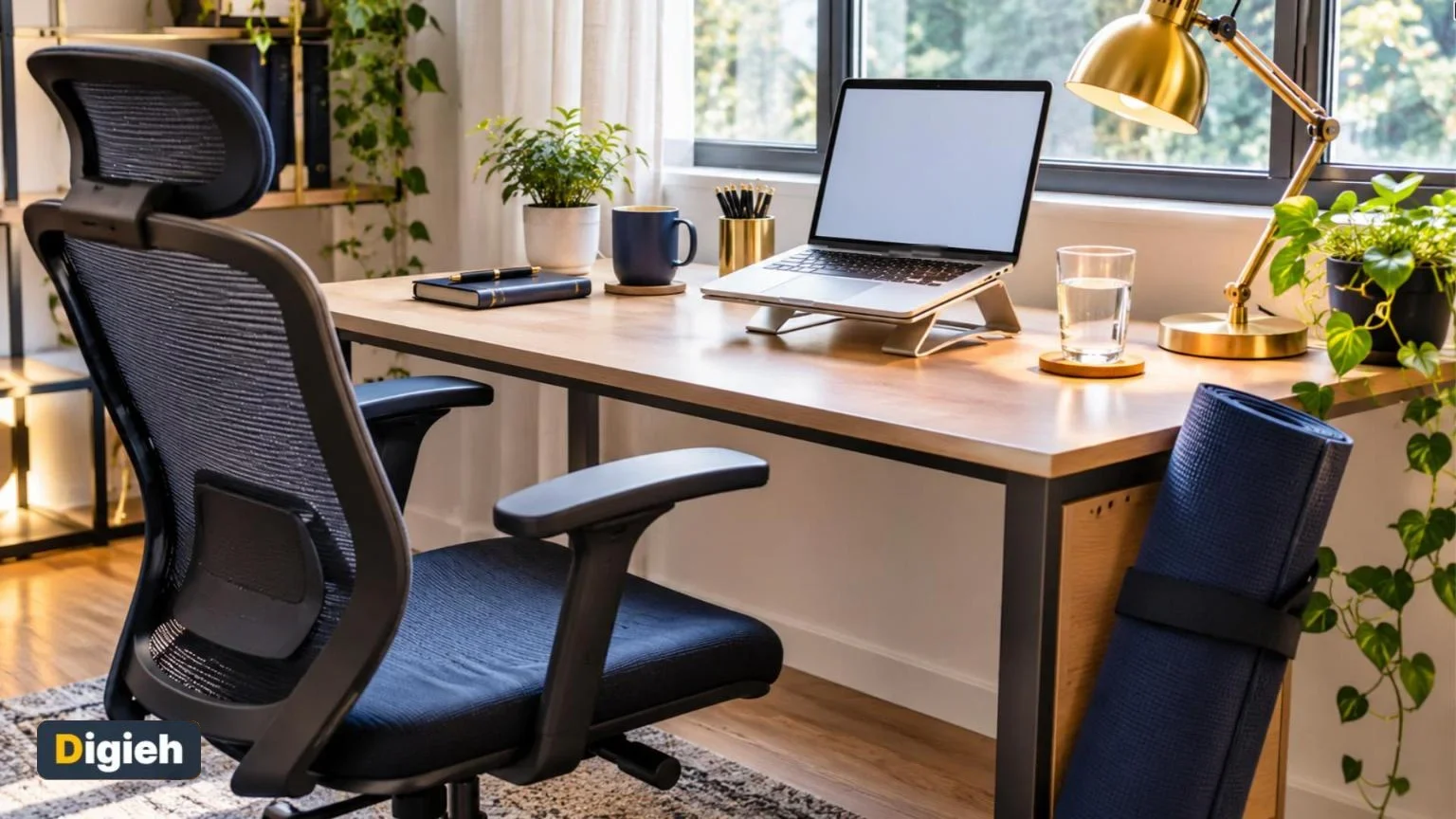
Good setup reduces the strain that stretches have to undo. Mayo Clinic offers clear guidance.
| Item | Mayo Clinic tip |
|---|---|
| Chair | Feet flat on the floor, thighs about parallel to the floor |
| Monitor | About an arm’s length away, top at or just below eye level |
| Keyboard and mouse | Wrists straight, hands at or slightly below elbow level |
| Shoulders | Relaxed, elbows close to your body |
| Under the desk | Clear space for your legs and feet |
These tips come from Mayo Clinic’s office ergonomics guide. For more help at home, read our guide to better posture when working from home.
20 minHow often to take a short active break at your desk, says Colorado State University.
When to Get Help
Stretching should feel gentle and relieving, never painful. Colorado State lists warning signs to report early.
- Pain that does not go away
- Tingling or numbness in your hands or arms
- Swelling around a joint
- Weakness or loss of function
If you notice any of these, stop the stretch and speak with a doctor or physical therapist. Tell your employer if the problem seems linked to your workstation.
Good to know. This article is for information only and is not medical advice. Ask a doctor or physical therapist before stretching if you have an injury or health condition.
- Set a 20-minute break reminder
- Learn three neck and shoulder stretches
- Stretch wrists twice a day
- Check your chair and monitor height
- Report lasting pain or numbness
Want a longer stretch session after work? Try our yoga for beginners at home.
Try this today. Do the five-minute routine right now, then set a reminder to repeat it this afternoon.
Test Yourself
How often should desk workers take a short active break?
- Once a day
- About every 20 minutes
- Only when in pain
Colorado State recommends an active micro break about every 20 minutes.
What should a stretch feel like?
- Gentle tension
- Sharp pain
- Fast bouncing
Stretch slowly to a gentle pull and never push into pain.
Frequently Asked Questions
Can desk stretches fix back pain?
They may ease stiffness, but lasting pain needs a professional check. Good desk setup matters too.
Do I need to stand up to stretch?
No. Most of these stretches work while seated, though standing breaks are also helpful.
How many times a day should I stretch?
Short stretches spread through the day work well. Try a quick routine morning and afternoon.
Is it okay to stretch during meetings?
Subtle moves like shoulder rolls and chin tucks fit easily into video calls.
Conclusion
Short, regular stretch breaks help your body handle long days at a desk. Combine gentle stretches with a good setup and frequent movement.
Your next step is to try the five-minute routine and set a 20-minute break reminder.
Found this useful?
Editor’s Note
This guide is accurate as of November 17, 2026. It draws on Colorado State University, UC Davis physical therapists and Mayo Clinic.
Everyone’s body is different. Adjust stretches to your comfort and any health needs.
Spot an error in this article? Please contact us at support@digieh.com or read our Corrections Policy.
Keep exploring
Your next read is waiting
 1Fitness & ExerciseHow Much Exercise Per Week? A Simple Guide7 min read
 2Education & CareersHow to Write a Professional Email, With Examples8 min read
 3InsuranceWhat to Do Right After a Car Accident8 min read
 4GamingGaming Eye Strain and the 20-20-20 Rule Explained7 min read
 5TechnologyHow to Convert PowerPoint to PDF With Notes4 min read
 6RecipesSoft and Chewy Chocolate Chip Cookies Made Easy6 min read