TRENDING
How Long Can a Blackout Last? Real Cases

5 min read
Last updated November 17, 2026
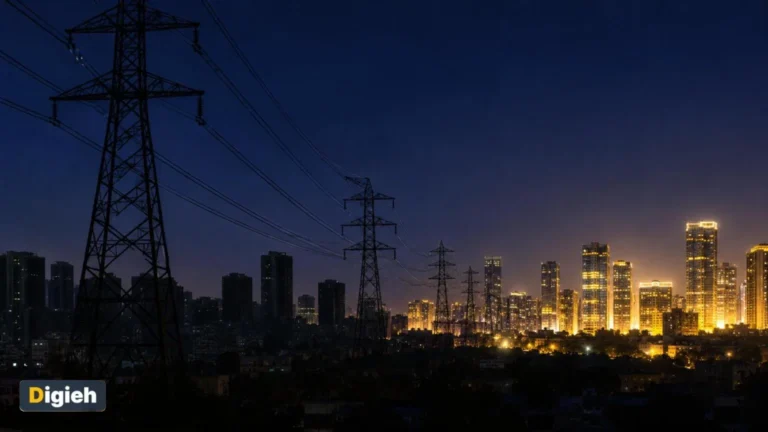
Most power outages end within a few hours. Some big blackouts, though, have lasted days, weeks or even months.
This guide looks at real blackouts and how long they lasted. It also explains what makes some outages drag on and how to plan for a long one.
Key Takeaways.
- Large grid blackouts are often fixed within hours to a couple of days.
- Storms that destroy poles and lines can cause outages lasting weeks.
- One of the longest US blackouts followed Hurricane Maria in Puerto Rico and lasted about 11 months.
- A full fridge keeps food safe for only about 4 hours without power.
- Plan for at least several days of water, food and light.
Jump to a section
- How long real blackouts lasted
- Why some outages last longer
- How long your food stays safe
- Water calculator
- How to plan for a long outage
How Long Real Blackouts Lasted
The length of a blackout depends on what caused it. Damage to the grid itself takes far longer to fix than a control problem.
| Event | Cause | How long it lasted | Source |
|---|---|---|---|
| Spain and Portugal, April 2025 | Voltage control failure | Up to 12 hours in Portugal and up to 16 hours in parts of Spain | POWER magazine |
| Quebec, March 1989 | Solar storm | Nine hours for six million people, days for some | NOAA |
| Northeast and Ontario, August 2003 | Cascading grid failure | Ontario restored within 30 hours | IESO |
| Texas, February 2021 | Frozen power plants and gas supply | Up to four days for some homes | FERC and NERC report |
| Moore County, North Carolina, December 2022 | Gunfire at two substations | About five days for the last homes | NBC News |
| Puerto Rico, 2017 to 2018 | Hurricane Maria destroyed much of the grid | About 11 months until the utility said all homes had power | WYPR and NPR |
11 monthsTime Puerto Rico’s utility needed to restore all homes after Hurricane Maria, per WYPR.
Short but huge blackouts
The Iberian blackout in 2025 affected more than 50 million people. Even so, both countries had their grids back within a day.
That happened because the lines and power plants were not badly damaged. Operators mainly had to restart the system step by step.
Long blackouts after storms
Hurricane Maria was very different. The storm knocked down poles and lines across the island, so crews had to rebuild much of the grid.
How long could your home manage without power?
- A few hours
- One or two days
- A week or more
- Not sure
Why Some Outages Last Longer
Several factors decide whether your power returns in hours or weeks.
- Physical damage. Fallen poles, broken lines and burned equipment take time to replace.
- Access. Floods, snow and blocked roads can stop repair crews from reaching damaged areas.
- Spare parts. Large transformers are hard to replace quickly if many fail at once.
- Restart order. Grid operators restore power in stages to avoid another collapse.
- Priority sites. Hospitals, water plants and emergency services usually come back first.
Quick tip. Report your outage to your utility, even if neighbors already did. It helps crews map the damage faster.
To understand what triggers these events, read our guide on what causes a nationwide blackout.
How Long Your Food Stays Safe
Food is often the first thing people lose in a long outage. US food safety officials give clear time limits.
| Appliance | Safe time without power | Source |
|---|---|---|
| Refrigerator, door kept closed | Up to 4 hours | FoodSafety.gov |
| Full freezer, door kept closed | About 48 hours | FoodSafety.gov |
| Half-full freezer, door kept closed | About 24 hours | FoodSafety.gov |
Throw out perishable food that sat at 40 degrees Fahrenheit or warmer for more than 2 hours. When in doubt, throw it out.
Free updates
Join the Digieh list
Be the first to know when our weekly brief launches.
No spam. Unsubscribe anytime. Read our Privacy Policy.
Water Calculator
Ready.gov advises storing one gallon of water per person per day for several days. Use this calculator to plan your supply.
Emergency water planner
Add extra water for pets, hot weather or anyone who is sick or pregnant.
How to Plan for a Long Outage
Plan for several days without power, not just a few hours. A little preparation makes a long outage far less stressful.
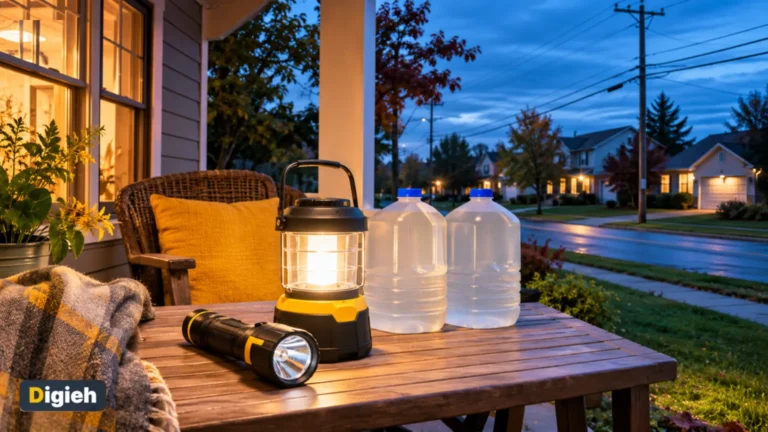
- Store water and shelf-stable food for at least several days.
- Keep flashlights, batteries and a battery radio in one place.
- Charge power banks before storms and keep them topped up.
- Fill your car fuel tank when a big storm is forecast.
- Plan where you could go if your home gets too cold or hot.
Safety first. Never run a generator, grill or camp stove indoors. These can cause deadly carbon monoxide build-up. Learn the signs of carbon monoxide poisoning.
For a full checklist, see our guide to power outage preparedness. Worried about rumors of a planned long blackout? Read our 90-day blackout fact check.
- Water for several days
- Shelf-stable food
- Flashlights and batteries
- Charged power banks
- Carbon monoxide alarm with fresh batteries
Try this today. Use the calculator above and check how much water you have at home. Buy what you are missing this week.
Test Yourself
How long does a closed refrigerator keep food safe without power?
- About 1 hour
- About 24 hours
- Up to 4 hours
FoodSafety.gov says a refrigerator keeps food safe for up to 4 hours if the door stays closed.
Why did Puerto Rico’s blackout after Hurricane Maria last so long?
- The grid only needed a restart
- The storm destroyed much of the grid
- There was a solar storm
Crews had to rebuild poles and lines across the island, which took about 11 months.
Frequently Asked Questions
How long do most power outages last?
Most local outages end within hours. Major storms can cause outages lasting days.
What is one of the longest blackouts in the US?
The outage after Hurricane Maria in Puerto Rico lasted about 11 months.
How long can a freezer keep food frozen?
About 48 hours if full and 24 hours if half full, with the door closed.
How much water should I store?
One gallon per person per day, for several days.
Conclusion
Blackouts can last from a few hours to many months. The biggest factor is how much physical damage the grid suffers.
Your next step is to use the water calculator and build a kit that lasts at least several days.
Found this useful?
Editor’s Note
This article is accurate as of November 17, 2026. Facts come from NOAA, FoodSafety.gov, Ready.gov and Ontario’s grid operator IESO. Other facts come from a FERC and NERC report, a European expert panel and news reports.
Spot an error in this article? Please contact us at support@digieh.com or read our Corrections Policy.
Keep exploring
Your next read is waiting
 1GamingGaming Eye Strain and the 20-20-20 Rule Explained7 min read
 2RecipesSoft and Chewy Chocolate Chip Cookies Made Easy6 min read
 3Education & CareersHow to Write a Professional Email, With Examples8 min read
 4Parenting & FamilySafe Sleep for Babies, a Simple Parent Checklist8 min read
 5InsuranceWhat to Do Right After a Car Accident8 min read
 6TechnologyHow to Convert a PDF to Markdown for Notes and AI4 min read