TRENDING
How to Start a Podcast at Home: Beginner Guide
Learn how to start a podcast at home in five simple steps. Pick a topic, choose budget gear, record and edit for free, then publish and grow your audience.

8 min read
Last updated November 6, 2026
To start a podcast, pick a clear topic and a show name. Record with a Universal Serial Bus (USB) microphone in a quiet room, then edit with free software. Upload episodes to a podcast host, which shares them with Apple Podcasts and Spotify.
You do not need a studio to start. A laptop, a decent microphone and a good idea are enough.
Key Takeaways
- Choose a topic you can talk about for months.
- A Universal Serial Bus (USB) microphone is the best first upgrade.
- Record in a small room with soft surfaces.
- Free software handles basic editing.
- Release episodes on a steady schedule.
On This Page
- Choose Your Topic and Format
- What Gear You Need
- How to Start a Podcast Step by Step
- How to Grow Your Audience
- Common Mistakes to Avoid
- Find Your Podcast Niche
- Name Your Podcast
- Plan Episode Formats
- Write a Simple Episode Outline
- Improve Your Sound Without Spending Much
- Interview Guests With Confidence
- Write Good Episode Titles and Descriptions
- Stay Consistent
- Turn Episodes Into More Content
- Respect Your Guests and Listeners
Choose Your Topic and Format
Pick a subject you love and know well. Narrow topics often grow faster than broad ones.
Decide if you will talk solo, with a co-host or with guests. Each style has its own feel.
5Simple steps to launch your first podcast from home.
What Gear You Need
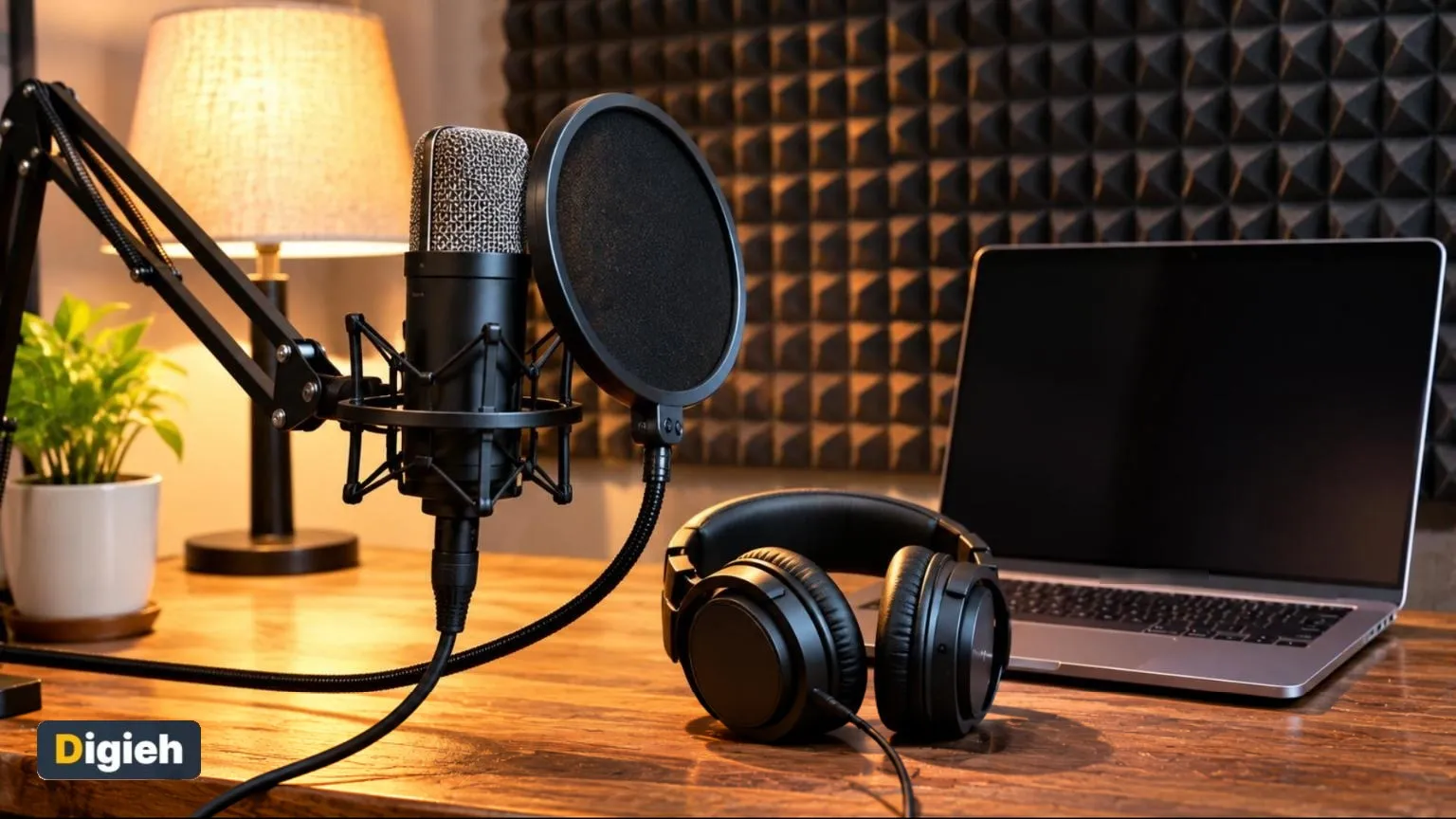
A Universal Serial Bus (USB) microphone plugs straight into your laptop. Add headphones to hear yourself clearly.
A foam windscreen or pop filter softens harsh sounds.
- Universal Serial Bus (USB) microphone
- Headphones
- Pop filter or windscreen
- Laptop
- Free editing software
- Podcast host account
- Cover art
How to Start a Podcast Step by Step
Apple Podcasts for Creators explains how to submit a show.
Spotify for Creators explains how to publish a podcast on Spotify.
1. Plan Your First Three Episodes
Write a short outline for each. Having a few ready keeps you going.
2. Set Up Your Space
Record in a closet or small room. Rugs, curtains and pillows cut echo.
3. Record a Test
Talk for one minute and play it back. Adjust your distance from the mic.
Quick tip. Keep the mic about a fist away from your mouth. It gives clear sound without loud pops.
4. Edit Your Episode
Free tools like Audacity or GarageBand let you cut mistakes and add music.
5. Publish With a Host
A podcast host stores your audio files. It sends your show to Apple Podcasts, Spotify and others.
What would your podcast be about?
- Hobbies
- Business or career
- Movies and television (TV)
- Not sure yet
Episode Length Guide
| Show Type | Typical Length |
|---|---|
| Daily news | 5 to 15 minutes |
| Tips and how-to | 15 to 25 minutes |
| Interviews | 30 to 60 minutes |
| Storytelling | 20 to 45 minutes |
Use this calculator to plan your recording time.
Episode time planner
Good to know. Most new podcasters spend about two to three times the episode length on recording and editing.
How to Grow Your Audience
Share short clips on social media. Ask friends to listen and leave a review.
Invite guests who will share the episode with their followers.
Common Mistakes to Avoid
Do not skip audio checks. Poor sound drives listeners away fast.
Avoid long gaps between episodes. A steady weekly or every-other-week schedule builds trust.
Use only music you have the rights to. Many sites offer free, licensed tracks.
Create Great Cover Art
Your cover art is the first thing listeners see. Keep it bold, simple and easy to read.
Use only images you own or have rights to, as the United States Copyright Office explains.
Most directories want a square image of at least 1400 by 1400 pixels.
Add to calendar
Find Your Podcast Niche
A clear niche helps listeners know what to expect. It also helps your show stand out.
| Broad Topic | Narrower Niche |
|---|---|
| Food | Weeknight dinners for busy parents |
| Sports | Local high school sports news |
| Business | Tips for new online shop owners |
| Books | Mystery novels by new authors |
| Health | Beginner walking and fitness stories |
Ask yourself who your ideal listener is. Picture one person and make each episode for them.
Search podcast apps for shows like yours. Look for gaps you can fill with a fresh angle.
Name Your Podcast
Your podcast name is often the first thing people notice. A good name is clear and easy to remember.
- Keep it short and easy to spell.
- Include a word that hints at your topic.
- Check that no popular show already uses the name.
- Make sure matching social media names are free.
Say the name out loud a few times. It should sound good when spoken.
Plan Episode Formats
Mixing formats keeps your show fresh. Try a few styles to see what your audience enjoys.
Solo Episodes
You share tips, stories or opinions on your own. These are easy to schedule.
Interviews
You invite guests to share their expertise. Guests bring new ideas and can share the episode with their followers.
Co-Hosted Shows
Two hosts chat about a topic. The back-and-forth feels natural and lively.
Listener Questions
You answer questions sent in by listeners. It builds a strong connection with your audience.
Write a Simple Episode Outline
An outline keeps you on track without sounding scripted. It also cuts editing time.
- A short intro that tells listeners what the episode covers
- Three to five main points
- A story or example for each point
- A clear wrap-up with one key takeaway
- A call to action, like subscribing or leaving a review
Practice your intro a few times. A strong start keeps listeners from skipping ahead.
Improve Your Sound Without Spending Much
Good sound matters more than fancy gear. Small changes make a big difference.
- Speak about a fist’s width away from the microphone.
- Record in a room with soft furniture.
- Turn off fans, heaters and noisy appliances.
- Silence your phone and notifications.
- Wear headphones to catch problems as you record.
Record a few seconds of silence at the start. Some editing tools use it to reduce background noise.
Free updates
Join the Digieh list
Be the first to know when our weekly brief launches.
No spam. Unsubscribe anytime. Read our Privacy Policy.
Interview Guests With Confidence
Guests can make or break an episode. Prepare well to help them shine.
Research your guest before the interview. Share a few questions ahead of time so they can prepare.
Test the recording setup together before you start. Ask them to use headphones to avoid echo.
Listen closely and ask follow-up questions. The best moments often come from unplanned answers.
Thank your guest and share the episode link when it goes live.
Write Good Episode Titles and Descriptions
Titles and descriptions help people find your show. They also help listeners decide whether to press play.
Use clear titles that explain the topic. Avoid vague titles like “Episode 12.”
Write a short description with the key points. Add links to resources you mention.
Stay Consistent
Consistency builds trust with listeners. Choose a schedule you can keep.
Batch-record several episodes at once. It gives you a buffer for busy weeks.
Track your downloads and listener feedback. Adjust your topics based on what people enjoy most.
Turn Episodes Into More Content
One episode can feed many other posts. This helps you reach new listeners without much extra work.
- Pull short audio or video clips for social media.
- Write a blog post that summarizes the episode.
- Share a favorite quote as a simple graphic.
- Send key takeaways to your email list.
- Create a transcript for people who prefer reading.
Transcripts also make your show easier to find in search engines. Many editing tools can create a rough transcript for you to check.
Respect Your Guests and Listeners
Ask guests for permission before you publish their interview. Let them know where and when it will appear.
Be honest about sponsors and paid promotions. Listeners trust hosts who are open about ads.
Keep personal details about guests private unless they agree to share them.
Podcast Mistakes New Hosts Make
Many new podcasters make the same few mistakes. Avoiding them helps your show grow faster.
- Talking for too long before getting to the point
- Publishing on a random schedule
- Ignoring poor sound quality
- Skipping a clear show description
Start each episode with what listeners will learn. A strong opening keeps people listening.
Stay Motivated as a Podcaster
Growing an audience takes time, so motivation matters. Small habits help you keep going.
Record several episodes before you launch. This gives you a buffer during busy weeks.
Celebrate small milestones, like your tenth episode or first listener review. Each step is progress.
Listen to Your Audience
Read comments and messages from listeners. Their ideas can inspire your next great episode.
Ask them what topics they want to hear next. Simple polls on social media can help you decide.
Try this today. Record a two-minute test on your phone today in a closet full of clothes. Listen back for echo.
Test Yourself
What is the best first gear upgrade for a podcast?
- A new laptop
- A Universal Serial Bus (USB) microphone
- Studio lights
Good sound matters most to listeners.
What does a podcast host do?
- Talks on your show
- Edits your audio
- Stores files and sends them to apps
Hosts deliver your show to listening apps.
Frequently Asked Questions
How much does it cost to start a podcast?
You can start for under 100 dollars with a Universal Serial Bus (USB) mic.
Do I need a podcast host?
Yes. It stores your files and sends them to apps.
How often should I post episodes?
Weekly or every two weeks works well.
Can I record a podcast on my phone?
Yes. Add a clip-on mic for better sound.
How do I pick a podcast niche?
Choose a narrow topic you love and picture one ideal listener for every episode.
What makes a good podcast name?
A short, easy-to-spell name that hints at your topic and is not already taken.
How do I improve podcast sound cheaply?
Record in a room with soft furniture, turn off noisy appliances and wear headphones.
How should I prepare for a guest interview?
Research the guest, share questions ahead and test the recording setup together.
Wrapping Up
Outline your first episode this week and record a quick test. Every great show starts with one try.
Find show ideas in our list of Netflix Christmas movies. Keep your files safe with tips to back up your phone.
Found this useful?
Editor’s Note
This guide is accurate as of November 6, 2026. Software features and hosting plans can change.
Spot an error in this article? Please contact us at support@digieh.com or read our Corrections Policy.
Keep exploring
Your next read is waiting
 1HealthEarwax Build-Up: Safe Removal and When to Worry7 min read
 2MedicinesIs Sugar an Electrolyte? The Simple Science Answer7 min read
 3Pets & AnimalsCat Urinary Problems: Signs That Need Urgent Care7 min read
 4Home & KitchenFridge Without Power: How Long Food Stays Safe7 min read
 5Beauty & Personal CareDandruff vs Dry Scalp: Signs, Causes and Treatment7 min read
 6HealthAthlete’s Foot: Symptoms, Treatment and How to Prevent7 min read