TRENDING
Brine Your Turkey With This Simple Juicy Method

9 min read
Last updated November 7, 2026
To brine a turkey, soak it in cold salt water for 12 to 24 hours. Or rub it with salt for a dry brine one to three days ahead. A basic wet brine uses about 1 cup of kosher salt per gallon of water.
Keep the turkey cold the whole time, then pat it dry before roasting.
Brining helps the meat hold on to moisture while it cooks. The result is a juicier, better seasoned turkey.
Key Takeaways
- Wet brining soaks the turkey in salty water for 12 to 24 hours.
- Dry brining rubs salt on the skin and rests it in the fridge.
- Use about 1 cup of kosher salt per gallon of water for a wet brine.
- Keep the turkey at 40 degrees Fahrenheit or colder while brining.
- Do not brine a turkey that is already salted or self-basting.
On This Page
- How Brining Works
- Wet Brine or Dry Brine?
- Before You Start
- Basic Wet Brine Recipe
- How to Wet Brine Step by Step
- How to Dry Brine Step by Step
- Brining Times by Turkey Size
- Keep It Safe While Brining
- Flavor Ideas for Your Brine
- After Brining, Before Roasting
- Common Brining Mistakes
- Is Brining Worth It?
- How to Fit a Brining Turkey in a Cooler
- Brining Other Meats
- Make Gravy With Brined Drippings
How Brining Works
Salt changes the proteins in meat so they hold more water. When the turkey cooks, it loses less moisture than an unbrined bird.
Salt also seasons the meat deep inside, not just on the surface. That is why brined turkey tastes more flavorful in every bite.
Turkey breast meat is lean and dries out easily. Brining gives you a little extra room for error in the oven.
This matters most for big birds. The breast often finishes cooking before the thighs, and brining helps it stay moist while the dark meat catches up.
1 cupKosher salt per gallon of water is a common ratio for a basic turkey wet brine.
Wet Brine or Dry Brine?
Both methods work well. The best choice depends on your space, time and taste.
| Feature | Wet brine | Dry brine |
|---|---|---|
| How it works | Turkey soaks in salt water | You rub salt on the skin |
| Time needed | 12 to 24 hours | 1 to 3 days |
| Space needed | Large container or cooler | Fridge shelf and a pan |
| Skin result | Softer, needs drying | Crispier skin |
| Mess level | Higher | Lower |
Dry brining has become very popular because it is easier and gives crispier skin. Wet brining is great if you like extra juicy meat and have the space.
Before You Start
First, check your turkey label. Many store turkeys carry labels like kosher, enhanced, self-basting or pre-brined.
These birds already contain added salt. Brining them again can make the meat far too salty.
Make sure the turkey is fully thawed before brining. Our guide on how to thaw a turkey safely explains how long that takes.
Quick tip. Look for words like enhanced, kosher or self-basting on the label. If you see them, skip the brine.
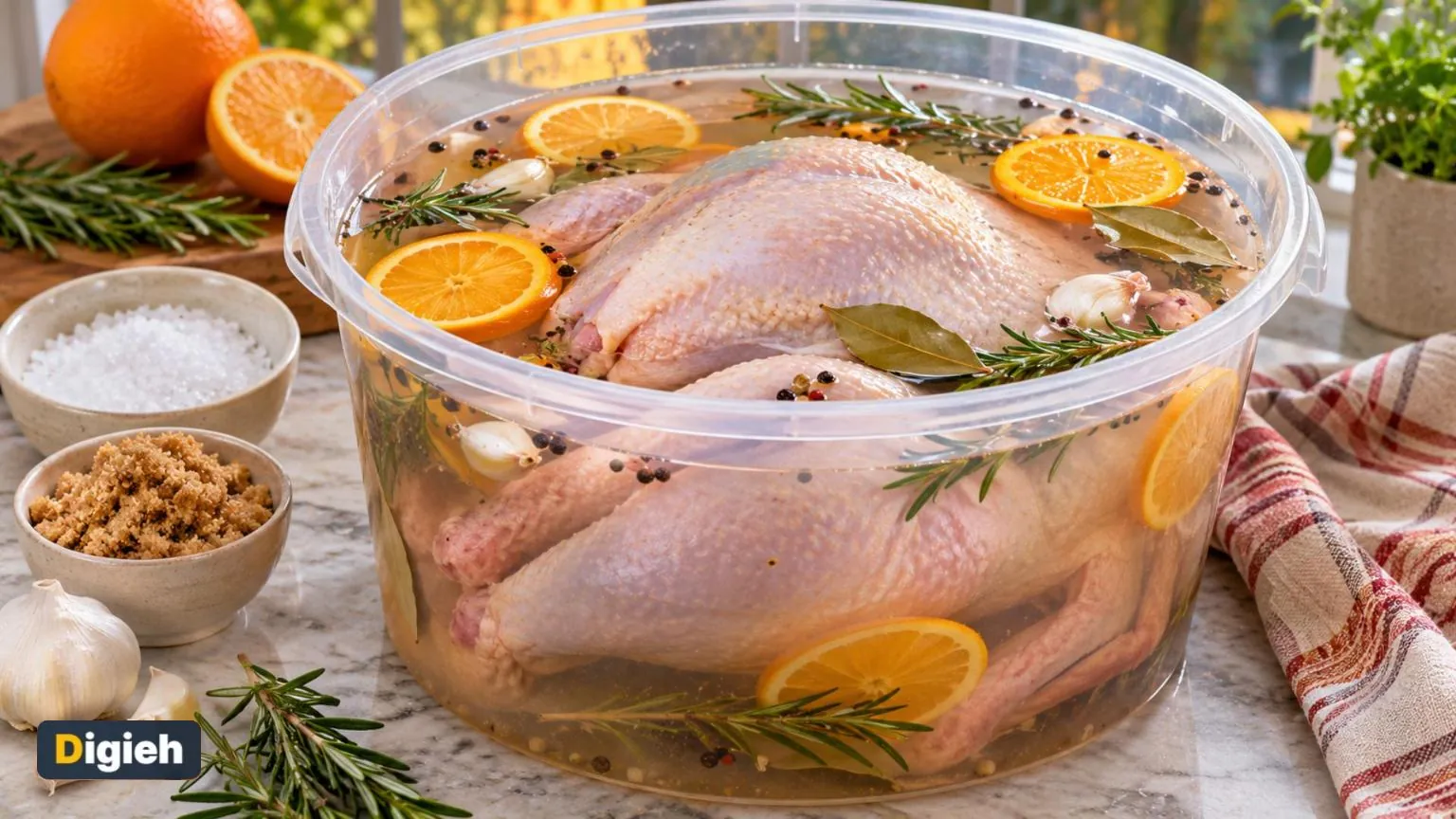
Basic Wet Brine Recipe
This recipe makes about 2 gallons of brine, enough for a 12 to 16 pound turkey in a large container.
| Ingredient | Amount |
|---|---|
| Cold water | 2 gallons |
| Kosher salt | 2 cups |
| Brown sugar | 1 cup |
| Black peppercorns | 2 tablespoons |
| Bay leaves | 4 |
| Garlic cloves, smashed | 6 |
| Fresh rosemary and thyme | A few sprigs each |
| Orange, sliced | 1 |
Different salts weigh different amounts. If you use table salt, use about half as much as kosher salt.
How to Wet Brine Step by Step
1. Make the Brine
Heat about 4 cups of the water in a pot. Stir in the salt, sugar and spices until the salt dissolves.
2. Cool It Completely
Add the rest of the cold water, plus ice if needed. The brine must be fully cold before the turkey goes in.
3. Choose a Safe Container
Use a food-grade bucket, a stainless steel pot or a food-safe brining bag. The United States Department of Agriculture (USDA) says household trash bags are not safe for brining. Its Food Safety and Inspection Service (FSIS) shares this advice.
4. Submerge the Turkey
Remove the neck and giblets. Place the turkey in the container and pour the brine over it until it is fully covered.
5. Keep It Cold
Cover the container and keep it in the fridge. If it will not fit, use a cooler with plenty of ice.
6. Brine for the Right Time
Leave it for 12 to 24 hours. Do not go longer, or the meat can become too salty and spongy.
Which brining method will you try?
- Wet brine
- Dry brine
- No brine this year
How to Dry Brine Step by Step
1. Measure the Salt
Use about 1 tablespoon of kosher salt for every 4 to 5 pounds of turkey.
2. Season the Turkey
Pat the turkey dry. Rub the salt all over the skin and inside the cavity. Add pepper and dried herbs if you like.
3. Rest It in the Fridge
Place the turkey on a rack in a roasting pan. Refrigerate it uncovered for one to three days.
4. Do Not Rinse
The salt soaks into the meat over time. The dry skin will roast up crisp and golden.
Use the calculator below to find how much salt you need for a dry brine.
Dry brine salt calculator
Brining Times by Turkey Size
| Turkey size | Wet brine time | Dry brine time |
|---|---|---|
| 10 to 12 pounds | 12 to 18 hours | 1 to 2 days |
| 12 to 16 pounds | 16 to 20 hours | 2 days |
| 16 to 20 pounds | 18 to 24 hours | 2 to 3 days |
| Turkey breast only | 6 to 10 hours | 1 day |
When in doubt, stay on the shorter side. A slightly shorter brine still adds plenty of flavor.
Good to know. Brined turkeys often cook a little faster. Start checking the temperature early.
Keep It Safe While Brining
Food safety matters a lot with raw poultry. The turkey must stay cold for the entire brining time.
Keep the brine at 40 degrees Fahrenheit or colder. If you use a cooler, check the temperature and add ice as it melts.
Wash your hands, sink and counters after handling raw turkey. Never reuse brine after it has touched raw meat.
The FoodSafety.gov four steps guide is a useful reminder before holiday cooking.
- Label checked for added salt
- Turkey fully thawed
- Brine completely cooled
- Food-safe container ready
- Turkey kept at 40 degrees or colder
- Turkey patted dry before roasting
Free updates
Join the Digieh list
Be the first to know when our weekly brief launches.
No spam. Unsubscribe anytime. Read our Privacy Policy.
Flavor Ideas for Your Brine
Once you know the basics, you can add your own flavors. Here are a few popular ideas.
- Apple cider instead of some of the water, for a sweet and tangy taste
- Lemon and herbs, with fresh thyme, sage and rosemary
- Maple and spice, with maple syrup, cinnamon and cloves
- Garlic and pepper, with plenty of smashed garlic and cracked pepper
Keep the salt amount the same when you change flavors. The salt does the real work.
After Brining, Before Roasting
Remove the turkey from the wet brine and throw the brine away. Most cooks no longer rinse the bird, since rinsing can splash germs around the sink.
Pat the turkey very dry with paper towels. For crispier skin, let it rest uncovered in the fridge for a few hours.
Skip extra salt in your rub, since the turkey is already seasoned. Then roast it as usual, using our guide on how to cook a turkey.
Always cook the turkey to an internal temperature of 165 degrees Fahrenheit.
What should you do after taking the turkey out of a wet brine?
- Brine it again
- Pat it very dry
- Add more salt
Drying the skin helps it roast crisp and golden.
Common Brining Mistakes
The most common mistake is brining a pre-salted turkey. Always check the label first.
Another mistake is leaving the turkey in the brine too long. More time does not mean more flavor, just saltier meat.
Some cooks also forget that brined drippings are salty. Taste before adding salt to your gravy.
Which turkey should NOT be brined?
- A fresh, plain turkey
- A thawed, plain turkey
- A self-basting turkey
Self-basting turkeys already contain added salt.
Is Brining Worth It?
Many cooks say brining makes the biggest difference for a juicy turkey. It is especially helpful for lean breast meat.
If you are short on time or space, a dry brine is a great middle ground. It takes only a few minutes of work.
Even without brining, you can still make a delicious turkey by not overcooking it. A good food thermometer is your best tool.
Add to calendar
How to Fit a Brining Turkey in a Cooler
Many fridges are too full during the holidays. A clean cooler is a great backup for wet brining.
Wash the cooler with hot, soapy water first. Place the turkey in a food-safe brining bag, then set the bag inside the cooler.
Pour in the cold brine and surround the bag with ice. Check the temperature every few hours with a thermometer.
Add more ice as needed so the brine stays at 40 degrees Fahrenheit or colder. The University of Georgia Extension turkey guide shares more tips for safe holiday turkey handling.
Brining Other Meats
The same method works well for chicken, pork chops and pork loin. These lean meats also benefit from extra moisture.
A whole chicken needs only four to eight hours in a wet brine. Pork chops need about one to two hours.
Use the same ratio of salt to water. Just shorten the time to match the smaller size.
Make Gravy With Brined Drippings
Brined turkey makes rich drippings, but they can be salty. Use low-sodium broth when you make gravy.
Taste the gravy before adding any extra salt. Our easy homemade gravy recipe works perfectly with a brined bird.
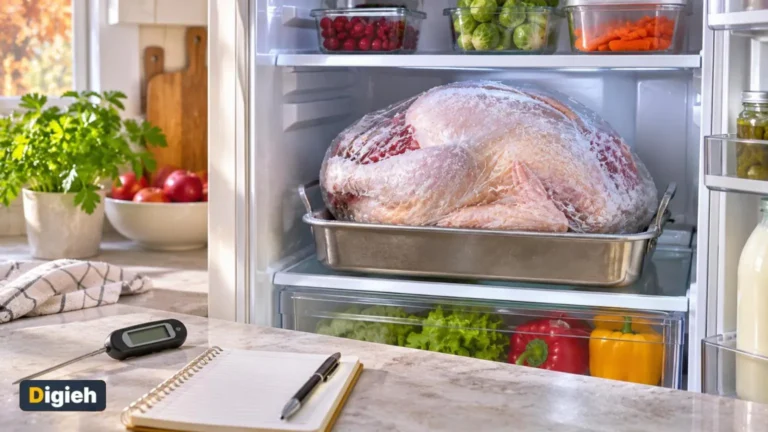
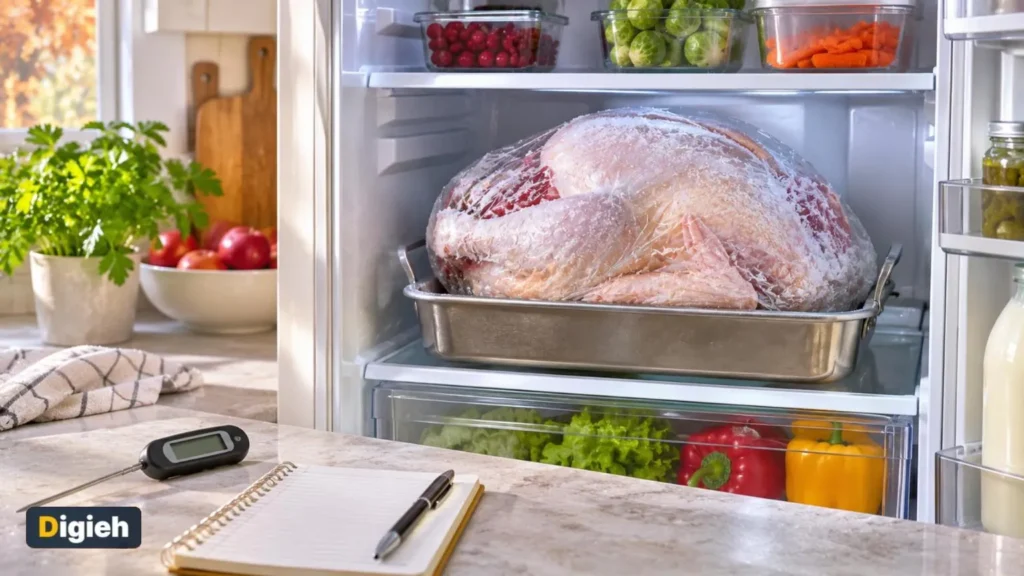
Try this today. Check that your fridge has a free shelf big enough for a turkey in a pan. Clear it a few days before brining.
Frequently Asked Questions
How long should I brine a turkey?
Wet brine for 12 to 24 hours. Dry brine for one to three days in the fridge.
Should I rinse a turkey after brining?
Most cooks no longer rinse it. Just pat it very dry with paper towels.
Can I brine a frozen turkey?
No. Thaw the turkey completely before brining so the salt can soak in evenly.
Can I brine a kosher or self-basting turkey?
No. These turkeys already contain salt, so brining can make them too salty.
Where do I brine a turkey if it will not fit in my fridge?
Use a clean cooler with plenty of ice. Keep the brine at 40 degrees Fahrenheit or colder.
Conclusion
Brining is one of the easiest ways to get a juicy, flavorful turkey. Choose a wet brine for extra moisture or a dry brine for crispy skin and less mess.
Keep the turkey cold, follow the right timing and pat it dry before roasting. Your guests will notice the difference with every bite.
Found this useful?
Editor’s Note
This guide is accurate as of November 7, 2026, and follows USDA food safety guidance on brining. Salt amounts can vary by brand, so taste and adjust carefully.
Spot an error in this article? Please contact us at support@digieh.com or read our Corrections Policy.
Keep exploring
Your next read is waiting
 1Food & LifestyleThaw a Turkey Safely With This Simple Plan9 min read
 2EntertainmentSunrise on the Reaping Release and Big Details3 min read
 3NewsWhat We Know About the Tragic Florida Crash4 min read
 4SportsThe Biggest Surprises in the New CFP Rankings3 min read
 5TechnologyFree Steam Games You Can Grab This November4 min read
 6BusinessWhich Big Stores Are Open on Thanksgiving 20264 min read