TRENDING
Iron Deficiency Anemia: Signs, Causes and Treatment Options
Iron deficiency anemia explained: common signs, causes, daily iron needs, iron-rich foods, how to take iron tablets and when to see a doctor. Checker inside.

7 min read
Last updated November 25, 2026
Iron deficiency anemia happens when your body lacks the iron it needs to make healthy red blood cells. Tiredness, pale skin and shortness of breath are the most common signs.
A simple blood test confirms it. Iron tablets, diet changes and treating the cause usually fix it within a few months.
Health note. This article is for general information only and is not medical advice. Do not start iron tablets without talking to a doctor.
Key Takeaways.
- It is the most common type of anemia, says the National Heart, Lung, and Blood Institute.
- Heavy periods, pregnancy and hidden bleeding in the gut are common causes.
- Women aged 19 to 50 need 18 milligrams of iron a day. Men need 8.
- Iron tablets often take 3 to 6 months to refill your stores.
- Vitamin C helps your body absorb iron. Tea and coffee make it harder.
Jump to a section
- What it is
- Symptoms
- Causes and who is at risk
- Official advice compared
- Should I see a doctor?
- Tests
- Treatment
- Taking iron tablets
- Iron-rich foods
- When to Get Help
- Questions to Ask Your Doctor
- Frequently Asked Questions
- Sources
- Conclusion
What Is Iron Deficiency Anemia?
Your body uses iron to make hemoglobin, the part of red blood cells that carries oxygen. Without enough iron, your organs get less oxygen and you feel tired.
It is the most common kind of anemia, according to the National Heart, Lung, and Blood Institute. Mild cases may cause no symptoms at all.
18 milligramsDaily iron needed by women aged 19 to 50. Men need 8 milligrams, says the National Institutes of Health.
Symptoms of Iron Deficiency Anemia
| Common signs | Less common signs |
|---|---|
| Tiredness and low energy | Ringing in the ears |
| Shortness of breath | Sore tongue or mouth ulcers |
| Heart palpitations | Hair loss |
| Pale skin | Spoon-shaped nails |
| Headaches | Craving ice, soil or paper |
| Cold hands and feet | Restless legs at night |
Source: National Health Service and the National Heart, Lung, and Blood Institute, checked November 25, 2026.
Ringing ears can have many causes. See our guide to tinnitus for others.
Celiac disease can stop the gut absorbing iron. See our guide to celiac disease symptoms and testing.
Causes and Who Is at Risk
- Blood loss: heavy periods, childbirth, injury or surgery.
- Bleeding in the gut: from ulcers, piles, bowel inflammation or, less often, cancer.
- Painkillers: regular aspirin or ibuprofen can cause stomach bleeding.
- Pregnancy: the baby needs extra iron.
- Poor absorption: celiac disease, Crohn’s disease or weight loss surgery.
- Diet: too little iron, more common in vegetarians and toddlers.
- Endurance sports and kidney disease.
These causes come from the National Health Service and the National Heart, Lung, and Blood Institute.
Low energy can also come from low vitamin B12. Read our guide to vitamin B12 deficiency signs.
Official Advice Compared
| Question | National Health Service (UK) | National Institutes of Health (US) |
|---|---|---|
| How is it found? | Full blood count, sometimes more tests | Blood count, hemoglobin, iron and ferritin tests |
| Main treatment | Iron tablets for about 6 months | Iron tablets for 3 to 6 months, iron drip if severe |
| Tablet tips | Take with or after food if your stomach is upset | Take with food, lower the dose or switch products |
| Diet advice | Eat iron-rich foods, limit tea, coffee and dairy | Pair iron foods with vitamin C, black tea reduces absorption |
| Child safety | Keep tablets out of reach | Iron overdose is a leading cause of fatal poisoning in children under 6 |
Sources: National Health Service, blood institute and supplement office, checked November 25, 2026.
Should I See a Doctor?
Tap the signs you have. The bars show the level of care that fits best. This is a guide, not a diagnosis.
- A little tired after a busy week
- Tired for weeks even with good sleep
- Pale skin or cold hands
- Very heavy periods
- Craving ice or non-food items
- Breathless climbing stairs
- Black or bloody poo
- Chest pain or fainting
- I am pregnant and very tired
Have you ever been told your iron is low?
- Yes
- No
- I think so
- Not sure
Tests for Low Iron
A doctor will ask about your diet, periods, medicines and any bleeding. A full blood count is the first test, and it needs no special preparation.
Doctors may also check ferritin, which shows your iron stores. If the cause is not clear, you may need a stool test for hidden blood or a specialist visit.
Treatment
- Iron tablets: the most common treatment, usually for 3 to 6 months.
- Iron through a drip: for severe cases or when tablets do not work.
- Treating the cause: such as heavy periods or a stomach ulcer.
- Blood transfusion: only for serious cases.
Your doctor may repeat blood tests over a few months to check progress, says the National Health Service.
Taking Iron Tablets
- Take them exactly as your doctor or pharmacist says.
- Drink a glass of orange juice with the tablet to help absorption.
- Avoid tea, coffee and milk for an hour or two around your dose.
- Take with food if they upset your stomach.
- Expect darker poo. This is normal.
- Keep taking them even if you feel better, until your doctor says stop.
- Store them out of children’s reach.
Safety note. Adults should not take over 45 milligrams of iron a day without a prescription, says the National Institutes of Health. Iron overdose can kill young children.
Iron tablets can cause constipation. Our guide on why constipation happens has simple fixes.
Try this today. Tomorrow at breakfast, pair fortified cereal or eggs with an orange. Save your tea or coffee for later.
Free updates
Join the Digieh list
Be the first to know when our weekly brief launches.
No spam. Unsubscribe anytime. Read our Privacy Policy.
Iron-Rich Foods
| Helps iron | Blocks iron |
|---|---|
| Lean red meat, chicken and fish | Tea and coffee with meals |
| Beans, lentils and peas | Milk and other dairy at the same time |
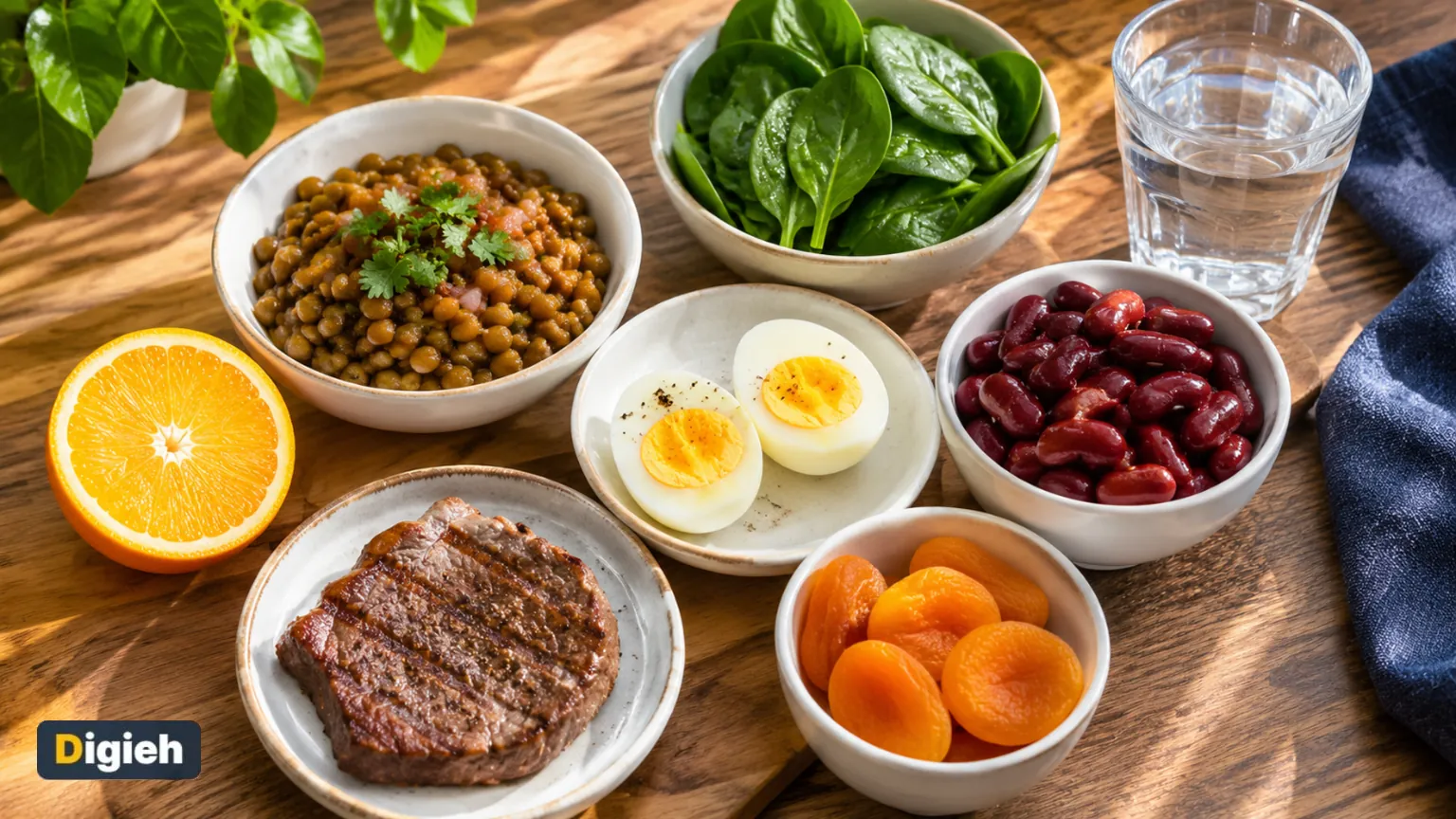
| Dark leafy greens such as kale and spinach | High-fiber whole grain cereals in large amounts |
| Fortified breakfast cereals and bread | Calcium supplements taken with iron |
| Dried apricots, prunes and raisins | |
| Vitamin C foods such as oranges, peppers and strawberries |
Sources: National Health Service and National Institutes of Health, checked November 25, 2026.
Iron from meat is absorbed more easily than iron from plants. Vegetarians may need almost twice as much iron, says the National Institutes of Health.
Wondering which greens have more iron? See our kale vs spinach comparison.
Low Iron in Children and Teens
Babies between about 9 months and 1 year can run low as they move to solid food. Offer iron-rich foods like meat, beans and fortified cereal each day.
Teen girls need more iron once periods start. Picky eaters and children who drink lots of milk may also run low.
Never give a child adult iron tablets. Ask a doctor first, and keep all iron products locked away.
Daily Iron Needs
| Group | Iron per day |
|---|---|
| Men 19 and older | 8 milligrams |
| Women 19 to 50 | 18 milligrams |
| Adults 51 and older | 8 milligrams |
| Pregnancy | 27 milligrams |
| Breastfeeding | 9 milligrams |
| Children 1 to 3 | 7 milligrams |
Source: National Institutes of Health supplement office, checked November 25, 2026.
Which drink helps your body absorb iron?
- Orange juice
- Black tea
- Milk
Vitamin C in orange juice helps absorption. Tea and milk can reduce it.
When to Get Help
Call emergency services if you have chest pain, faint, or vomit blood.
See a doctor urgently if you notice black, tarry or bloody poo, which can mean bleeding in the gut. See the National Health Service page for more.
Book a doctor visit if you are tired for weeks, very breathless, or have very heavy periods. Pregnant women should mention tiredness to their midwife or doctor.
Short of breath often? Our guide to shortness of breath causes covers other reasons.
Questions to Ask Your Doctor
- What is causing my low iron?
- How long should I take iron tablets?
- When will you test my blood again?
- Do I need tests to look for bleeding?
- What should I do about side effects?
- Could my periods be checked?
- Do I need an iron drip instead?
Frequently Asked Questions
What are the first signs of low iron?
Tiredness, pale skin, shortness of breath and headaches are common early signs.
How long does it take to fix?
Iron tablets usually take 3 to 6 months to refill your stores.
Can I take iron tablets without a test?
It is best not to. Too much iron can be harmful, and a doctor should find the cause.
Does spinach fix low iron?
It helps a little, but plant iron is absorbed less well than iron from meat.
Sources
- National Health Service: Iron deficiency anaemia
- National Heart, Lung, and Blood Institute: Iron-deficiency anemia
- National Institutes of Health: Iron fact sheet
Conclusion
Iron deficiency anemia is common and very treatable once the cause is found. A blood test is the first step.
Next step: if you have felt tired for weeks, ask your doctor for a full blood count.
Editor’s Note
This article is accurate as of November 25, 2026. Facts come from the National Health Service and two United States National Institutes of Health offices.
Spot an error in this article? Please contact us at support@digieh.com or read our Corrections Policy.
Keep exploring
Your next read is waiting
 1HealthOveractive Thyroid: Key Signs, Causes, Tests and Treatment7 min read
 2Finance & MarketsJensen Huang Returns to Lead Nvidia After Resigning4 min read
 3Pets & AnimalsCat Urinary Problems: Signs That Need Urgent Care7 min read
 4AI & TechChatGPT Classic Is Retiring: How to Switch Apps4 min read
 5NewsThanksgiving Storm 2026: Where Travel Delays Are Likely4 min read
 6Parenting & FamilyFood Stamp Rule Could Change Free School Meals4 min read
Found this useful?