TRENDING
Kale vs Spinach: Which Leafy Green Is Healthier?

9 min read
Last updated November 10, 2026
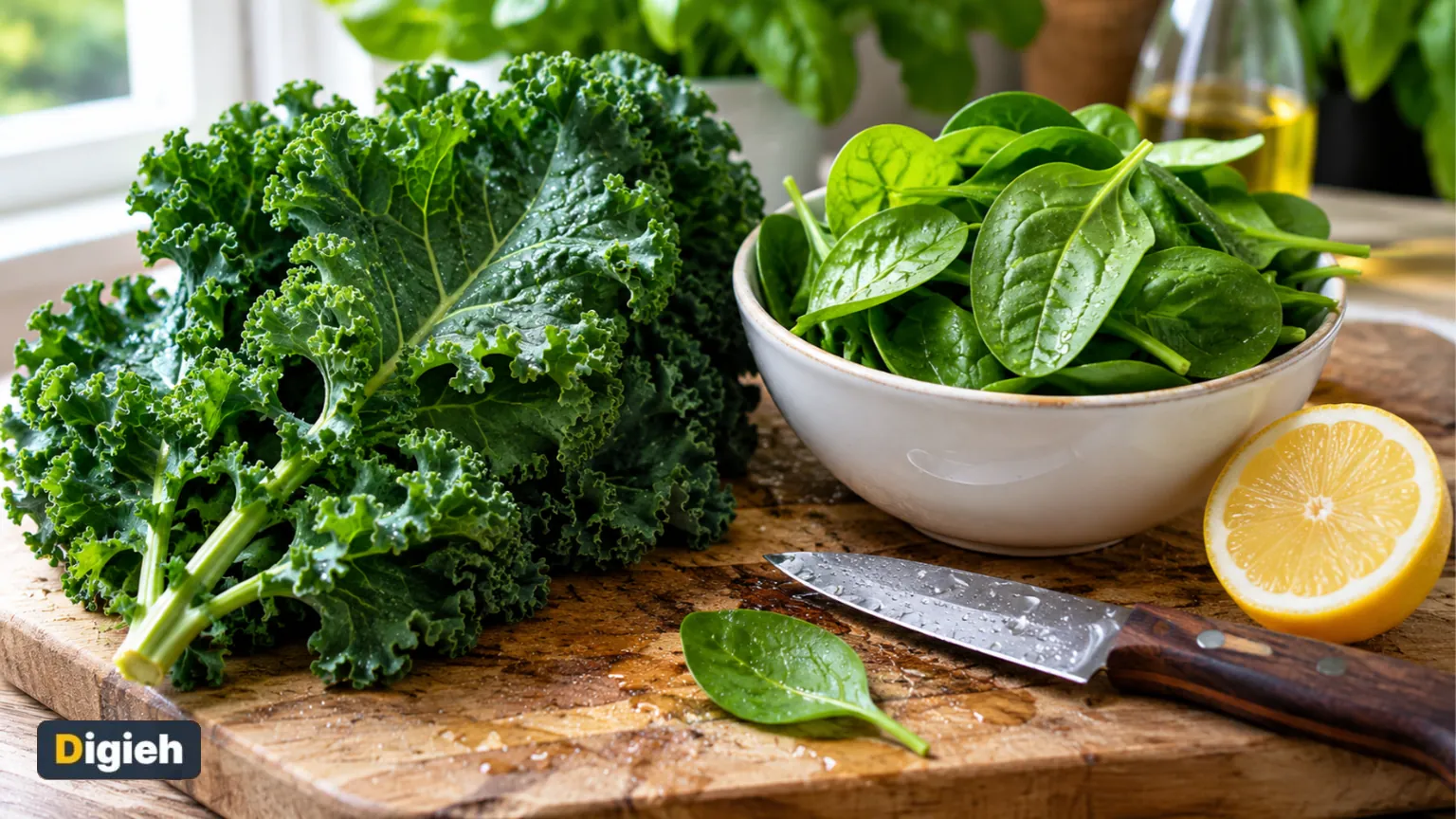
Kale and spinach are both nutrient-packed leafy greens, and neither one is a clear winner. Each has its own strengths.
Spinach is tender, mild and easy to add to almost anything. Kale is sturdier, with a stronger flavor and calcium that your body may absorb more easily.
This guide compares kale and spinach on nutrition, taste, cooking and cautions. You will also learn how to enjoy more of both.
Key Takeaways
- Both greens are rich in vitamin K, vitamin A and folate.
- Spinach is high in oxalate, which limits how much calcium you absorb.
- Kale belongs to the cabbage family, like broccoli and Brussels sprouts.
- People on blood thinners should keep vitamin K intake steady.
- The best choice is the green you will actually eat often.
Jump to a section
- At a glance
- Nutrition
- Calcium and oxalate
- Iron
- Taste and texture
- Cooking
- Cautions
- Buying and storing
- Which to choose
- Frequently asked questions
Kale vs Spinach at a Glance
| Feature | Kale | Spinach |
|---|---|---|
| Plant family | Cabbage family | Amaranth family |
| Texture | Sturdy and chewy | Soft and tender |
| Flavor | Earthy, slightly bitter | Mild and slightly sweet |
| Oxalate | Low | High |
| Best raw use | Massaged salads | Salads and sandwiches |
| Best cooked use | Soups, chips, sautes | Pasta, eggs, smoothies |
Both greens shrink a lot when cooked. Spinach wilts in seconds, while kale needs a few minutes.
5 percentAverage calcium absorbed from spinach in a small clinical study, compared with about 28 percent from milk.
Nutrition Compared
Harvard T.H. Chan School of Public Health lists kale as a source of vitamins K, C and A. It also provides folate, fiber and manganese. It also contains the eye-friendly carotenoids lutein and zeaxanthin.
Spinach offers a similar mix. It is well known for vitamin K, vitamin A, folate, iron and magnesium.
| Nutrient | Kale | Spinach |
|---|---|---|
| Vitamin K | Very high | Very high |
| Vitamin A from carotenoids | High | High |
| Vitamin C | Good source | Moderate source |
| Folate | Good source | Good source |
| Calcium | Good source, well absorbed | Present, poorly absorbed |
| Iron | Moderate | Moderate |
Exact amounts vary by serving size and whether the greens are raw or cooked. A cup of cooked greens packs far more nutrients than a cup of raw, since cooking shrinks them.
Quick tip. Pair greens with a little olive oil or avocado. Fat helps your body absorb vitamins A and K.
Calcium and Oxalate
Spinach contains calcium, but it also contains a lot of oxalate. Oxalate binds to calcium and makes much of it unavailable to your body.
A 1988 study tested how much calcium adults absorbed from spinach. They absorbed only about 5 percent. They absorbed about 28 percent from milk.
The NIH Office of Dietary Supplements lists kale among vegetables that contain calcium. Since kale is low in oxalate, it is a better green for calcium.
This does not make spinach a bad food. It just means you should not count on spinach as a main calcium source.
Iron in Kale and Spinach
Spinach is famous for iron, but plant iron is harder to absorb than iron from meat. Both greens contain this plant form.
- Eat greens with vitamin C foods like citrus, peppers or strawberries.
- Avoid drinking tea or coffee with iron-rich meals.
- Cook greens to make them easier to eat in larger amounts.
Learn more about absorbing iron in our iron supplements guide. Our list of vitamin C foods shows good partners for greens.
Which leafy green do you eat more often?
- Kale
- Spinach
- Both equally
- Not sure
Taste and Texture
Spinach is soft and mild, so it blends into food without much notice. That makes it great for picky eaters.
Kale has a firmer leaf and an earthy, slightly bitter taste. Curly kale is the most common, while lacinato kale has flatter, darker leaves and a softer bite.
Baby kale is more tender than mature kale. It works well raw in salads, much like spinach.
How to Cook Kale
Harvard notes that kale holds up well to boiling, braising, steaming, microwaving and stir-frying. Its sturdy leaves keep their shape.
- Strip the leaves from tough stems.
- Tear or chop the leaves into pieces.
- Saute with olive oil and garlic for a few minutes.
- Add a splash of water and cover until tender.
- Finish with lemon juice and salt.
For raw kale salads, Harvard suggests massaging the leaves with olive oil for one to two minutes. This softens the leaves and mellows the flavor.
Harvard also says kale stems are edible when cooked. Add chopped stems to stir-fries, soups or stock.
How to Cook Spinach
- Wilt it in a hot pan with a little oil for one or two minutes.
- Stir it into soups, pasta or eggs at the very end.
- Blend raw spinach into smoothies.
- Use baby spinach raw in salads and wraps.
A big pile of spinach cooks down to a small amount. Plan on lots of raw leaves for each cooked serving.
Raw or cooked spinach each has benefits. Our guide on spinach raw vs cooked explains the differences.
Easy Ways to Eat More Greens
| Idea | Best green |
|---|---|
| Smoothies | Spinach |
| Crispy chips | Kale |
| Pasta sauces | Spinach |
| Hearty soups | Kale |
| Breakfast eggs | Either |
| Salads | Baby spinach or massaged kale |
A simple vinaigrette works well with both. Try one of our homemade salad dressing recipes.
Kale is a close cousin of broccoli and Brussels sprouts. See our guides to the best way to cook broccoli and how to cook Brussels sprouts.
How to Make Kale Chips
Kale chips are a crunchy snack that even greens skeptics enjoy. They take only a few ingredients.
- Heat the oven to a low to moderate temperature.
- Strip the leaves from the stems and tear them into chips.
- Dry the leaves completely.
- Toss with a little olive oil and salt.
- Spread in a single layer and bake until crisp, checking often.
Watch them closely near the end. Kale chips go from crisp to burnt quickly.
Try seasonings like garlic powder, smoked paprika or a little parmesan. Store leftovers in an airtight container, though they taste best fresh.
Other Leafy Greens Worth Trying
| Green | Flavor | Good for |
|---|---|---|
| Collard greens | Mild and hearty | Braising and wraps |
| Swiss chard | Earthy, beet-like | Sautes and soups |
| Romaine | Crisp and mild | Salads and sandwiches |
| Arugula | Peppery | Salads and pizza |
| Bok choy | Mild and juicy | Stir-fries |
Collards and bok choy belong to the same family as kale. Swiss chard is a cousin of spinach and beets.
Rotating greens keeps meals interesting. It also spreads out nutrients and compounds like oxalate.
Free updates
Join the Digieh list
Be the first to know when our weekly brief launches.
No spam. Unsubscribe anytime. Read our Privacy Policy.
Myths About Kale and Spinach
| Myth | Fact |
|---|---|
| Spinach is the best calcium source | Its calcium is poorly absorbed |
| Kale must be eaten raw to be healthy | Cooked kale is nutritious too |
| Greens are dangerous on blood thinners | Steady amounts are usually fine with medical advice |
| Frozen greens have no nutrients | Frozen greens keep most of their nutrients |
Most myths come from oversimplifying good science. Both greens are healthy for most people and fit into many different eating styles.
Getting Kids to Eat Greens
Start with mild spinach blended into smoothies, sauces or muffins. Many kids never notice it.
Kale chips are another kid-friendly option. Let children help tear the leaves and sprinkle the seasoning.
Offer greens often without pressure. Kids may need many tries before they accept a new food. Eating greens yourself at family meals also sets a helpful example.
Saving Money on Greens
- Buy whole bunches instead of pre-washed bags.
- Choose frozen greens for soups and smoothies.
- Use stems and wilting leaves in soups before they spoil.
- Grow spinach or kale in a pot if you have space.
Kale lasts longer in the fridge than spinach, often by several days when stored dry and well wrapped. Buy spinach in smaller amounts if you cannot use it quickly.
Cautions to Know
Blood Thinners and Vitamin K
Both greens are very high in vitamin K. NIH experts advise people on warfarin to keep vitamin K intake steady each day.
You do not need to avoid greens. Talk with your doctor about eating them in steady amounts.
Kidney Stones and Oxalate
NIDDK lists spinach among foods that people with calcium oxalate kidney stones may want to avoid. Ask your doctor or a dietitian about your own diet.
Thyroid and Raw Kale
Harvard explains that healthy people with enough iodine are not affected by compounds in cruciferous vegetables. People with low thyroid function may want to cook kale rather than eat large amounts raw.
Buying and Storing Greens
- Choose crisp, deep green leaves with no yellowing or slime.
- Store unwashed greens in a bag or container lined with a paper towel.
- Keep them in the fridge crisper drawer.
- Wash just before using.
- Use spinach within a few days, since it spoils faster than kale.
Our guides on how to wash fruits and vegetables and how to store fruits and vegetables have more tips.
Frozen spinach and kale are budget-friendly and keep for months. Compare them in frozen vs fresh vegetables.
Kale and Spinach in Winter
Kale is a cool-weather crop that often tastes sweeter after a frost. Spinach also grows well in cooler months.
Winter is a great time to add greens to warm dishes. Stir them into soups, stews, curries and casseroles near the end of cooking.
- Add chopped kale to bean soup.
- Stir spinach into lentil curry.
- Fold greens into baked pasta.
- Top a baked potato with sauteed greens.
Warm dishes are an easy way to eat more vegetables when salads feel too cold. A large handful of greens disappears into a pot of soup.
Kale vs Spinach for Different Goals
| Goal | Better pick |
|---|---|
| More absorbable calcium | Kale |
| Mild taste for kids | Spinach |
| Quick cooking | Spinach |
| Meal prep that lasts | Kale |
| Low-oxalate diet | Kale |
| Smoothies | Spinach |
Which One Should You Choose?
Both greens belong in a healthy diet. Kale wins for absorbable calcium and low oxalate, while spinach wins for mild flavor and easy cooking.
The Dietary Guidelines encourage a variety of vegetables, including dark green ones. Rotating between kale, spinach and other greens gives you the widest range of nutrients.
Your Leafy Greens Checklist
- Eat a mix of kale, spinach and other greens
- Pair greens with a little healthy fat
- Add vitamin C foods for iron
- Keep vitamin K steady if you take warfarin
- Store greens dry and cold
- Wash just before eating
Try this today. Add a handful of spinach to your next smoothie or a few kale leaves to your soup.
Test Yourself
Why is calcium from spinach poorly absorbed?
- Spinach is high in oxalate
- Spinach has no calcium
- Spinach is low in water
Oxalate binds calcium in spinach, so much of it is unavailable to your body.
Frequently Asked Questions
Is kale healthier than spinach?
Neither is clearly healthier. Each has different strengths.
Which has more calcium, kale or spinach?
Kale calcium is easier to absorb because kale is low in oxalate.
Can I eat kale and spinach every day?
Yes, for most people. Keep vitamin K steady if you take warfarin.
Is raw kale hard to digest?
It can be. Massage it with oil or cook it to soften it.
Conclusion
Kale and spinach are both excellent greens. Kale offers better calcium absorption, while spinach is mild and quick to cook.
Enjoy both often and mix in other greens for variety.
Found this useful?
Editor’s Note
This guide is accurate as of November 10, 2026. It draws on Harvard T.H. Chan School of Public Health, NIDDK, the NIH Office of Dietary Supplements and published research.
Ask your doctor about diet changes if you take blood thinners.
Spot an error in this article? Please contact us at support@digieh.com or read our Corrections Policy.
Keep exploring
Your next read is waiting
 1Fruits & VegetablesLemon Water Benefits: Separating the Facts From Myths9 min read
 2MedicinesHow Long Do Antibiotics Take to Start Working?9 min read
 3AI & TechHow to Use AI for Smarter Holiday Shopping9 min read
 4FashionHow to Clean White Sneakers So They Shine9 min read
 5Science & DiscoveriesQuadrantid Meteor Shower 2027: Best Time to Watch9 min read
 6Finance & MarketsAnthropic IPO Explained: Date, Ticker and Key Numbers5 min read