TRENDING
How to Cook Brussels Sprouts That Taste Great

9 min read
Last updated November 10, 2026
Brussels sprouts have a bad reputation, but most of it comes from overcooking. Cooked the right way, they turn sweet, nutty and crisp.
The secret is simple. Use high heat, give them space in the pan and stop cooking before they turn mushy.
This guide covers how to pick, prep and cook Brussels sprouts five different ways. You will also find flavor ideas and storage tips.
Key Takeaways
- Choose small, firm, bright green sprouts of similar size.
- Roasting at high heat brings out a sweet, nutty flavor.
- Cut sprouts in half so they cook evenly and brown well.
- Overcooking causes the strong smell and mushy texture people dislike.
- Brussels sprouts are rich in vitamin C, vitamin A, folate and fiber.
Jump to a section
- How to pick them
- How to prep them
- Roasted
- Pan-seared
- Air fryer
- Steamed
- Shaved raw
- Flavor ideas
- Storage
- Frequently asked questions
Why Brussels Sprouts Taste Bitter
Brussels sprouts belong to the cabbage family. Like their cousins, they contain sulfur compounds that give them a sharp edge.
Long boiling releases more of those compounds, which leads to a strong smell and a bitter taste. Quick, hot cooking keeps them sweet.
Browning also helps. The caramelized edges add natural sweetness that balances any bitterness.
400 degrees FRoasting temperature recommended by Iowa State University Extension for crispy Brussels sprouts.
How to Pick Brussels Sprouts
Iowa State University Extension advises choosing sprouts that are small and firm with compact, bright green heads. Ohio State University Extension adds that they should be green, not yellow.
- Look for tight, firm heads with no loose leaves.
- Avoid yellow leaves, black spots or soft patches.
- Pick sprouts of similar size so they cook evenly.
- Smaller sprouts tend to taste sweeter and more tender.
- Sprouts on the stalk often stay fresh a bit longer.
Brussels sprouts are at their best in fall and winter. See our guide to winter fruits and vegetables in season for more ideas.
How to Prep Brussels Sprouts
- Rinse the sprouts in cool water and pat them dry.
- Trim off the dry stem end.
- Pull away any loose or yellow outer leaves.
- Cut each sprout in half from top to stem.
- Quarter very large sprouts so all pieces match in size.
Ohio State University Extension advises washing vegetables in cold water without soap, detergent or bleach. Our guide on how to wash fruits and vegetables explains why.
Dry sprouts brown better than wet ones. Take a minute to pat them well before cooking.
Quick tip. Save the loose leaves that fall off. They roast into crispy little chips in just a few minutes.
Method 1. Roasted Brussels Sprouts
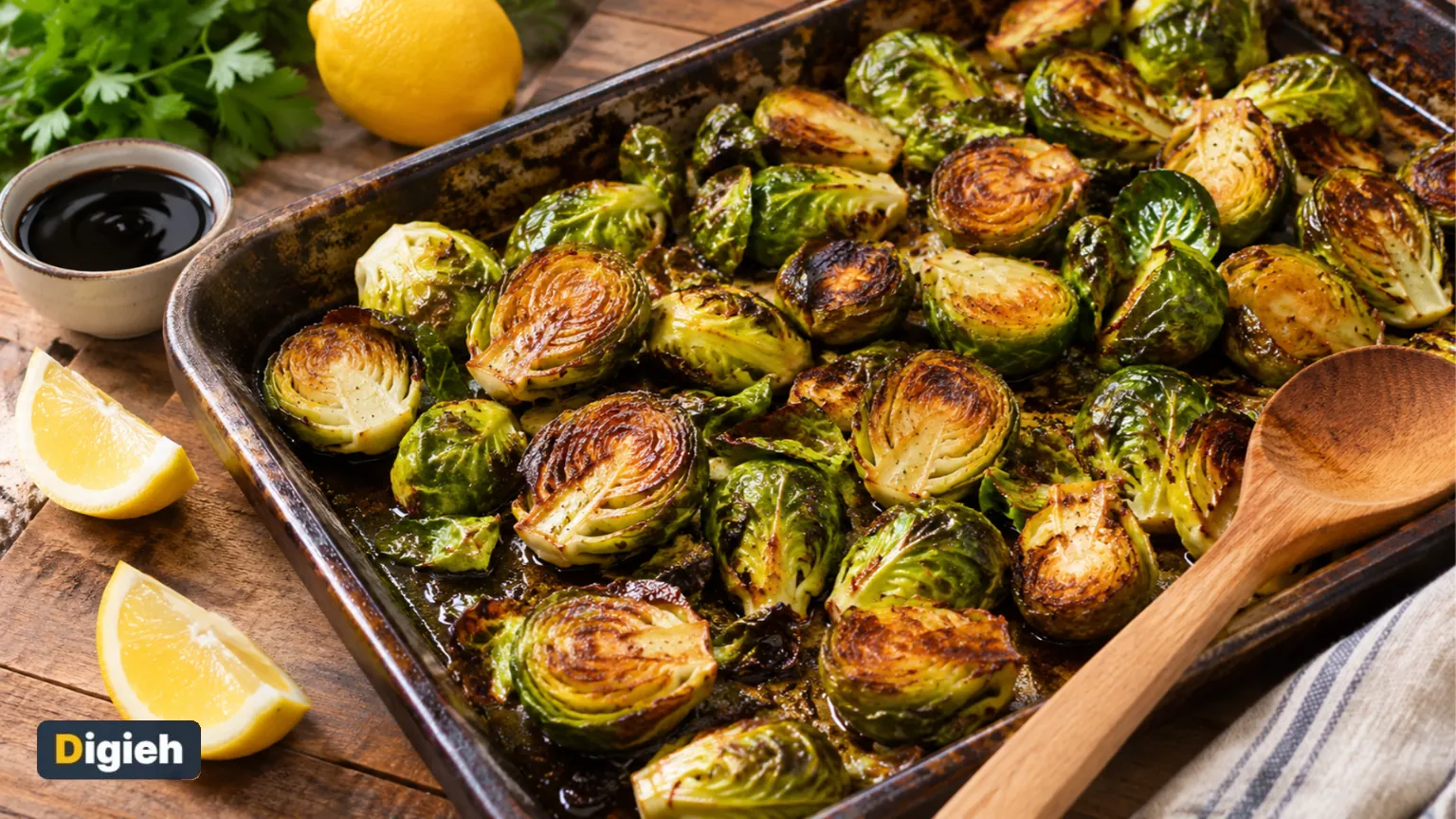
Roasting is the most popular way to cook Brussels sprouts. Iowa State University Extension recommends roasting halved sprouts at 400 degrees Fahrenheit. Roast them for 25 to 30 minutes, stirring every 10 minutes.
- Heat the oven to 400 degrees Fahrenheit.
- Toss halved sprouts with olive oil, salt and pepper.
- Spread them in a single layer on a baking sheet.
- Place them cut side down for the best browning.
- Roast until browned and crispy, stirring a few times.
University of Missouri Extension shares a version that adds garlic and a drizzle of balsamic vinegar near the end. The vinegar adds a sweet, tangy finish.
Do not crowd the pan. Sprouts packed too tightly steam instead of browning. Use two pans if needed.
Want more roasting tips? Our roasted vegetables recipe covers timing for many vegetables.
Method 2. Pan-Seared Brussels Sprouts
Pan-searing gives you deep browning on the stovetop. It is a good choice when your oven is busy.
- Heat a little oil in a large skillet over medium-high heat.
- Add halved sprouts cut side down in one layer.
- Cook without stirring until the cut sides turn deep golden.
- Stir, add a splash of water and cover for a few minutes.
- Uncover, season and cook until tender.
A cast iron pan works especially well. It holds heat and gives an even sear.
How do you usually cook Brussels sprouts?
- Roasted
- Air fryer
- Steamed or boiled
- Not sure
Method 3. Air Fryer Brussels Sprouts
An air fryer makes Brussels sprouts extra crispy with little oil. It is also faster than the oven for small batches.
- Toss halved sprouts with a small amount of oil and salt.
- Spread them in the basket without piling them up.
- Cook and shake the basket partway through.
- Check often, since air fryers vary in power.
Follow your air fryer manual for exact times and temperatures. Cook in batches if your basket is small.
Method 4. Steamed Brussels Sprouts
Steaming keeps sprouts soft and bright green. Ohio State University Extension recommends steaming or cooking in a small amount of liquid until fork tender.
OSU suggests a general rule of about a quarter cup of liquid for each cup of vegetables. Check them often so they stay bright green and do not turn mushy.
Toss steamed sprouts with lemon juice and a little butter or olive oil. OSU suggests this simple lemon butter finish.
Method 5. Shaved Raw Brussels Sprouts
Raw Brussels sprouts make a crunchy winter salad. Iowa State University Extension suggests slicing raw sprouts very thin for slaws and salads.
- Slice sprouts thinly with a sharp knife or mandoline.
- Toss with lemon juice and olive oil.
- Add nuts, dried cranberries and shaved cheese.
- Let the salad rest a few minutes to soften.
A simple vinaigrette works well here. Try one of our homemade salad dressing recipes.
Cooking Methods Compared
| Method | Texture | Best for |
|---|---|---|
| Roasting | Crispy outside, tender inside | Big batches and holiday meals |
| Pan-searing | Deeply browned | Quick weeknight sides |
| Air frying | Extra crispy | Small batches |
| Steaming | Soft and tender | Gentle flavor |
| Shaved raw | Crunchy | Salads and slaws |
Flavor Ideas That Work
| Flavor | Add it |
|---|---|
| Balsamic glaze | After roasting |
| Garlic | In the last part of cooking |
| Lemon zest and juice | Just before serving |
| Parmesan | Right out of the oven |
| Honey or maple syrup | Near the end of roasting |
| Toasted nuts | Before serving for crunch |
OSU lists herbs and spices like caraway, cumin, dill, garlic, mustard seed, nutmeg, sage and thyme as good matches.
Garlic adds flavor and a few nutrients of its own. Read about the health benefits of garlic.
Add garlic late in cooking so it does not burn. Sweet glazes also burn easily, so watch them closely.
Common Mistakes to Avoid
| Mistake | Fix |
|---|---|
| Overcooking | Stop when tender and browned |
| Crowding the pan | Use a single layer with space |
| Mixing big and small sprouts | Cut pieces to the same size |
| Skipping the oil | Use enough oil to coat lightly |
| Adding glaze too early | Add sweet sauces near the end |
Most bad Brussels sprouts come from one of these mistakes. Fix them and the flavor improves a lot.
Free updates
Join the Digieh list
Be the first to know when our weekly brief launches.
No spam. Unsubscribe anytime. Read our Privacy Policy.
Make-Ahead Tips for Holiday Meals
Brussels sprouts are a classic holiday side. A little prep the day before frees up time on the big day.
- Trim and halve the sprouts a day ahead.
- Store them dry in a sealed container in the fridge.
- Mix your glaze or dressing in advance.
- Roast them while the main dish rests.
Roasted sprouts taste best fresh from the oven. If you must reheat them, use a hot oven or skillet so they crisp up again.
Avoid reheating in the microwave if you can. It softens the crispy edges that make them taste so good.
Easy Brussels Sprouts Combinations
Brussels sprouts pair well with many other foods. Mixing them with other vegetables makes a colorful side dish.
- Roast them with cubes of sweet potato or butternut squash.
- Toss them with apples and pecans for a fall twist.
- Mix them with crispy chickpeas for extra protein.
- Add them to grain bowls with rice or quinoa.
- Stir them into pasta with garlic and parmesan.
Cut all the vegetables to a similar size so they finish cooking together. Dense vegetables like squash may need a head start.
How Much to Buy
OSU Extension notes that about one and a half pounds of Brussels sprouts makes about four servings. Plan a little more if they are the main vegetable.
Sprouts shrink a bit as they cook. Buying extra also gives you leftovers for salads or grain bowls later in the week.
Brussels Sprouts Nutrition
OSU Extension calls Brussels sprouts excellent sources of vitamins A and C, potassium, folate and fiber. It also notes they are a good source of iron.
| Nutrient | Why it matters |
|---|---|
| Vitamin C | Supports healing and the immune system |
| Vitamin A | Supports vision and immune function |
| Fiber | Supports digestion and helps you feel full |
| Folate | Helps the body make new cells |
| Potassium | Supports healthy blood pressure |
OSU notes that one cooked cup has about 60 calories. That makes them a filling, low-calorie side dish.
Brussels sprouts are a close cousin of broccoli. See our tips on the best way to cook broccoli for another easy green side.
A Note for People on Warfarin
Brussels sprouts and other green vegetables contain vitamin K. The NIH Office of Dietary Supplements advises people on warfarin to keep vitamin K intake steady each day.
You do not have to avoid green vegetables. Talk with your doctor about how to eat them consistently.
How to Store Brussels Sprouts
Iowa State University Extension advises refrigerating unwashed sprouts in an airtight bag for up to a week. University of Missouri Extension suggests a ventilated bag with a damp paper towel.
- Remove wilted outer leaves before storing.
- Wash them just before cooking, not before storing.
- Store cooked sprouts in a sealed container in the fridge.
- Eat cooked leftovers within a few days.
Our guide on how to store fruits and vegetables has more tips. For leftovers, see how long leftovers last.
Frozen Brussels sprouts are a handy backup. Learn the trade-offs in frozen vs fresh vegetables.
Getting Kids to Try Them
Kids are more likely to enjoy crispy roasted sprouts than soft boiled ones. Start with small halves and a familiar topping like cheese.
Let kids help toss the sprouts in oil or sprinkle the seasoning. Cooking together makes new foods less scary.
Your Brussels Sprouts Checklist
- Pick small, firm, green sprouts
- Trim and halve them
- Dry them well
- Use high heat and one layer
- Stop before they turn mushy
- Finish with a bright flavor
Try this today. Roast one sheet of halved sprouts cut side down and taste the difference that browning makes.
Test Yourself
What usually makes Brussels sprouts taste bitter and smell strong?
- Cutting them in half
- Overcooking them
- Roasting them
Long cooking releases more sulfur compounds. Quick, hot cooking keeps them sweet.
Frequently Asked Questions
How do you make Brussels sprouts not bitter?
Roast or sear them at high heat and avoid overcooking.
Should you cut Brussels sprouts in half?
Yes. Halves cook evenly and brown better.
Can you eat Brussels sprouts raw?
Yes. Slice them thin for salads and slaws.
How long do Brussels sprouts last in the fridge?
Unwashed raw sprouts last up to about a week.
Conclusion
Great Brussels sprouts come down to high heat, enough space and good timing. Roast them, sear them or shave them raw for a side dish people actually want.
Try one new method this week and add your favorite topping.
Found this useful?
Editor’s Note
This guide is accurate as of November 10, 2026. It draws on Extension guides from Iowa State, Ohio State and the University of Missouri. It also uses the NIH Office of Dietary Supplements.
Ask your doctor about diet changes if you take blood thinners.
Spot an error in this article? Please contact us at support@digieh.com or read our Corrections Policy.
Keep exploring
Your next read is waiting
 1Science & DiscoveriesQuadrantid Meteor Shower 2027: Best Time to Watch9 min read
 2Fruits & VegetablesWinter Squash Types: How to Pick and Cook9 min read
 3MedicinesIs Taurine Safe? The Truth About Energy Drinks9 min read
 4AI & TechClaude Fable 5.2 and Mythos 5.2: What Changed4 min read
 5FashionHow to Hem Pants Without Sewing in Minutes9 min read
 6Travel & TourismHow to Pack a Carry-On for a Week9 min read