TRENDING
Garlic Health Benefits and Best Ways to Eat

9 min read
Last updated November 10, 2026
Garlic adds big flavor with almost no calories. Research suggests garlic supplements may modestly lower cholesterol and blood pressure in some people. Evidence that garlic prevents colds or cancer is weak.
The best way to enjoy garlic is as part of everyday cooking. Fresh, roasted or sauteed, it makes vegetables, beans and whole grains more delicious.
This guide explains what the research shows and how to cook and store garlic safely. It also covers who should be careful with supplements.
Health note. This article shares general information, not medical advice. Talk with your doctor before taking garlic supplements, especially if you take blood thinners or have surgery planned.
Key Takeaways
- Garlic supplements may modestly lower total and LDL cholesterol, says NCCIH.
- Limited evidence suggests a small drop in blood pressure for people with high blood pressure.
- Very little research supports garlic for preventing colds.
- Garlic supplements may raise bleeding risk.
- Keep homemade garlic in oil in the fridge and use it within four days.
Jump to a section
- What research shows
- Heart health
- Colds and immunity
- Safety and side effects
- Best ways to eat garlic
- Buying and storing
- Garlic in oil safety
- Easy ideas
- Frequently asked questions
What Garlic Is
Garlic is a bulb in the same family as onions, leeks and chives. People have used it in cooking and folk medicine for thousands of years.
Each bulb holds many cloves wrapped in papery skin. Chopping or crushing garlic releases its famous strong smell and flavor.
4 daysThe longest you should keep homemade garlic in oil in the fridge, per Oregon State University Extension.
What the Research Shows
The National Center for Complementary and Integrative Health reviews the science on garlic. Here is a simple summary of its findings.
| Health claim | What the evidence says |
|---|---|
| Lower cholesterol | Supplements may modestly lower total and LDL cholesterol |
| Lower blood pressure | Limited evidence of a slight drop in people with high blood pressure |
| Prevent colds | Very little research supports this |
| Prevent stomach cancer | Eating garlic does not appear to lower risk |
| Prevent colorectal cancer | The effect is uncertain |
Most studies used garlic supplements, not garlic in food. Results from supplements may not match what you get from cooking.
Quick tip. Treat garlic as a healthy flavor booster, not a medicine. It helps you enjoy more vegetables and use less salt.
Garlic and Heart Health
Cholesterol is the most studied area, NCCIH says. Garlic supplements may modestly reduce total and LDL cholesterol in people with high cholesterol.
NCCIH also notes limited evidence that garlic supplements may slightly lower blood pressure in people with high blood pressure.
These effects are small. Garlic should not replace prescribed medicines, a healthy diet or regular exercise.
- Keep taking your prescribed heart medicines.
- Tell your doctor about any supplements you add.
- Use garlic in place of extra salt for flavor.
Garlic for Colds and Immunity
Many people reach for garlic in cold season. NCCIH says very little research supports garlic supplements for immune health.
A 2022 review found only two small studies suggesting a possible benefit, and both had weak methods, according to NCCIH.
Enjoy garlic in warm soups, but rely on proven habits too. Read our guide on supporting your immune system this winter.
How do you use garlic most often?
- Sauteed in cooking
- Roasted whole
- Raw in dressings
- Not sure
Safety and Side Effects
Garlic in food is safe for most people. Supplements and large amounts carry more risks.
| Concern | What NCCIH says |
|---|---|
| Bleeding | Supplements may increase bleeding risk |
| Medicines | Garlic may interact with some medicines |
| Common side effects | Bad breath, body odor, stomach pain, gas, nausea |
| Allergy | Some people have allergic reactions |
| Pregnancy | Amounts above normal food use may not be safe |
| Raw garlic on skin | Can cause severe irritation and chemical burns |
NCCIH advises telling your providers about garlic supplements, especially before surgery or if you take blood thinners or aspirin.
Never put raw garlic on your skin. NCCIH warns it can cause serious burns.
Best Ways to Eat Garlic
| Method | Flavor | Best uses |
|---|---|---|
| Raw, minced | Sharp and spicy | Dressings, salsas, dips |
| Sauteed | Nutty and mellow | Stir-fries, sauces, greens |
| Roasted whole | Sweet and buttery | Spreads, mashed potatoes |
| Simmered | Soft and gentle | Soups, stews, beans |
Cook garlic over medium heat and watch it closely. Burnt garlic turns bitter quickly.
Add minced garlic near the end of sauteing vegetables. It needs less than a minute to turn golden.
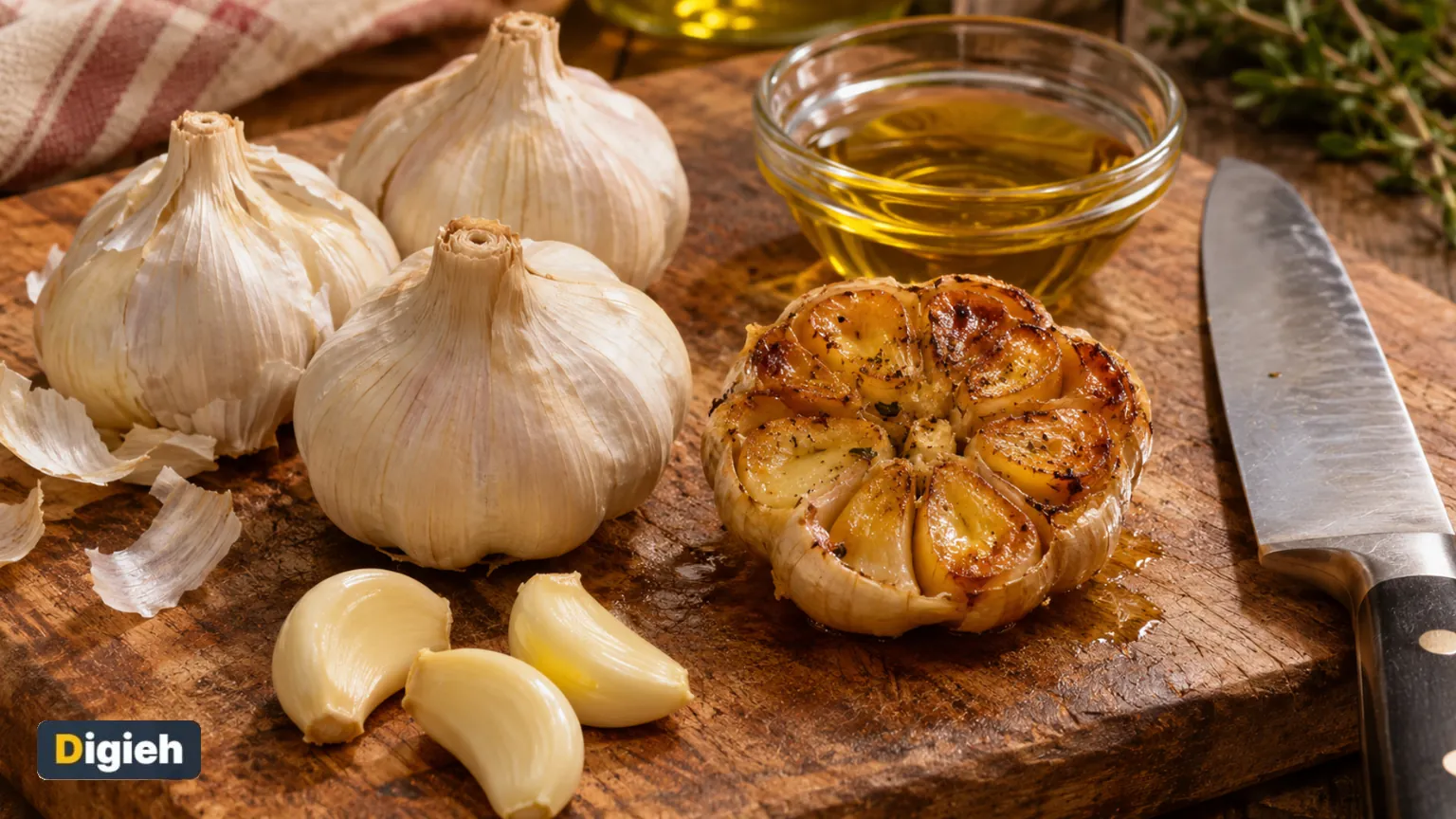
How to Roast a Whole Garlic Bulb
- Heat the oven to about 400 degrees Fahrenheit.
- Slice the top off the bulb to expose the cloves.
- Drizzle with a little olive oil.
- Wrap in foil and roast for about 35 to 45 minutes.
- Squeeze the soft cloves out and spread on bread or stir into dishes.
Roasted garlic pairs well with sheet pan vegetables. Try it with our roasted vegetables recipe.
How to Peel and Chop Garlic
- Press a clove with the flat side of a knife to loosen the skin.
- Trim the root end and slip off the peel.
- Slice, mince or crush depending on the recipe.
- Sprinkle a pinch of salt to make mincing easier.
Use a garlic press for a quick, fine texture. Clean it right away so bits do not dry inside.
Buying and Storing Garlic
Michigan State University Extension suggests choosing dry bulbs with plump, firm cloves and plenty of papery skin. Skip bulbs with soft, shriveled cloves or green shoots.
- Store whole bulbs uncovered or loosely covered in a cool, dark place.
- Keep garlic away from heat and sunlight.
- Whole bulbs last about a month, MSU says.
- Once you break a bulb, use the cloves within a few days.
Our guide on how to store fruits and vegetables covers more pantry produce.
Garlic in Oil Safety
Homemade garlic in oil can be dangerous if stored wrong. Oregon State University Extension explains that garlic in oil can grow the bacteria that cause botulism.
- Always refrigerate homemade garlic in oil.
- Use it within four days.
- Label the jar with the date you made it.
- Freeze it for longer storage.
MSU Extension agrees and adds that room temperature mixtures carry a botulism risk. Makers acidify store-bought garlic in oil, so follow its label.
Food safety. Never leave homemade garlic oil on the counter. Botulism is rare but very serious.
Freezing and Drying Garlic
MSU notes that frozen garlic can become strong or bitter. Oregon State suggests freezing crushed garlic in ice cube trays, then moving the cubes to airtight containers.
You can also dry thin garlic slices in a dehydrator. MSU says to expect a strong smell while it dries.
Free updates
Join the Digieh list
Be the first to know when our weekly brief launches.
No spam. Unsubscribe anytime. Read our Privacy Policy.
Garlic Breath Tips
- Eat fresh parsley or mint after a garlicky meal.
- Drink water with your meal.
- Brush your teeth and tongue.
- Cook garlic instead of eating it raw for a milder smell.
Easy Garlic Ideas
- Garlic and lemon green beans
- Garlic sauteed spinach
- White bean and garlic soup
- Garlic yogurt dip with herbs
- Garlic roasted chickpeas
Add garlic to steamed vegetables too. Our guide on the best way to cook broccoli pairs well with a garlic finish.
Whisk fresh garlic into a simple vinaigrette. See our homemade salad dressing guide.
Types of Garlic
| Type | What to know |
|---|---|
| Softneck garlic | Common in stores, stores well, many small cloves |
| Hardneck garlic | Fewer, larger cloves, bold flavor |
| Elephant garlic | Very large cloves, mild flavor, closer to a leek |
| Black garlic | Aged until dark and sweet, soft texture |
| Garlic powder | Convenient, milder, good for rubs |
Most grocery stores carry softneck garlic because it keeps well on the shelf. Farmers markets often sell hardneck types in late summer.
Fresh garlic gives the brightest flavor. Garlic powder is handy for spice rubs and quick seasoning.
Garlic and Your Stomach
Garlic can upset some stomachs. NCCIH lists stomach pain, gas and nausea among possible side effects.
- Start with small amounts if garlic bothers you.
- Choose cooked garlic, which is often gentler than raw.
- Avoid eating lots of raw garlic on an empty stomach.
- Talk with your doctor if you have ongoing digestive symptoms.
Garlic and Its Cousins
Garlic belongs to the allium family with onions, shallots, leeks and chives. Each adds its own flavor to meals.
Mixing them is an easy way to build flavor without extra salt. Try leeks in soup, shallots in dressings and chives on eggs.
Cooking Mistakes to Avoid
| Mistake | Better choice |
|---|---|
| Burning garlic | Cook on medium heat and add it late |
| Storing bulbs in plastic | Keep them loosely covered and dry |
| Leaving garlic oil out | Refrigerate and use within four days |
| Using sprouted cloves raw | Remove green sprouts, which taste bitter |
Garlic Supplements
Garlic supplements come as powders, oils and aged garlic extract. Quality and strength vary a lot between brands.
- Talk with your doctor before starting.
- Tell your surgeon if you take garlic supplements.
- Look for products tested by an independent group.
- Do not use supplements to replace prescribed medicines.
Growing Your Own Garlic
Garlic is one of the easiest crops for home gardeners. In many cold climates, people plant cloves in fall and harvest bulbs the next summer.
- Buy firm bulbs from a garden center or local farm.
- Break bulbs into cloves just before planting.
- Plant cloves pointed end up in loose, well-drained soil.
- Cover with mulch to protect them through winter.
- Harvest when the lower leaves turn brown.
Check with your local extension office for the best planting time in your area. Timing varies a lot by climate.
Cooking With Garlic on a Budget
Fresh garlic is cheap and lasts for weeks. One bulb can flavor many meals.
- Buy whole bulbs instead of pre-peeled cloves.
- Use garlic to make beans, lentils and rice taste special.
- Freeze extra crushed garlic in small portions.
Your Garlic Checklist
- Choose firm, dry bulbs
- Store whole bulbs in a cool, dark place
- Refrigerate homemade garlic oil and use within four days
- Cook garlic gently to avoid bitterness
- Ask your doctor before taking supplements
- Never apply raw garlic to skin
Try this today. Roast a whole garlic bulb while dinner cooks. Spread the soft cloves on toast or stir them into mashed potatoes.
Test Yourself
How long can homemade garlic in oil stay in the fridge?
- Two weeks
- One month
- Four days
Oregon State University Extension says to use refrigerated homemade garlic in oil within four days or freeze it.
Frequently Asked Questions
Is garlic good for your heart?
Supplements may modestly lower cholesterol and blood pressure, NCCIH says.
Does garlic cure colds?
No. Very little research supports garlic for colds.
Is raw garlic healthier than cooked?
Both add flavor and nutrients. Choose the form you enjoy most.
Can garlic supplements cause bleeding?
Yes, they may raise bleeding risk. Ask your doctor first.
Conclusion
Garlic is a flavorful, healthy addition to everyday meals. Supplements may offer small heart benefits, but they carry risks and are not a cure.
Cook with garlic often, store it safely and talk with your doctor before trying supplements.
Found this useful?
Editor’s Note
This guide is accurate as of November 10, 2026. It draws on the National Center for Complementary and Integrative Health. It also uses extension guidance from Michigan State and Oregon State universities.
Research on garlic continues, so check back for updates.
Spot an error in this article? Please contact us at support@digieh.com or read our Corrections Policy.
Keep exploring
Your next read is waiting
 1Fruits & VegetablesOnion Health Benefits and How to Cut Tearlessly9 min read
 2MedicinesHow SSRI Antidepressants Work: Sertraline and More Facts9 min read
 3FashionHow to Hem Pants Without Sewing in Minutes9 min read
 4AI & TechHow to Use AI for Smarter Holiday Shopping9 min read
 5Travel & TourismHow to Pack a Carry-On for a Week9 min read
 6Science & DiscoveriesQuadrantid Meteor Shower 2027: Best Time to Watch9 min read