TRENDING
Iron Supplements Guide: Signs, Types and Smart Tips

9 min read
Last updated November 10, 2026
Iron supplements can treat iron deficiency, but you should take them only after a blood test confirms you need them. Too much iron can cause stomach problems and, in children, dangerous poisoning.
Signs of low iron include tiredness, weakness, pale skin, shortness of breath and cold hands and feet. Many people with mild deficiency have no symptoms at all.
This guide explains who is at risk and how doctors test for low iron. It also covers supplement types and how to take them safely.
Health note. This article shares general information, not medical advice. Ask your doctor for a blood test before taking iron, and follow their directions for the type and amount.
Key Takeaways
- Iron deficiency often has no symptoms early on, says the NIH Office of Dietary Supplements.
- Blood tests, including ferritin, confirm low iron before treatment.
- Oral iron is the most common treatment and can take months to restore levels.
- Vitamin C foods boost absorption, while tea and calcium can reduce it.
- Keep iron pills away from children, since overdose can be fatal.
Jump to a section
- Why iron matters
- Signs of low iron
- Who is at risk
- Testing for low iron
- Types of iron supplements
- How to take iron
- Iron-rich foods
- Safety and side effects
- When to get help
- Frequently asked questions
Why Iron Matters
MedlinePlus explains that your body uses iron to make hemoglobin, the protein in red blood cells that carries oxygen. Muscles also need iron to make myoglobin.
Your body cannot make iron, so it must come from food. When iron runs low, your body makes fewer healthy red blood cells.
3 to 6 monthsHow long oral iron often takes to restore iron levels, per the NHLBI.
The NHLBI calls iron-deficiency anemia the most common type of anemia. Left untreated, it can lead to fatigue, headaches, restless legs, heart problems and pregnancy complications. In children, it can affect growth and development, so early testing matters.
Signs of Low Iron
The NIH Office of Dietary Supplements notes that iron deficiency often causes no obvious symptoms at first. As anemia develops, signs appear.
| Sign | What you might notice |
|---|---|
| Tiredness and weakness | Low energy that does not improve with rest |
| Pale skin | Paler face, gums or nail beds |
| Shortness of breath | Getting winded easily |
| Cold hands and feet | Feeling chilly more often |
| Trouble concentrating | Foggy thinking or poor memory |
| Dizziness | Feeling lightheaded |
These symptoms have many causes. A blood test is the only way to know if low iron is the reason.
Quick tip. Write down your symptoms and how long you have had them. Bring the list to your doctor visit.
Who Is at Risk
ODS lists several groups at higher risk of iron deficiency.
- Teen girls and women with heavy periods
- Pregnant people
- Infants, especially those born early or small
- Frequent blood donors
- People with cancer, digestive disorders or heart failure
- People who do not eat meat, poultry or seafood
The National Heart, Lung, and Blood Institute adds other causes. These include bleeding ulcers, regular aspirin use and some intestinal surgeries.
Testing for Low Iron
The NHLBI says doctors diagnose iron-deficiency anemia with blood tests. These often include a complete blood count, hemoglobin, blood iron and ferritin.
Ferritin shows how much iron your body has stored. Low iron and low ferritin support the diagnosis.
Your doctor may also look for the cause, such as hidden blood loss. Treating the cause matters as much as replacing iron.
Have you ever had your iron levels checked?
- Yes, recently
- Yes, years ago
- Never
- Not sure
Types of Iron Supplements
ODS says iron supplements usually contain one of these forms.
| Form | Notes |
|---|---|
| Ferrous sulfate | Very common and low cost |
| Ferrous gluconate | Another common form |
| Ferric citrate | Also used in some prescriptions |
| Ferric sulfate | Found in some products |
| Multivitamins with iron | Smaller amounts mixed with other nutrients |
Labels list both the iron compound and the elemental iron. Your doctor or pharmacist can explain which number matters for your plan.
For serious cases, the NHLBI notes that doctors may give iron through an IV. This often works in one or a few sessions.
How to Take Iron
- Follow your doctor’s directions for the type, amount and timing.
- Take iron with a vitamin C food or drink if your doctor agrees.
- Avoid taking iron at the same time as calcium, tea or coffee.
- Ask whether to take it with food if your stomach gets upset.
- Keep taking it for the full time your doctor recommends.
ODS notes that calcium can interfere with iron absorption, so taking them at different times of day may help.
Our guide on how to read a Drug Facts label helps you understand supplement and medicine labels.
Medicine Interactions
| Medicine | Possible issue |
|---|---|
| Levothyroxine for thyroid | Iron can make it less effective |
| Levodopa for Parkinson’s | Iron can lower its absorption |
| Acid reducers like omeprazole | Less stomach acid can lower iron absorption |
| Calcium supplements | Can reduce iron absorption |
Tell your pharmacist about every medicine and supplement you take. They can help you space doses correctly.
Iron-Rich Foods
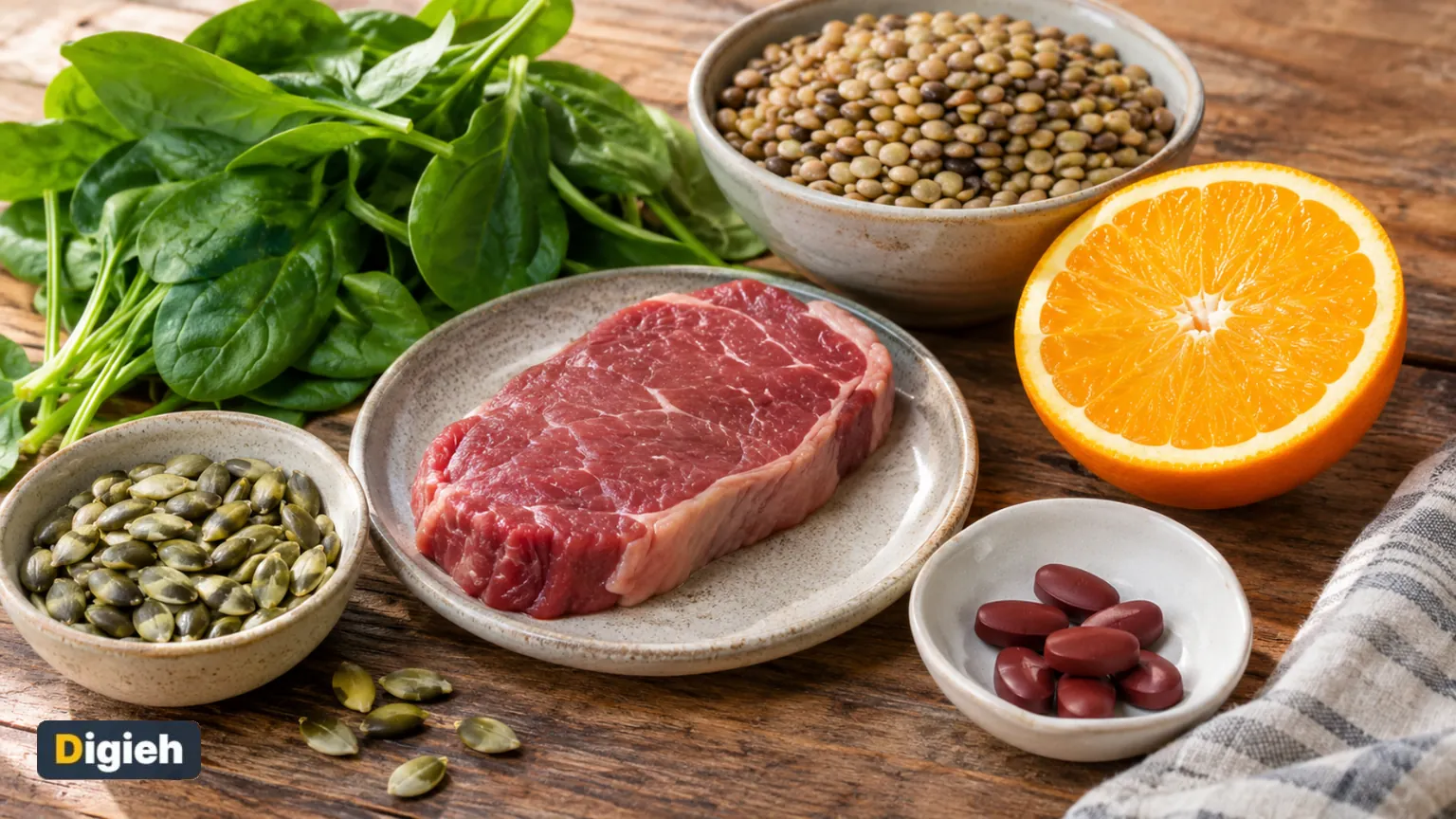
ODS explains that your body absorbs heme iron from meat, seafood and poultry more easily than nonheme iron from plants.
| Heme iron foods | Nonheme iron foods |
|---|---|
| Lean red meat | Beans and lentils |
| Dark meat poultry | Spinach and other leafy greens |
| Oysters and clams | Iron-fortified cereals |
| Salmon and tuna | Nuts, seeds and dried fruit |
MedlinePlus says eating some meat, fish or poultry with beans or greens can boost plant iron absorption. It also notes that cooking in a cast-iron skillet can add iron to food.
See our guides on spinach raw vs cooked and caring for cast iron.
Boost Absorption From Food
- Pair beans with tomatoes or peppers.
- Add strawberries or citrus to iron-fortified cereal.
- Squeeze lemon over sauteed greens.
- Drink tea and coffee between meals, not with them.
MedlinePlus notes that black tea contains compounds that bind iron and reduce absorption.
Safety and Side Effects
ODS lists stomach upset, constipation, nausea, belly pain, vomiting and diarrhea as common side effects, especially on an empty stomach.
Higher amounts can irritate the stomach and lower zinc absorption. People with hemochromatosis, an inherited condition that causes iron buildup, should avoid iron supplements.
Keep iron away from children. ODS warns that accidental iron overdose is a leading cause of fatal poisoning in young children. Call Poison Control at 1-800-222-1222 right away if a child swallows iron pills.
Store iron in a locked cabinet with child-resistant caps. Our guide on how to store medicines at home explains safe storage.
Free updates
Join the Digieh list
Be the first to know when our weekly brief launches.
No spam. Unsubscribe anytime. Read our Privacy Policy.
Iron During Pregnancy
Pregnancy raises the body’s need for iron, and ODS lists pregnant people as a higher-risk group. Many prenatal vitamins include iron.
Follow your prenatal care team’s advice on testing and supplements.
Iron for Vegetarians and Vegans
Plant-based eaters can get enough iron with planning. Focus on beans, lentils, tofu, fortified cereals and leafy greens, paired with vitamin C foods.
Ask your doctor about testing if you feel tired or have heavy periods. Cooking beans and lentils from scratch or buying canned versions makes it easy to add iron to soups, stews and salads every week.
Other Minerals People Ask About
Iron is one of several minerals that support energy. Magnesium is another popular supplement, and our magnesium guide explains its types and safety.
Iron for Babies and Children
Infants and young children need iron for growth and brain development. ODS lists infants, especially those born early or small, as a higher-risk group.
The NHLBI notes that young children may develop low iron as they start whole foods. This often happens between nine months and one year. Iron-rich baby foods and fortified cereals help.
Never give children adult iron pills. Ask your pediatrician before giving any iron supplement.
Iron and Athletes
The NHLBI lists endurance sports among things that can affect iron. Runners and other endurance athletes may want to discuss iron testing with their doctor.
Eat balanced meals with iron and vitamin C foods, and report unusual tiredness or a drop in performance.
Iron Myths and Facts
| Myth | Fact |
|---|---|
| Everyone who is tired needs iron | Only a blood test can confirm low iron |
| More iron works faster | Extra iron raises side effects and risks |
| Spinach is the best iron source | Your body absorbs plant iron less easily than meat iron |
| Iron supplements are harmless | They can poison children and harm people with hemochromatosis |
| You can stop when you feel better | Finish the full course your doctor sets |
Heavy Periods and Iron
Heavy menstrual bleeding is a common cause of low iron, according to both ODS and the NHLBI. If you soak through pads or tampons quickly or have very long periods, talk with your doctor.
Treating the cause of heavy bleeding can help prevent iron deficiency from coming back.
Questions to Ask Your Doctor
- Do my blood tests show low iron or low ferritin?
- What is causing my low iron?
- Which iron form and schedule fit me best?
- How long should I take iron, and when will you retest?
- Could iron affect my other medicines?
A follow-up blood test shows whether treatment is working. Ask when to schedule it before you leave the appointment.
Should You Take a Multivitamin With Iron?
Some people take a multivitamin that includes iron. It provides smaller amounts than a dedicated iron supplement.
If you do not have low iron, extra iron may not help. Some people choose a multivitamin without iron for this reason, unless a doctor advises otherwise.
Ask your doctor or pharmacist which product fits your age, diet and health.
When to Get Help
- Ongoing tiredness, weakness or shortness of breath
- Very heavy periods or bleeding between periods
- Black or bloody stools
- Chest pain or a racing heart
- A child who swallowed iron pills
Call 911 for chest pain, severe shortness of breath or fainting.
Your Iron Checklist
- Get a blood test before supplementing
- Ask your doctor about the right form
- Pair iron with vitamin C if advised
- Space iron away from calcium and tea
- Watch for stomach side effects
- Lock iron away from children
Try this today. Add a vitamin C food to one iron-rich meal, like peppers with beans or berries with fortified cereal.
Test Yourself
Which drink can reduce iron absorption when taken with meals?
- Orange juice
- Water
- Black tea
MedlinePlus notes that black tea contains compounds that bind iron and lower absorption.
Frequently Asked Questions
Should I take iron if I feel tired?
Not without a blood test. Tiredness has many causes.
How long do iron supplements take to work?
Restoring iron levels often takes three to six months, the NHLBI says.
Why do iron pills upset my stomach?
Stomach upset is common. Ask your doctor about timing or another form.
Can I get enough iron from food?
Many people can. Pair iron foods with vitamin C for better absorption.
Conclusion
Iron supplements help people with confirmed low iron, but they are not for everyone. Get tested, follow your doctor’s plan and pair iron with smart food choices.
Always store iron safely away from children, ideally in a locked cabinet.
Found this useful?
Editor’s Note
This guide is accurate as of November 10, 2026. It draws on the NIH Office of Dietary Supplements, the National Heart, Lung, and Blood Institute and MedlinePlus.
Talk with your doctor about your own iron needs and a testing plan.
Spot an error in this article? Please contact us at support@digieh.com or read our Corrections Policy.
Keep exploring
Your next read is waiting
 1Fruits & VegetablesPotassium Rich Fruits and Vegetables Beyond the Banana9 min read
 2FashionHow to Thrift Shop Like a Pro Easily9 min read
 3MedicinesAshwagandha Benefits and Risks: What the Research Shows9 min read
 4Travel & TourismHow to Pack a Carry-On for a Week9 min read
 5BusinessHoliday Gift Ideas for Coworkers Under 25 Dollars9 min read
 6Food & LifestyleHealthy Christmas Cookies That Still Taste Like Treats9 min read