TRENDING
Spinach Raw vs Cooked: Which Gives More Nutrients?

7 min read
Last updated November 10, 2026
Both raw and cooked spinach are healthy, but they shine in different ways. Cooked spinach packs more iron, folate and magnesium per serving because it shrinks down. Raw spinach keeps more vitamin C.
Half a cup of boiled spinach has 131 mcg of folate, the NIH says. A cup of raw spinach has 58 mcg. The best plan is to enjoy both.
This guide compares raw and cooked spinach, explains oxalates and shares easy cooking tips.
Key Takeaways
- Cooking shrinks spinach, so a serving of cooked spinach holds more nutrients.
- Boiled spinach gives 3 mg of iron per half cup, about 17 percent of the daily value.
- Heat can reduce vitamin C, so raw spinach keeps more of it.
- Steaming or microwaving may lessen vitamin C losses.
- People prone to kidney stones may need to limit spinach.
Jump to a section
- Raw vs cooked at a glance
- Benefits of cooked spinach
- Benefits of raw spinach
- Iron and how to absorb more
- Oxalates and kidney stones
- Best ways to cook spinach
- Easy ways to eat more
- How to buy and store
- Frequently asked questions
Raw vs Cooked Spinach at a Glance
| Nutrient | Raw spinach, 1 cup | Boiled spinach, ½ cup | Source |
|---|---|---|---|
| Folate | 58 mcg | 131 mcg | NIH folate fact sheet |
| Iron | Lower per cup | 3 mg | NIH iron fact sheet |
| Magnesium | Lower per cup | 78 mg | NIH magnesium fact sheet |
| Vitamin C | Higher | Lower after heating | NIH vitamin C fact sheet |
A large bowl of raw leaves cooks down to a small pile. That is why a half cup of cooked spinach often beats a full cup of raw for minerals.
131 mcgFolate in half a cup of boiled spinach, per the NIH Office of Dietary Supplements.
Benefits of Cooked Spinach
- More nutrients per bite. Shrinking concentrates iron, folate and magnesium.
- Easier to eat a lot. A full bag fits into one side dish.
- Softer texture. Great for soups, pastas and eggs.
- Lower oxalate when boiled. Some oxalate leaches into the cooking water.
The NIH lists half a cup of boiled spinach at 131 mcg of folate. That makes it one of the richest vegetable sources. Folate helps your body make new cells.
Magnesium matters too. Boiled spinach is among the top foods on the NIH list, as our magnesium guide shows.
Benefits of Raw Spinach
- More vitamin C. The NIH notes cooking can reduce vitamin C in food.
- Crunchy and fresh. Perfect for salads and sandwiches.
- Quick to prepare. Just wash and toss.
- Low in calories. Fills your plate with very few calories.
The NIH says the vitamin C in food may drop with cooking and long storage. It also notes that steaming or microwaving may lessen those losses.
Quick tip. Eat spinach raw at lunch and cooked at dinner. You get the vitamin C from fresh leaves and the minerals from cooked ones.
How do you usually eat spinach?
- Raw in salads
- Cooked in meals
- Blended in smoothies
- Not sure
Iron in Spinach and How to Absorb More
The NIH lists half a cup of boiled spinach at 3 mg of iron. That is about 17 percent of the daily value.
But plant iron, called nonheme iron, is harder to absorb than iron from meat. The NIH notes that spinach contains compounds that block some absorption.
Vitamin C helps. The NIH says vitamin C boosts how well your body absorbs nonheme iron.
- Add lemon juice or orange segments to spinach dishes.
- Pair spinach with red peppers or tomatoes.
- Eat a vitamin C fruit like kiwi with your meal.
- Skip tea or coffee right with iron-rich meals.
Kiwi is a vitamin C star. See our kiwi health benefits guide.
Oxalates and Kidney Stones
Spinach is high in oxalate, a natural compound. The NIDDK lists spinach among foods people with calcium oxalate stones may want to avoid.
For most healthy people, spinach is fine. If you have had kidney stones, ask your doctor how much is safe.
Boiling spinach and draining the water lowers oxalate. Pairing spinach with calcium foods, like cheese or yogurt, is another common tip to discuss with your doctor.
Good to know. Spinach is also rich in vitamin K. People on blood thinners like warfarin should keep vitamin K intake steady and talk to their doctor about diet changes.
Best Ways to Cook Spinach
| Method | Time | Why choose it |
|---|---|---|
| Steaming | 2 to 3 minutes | Keeps color and more vitamin C |
| Microwaving | 1 to 2 minutes | Fast with little water |
| Sauteing | 2 to 4 minutes | Great flavor with garlic and oil |
| Boiling | 1 to 2 minutes | Lowers oxalate, but drain well |
| Wilting into dishes | At the end of cooking | Easy in soups and pasta |
The NIH notes that steaming or microwaving may reduce vitamin C losses. Short cooking times help keep nutrients and bright green color.
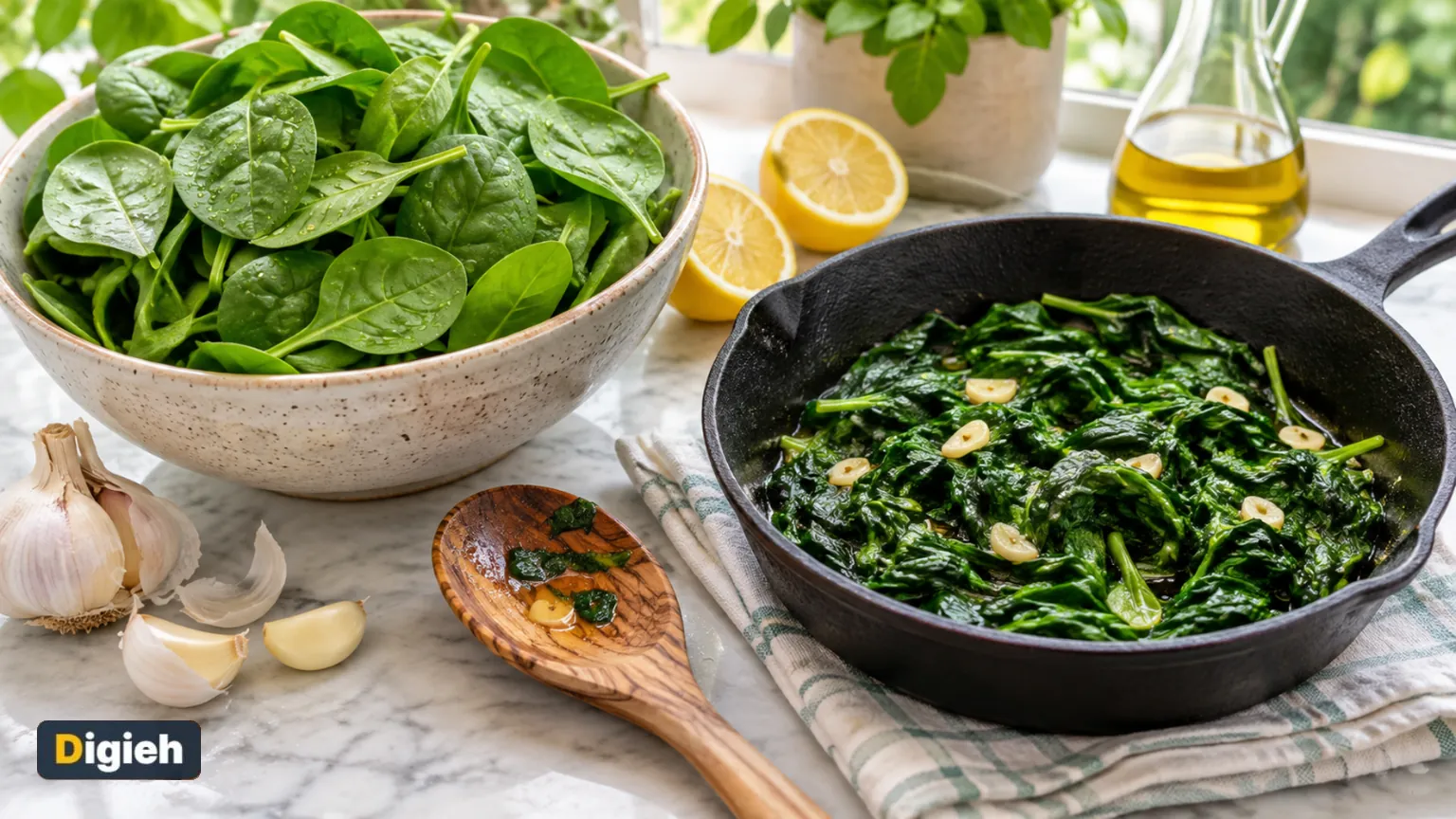
Simple Garlic Spinach
- Warm a little olive oil in a large pan.
- Add sliced garlic and cook for 30 seconds.
- Add washed spinach in handfuls.
- Stir until just wilted, then season with salt and lemon.
Easy Ways to Eat More Spinach
- Blend a handful into a fruit smoothie.
- Stir spinach into scrambled eggs or omelets.
- Add it to pasta sauce in the last minute.
- Layer raw leaves in sandwiches and wraps.
- Toss a spinach salad with berries and nuts.
- Mix chopped spinach into soups and stews.
A tangy dressing makes raw spinach salads shine. Try our homemade salad dressing, and add roasted beets for color.
Free updates
Join the Digieh list
Be the first to know when our weekly brief launches.
No spam. Unsubscribe anytime. Read our Privacy Policy.
Fresh, Frozen or Canned?
| Form | Pros | Watch for |
|---|---|---|
| Fresh | Best for salads | Wilts in a few days |
| Frozen | Cheap, already cooked down, keeps for months | Squeeze out water before using |
| Canned | Shelf stable | Often has added salt, so rinse it |
Frozen spinach is a smart winter staple. It is already blanched, so it adds lots of spinach to recipes quickly.
How to Buy, Wash and Store Spinach
- Choose crisp, deep green leaves without slimy spots.
- Store unwashed spinach in a bag with a paper towel in the fridge.
- Use fresh spinach within a few days.
- Wash well before eating to remove grit.
Leafy greens can hide dirt. Our guides on how to wash fruits and vegetables and how to store produce have more tips.
Baby Spinach vs Mature Spinach
Growers pick baby spinach young. Its leaves are small, tender and mild, which makes them ideal for salads and smoothies.
Mature spinach has larger, crinkly leaves with a stronger flavor and thicker stems. It holds up better to cooking, so use it for sautes, soups and casseroles.
Spinach in Cozy Winter Dishes
- Stir spinach into lentil or bean soup.
- Fold it into baked pasta or lasagna.
- Add it to curry or dal at the end.
- Mix it into a warm grain bowl with roasted vegetables.
- Bake it into a frittata for an easy brunch.
Cooked spinach fits right into warm winter meals, and frozen spinach keeps these dishes cheap and simple.
Smoothie Tips With Spinach
Raw spinach blends almost invisibly into fruit smoothies. Start with a small handful and add more as you get used to it.
Pair it with banana, mango or berries to balance the flavor. Add a squeeze of orange or lemon for vitamin C that helps your body absorb the iron.
Spinach Food Safety
Leafy greens are sometimes recalled because of germs. Check news alerts, wash loose leaves well and keep spinach cold.
Bagged spinach labeled ready to eat or triple washed does not need another wash, but loose bunches do.
Spinach for Kids
Many kids are wary of leafy greens. Blend spinach into smoothies, sauces or muffins, where the taste disappears.
Baby spinach is milder and softer than mature leaves, which makes it easier for picky eaters.
Spinach Myths and Facts
| Myth | Fact |
|---|---|
| Raw spinach is always healthier | Cooked spinach has more minerals per serving |
| Spinach is the best iron source | Its iron is harder to absorb than meat iron |
| Cooking destroys all nutrients | Many nutrients become more concentrated |
| Everyone should avoid spinach oxalate | Most people can eat it, but stone-prone people may limit it |
Your Spinach Checklist
- Eat spinach both raw and cooked
- Steam or microwave to keep vitamin C
- Pair spinach with vitamin C foods
- Keep frozen spinach on hand
- Wash fresh leaves well
- Ask your doctor if you have kidney stones
Try this today. Stir two handfuls of spinach into tonight’s pasta or soup. It wilts in a minute and adds a big nutrient boost.
Test Yourself
Which nutrient does raw spinach usually keep more of than cooked spinach?
- Vitamin C
- Iron
- Folate
Heat can reduce vitamin C, while cooking concentrates minerals like iron and nutrients like folate per serving.
Frequently Asked Questions
Is spinach healthier raw or cooked?
Both are healthy. Cooked has more minerals per serving, and raw keeps more vitamin C.
Does cooking spinach remove oxalate?
Boiling and draining lowers oxalate, since some of it leaches into the water.
How can I absorb more iron from spinach?
Pair it with vitamin C foods like lemon, peppers or kiwi.
Is frozen spinach as healthy as fresh?
Yes. It is already cooked down and convenient for many recipes.
Conclusion
Raw and cooked spinach each bring something special. Eat it raw for vitamin C and crunch, and cooked for more iron, folate and magnesium per bite.
Add a little spinach to two meals this week, one raw and one cooked, and enjoy the best of both.
Found this useful?
Editor’s Note
This guide is accurate as of November 10, 2026. Nutrition facts come from NIH Office of Dietary Supplements fact sheets, and kidney stone guidance comes from the NIDDK.
This is general information, not medical advice. Talk to a health professional about your own diet.
Spot an error in this article? Please contact us at support@digieh.com or read our Corrections Policy.
Keep exploring
Your next read is waiting
 1MedicinesHow Long Do Antibiotics Take to Start Working?9 min read
 2Fruits & VegetablesGrapes Health Benefits: Red, Green and Black Compared9 min read
 3FashionNew Year’s Eve Outfit Ideas for Every Party9 min read
 4Travel & TourismHow to Pack a Carry-On for a Week9 min read
 5Science & DiscoveriesQuadrantid Meteor Shower 2027: Best Time to Watch9 min read
 6AI & TechHow to Use AI for Smarter Holiday Shopping9 min read