TRENDING
Sweet Potato vs Potato: Which One Is Healthier?

8 min read
Last updated November 10, 2026
Sweet potatoes and white potatoes are both healthy when you cook them well. Sweet potatoes win on vitamin A and have a slightly lower glycemic load. White potatoes offer plenty of potassium and vitamin C.
How you cook them matters more than which one you pick. A baked potato with the skin is a very different food from a plate of fries.
This guide compares nutrition, blood sugar effects, cooking methods and easy ways to enjoy both.
Health note. This article shares general nutrition information, not medical advice. If you have diabetes or kidney disease, ask your doctor or a dietitian how potatoes fit your plan.
Key Takeaways
- Sweet potatoes are rich in beta carotene, which your body turns into vitamin A.
- White potatoes provide potassium, vitamin C and vitamin B6.
- Sweet potatoes have a slightly lower glycemic load, but portions still matter.
- Eat the skin of both for more fiber.
- Baking, roasting or boiling beats frying for either one.
Jump to a section
- Quick comparison
- Sweet potato benefits
- White potato benefits
- Blood sugar effects
- Sweet potato vs yam
- Best ways to cook
- Potatoes and weight
- Buying and storing
- Meal ideas
- Frequently asked questions
Sweet Potato vs Potato at a Glance
| Feature | Sweet potato | White potato |
|---|---|---|
| Vegetable group | Red and orange | Starchy |
| Standout nutrient | Vitamin A from beta carotene | Potassium |
| Vitamin C | Good source | Good source |
| Fiber | Good, especially with skin | Good, mostly in the skin |
| Glycemic load | Slightly lower | Higher |
| Flavor | Sweet and earthy | Mild and savory |
USDA MyPlate places sweet potatoes in the red and orange vegetable group. It places white potatoes in the starchy vegetable group.
About 100 caloriesIn one medium sweet potato, says North Carolina Cooperative Extension.
Sweet Potato Benefits
The bright orange flesh comes from beta carotene. Your body converts it into vitamin A, which supports eyes, skin and the immune system.
North Carolina Cooperative Extension says one medium sweet potato gives about 4 grams of fiber. It also provides vitamin C and potassium, with no saturated fat or cholesterol.
- Rich in beta carotene for vitamin A
- Good source of fiber for digestion
- Provides vitamin C, which helps your body absorb iron
- Naturally sweet, so it needs little added sugar
The University of Arkansas Extension notes that sweet potatoes also supply small amounts of B vitamins, potassium and iron.
White Potato Benefits
White potatoes get a bad reputation, but a plain potato is quite nutritious. The Harvard Nutrition Source notes that a medium potato with skin provides potassium, fiber and vitamins C and B6.
- High in potassium, which supports healthy blood pressure
- Provides vitamin C and vitamin B6
- Most of the fiber sits in the peel
- Filling and budget friendly
Harvard also notes that boiling lowers potassium because some of it leaches into the water.
Quick tip. Scrub potatoes well and keep the skin on. You keep more fiber and nutrients, and you save prep time.
Purple and Other Potatoes
Purple potatoes are close cousins of white potatoes. Harvard notes they have a slightly lower glycemic load and contain anthocyanins, the same antioxidant pigments found in berries.
Yellow potatoes like Yukon Gold sit between russets and red potatoes in texture. All of them work well in a healthy diet when cooked simply.
Blood Sugar Effects
Potatoes are mostly starch. Harvard explains that much of the starch in white potatoes breaks down quickly into blood sugar. That gives them a high glycemic load.
Sweet potatoes have a slightly lower glycemic load, Harvard says. Large portions can still raise blood sugar.
| Factor | Effect on blood sugar |
|---|---|
| Frying | Adds fat and calories without improving blood sugar |
| Cooling after cooking | Raises resistant starch, which may soften the spike |
| Eating the skin | Adds fiber that slows digestion |
| Pairing with protein | Helps balance the meal |
| Large portions | Raises the total carbohydrate load |
Harvard notes that boiling and then cooling potatoes increases resistant starch. A chilled potato salad with a vinegar dressing is one easy way to use this.
Which potato do you eat most often?
- Sweet potato
- White potato
- Both equally
- Not sure
What the Research Says
Harvard reviews several large studies on potatoes. The pattern is clear. French fries carry most of the risk, not plain potatoes.
- A 2025 study linked more French fries to a higher type 2 diabetes risk.
- Baked, boiled and mashed potatoes did not show the same link in that study.
- People who swapped fries for whole grains had a lower risk.
- Fries were also linked to more weight gain over time in a large study.
These studies show links, not proof of cause. People who eat many fries often have other habits that affect their health too.
So the real question is less about which potato you eat. It is about how you cook it and what you put on top.
Sweet Potato vs Yam
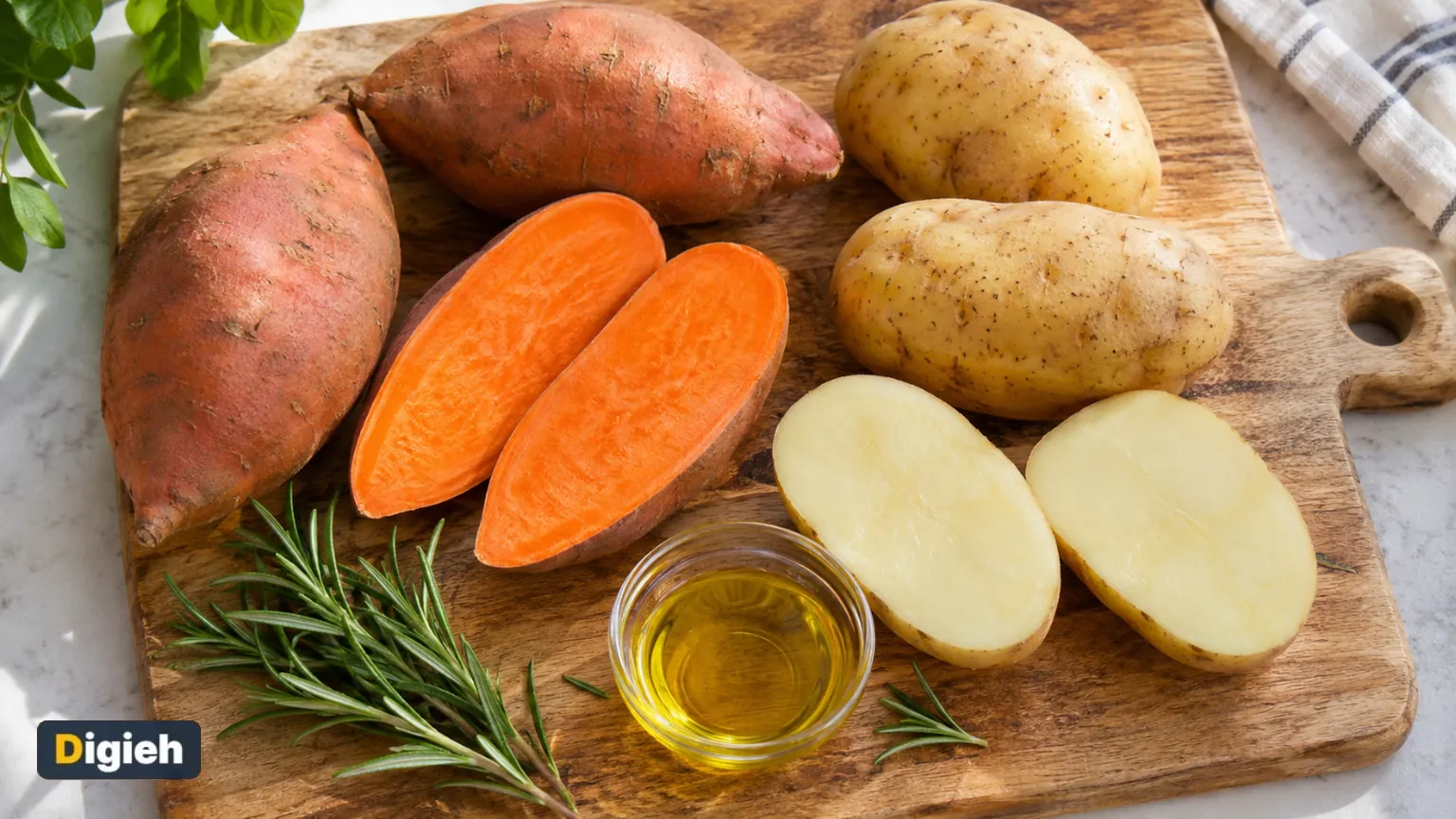
Many grocery stores in the United States label orange sweet potatoes as yams. True yams are a different plant with rough, bark-like skin and starchy white flesh.
Most of what American shoppers call yams are actually soft, orange sweet potatoes. The nutrition tips in this guide apply to those.
True yams are common in African, Caribbean and Asian cooking. They are drier and less sweet, and you usually need to peel and cook them well.
Best Ways to Cook Both
| Method | Why it works |
|---|---|
| Baking whole | Keeps the skin and nutrients intact |
| Roasting with olive oil | Adds healthy fat and great flavor |
| Steaming | Keeps more nutrients than boiling |
| Microwaving | Fast and keeps the skin on |
| Boiling in skins | Keeps more sweetness and nutrients inside |
The University of Arkansas Extension suggests baking sweet potatoes without foil, since foil steams them. It also suggests boiling them in their skins to keep sweetness from dissolving into the water.
North Carolina Cooperative Extension says cooking brings out the natural sweetness of sweet potatoes and gives them a caramel flavor. Roasting at a high heat works especially well for this.
Harvard suggests topping baked potatoes with Greek yogurt, bean chili or broccoli instead of butter or sour cream.
Potatoes and Weight
Plain potatoes are filling and fairly low in calories. The extras often add more calories than the potato itself.
- Swap butter and sour cream for Greek yogurt and herbs.
- Bake fries in the oven with a little olive oil.
- Fill half your plate with other vegetables.
- Keep portions to about the size of your fist.
Heading into the holidays? Our guide on preventing holiday weight gain has more simple swaps.
Free updates
Join the Digieh list
Be the first to know when our weekly brief launches.
No spam. Unsubscribe anytime. Read our Privacy Policy.
Which One Should You Choose?
| If you want | Choose |
|---|---|
| More vitamin A | Sweet potato |
| More potassium | White potato |
| A gentler blood sugar rise | Sweet potato, in a moderate portion |
| Savory comfort food | White potato |
| Variety and balance | Both, on different days |
Your health goals also matter. Someone watching blood pressure may value the potassium in white potatoes. Someone wanting more vitamin A may lean toward sweet potatoes.
People managing blood sugar can enjoy either one in smaller portions. Pairing them with beans, fish, eggs or chicken makes the meal more balanced and filling.
There is no need to pick a single winner. Rotating both gives you a wider mix of nutrients.
Buying and Storing Potatoes
- Choose firm potatoes without soft spots, mold or sprouts.
- Avoid white potatoes with a green tint, which Harvard says signals solanine.
- Store both in a cool, dark, dry place with airflow.
- Keep sweet potatoes out of the fridge, since cold changes their texture and flavor.
- Wash potatoes just before cooking, not before storing.
North Carolina Cooperative Extension says sweet potatoes stored well keep for a month or longer. Our guide on how to store fruits and vegetables covers more produce.
Good to know. Cut away small green spots and sprouts before cooking. Throw out potatoes that are very green, soft or bitter.
Easy Meal Ideas
- Baked sweet potato topped with black beans and salsa
- Roasted potato wedges with rosemary and olive oil
- Chilled potato salad with yogurt and herbs
- Sweet potato and spinach hash with eggs
- Mashed sweet potatoes with cinnamon instead of marshmallows
Pair potatoes with leafy greens for more nutrients. See our guide on spinach raw vs cooked for ideas.
For another colorful root vegetable, read about beetroot benefits.
Thanksgiving and Holiday Tips
Holiday tables often feature both potatoes. A few swaps keep them tasty and lighter.
- Use less butter and add roasted garlic for flavor.
- Skip marshmallow toppings and use pecans and cinnamon instead.
- Leave some skins on in mashed potatoes.
- Store leftovers in the fridge within two hours.
Learn how long cooked sides keep in our guide on how long Thanksgiving leftovers last.
Potatoes for Kids and Picky Eaters
Potatoes are an easy way to get children to eat vegetables. Their mild flavor and soft texture make them familiar and friendly.
- Bake sweet potato fries with a little olive oil and paprika.
- Mix mashed sweet potato into pancakes or muffins.
- Let kids top their own baked potato with beans and cheese.
- Blend cooked potato into soups for a creamy texture without cream.
Serving both kinds helps kids learn different flavors. It also adds more color to their plate.
Common Potato Mistakes
| Mistake | Better choice |
|---|---|
| Peeling every potato | Keep the skin for fiber |
| Frying often | Bake or roast instead |
| Heavy toppings | Use yogurt, salsa or herbs |
| Storing in the fridge | Keep in a cool pantry |
| Huge portions | Fill the rest of the plate with vegetables |
Your Potato Choice Checklist
- Eat the skin for extra fiber
- Bake, roast or steam instead of frying
- Watch portion size
- Pair with protein and vegetables
- Rotate sweet and white potatoes
- Store in a cool, dark place
Try this today. Bake one sweet potato and one white potato for dinner. Top both with Greek yogurt and herbs and compare.
Test Yourself
Which nutrient do sweet potatoes provide far more of than white potatoes?
- Sodium
- Vitamin B12
- Vitamin A
Sweet potatoes are rich in beta carotene, which the body turns into vitamin A.
Frequently Asked Questions
Is sweet potato healthier than potato?
Both are healthy. Sweet potatoes offer more vitamin A, while white potatoes offer more potassium.
Are sweet potatoes good for diabetes?
They have a slightly lower glycemic load, but portions matter. Ask your care team for advice.
Should I eat potato skin?
Yes. The skin holds much of the fiber. Scrub it well first.
Are potatoes a vegetable?
MyPlate counts them as starchy vegetables. Treat them more like a carb on your plate.
Conclusion
Sweet potatoes and white potatoes both earn a place on your plate. Sweet potatoes lead on vitamin A, while white potatoes bring potassium and vitamin C.
Cook them simply, keep the skin and enjoy both in moderation.
Found this useful?
Editor’s Note
This guide is accurate as of November 10, 2026. It draws on the Harvard Nutrition Source, North Carolina Cooperative Extension, University of Arkansas Extension and USDA MyPlate.
Nutrition needs vary, so ask a dietitian for personal advice.
Spot an error in this article? Please contact us at support@digieh.com or read our Corrections Policy.
Keep exploring
Your next read is waiting
 1MedicinesDoes Zinc Help Colds? How to Use It9 min read
 2Fruits & VegetablesCauliflower Nutrition and Easy Ways to Eat More9 min read
 3AI & TechHow to Use AI for Smarter Holiday Shopping9 min read
 4Science & DiscoveriesQuadrantid Meteor Shower 2027: Best Time to Watch9 min read
 5FashionHow to Clean White Sneakers So They Shine9 min read
 6Travel & TourismHow to Pack a Carry-On for a Week9 min read