TRENDING
Pink Eye: Why It Happens and Best Treatments
Pink eye explained: the 5 main causes, viral vs bacterial vs allergic signs, why antibiotics often do not help, home care and when to see a doctor fast.

9 min read
Last updated November 21, 2026
Pink eye happens when the thin clear layer over the white of your eye gets inflamed. Doctors call it conjunctivitis. Viruses cause most cases, but bacteria, allergies and irritants can cause it too.
Most pink eye gets better on its own in one to two weeks. Treatment depends on the cause. Antibiotic drops help only bacterial pink eye, not the far more common viral kind.
Key Takeaways.
- Viruses are the most common cause of pink eye, often the same ones behind colds.
- Viral and bacterial pink eye spread easily, but allergic pink eye is not contagious.
- Cold compresses and artificial tears ease symptoms for most types.
- Eye pain, blurred vision or strong light sensitivity needs a doctor quickly.
- Newborns with red or draining eyes should see a doctor right away.
Jump to a section
- What pink eye is
- Why pink eye happens
- Types compared
- Symptoms
- How it spreads
- Treatment by cause
- Home care
- Contact lens wearers
- Children and newborns
- Going back to school or work
- Prevention
- When to Get Help
- Questions to Ask Your Doctor
- Frequently asked questions
- Sources
- Conclusion
What Pink Eye Is
The conjunctiva is a thin, clear tissue. It covers the white part of your eye and lines the inside of your eyelids.
When it gets inflamed, tiny blood vessels swell and become easier to see. That is why the eye looks pink or red, says the Centers for Disease Control and Prevention.
The agency calls pink eye one of the most common and treatable eye conditions. It can affect one eye or both.
Why Pink Eye Happens
The Centers for Disease Control and Prevention lists several main causes.
1. Viruses
Viruses are the most common cause. Adenoviruses are a frequent culprit, says Mayo Clinic. Viral pink eye often comes with a cold or other breathing infection.
2. Bacteria
Bacterial pink eye is more common in children than adults. It also shows up more from December through April, the agency notes. It can come with an ear infection.
3. Allergies
Pollen, dust mites, pet dander and mold can trigger allergic pink eye. It usually affects both eyes and itches a lot. It does not spread to other people.
4. Irritants and chemicals
Smoke, pool chlorine, fumes or a chemical splash can irritate the eye. Mild irritation often clears within about a day after rinsing. A splash of a strong chemical, like lye, needs urgent care.
5. Contact lenses and foreign objects
Wearing lenses too long, or not cleaning them well, raises the risk. Something stuck in the eye can also cause redness and swelling.
Viral vs Bacterial vs Allergic Pink Eye
| Feature | Viral | Bacterial | Allergic |
|---|---|---|---|
| How common | Most common cause | Second most common | Common in allergy season |
| Spreads to others | Yes, very easily | Yes, very easily | No |
| Eyes affected | One or both | One or both | Usually both |
| Main signs | Watery eyes, often with a cold | Thick yellow or green discharge | Strong itching and tearing |
| How long | About 1 to 2 weeks, sometimes 2 to 3 or longer | Mild cases improve in days, about 2 weeks to clear | As long as you meet the allergen |
| Antibiotics help | No | Sometimes | No |
Sources: pink eye treatment page, Cleveland Clinic and Mayo Clinic, checked November 21, 2026.
1 to 2 weeksViral pink eye usually clears in one to two weeks on its own, per the health agency.
Symptoms
- Pink or red color in the white of the eye.
- Swollen eyelids or swollen eye lining.
- More tears than usual.
- Feeling like something is in the eye.
- Itching, burning or irritation.
- Discharge of pus or mucus.
- Crusty lids or lashes, worst in the morning.
- Contact lenses that feel wrong or will not stay in place.
This list comes from the Centers for Disease Control and Prevention. Crusting can glue the lids shut after sleep, Mayo Clinic adds.
How Pink Eye Spreads
Viral and bacterial pink eye spread in three main ways, says the agency’s causes page.
- Close contact, like touching or shaking hands.
- Droplets in the air when someone coughs or sneezes.
- Touching a surface with germs, then touching your eyes before washing your hands.
You can also spread it from one eye to the other by rubbing. Shared towels, pillowcases and eye makeup are common paths.
Have you or your child had pink eye this year?
- Yes, once
- Yes, more than once
- No
- Not sure
Treatment by Cause
Viral pink eye
There is usually no cure to take. The infection runs its course. Antibiotics do not work against viruses, says the Centers for Disease Control and Prevention.
Some viruses, like herpes viruses, can cause a more serious eye infection. A doctor may prescribe antiviral medicine for those cases.
Using antibiotics when they will not help can cause side effects and resistance. Our guide on antibiotics for colds and flu explains why.
Bacterial pink eye
Mild bacterial pink eye often gets better on its own in a few days. A doctor may prescribe antibiotic drops or ointment to speed recovery.
Antibiotics are more likely for people with a weak immune system, heavy discharge or contact lens use. Use them exactly as your doctor or pharmacist says, even after your eyes look better.
Allergic pink eye
The best step is to avoid what triggers it. Allergy eye drops, sometimes called antihistamine drops, can calm the itch. Ask a pharmacist which kind suits you.
Not sure if it is allergies or a cold? Our guide to winter allergies vs cold symptoms can help.
Irritant pink eye
Rinse the eye with lots of clean, lukewarm water for several minutes. Seek urgent care if a strong chemical splashed in, or if rinsing does not help.
Home Care That Helps
- Put a clean, cold, damp cloth over closed eyes for a few minutes.
- Use preservative-free artificial tears to soothe dryness.
- Wipe discharge gently from the inner corner outward with a fresh tissue.
- Use a new cloth or tissue for each eye.
- Wash your hands before and after touching your eyes.
- Change pillowcases and towels daily until it clears.
- Skip eye makeup until your eyes are fully healed.
Cold compresses and artificial tears are on the agency’s treatment page. Stop using a product if it makes your eyes sting more.
For red, gritty eyes that are not infected, read our tips on winter dry eyes.
Contact Lens Wearers
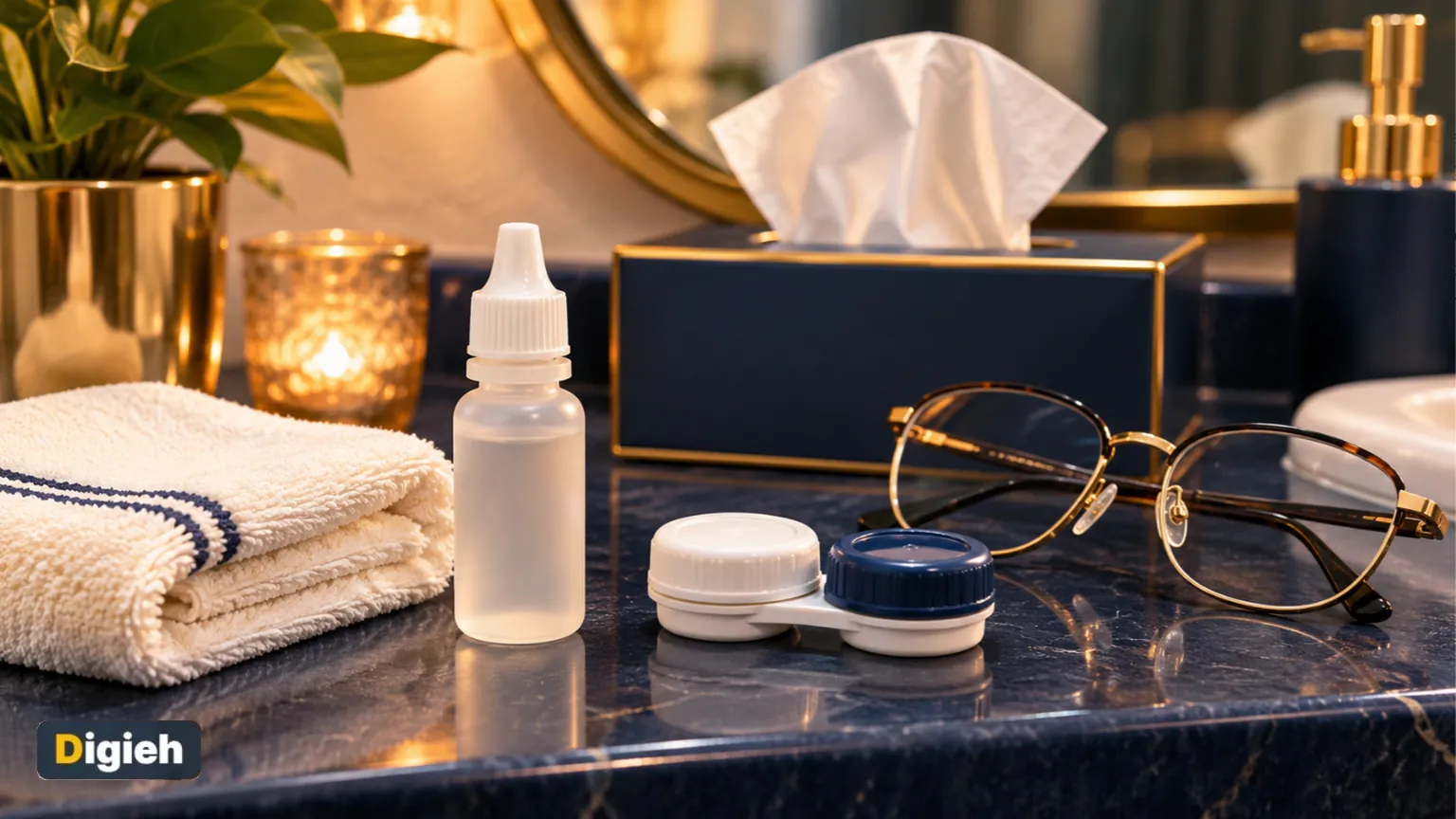
Take your lenses out as soon as your eyes feel irritated, says Mayo Clinic. See an eye doctor if things do not improve within 12 to 24 hours.
- Wear glasses until your eyes are clear and your doctor says it is safe.
- Throw away disposable lenses you wore while sick.
- Replace your lens case.
- Clean reusable lenses as the label says before wearing them again.
Lens wearers face a higher risk of a serious corneal infection, so do not wait it out.
Free updates
Join the Digieh list
Be the first to know when our weekly brief launches.
No spam. Unsubscribe anytime. Read our Privacy Policy.
Children and Newborns
Pink eye is very common in children, partly because they touch their faces and share toys. Teach handwashing for at least 20 seconds, as our handwashing guide shows.
Newborns need fast care
In newborns, causes include a blocked tear duct, the eye drops given at birth or an infection passed during delivery. Signs include drainage and red, puffy, tender lids.
Some infections from birth can harm the eyes badly if not treated. A baby with these signs should see a doctor right away, says the Centers for Disease Control and Prevention.
Most states require antibiotic eye drops or ointment soon after birth to help prevent this, the agency adds.
Going Back to School or Work
Rules differ by school, child care center and job. The agency says to check with your doctor before going back, especially if you have a fever.
Mayo Clinic says many people can return with good hygiene and less close contact. If your job means close contact with others, staying home until symptoms clear may be wiser.
Prevention
- Wash your hands often with soap and water.
- Use hand sanitizer with at least 60 percent alcohol when you cannot wash.
- Do not touch or rub your eyes with unwashed hands.
- Do not share towels, washcloths, pillows or eye makeup.
- Throw out old mascara and eye makeup used during an infection.
- Wear safety goggles for work or hobbies with chemicals or dust.
These steps come from the agency and Cleveland Clinic.
When to Get Help
See a provider if pink eye comes with any of these, says the Centers for Disease Control and Prevention.
- Eye pain.
- Strong sensitivity to light.
- Blurred vision that does not clear when you wipe away discharge.
- Intense redness in the eye.
- Symptoms that get worse or do not improve.
- No improvement after 24 hours on antibiotics for bacterial pink eye.
- A weak immune system, for example from cancer treatment.
Newborns with any eye redness or drainage need a doctor right away. For a chemical splash, rinse first and then get urgent care.
Information only, not medical advice. This article is for general information and is based on public health and hospital sources. It does not replace an exam or advice from your doctor or eye doctor.
Questions to Ask Your Doctor
- Is this viral, bacterial or allergic pink eye?
- Do I need antibiotic drops, or will it clear on its own?
- How long am I likely to be contagious?
- When can I or my child go back to school or work?
- When can I wear contact lenses again?
- Which signs mean I should come back sooner?
Try this today. Take a clear photo of the eye each morning. Changes are easier to show your doctor than to describe.
Test Yourself
What is the most common cause of pink eye?
- Bacteria
- Viruses
- Allergies
Viruses cause most pink eye, and antibiotics do not help them, according to the Centers for Disease Control and Prevention.
Frequently Asked Questions
Can pink eye go away on its own?
Yes, often. Viral pink eye usually clears in one to two weeks, and mild bacterial cases can improve in days.
How can I tell if pink eye is viral or bacterial?
Viral pink eye is often watery and comes with a cold. Bacterial pink eye more often has thick yellow or green discharge. A doctor can tell for sure.
Is allergic pink eye contagious?
No. Allergic and irritant pink eye do not spread to other people.
Should I use leftover antibiotic eye drops?
No. Old drops may be the wrong medicine, expired or contaminated. Ask a doctor or pharmacist first.
Sources
- Centers for Disease Control and Prevention, About pink eye
- Centers for Disease Control and Prevention, Causes and how it spreads
- Centers for Disease Control and Prevention, How to treat pink eye
- Centers for Disease Control and Prevention, Pink eye in newborns
- Centers for Disease Control and Prevention, Clinical overview for health workers
- Mayo Clinic, Pink eye symptoms and causes
- Cleveland Clinic, Pink eye (conjunctivitis)
Conclusion
Pink eye is common and usually mild. Viruses cause most cases, which is why antibiotics often do not help. Good hygiene keeps it from spreading.
Start cold compresses and careful handwashing today. See a doctor fast for pain, vision changes or a newborn with red eyes.
Editor’s Note
This article is accurate as of November 21, 2026. Facts come from the Centers for Disease Control and Prevention, Mayo Clinic and Cleveland Clinic. This article is for information only.
Spot an error in this article? Please contact us at support@digieh.com or read our Corrections Policy.
Keep exploring
Your next read is waiting
 1HealthBlood Pressure in Winter: Why It Goes Up7 min read
 2TechnologyHow to Convert MP4 to Animated WebP, Tested7 min read
 3Pets & AnimalsCost of Owning a Cat: Yearly Budget, Calculator7 min read
 4AI & TechCanva AI Off Switch: Hide Generative Tools Fast4 min read
 5Food & LifestyleElectric Blanket vs Space Heater: Which Costs Less?7 min read
 6BusinessUS Chip Export Rule: Five Countries Need Licenses4 min read
Found this useful?