TRENDING
Bike Maintenance Basics Every Rider Should Know

8 min read
Last updated November 9, 2026
Basic bike maintenance comes down to a few simple habits. Check tire pressure, test the brakes and keep the chain clean and oiled. Also make sure bolts and quick releases are tight.
A quick check before each ride takes about a minute. This guide shows the easy steps anyone can do at home, plus when to visit a bike shop.
Key Takeaways
- Use the ABC Quick Check before every ride, Air, Brakes, Chain and cranks, Quick releases.
- Check tire pressure with a gauge at least once a week.
- Clean and lightly oil the chain regularly, especially after wet rides.
- Replace worn brake pads and tires before they fail.
- Have a shop inspect a bike that has sat unused for months.
Inside this guide
- The ABC Quick Check
- Tires and air pressure
- Brakes
- Chain care
- Bolts and quick releases
- Tools you need
- A simple maintenance schedule
- Frequently asked questions
Why Bike Maintenance Matters
A well-kept bike is safer, faster and more fun to ride. Small problems like soft tires or worn brakes can lead to crashes.
The National Highway Traffic Safety Administration reports that 1,103 bicyclists died in traffic crashes in 2024. Its bicycle safety page stresses keeping your bike in good working order, especially the brakes.
1,103Bicyclists killed in United States traffic crashes in 2024, per the National Highway Traffic Safety Administration.
The ABC Quick Check
The ABC Quick Check is an easy pre-ride routine. The safety agency shares it in a simple one-page guide.
A is for Air
Check tire pressure, spin each wheel and look for worn or cracked tires. Tires can feel firm but still be low, so use a gauge.
B is for Brakes
Squeeze each brake lever. The levers should not touch the handlebars, and each wheel should stop when you spin it and squeeze.
C is for Cranks, Chain and Cogs
Grab the crank arms and make sure they do not wiggle side to side. Spin the pedals and check that the chain moves smoothly and looks clean, not rusty.
Quick releases
Check that any quick-release levers on the wheels and seat post are fully closed and tight.
Check with a short ride
Make sure the seat and handlebars are tight. Then take a slow ride to check that everything works.
Good to know. The City of Little Rock suggests a bike shop inspection if your bike has not been ridden for several months, in its ABC Quick Check guide.
Tires and Air Pressure
Correct pressure makes riding easier and helps prevent flats. The recommended range is usually printed on the side of the tire.
Check pressure at least once a week with a floor pump that has a gauge. Road bike tires lose air faster than many riders expect.
Look for cuts, bulges and worn tread. Replace tires that show the inner layers or have deep cracks.
Fixing a flat
- Remove the wheel and let out any remaining air.
- Use tire levers to pull one side of the tire off the rim.
- Remove the tube and find the cause of the flat.
- Feel inside the tire for glass or thorns.
- Install a new or patched tube and inflate slowly.
Quick tip. Carry a spare tube, two tire levers and a mini pump on longer rides. A flat far from home is much easier to handle.
Brakes
Brakes are the most important safety part on any bike. Test them before every ride.
Rim brakes
Look at the pads that press on the wheel rim. Replace them when the grooves wear away or the pads look thin.
Make sure the pads hit the rim squarely and do not touch the tire.
Disc brakes
Disc brakes use pads that grip a metal rotor near the hub. Keep oil and grease off the rotor, since it can ruin braking.
If disc brakes squeal badly or feel weak, have a shop check the pads.
How often do you check your bike before riding?
- Before every ride
- Once a week
- Only when something feels wrong
- Not sure
Chain Care
A clean, oiled chain shifts smoothly and lasts longer. A dirty chain wears out the gears faster.
- Wipe the chain with a rag while you turn the pedals backward.
- Use a bike chain cleaner or mild degreaser if it is very dirty.
- Apply one drop of bike chain oil to each link.
- Turn the pedals to spread the oil, then wipe off the extra.
Clean and oil the chain more often after riding in rain or on dusty roads. Too much oil attracts dirt, so always wipe off the extra.
Check chain wear
Chains stretch over time. A bike shop can measure wear with a simple tool and tell you when to replace it.
Bolts and Quick Releases
Loose parts can cause sudden problems. Check the handlebars, stem, seat and wheels regularly.
Use hex keys to snug up loose bolts, but do not overtighten. Carbon parts need exact settings, so follow the maker’s guidance or ask a shop.
Close quick-release levers firmly so they leave a mark on your palm. They should point back or up so they do not catch on things.
Tools You Need
| Tool | What it does |
|---|---|
| Floor pump with gauge | Inflates tires to the right pressure |
| Tire levers | Remove tires to fix flats |
| Hex key set | Tightens most bike bolts |
| Chain oil and rags | Keeps the drivetrain clean and smooth |
| Spare tube or patch kit | Fixes flats on the go |
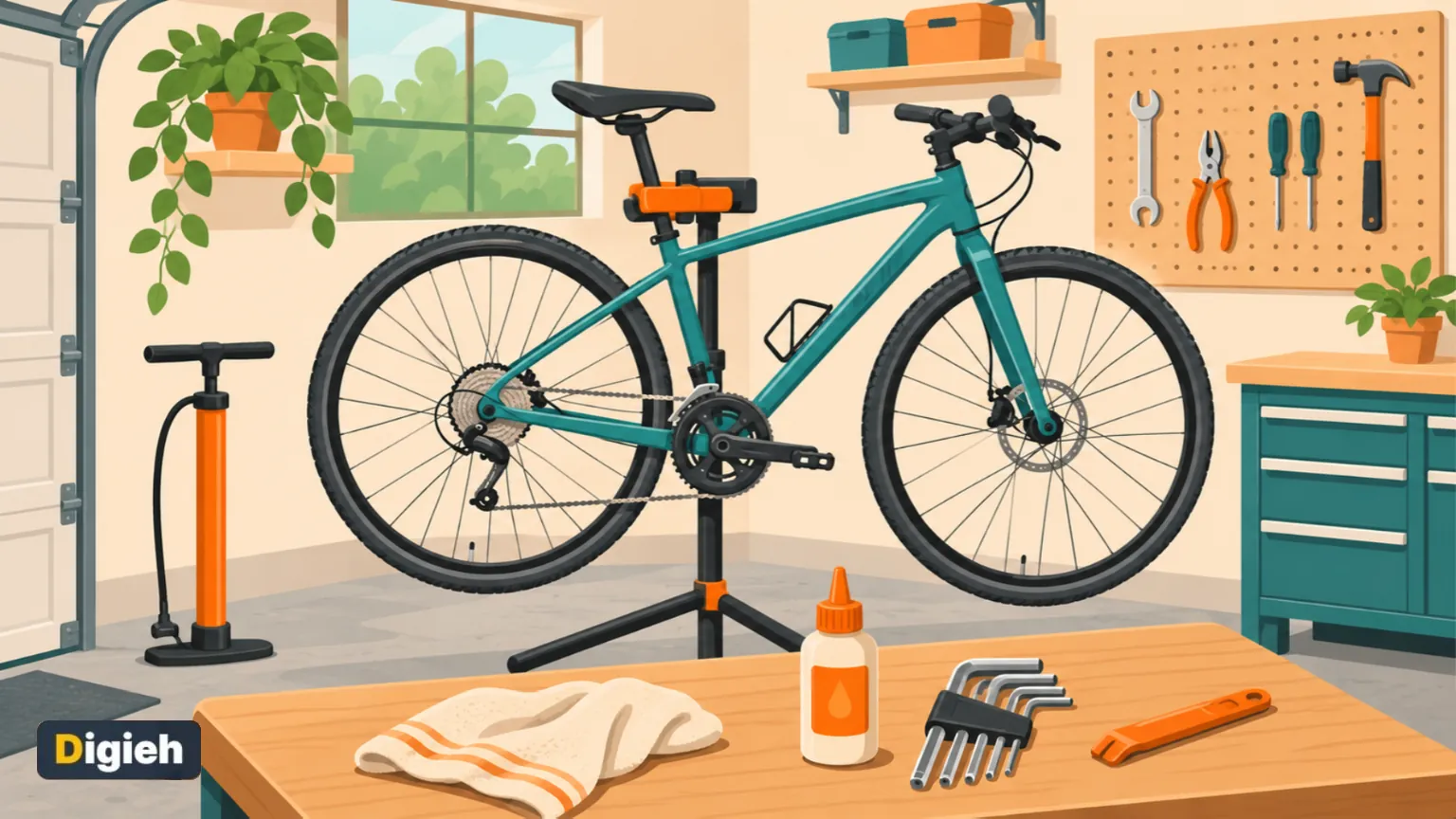
A simple repair stand makes work easier but is not required. Store tools in one spot, as our guide to organizing your garage suggests.
A Simple Maintenance Schedule
| When | What to do |
|---|---|
| Before every ride | ABC Quick Check |
| Every week | Check tire pressure |
| Every few weeks | Clean and oil the chain |
| Every few months | Check brake pads, tires and bolts |
| Once a year | Professional tune-up |
Ride more often or in wet weather? Do these tasks more often.
Free updates
Join the Digieh list
Be the first to know when our weekly brief launches.
No spam. Unsubscribe anytime. Read our Privacy Policy.
Set the Right Fit
The safety agency notes that a bike that is too big is harder to control. Fit matters as much as maintenance.
Set the seat so your leg is almost straight at the bottom of each pedal stroke. Your knee should keep a slight bend.
Adjust the handlebars so you can reach them without locking your elbows. A comfortable position helps you ride longer and safer.
Caring for Kids’ Bikes
Children grow fast, so check seat height every few months. Raise it as they grow, but never above the safe line on the seat post.
Teach kids to do the ABC Quick Check with you. It builds good habits and helps them notice problems early.
Make sure their helmet still fits snugly. A helmet that is too small or loose will not protect them well.
Ride Safely
Maintenance is only part of safe riding. The safety agency advises wearing a properly fitted helmet on every ride.
Use a white front light and a red rear light at night, and wear bright or reflective clothing. Ride in the same direction as traffic and obey signs and signals.
Tuck in shoelaces and pant legs so they do not catch in the chain.
E-Bikes Need Extra Care
Electric bikes need the same basics plus battery care. They are heavier, so brakes and tires wear faster.
Follow the maker’s charging advice and keep the battery out of extreme heat. Our e-bike buying guide covers battery safety in detail.
Planning to ride through the cold months? Read our guide to riding a bike in winter for gear and safety tips.
Store Your Bike Well
Keep your bike indoors or under a cover to prevent rust. Rain and snow wear out chains and cables quickly.
If you stop riding for winter, clean and oil the bike first. Many riders switch to indoor training, as our guide to indoor cycling for beginners explains.
Ride a motorcycle too? Our guide to motorcycle winter storage covers fuel, battery and tire care.
When to Visit a Bike Shop
- Gears skip or will not shift smoothly
- Brakes feel weak even after adjusting
- You hear grinding or clicking from the pedals or wheels
- A wheel wobbles when it spins
- The frame has cracks or dents
A yearly tune-up keeps everything adjusted and catches worn parts early.
Your Bike Maintenance Checklist
- Tires at the right pressure
- Brakes stop each wheel firmly
- Chain clean and lightly oiled
- Quick releases closed and tight
- Lights and reflectors working
- Helmet fits properly
Try this today. Do a full ABC Quick Check on your bike, then pump the tires to the pressure printed on the sidewall.
Test Yourself
What does the B in the ABC Quick Check stand for?
- Bell
- Brakes
- Bolts
B stands for brakes, the most important safety check.
How should you oil a bike chain?
- One drop per link, then wipe off the extra
- Spray the whole bike
- Never oil the chain
A light coat with the extra wiped off keeps dirt from sticking.
Frequently Asked Questions
How often should I service my bike?
Do a quick check before each ride and get a professional tune-up about once a year.
What is the right tire pressure?
Use the range printed on the tire sidewall. Adjust within that range for comfort and grip.
Can I use cooking oil on my chain?
No. Use oil made for bike chains, which resists dirt and water better.
Conclusion
Basic bike maintenance is quick and easy. Check air, brakes, chain and quick releases before you ride, and keep the chain clean.
A few minutes of care keeps your bike safe and smooth for years of riding. Start with a quick check on your next ride.
Found this useful?
Editor’s Note
This guide is accurate as of November 9, 2026. It draws on the National Highway Traffic Safety Administration and the City of Little Rock.
For complex repairs, visit a qualified bike mechanic.
Spot an error in this article? Please contact us at support@digieh.com or read our Corrections Policy.
Keep exploring
Your next read is waiting
 1Fruits & VegetablesFrozen vs Fresh Vegetables: Which Is Healthier?8 min read
 2Food & LifestyleEasy Lasagna Recipe: Classic, Cheesy and Make-Ahead8 min read
 3Home & KitchenHow to Make a Christmas Wreath at Home, Step by Step8 min read
 4HealthHow to Stop Coughing at Night: Simple Tips That Help8 min read
 5Travel & TourismTraveling With Kids: Tips for Stress-Free Family Trips8 min read
 6BikesRiding a Bike in Winter: Gear, Safety and Tips8 min read