TRENDING
How to Start Indoor Cycling at Home: Beginner Guide
Learn how to start indoor cycling at home with this beginner guide. Set up your bike, follow a simple 4-week plan, stay motivated and ride safely all winter.

8 min read
Last updated November 6, 2026
To start indoor cycling at home, set up a stationary bike or a trainer in a cool, open space. Adjust the seat so your knee stays slightly bent at the bottom of each pedal stroke. Begin with 15 to 20 minute rides at an easy pace.
Indoor cycling keeps you moving when it is cold or dark outside. It is low-impact and easy on your joints.
Check with your doctor before starting a new exercise routine, especially if you have a health condition.
Key Takeaways
- A proper seat height protects your knees.
- Start with short, easy rides.
- A fan and water bottle keep you comfortable.
- Mix steady rides with short intervals.
- Rest days help your body recover.
On This Page
- What You Need
- How to Set Up Your Bike
- A Simple Beginner Plan
- Tips to Stay Motivated
- Safety Tips
- Benefits of Indoor Cycling
- Types of Indoor Bikes
- Indoor Cycling for Older Adults
- Understanding Resistance and Cadence
- How Hard Should You Work?
- Sample Beginner Workouts
- Make Rides More Fun
- Common Beginner Mistakes
- Care for Your Bike
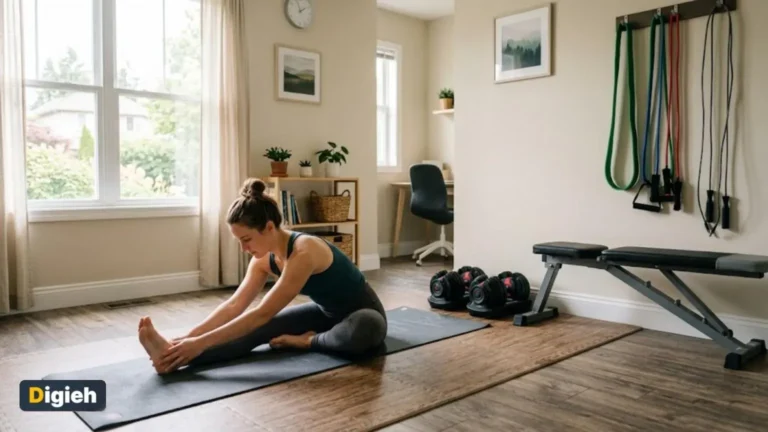
- Stretch After You Ride
What You Need
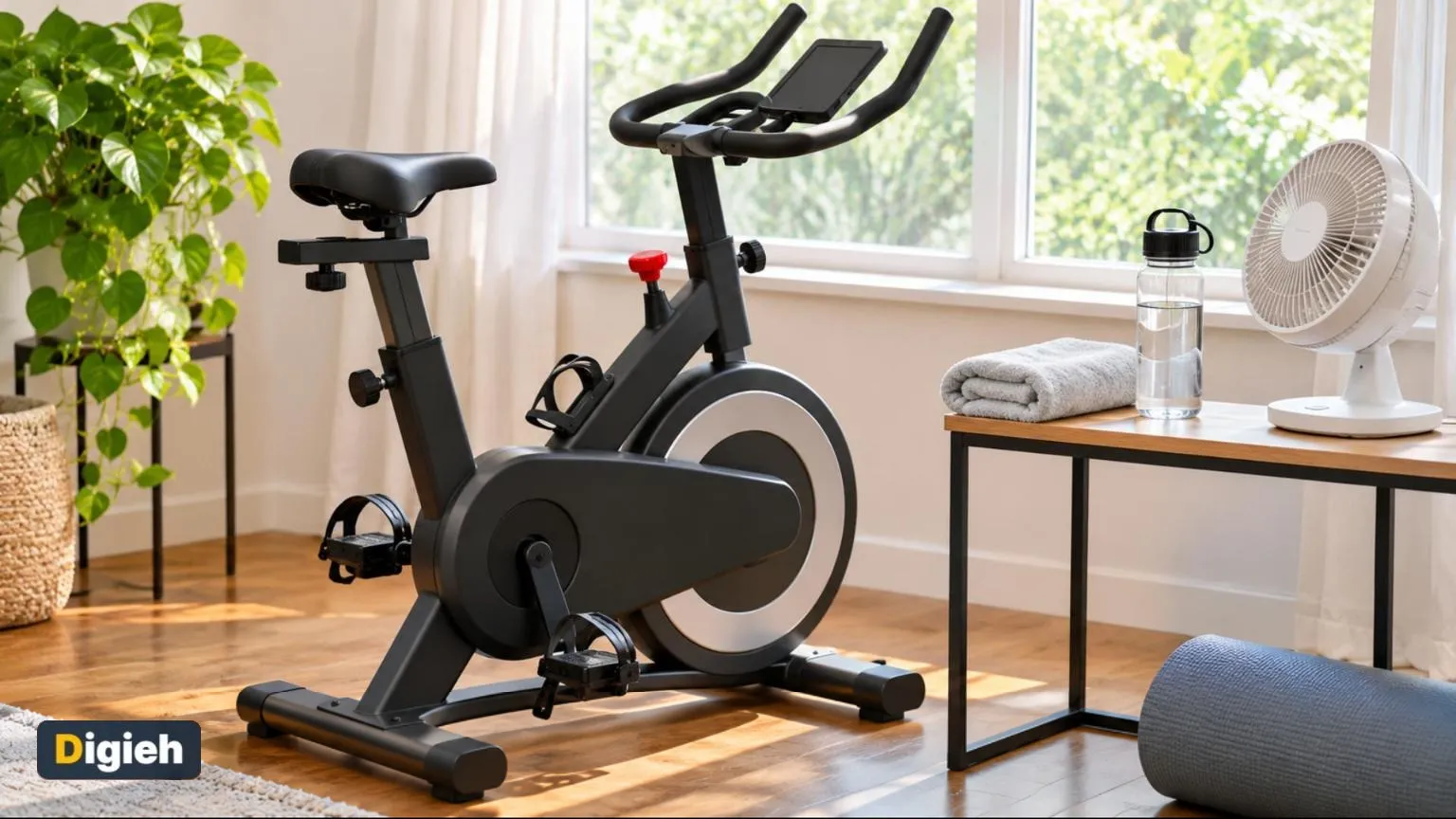
You can use a stationary bike or a trainer that holds your regular bike. Add a mat to protect the floor.
Keep a fan, towel and water bottle close. Padded shorts can make longer rides more comfortable.
150 minWeekly moderate activity the Centers for Disease Control and Prevention (CDC) recommends for adults.
How to Set Up Your Bike
1. Set Seat Height
Stand next to the bike. The seat should line up with your hip bone.
2. Check Knee Bend
At the bottom of a pedal stroke, your knee should bend slightly.
3. Adjust Handlebars
Set them so you can reach without straining your back.
Quick tip. Lay out your gear the night before. It makes morning rides much easier to start.
4. Position the Fan
Point a fan at your upper body. Indoor rides get warm fast.
How do you exercise in winter?
- Indoor cycling
- Walking
- Gym
- Not sure
A Simple Beginner Plan
The American Heart Association lists weekly activity targets for adults.
| Week | Plan |
|---|---|
| Week 1 | 3 rides of 15 minutes, easy pace |
| Week 2 | 3 rides of 20 minutes, easy pace |
| Week 3 | 4 rides of 20 minutes, add 3 short faster bursts |
| Week 4 | 4 rides of 25 minutes, mix easy and moderate |
Warm up for 5 minutes and cool down for 5 minutes on every ride.
Use this calculator to track your weekly riding time.
Weekly ride tracker
Good to know. Other activities like walking also count toward your weekly total.
- Stationary bike or trainer
- Floor mat
- Fan
- Water bottle
- Towel
- Correct seat height
Tips to Stay Motivated
Ride while watching a show or listening to music. Try free online workout videos for variety.
Track your rides in a notebook or app. Seeing progress keeps you going.
Safety Tips
Stop if you feel chest pain, dizziness or shortness of breath that does not ease. Drink water before, during and after each ride.
The agency explains how to tell moderate from vigorous effort.
The agency recommends about 150 minutes of moderate activity each week for adults.
Add to calendar
Prefer fresh air on milder days? See our tips for riding a bike in winter safely.
Benefits of Indoor Cycling
Indoor cycling is a low-impact workout. It is gentle on your knees, hips and ankles compared with running.
It strengthens your heart and lungs. It also works the big muscles in your legs and hips.
You can ride in any weather, at any hour. No traffic, no rain and no icy roads stand in your way.
The agency explains how regular activity helps your body and mind.
Types of Indoor Bikes
You have several choices for riding at home. Each fits a different budget and space.
| Type | How It Works | Best For |
|---|---|---|
| Upright exercise bike | A simple bike with a built-in resistance knob | Beginners and small budgets |
| Recumbent bike | A reclined seat with back support | People with back or joint concerns |
| Indoor cycling bike | A heavy flywheel and a sporty riding position | Studio-style workouts |
| Smart trainer | Your road bike clips onto a stand | Outdoor cyclists in winter |
| Smart bike | Built-in screen and automatic resistance | Riders who want guided classes |
Try a few bikes at a store or gym before you buy. Comfort matters more than fancy features.
Indoor Cycling for Older Adults
Indoor cycling is a great choice for many older adults. It builds fitness without the impact of running.
A recumbent bike gives back support and an easy step-in frame. It suits people with balance concerns.
Start with short, easy rides and build up slowly. Keep water nearby and take breaks when needed.
Check with your doctor before starting if you have heart, joint or balance problems.
Understanding Resistance and Cadence
Two numbers shape every indoor ride. Learning them helps you control the effort.
Resistance
Resistance is how hard the pedals feel. More resistance feels like riding uphill.
Cadence
Cadence is how fast you pedal, counted in rotations per minute (RPM). Many beginners ride comfortably between 70 and 90 revolutions per minute (RPM).
Balance the two. Very low resistance with fast pedaling can feel bouncy, while very high resistance can strain your knees.
How Hard Should You Work?
Use the talk test to check your effort. It needs no special tools.
| Effort | Talk Test | Feel |
|---|---|---|
| Easy | You can sing | Warm-up or recovery |
| Moderate | You can talk but not sing | Steady riding |
| Hard | You can say only a few words | Short intervals |
Most of your rides should feel easy to moderate. Add hard efforts slowly as your fitness grows.
Sample Beginner Workouts
These short rides build fitness without overwhelming new riders.
Steady Starter Ride
Warm up easy for 5 minutes. Ride at a moderate effort for 15 minutes, then cool down for 5 minutes.
Simple Intervals
Warm up for 5 minutes. Ride hard for 30 seconds, then easy for 90 seconds, and repeat six times.
Hill Ride
Warm up for 5 minutes. Add a little resistance every 2 minutes for 10 minutes, then lower it and cool down.
Rest at least one day between harder rides. Your muscles grow stronger during recovery.
Free updates
Join the Digieh list
Be the first to know when our weekly brief launches.
No spam. Unsubscribe anytime. Read our Privacy Policy.
Make Rides More Fun
Indoor cycling can feel dull without some variety. Try these ideas.
- Watch a favorite show only while you ride.
- Build an upbeat playlist that matches your pace.
- Follow free online cycling videos.
- Track your rides in a notebook or app.
- Join a friend on a video call while you both ride.
Small rewards help too. Celebrate a full week of rides with something you enjoy.
Common Beginner Mistakes
Avoid these common errors as you start.
- Setting the seat too low, which strains your knees
- Gripping the handlebars too tightly
- Skipping the warm-up
- Riding hard every day without rest
- Forgetting to drink water
Keep your shoulders relaxed and your back long. Let your legs do the work.
Thinking about riding outside too? Our e-bike buying guide explains classes, motors and battery safety.
Care for Your Bike
A clean bike lasts longer and rides more smoothly. Sweat can rust metal parts over time.
Wipe the frame, seat and handlebars after each ride. Check bolts and pedals once a month.
Read the maker’s manual for any parts that need oil or other care.
Riding outdoors too? Keep your bike safe with our bike maintenance basics guide.
Stretch After You Ride
A few gentle stretches help your muscles recover. Hold each one for about 20 to 30 seconds.
- Quad stretch. Hold one foot behind you and pull it toward your hip.
- Hamstring stretch. Rest one heel on a low step and lean forward gently.
- Hip flexor stretch. Step one foot forward into a lunge and press your hips down.
- Calf stretch. Press your hands against a wall and stretch one leg back.
Breathe slowly and never bounce. Stretching should feel gentle, not painful.
Indoor Cycling Mistakes to Avoid
New riders often make a few common mistakes. Fixing them helps you ride safely and comfortably.
- Setting the seat too high or too low
- Pedaling with no resistance at all
- Gripping the handlebars too tightly
- Skipping water during longer rides
Check your bike setup before each ride. Small adjustments can prevent knee and back pain.
Ride With Friends Online or at Home
Riding with others can keep you motivated. You can join friends even from different homes.
Plan a set time to ride together and share your workout on a video call. Cheer each other on during hard parts.
Families can take turns on one bike and keep a simple scoreboard. Friendly goals make workouts more fun.
Rest Days Matter
Give your body at least one or two rest days each week. Recovery helps your muscles grow stronger.
Listen to your body and take an extra day off if you feel very sore.
Light stretching or an easy walk on rest days can help you feel less stiff.
Try this today. Ride for 10 easy minutes today at a pace where you can still talk. Write down how your legs feel.
Test Yourself
How should your knee look at the bottom of a pedal stroke?
- Fully locked
- Slightly bent
- Deeply bent
A slight bend protects your knees.
How long should a beginner ride?
- 15 to 20 minutes
- 2 hours
- 5 hours
Start short and build up slowly.
Frequently Asked Questions
How long should a beginner ride?
Start with 15 to 20 minutes at an easy pace.
How high should my bike seat be?
Your knee should stay slightly bent at the bottom of the stroke.
Is indoor cycling good exercise?
Yes. It builds heart fitness and leg strength with low impact.
How often should I ride?
Three to four times a week is a good start.
What is a good cadence for beginners?
Many beginners ride comfortably between 70 and 90 rotations per minute (RPM).
Do I need special shoes for indoor cycling?
Not always. Many bikes work with regular sneakers. Some bikes use clip-in pedals that need cycling shoes.
Why does my seat hurt?
New riders often feel saddle soreness. Padded shorts and a gel seat cover help.
Can indoor cycling help with weight loss?
Regular cycling burns calories and builds fitness. Pair it with healthy eating for the best results.
Wrapping Up
Set up your bike and take your first easy ride this week. Small, steady steps build lasting fitness.
Find more ways to move with ideas to stay active in winter. Stay hydrated with our winter hydration tips.
Found this useful?
Editor’s Note
This guide is accurate as of November 6, 2026. It is general information, not medical advice.
Spot an error in this article? Please contact us at support@digieh.com or read our Corrections Policy.
Keep exploring
Your next read is waiting
 1HealthOveractive Thyroid: Key Signs, Causes, Tests and Treatment7 min read
 2Home & KitchenFridge Without Power: How Long Food Stays Safe7 min read
 3Beauty & Personal CareDandruff vs Dry Scalp: Signs, Causes and Treatment7 min read
 4MedicinesIs Sugar an Electrolyte? The Simple Science Answer7 min read
 5Pets & AnimalsFleas on Dogs and Cats: Treatment and Prevention7 min read
 6HealthStye on the Eyelid: Causes, Treatment and Prevention7 min read