TRENDING
Motorcycle Winter Storage, Easy Step by Step Guide

8 min read
Last updated November 9, 2026
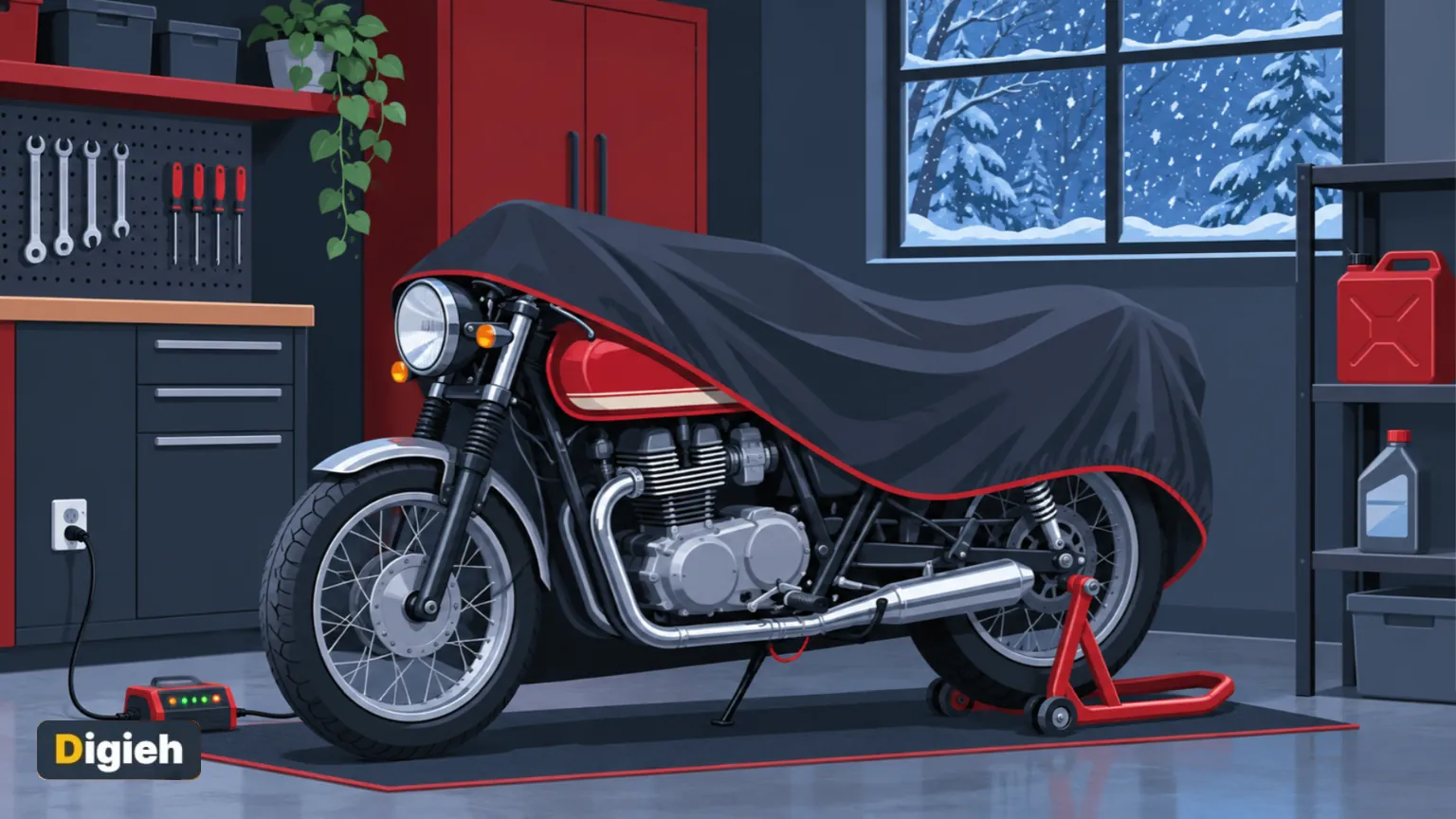
To store a motorcycle for winter, clean it and change the oil. Then add fuel stabilizer to a full tank and keep the battery charged. Lift the tires off the ground and cover the bike in a dry, secure place.
These steps prevent rust, stale fuel, a dead battery and flat-spotted tires. This guide walks you through each one, plus what to check before your first spring ride.
Key Takeaways
- Wash and dry the bike before storage to prevent corrosion.
- Change the oil and add stabilizer to a full fuel tank.
- Charge the battery fully and keep it charged, or remove it and store it indoors.
- Use a stand to keep weight off the tires.
- Store indoors in a dry place with a breathable cover.
Inside this guide
- Why winter storage matters
- Clean and protect
- Oil and fluids
- Fuel
- Battery
- Tires
- Spring start-up checklist
- Frequently asked questions
Why Winter Storage Matters
Months of sitting can be hard on a motorcycle. Fuel goes stale, batteries drain and moisture causes rust.
Honda says stale fuel can leave residue that clogs fuel lines, in its seasonal tips for owners. A little work in the fall saves money and trouble in spring.
4 monthsStorage time after which Honda advises an oil change before riding again, per its seasonal owner tips.
Always check your owner’s manual too. Some bikes have special steps for their fuel or cooling systems.
Clean and Protect
Wash the bike thoroughly and let it dry completely. Road salt, bugs and grime can eat into paint and metal over winter.
Honda also suggests checking metal, rubber and plastic parts before storage. Look for cracks, leaks and loose bolts.
Apply a coat of wax to painted parts and a light protectant to bare metal. Lubricate the drive chain so it does not rust.
Good to know. Ride the bike briefly after washing to dry hidden areas. Then let the engine and exhaust cool fully before you cover it.
Oil and Fluids
Old oil holds acids and dirt that can harm engine parts while the bike sits. Change the oil and filter before storage.
Top up the coolant if your bike has a liquid-cooled engine. Check the brake fluid level and color too.
Chain, Brakes and Controls
Clean the drive chain with a chain cleaner and a soft brush, then apply fresh chain lube. Wipe off the extra so it does not collect dust.
Spray a light protectant on cables and levers to keep them moving freely. Check the brake pads and discs for wear while you have time.
If the bike uses a belt or shaft drive, follow the manual for those parts. They need less care but still benefit from a quick inspection.
Fuel
Fill the tank nearly to the top before storage. A full tank leaves less room for moist air, which helps prevent rust inside.
Add a fuel stabilizer and run the engine for a few minutes. That spreads treated fuel through the system.
Honda notes that a stabilizer helps prevent moisture buildup in a full tank. Follow the directions on the product label.
How do you store your motorcycle in winter?
- In a heated garage
- In an unheated garage or shed
- Outside under a cover
- Not sure
Battery
Batteries slowly lose charge, especially in the cold. A dead battery in spring is one of the most common problems.
Option one, use a battery maintainer
A smart maintainer, often called a battery tender, keeps the battery topped up without overcharging. Connect it and leave it plugged in.
Option two, remove the battery
Honda suggests removing the battery for long storage and charging it fully. Store it in a dark, well-ventilated place.
If you leave the battery in the bike, disconnect the negative terminal. Handle battery acid with care.
Many of the same habits help car batteries too. See our guide to cold-weather car battery tips.
Tires
Weight on one spot for months can flatten tires. Michelin calls lifting the tires off the ground the most effective protection in its winter storage guide.
- Inflate tires to the recommended pressure before storage.
- Use a center stand or paddock stands to lift the wheels.
- If you have no stand, roll the bike a little every few weeks.
- Keep tires out of direct sunlight and extreme temperatures.
Cold air lowers tire pressure, so check again before your first ride.
Choose the Right Spot
Honda recommends a secure area, preferably indoors, free of excessive humidity, snow, dirt and dust. A garage or storage unit works well.
Keep the bike away from furnaces and water heaters. Avoid spots where cars or tools could bump it.
A tidy garage makes winter storage easier. Our guide to organizing your garage can help you make room.
Cover It Properly
A cover protects against dust, scratches and sunlight. Choose a breathable cover so moisture can escape.
Honda warns that poorly ventilated waterproof covers can hold moisture. If the bike gets wet, remove the cover so it can dry.
Keep Pests Out
Mice and other pests like quiet, sheltered spots. They may nest in air boxes and exhausts.
Cover the exhaust opening and air intake with mesh or a plug. Put a bright tag on the handlebars to remind you to remove them in spring.
Should You Start It During Winter?
Honda suggests running stored vehicles regularly to keep parts from sticking and to remove moisture. If you do, run it long enough to reach full temperature.
Short idling sessions can create moisture without burning it off. If you cannot run it properly, it may be better to leave it stored and protected.
Free updates
Join the Digieh list
Be the first to know when our weekly brief launches.
No spam. Unsubscribe anytime. Read our Privacy Policy.
Cold Garages and Damp Basements
An unheated garage is fine for most bikes if it stays dry. Damp air is a bigger problem than cold air.
Place a moisture absorber or a small dehumidifier nearby if your space feels humid. Keep the bike off bare concrete with a mat if water collects on the floor.
Avoid storing the bike next to open bags of fertilizer, salt or chemicals. Fumes and spills can damage metal and paint.
Insurance and Paperwork
Some insurers offer lower rates or storage plans for bikes parked for winter. Ask your agent, but keep theft and fire coverage in place.
Note the date your registration expires so you can renew before spring. Keep your title and records in a safe place at home.
Take a few photos of the bike before storage. They help with any insurance claim if something happens.
Scooters and Dirt Bikes
Scooters and dirt bikes need the same basics. Clean them, treat the fuel, care for the battery and protect the tires.
Electric motorcycles and scooters follow different battery rules. Check the maker’s storage charge level and temperature advice.
Common Storage Mistakes
- Leaving old, untreated fuel in the tank
- Letting the battery drain all winter
- Covering a hot engine or a wet bike
- Storing near a furnace or water heater
- Forgetting to remove exhaust plugs in spring
Avoiding these mistakes saves you from the most common spring repairs. It also keeps your bike looking great for many years.
Spring Start-Up Checklist
- Remove plugs from the exhaust and air intake.
- Check tires for cracks and set the correct pressure.
- Reinstall and connect the battery if you removed it.
- Check for rust and lubricate the chain.
- Change the oil if the bike sat for more than four months.
- Test brakes, lights and signals before riding.
The National Highway Traffic Safety Administration also lists checks before every ride on its motorcycle safety page. These include tires, brakes, lights, fluids and leaks.
Ride Safely This Spring
The agency reports that 6,228 motorcyclists died in crashes in 2024. Wear a helmet that meets federal safety standards on every ride.
Your skills may feel rusty after winter. Take a few easy rides in quiet areas before heading into heavy traffic.
Cyclists can use similar habits. Our bike maintenance basics guide covers simple pre-ride checks.
Your Winter Storage Checklist
- Bike washed, dried and waxed
- Oil and filter changed
- Full tank with stabilizer added
- Battery on a maintainer or stored indoors
- Tires lifted off the ground
- Breathable cover in place
Try this today. Buy a fuel stabilizer and a battery maintainer before the first hard freeze. Then pick your storage spot.
Test Yourself
Why should you fill the fuel tank before storage?
- Less room for moist air helps prevent rust
- It makes the bike heavier and more stable
- Fuel is cheaper in winter
A full tank leaves less space for moisture to build up.
What does Michelin call the most effective tire protection in storage?
- Overinflating the tires
- Washing the tires weekly
- Lifting the tires off the ground
Getting weight off the tires prevents flat spots.
Frequently Asked Questions
Can I store my motorcycle outside?
Indoors is best. If you must store it outside, use a breathable cover and a secure location.
Do I need to drain the fuel?
Many riders use a full tank with stabilizer instead. Check your owner’s manual for your bike.
How often should I charge the battery?
A smart maintainer keeps it charged all winter without extra work.
Conclusion
Winter storage is simple with a plan. Clean the bike, change the oil, stabilize the fuel, keep the battery charged and lift the tires.
Do it right this fall, and your motorcycle will be ready to ride on the first warm day of spring.
Found this useful?
Editor’s Note
This guide is accurate as of November 9, 2026. It draws on Honda owner tips, Michelin tire advice and the National Highway Traffic Safety Administration.
Every motorcycle is different, so follow your owner’s manual.
Spot an error in this article? Please contact us at support@digieh.com or read our Corrections Policy.
Keep exploring
Your next read is waiting
 1CarsPenny Test for Tires: How to Check Tread Depth8 min read
 2Travel & TourismHow to Renew a Passport Online: Steps, Fees and Rules8 min read
 3FashionHow to Care for Cashmere and Wool So They Last8 min read
 4Food & LifestyleDeep Fried Turkey Safety Tips to Prevent Fires8 min read
 5LaptopsChromebook Explained: What It Is and Who Should Buy One8 min read
 6BikesBike Maintenance Basics Every Rider Should Know8 min read