TRENDING
How to Eat a Persimmon and Pick a Ripe One

9 min read
Last updated November 10, 2026
A persimmon is a sweet orange fruit that shows up in stores each fall. The way you eat it depends on which kind you have.
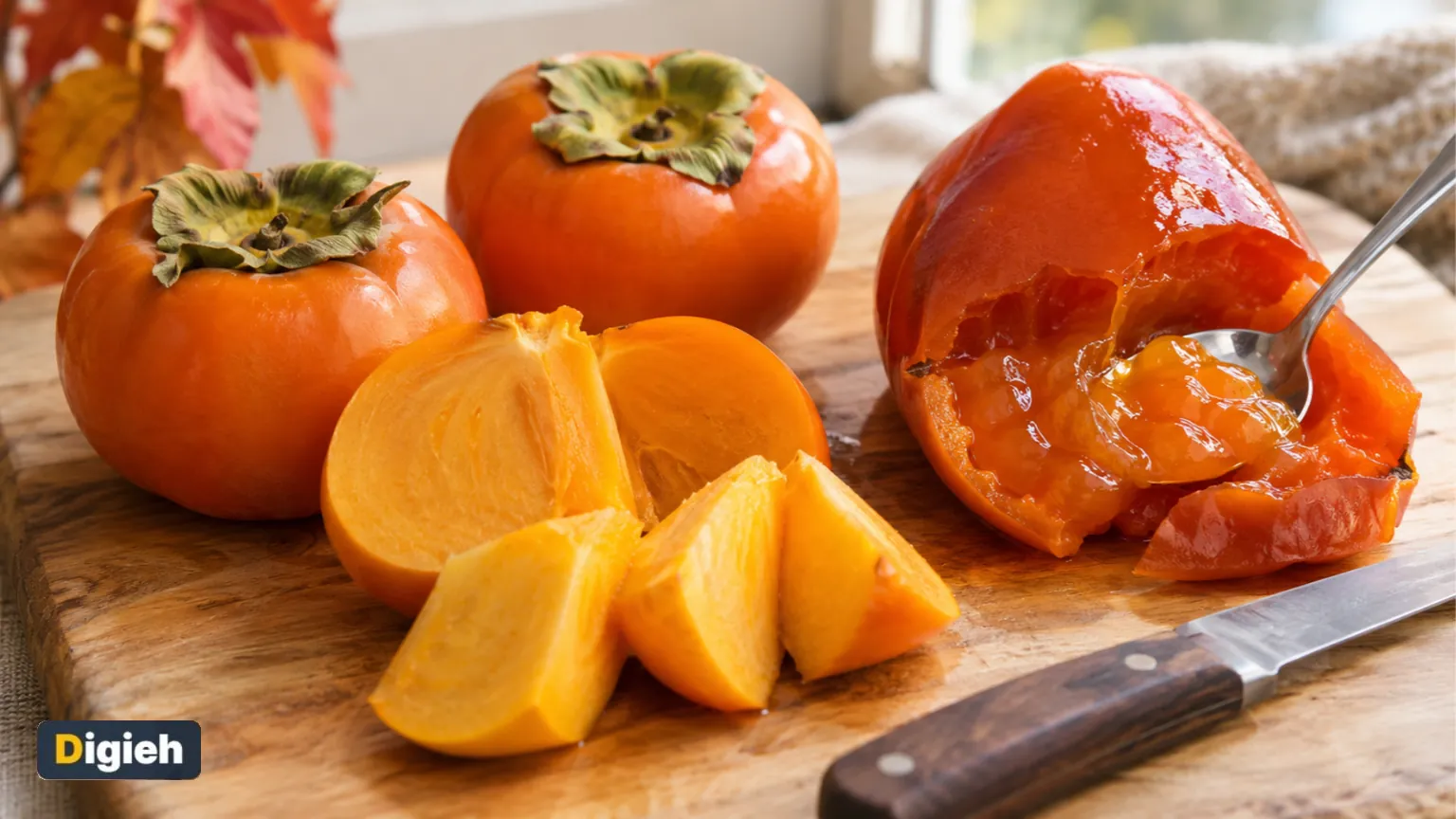
Fuyu persimmons are squat and round, and you can eat them firm like an apple. Hachiya persimmons are acorn shaped and must be very soft before you eat them.
This guide shows you how to tell them apart, pick a ripe one and enjoy it fresh, frozen or baked.
Key Takeaways
- Fuyu persimmons are non-astringent and taste good while still firm.
- Hachiya persimmons are astringent and taste bitter until fully soft.
- A ripe Hachiya feels like a water balloon and has jelly-like pulp.
- You can ripen persimmons in a bag with an apple or banana.
- Persimmons are rich in fiber, potassium and vitamin A.
Jump to a section
- Fuyu vs Hachiya
- How to pick a ripe one
- How to ripen persimmons
- How to eat a Fuyu
- How to eat a Hachiya
- Easy ways to enjoy them
- How to store them
- Nutrition
- Who should be careful
- Frequently asked questions
What Is a Persimmon?
Persimmons grow on trees and ripen in autumn. The fruit has smooth orange skin and a leafy cap called the calyx on top.
Most persimmons sold in the United States are Asian varieties. A smaller native American persimmon grows wild in many eastern states.
UF/IFAS Extension notes that persimmons are in season from September to October in Florida. Stores in many areas carry them into early winter.
6 gFiber in one raw Japanese persimmon, according to Cleveland Clinic.
Fuyu vs Hachiya Persimmons
The University of California Master Food Preservers explain that the two main kinds behave very differently. Getting this right is the secret to enjoying persimmons.
| Feature | Fuyu | Hachiya |
|---|---|---|
| Shape | Squat and round, like a tomato | Long, acorn or heart shaped |
| Type | Non-astringent | Astringent |
| When to eat | Firm or slightly soft | Only when very soft |
| Texture | Crisp, like an apple | Silky, jelly-like pulp |
| Best uses | Salads, snacks, slices | Baking, puree, spooning |
UC ANR says unripe Hachiya fruit is very high in tannins. Those tannins make your mouth feel dry and fuzzy.
Quick tip. Look at the bottom of the fruit. A flat bottom usually means Fuyu, and a pointed bottom usually means Hachiya.
How to Pick a Ripe Persimmon
Color is your first clue for both kinds. UC ANR advises choosing fruit that is fully orange with little green or yellow.
- Choose deep orange fruit with glossy skin.
- Check that the leafy cap is still attached and green or brown.
- Avoid fruit with cracks, mold or large dark bruises.
- For Fuyu, pick fruit that is firm or gives slightly.
- For Hachiya, pick fruit that feels very soft if you want to eat it today.
A few small dark spots on the skin are normal. They usually do not affect the flavor inside.
Have you ever tried a persimmon?
- Yes, and I loved it
- Yes, but it tasted bitter
- No, never
- Not sure
How to Ripen Persimmons at Home
Persimmons keep ripening after you buy them. Hachiya fruit often needs several days to a few weeks on the counter.
- Place the persimmons stem side down on a plate at room temperature.
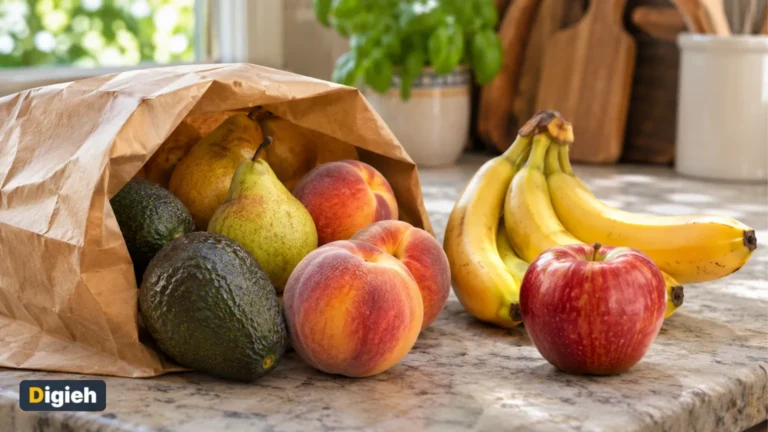
- Add them to a paper bag with an apple or banana to speed things up.
- Check them daily by pressing gently.
- Eat Hachiya fruit only once it feels like a water balloon.
UC ANR explains that apples and bananas give off ethylene gas, which helps fruit ripen faster. Our guide on how to store fruits and vegetables explains which produce to keep apart.
Freezing is another trick. UC ANR notes that freezing a wrapped Hachiya for a couple of weeks softens it and reduces astringency.
How to Eat a Fuyu Persimmon
Fuyu persimmons are the easiest place to start. You can eat them like an apple.
- Rinse the fruit under cool running water.
- Cut off the leafy cap with a small knife.
- Slice it into wedges or rounds.
- Remove any seeds you find.
- Eat the skin or peel it off if you prefer.
UF/IFAS notes that the skin is usually edible. Some people find it a little tough, so peeling is fine.
Rinsing matters even when you plan to peel. Our guide on how to wash fruits and vegetables covers the basics.
How to Eat a Hachiya Persimmon
A ripe Hachiya is soft and sweet, almost like pudding. Never rush it, since an underripe one tastes chalky and bitter.
- Wait until the fruit feels very soft all over.
- Cut off the top with the leafy cap.
- Scoop out the pulp with a spoon.
- Use it right away or freeze the pulp for later.
UC ANR describes ripe Hachiya skin as almost translucent. The pulp should look glossy and gel-like.
Avoid unripe Hachiya. Firm Hachiya fruit is unpleasant to eat. Rarely, eating a lot of unripe persimmon has been linked to a stomach blockage called a bezoar.
Easy Ways to Enjoy Persimmons
| Idea | Best kind | How |
|---|---|---|
| Fresh snack | Fuyu | Slice into wedges |
| Salad topping | Fuyu | Add thin slices to greens |
| Frozen sorbet | Hachiya | Freeze whole and eat with a spoon |
| Baking | Hachiya | Use puree in breads and muffins |
| Breakfast | Either | Stir into yogurt or oatmeal |
| Dried slices | Either | Dry thin slices in a dehydrator |
Fuyu slices pair well with nuts, cheese and a light vinaigrette. Try our homemade salad dressing ideas for a winter salad.
For baking, persimmon pulp works much like mashed banana or applesauce. It adds moisture and gentle sweetness.
Persimmons also mix well with other fall fruit. Combine them with pomegranate seeds or crisp apples for color and crunch.
Frozen Persimmon Treat
UC ANR suggests freezing a whole ripe Hachiya, then thawing it partway in the refrigerator. The pulp turns soft and icy, like sherbet.
Firm Fuyu fruit can also go in the freezer. Let it soften slightly, then eat it with a spoon.
This is a simple dessert with no added sugar. Kids often enjoy it as a cold treat.
Wrap each fruit well before freezing to prevent freezer burn. Label the bag with the date so you remember when it went in.
You can also freeze slices on a tray, then move them to a bag. They make a cool snack or an easy smoothie add-in.
Dried Persimmons and Hoshigaki
Dried persimmons are chewy and sweet. Hoshigaki is a traditional Japanese method that air-dries whole peeled Hachiya fruit over several weeks.
UC ANR explains that the fruit is gently massaged as it dries. Over time a white sugar bloom forms on the surface.
Store-bought dried persimmons may contain added sugar. Check the label if you are watching sugar.
Free updates
Join the Digieh list
Be the first to know when our weekly brief launches.
No spam. Unsubscribe anytime. Read our Privacy Policy.
How to Store Persimmons
| Type | Where | About how long |
|---|---|---|
| Unripe Fuyu | Counter, then fridge | A few weeks |
| Ripe Fuyu | Refrigerator | Several days to a couple of weeks |
| Unripe Hachiya | Counter | Until soft |
| Ripe Hachiya | Eat now or freeze | A day or two |
| Frozen puree | Freezer | Several months |
UF/IFAS says non-astringent fruit keeps a few weeks at room temperature and longer in the fridge. Ripe Hachiya should be eaten soon.
Very ripe fruit on the counter can attract pests. Learn how to get rid of fruit flies if they show up.
Common Persimmon Mistakes
| Mistake | What to do instead |
|---|---|
| Biting into a firm Hachiya | Wait until it is very soft |
| Throwing out spotted fruit | Small dark spots are usually fine |
| Refrigerating unripe Hachiya | Ripen it on the counter first |
| Leaving ripe fruit out too long | Eat it soon or freeze the pulp |
| Skipping the rinse | Wash the fruit before slicing |
The most common mistake is mixing up the two kinds. If a firm persimmon makes your mouth pucker, set it aside to soften.
Another mistake is giving up after one bad taste. A properly ripe Hachiya tastes nothing like an unripe one.
Baking With Persimmon Pulp
Hachiya pulp is a classic ingredient in holiday breads, cookies and puddings. Its soft texture blends smoothly into batter.
- Scoop the pulp from very ripe Hachiya fruit.
- Mash it with a fork or blend it until smooth.
- Measure the puree for your recipe.
- Freeze any extra in small containers.
UC ANR suggests adding a little lemon juice or ascorbic acid to puree before freezing. This helps keep its bright color.
Persimmon pairs well with warm spices like cinnamon, nutmeg and ginger. It also goes nicely with walnuts and raisins.
Start with a recipe written for persimmon pulp. Swapping it into other recipes may change the texture.
Persimmons for Kids
Ripe persimmons can be a fun new fruit for children. Thin Fuyu slices or spoonfuls of soft Hachiya pulp are easy to try.
Remove seeds and cut fruit into small pieces for young children. Offer only fully ripe fruit to avoid the bitter taste.
Let kids help pick a fruit at the store. Tasting both kinds side by side can turn snack time into a small science lesson.
Persimmon Nutrition
Cleveland Clinic lists persimmons as a good source of fiber, potassium, vitamin A and vitamin C. UF/IFAS calls them an excellent source of fiber, potassium and vitamin A.
| Nutrient | Why it matters |
|---|---|
| Fiber | Supports digestion and helps you feel full |
| Potassium | Helps support healthy blood pressure |
| Vitamin A and beta-carotene | Supports normal vision |
| Vitamin C | Supports immune function and skin |
Beta-carotene gives persimmons their orange color, just like carrots. Read more in our guide on whether carrots help eyesight.
Cleveland Clinic notes that persimmons fit into a heart-healthy diet but are not a cure for anything. Variety across many fruits matters most.
Who Should Be Careful
- People with gastroparesis or slow stomach emptying
- People who had a bezoar or stomach surgery before
- People on a low-fiber diet ordered by a doctor
- People managing diabetes who eat dried persimmons
Cleveland Clinic advises caution with large amounts of unripe persimmon for people with slow stomach emptying. Ask your doctor if you have digestive concerns.
Persimmons and Other Winter Produce
Persimmons are one of several fruits at their best in cold months. Citrus, pears and pomegranates also shine.
See our full list of winter fruits and vegetables in season. You can also explore the benefits of cranberries.
Your Persimmon Checklist
- Check the shape to tell Fuyu from Hachiya
- Pick fully orange fruit
- Eat Fuyu firm and Hachiya very soft
- Ripen in a bag with an apple or banana
- Rinse before cutting
- Freeze extra pulp for baking
Try this today. Buy one Fuyu and one Hachiya. Taste the Fuyu now and let the Hachiya soften on the counter.
Test Yourself
Which persimmon can you eat while it is still firm?
- Hachiya
- Fuyu
- Neither
Fuyu persimmons are non-astringent, so they taste sweet even when firm.
Frequently Asked Questions
Can you eat persimmon skin?
Yes. The skin is edible, but you can peel it if you prefer.
Why does my persimmon taste chalky?
It is probably an unripe Hachiya. Let it soften fully first.
How do I know a Hachiya is ripe?
It should feel very soft, like a water balloon.
Do persimmons have seeds?
Some do. Remove any seeds before eating.
Conclusion
Persimmons are easy to enjoy once you know which kind you have. Eat Fuyu firm like an apple, and wait for Hachiya to turn very soft.
Try them fresh, frozen or baked this season.
Found this useful?
Editor’s Note
This guide is accurate as of November 10, 2026. It draws on University of California Master Food Preservers, UF/IFAS Extension and Cleveland Clinic.
Ask your doctor if you have digestive health concerns.
Spot an error in this article? Please contact us at support@digieh.com or read our Corrections Policy.
Keep exploring
Your next read is waiting
 1AI & TechHow to Use AI for Smarter Holiday Shopping9 min read
 2Fruits & VegetablesKale vs Spinach: Which Leafy Green Is Healthier?9 min read
 3MedicinesHow Long Do Antibiotics Take to Start Working?9 min read
 4FashionNew Year’s Eve Outfit Ideas for Every Party9 min read
 5Travel & TourismHow to Pack a Carry-On for a Week9 min read
 6Science & DiscoveriesQuadrantid Meteor Shower 2027: Best Time to Watch9 min read