TRENDING
Budget Home Gym Setup: Simple Guide for Beginners

11 min read
Last updated November 8, 2026
Cold weather and busy schedules make gym trips harder in winter. A home gym lets you exercise whenever you like, without the commute.
You do not need a huge room or expensive machines. A few smart pieces of equipment can cover most of your fitness needs.
This guide shows you how to build a home gym on a budget. You will learn what to buy first, how to plan your space and how to start a simple routine.
Key Takeaways
- Adults need strength training at least two days a week.
- Start with a few versatile pieces, not a room full of machines.
- Buy used equipment to save money.
- Plan your space and protect your floor before buying.
- Add new gear slowly as your habits grow.
2 days a weekThe minimum muscle-strengthening goal for adults, according to the Centers for Disease Control and Prevention.
Why Build a Home Gym?
A home gym removes many common excuses. There is no drive, no waiting for equipment and no membership fee.
The Art of Manliness home gym guide cites an average gym membership of about 58 dollars a month. By its math, that money can pay for a basic home gym in a little over a year.
Working out at home also offers privacy. Many beginners feel more comfortable learning new moves away from crowds.
How Much Exercise Do You Need?
Knowing the target helps you plan your equipment. The Centers for Disease Control and Prevention recommends 150 minutes of moderate activity each week for adults.
It also recommends muscle-strengthening activities on two or more days a week. These should work the legs, hips, back, abdomen, chest, shoulders and arms.
California State University Monterey Bay notes that strength work can include lifting weights, push-ups, resistance bands or bodyweight exercises. That means a simple setup can meet the guidelines.
Where would your home gym go?
- Spare room
- Garage or basement
- Corner of the living room
- Not sure
Plan Your Space First
Before buying anything, decide where your gym will go. A spare room, garage, basement corner or even part of a living room can work.
Measure the space carefully. You need room to lie down, swing your arms and step in every direction.
Look at the ceiling height too. Overhead presses and jumping exercises need extra clearance.
Protect Your Floor
Weights and jumping can damage floors. Rubber mats protect the surface and reduce noise.
The Art of Manliness guide suggests horse stall mats as a low-cost option. Thick foam tiles work well for lighter workouts.
Light and Air
Good lighting keeps you safe and motivated. A room with a window feels more inviting than a dark corner.
Add a fan or open a window for airflow. Workouts feel much harder in a stuffy room.
Good to know. Bodyweight moves like squats, push-ups and planks need no equipment at all. You can start training today while you plan your gym.
Gyms for Small Apartments
Small spaces can still hold a great home gym. Focus on gear that folds, stacks or hangs on a wall.
Bands, a jump rope and a slim mat fit under a bed or in a closet. Adjustable dumbbells take up far less room than a full set.
Be mindful of neighbors below you. Thick mats soften jumps, and low-impact moves keep noise down.
Essential Equipment to Buy First
Start small and focus on versatile gear. Each item below supports many different exercises.
Exercise Mat
A good mat cushions your joints during floor exercises, stretching and core work. It is one of the cheapest and most useful items you can buy.
Choose a mat thick enough to protect your knees and back. Our guide to yoga for beginners at home shows how to use a mat for flexibility work.
Resistance Bands
Resistance bands are light, cheap and easy to store. They work almost every muscle group.
Buy a set with several resistance levels. You can increase the challenge as you get stronger.
Bands with handles and a door anchor add even more options. You can do rows, chest presses and leg work in a small space.
Adjustable Dumbbells
Adjustable dumbbells replace a full rack of weights. They save space and money over time.
You can use them for squats, lunges, presses, rows and curls. Start with a set that covers a wide weight range.
The Art of Manliness guide lists adjustable dumbbells as a smart next step after the basics.
Choosing Starting Weights
Pick a weight you can lift for 10 to 15 controlled repetitions. The last few should feel challenging but doable.
Lower body muscles are usually stronger than arms. Many beginners use heavier weights for squats than for curls or presses.
If your form breaks down, the weight is too heavy. Drop down and build up gradually.
Jump Rope
A jump rope is a simple cardio tool that costs very little. It builds endurance, coordination and footwork.
Our guide to a jump rope workout for beginners explains how to start safely.
- Measure your space
- Add floor protection
- Buy an exercise mat
- Get a resistance band set
- Add adjustable dumbbells
- Pick up a jump rope
- Plan a weekly routine
Next-Level Equipment
Once you build a habit, you can add larger pieces. Buy these only after you have used the basics for a few months.
Sturdy Bench
A flat bench opens up many exercises, from presses to step-ups. Choose one that feels solid and does not wobble.
Kettlebell
A kettlebell is great for swings, squats and carries. One or two weights can cover many workouts.
Pull-Up Bar
A doorway pull-up bar is a low-cost way to train your back and arms. Check that it fits your door frame securely.
Barbell and Rack
Serious lifters may eventually want a barbell, plates and a squat rack. The Art of Manliness guide advises spending more on the barbell, since you will use it most.
That same guide suggests not overspending on the rack. Most budget racks handle more weight than most people lift.
Quick tip. Leave your exercise mat rolled out in plain sight. Seeing it every day makes a quick workout more likely.
Smart Ways to Save Money
A home gym does not have to cost much. A few strategies stretch your budget.
Buy Used
Weights last for decades, so used gear is often a great deal. The Art of Manliness guide suggests checking online marketplaces and yard sales first.
Inspect used equipment carefully. Look for cracks, loose parts and rust that could make it unsafe.
Watch for Seasonal Sales
Fitness gear often goes on sale after the new year and during summer. Plan bigger purchases around these times.
Avoid Cheap, Flimsy Gear
Saving money is good, but safety matters more. The Art of Manliness guide warns that flimsy gear raises injury risk and may need replacing sooner.
Home gym payback calculator
Used gear can shorten the payback time.
A Simple Beginner Routine
You can start training with just a mat, bands and dumbbells. Aim for two or three strength sessions a week.
Begin each workout with five minutes of light movement. Marching in place or jumping jacks warm up your muscles.
Then try a simple circuit. Do squats, push-ups, dumbbell rows, lunges and a plank, resting briefly between moves.
Add Cardio on Other Days
Fill other days with brisk walking, jump rope or cycling. Our guide on how to start walking for fitness offers an easy plan.
California State University Monterey Bay advises starting low and going slow. Increase time and effort gradually as your fitness improves.
How many days a week should adults do muscle-strengthening activities?
- Once a month
- Two or more days
- Only on weekends
Federal guidelines recommend muscle-strengthening activities on two or more days each week.
Free updates
Join the Digieh list
Be the first to know when our weekly brief launches.
No spam. Unsubscribe anytime. Read our Privacy Policy.
Warm Up and Cool Down
Skipping the warm-up is a common beginner mistake. Cold muscles are more likely to strain.
Spend five minutes on light cardio and gentle movements like arm circles and leg swings. Your heart rate should rise slowly.
After your workout, cool down with easy walking and stretching. Hold each stretch for about 20 to 30 seconds without bouncing.
Staying Safe at Home
Working out alone means you need to be extra careful. Learn proper form before adding heavy weight.
Watch reputable videos or book a session with a trainer to check your technique. Small corrections early prevent injuries later.
Keep your space clear of clutter, pets and cords. A stray toy can cause a nasty fall.
Listen to Your Body
Mild muscle soreness after a new workout is normal. Sharp pain, dizziness or chest discomfort are signs to stop right away.
If you have a chronic condition or have been inactive, talk with a health professional before starting. California State University Monterey Bay recommends this step for people with health concerns.
Which item is a smart first purchase for a budget home gym?
- Resistance bands
- A full cable machine
- A commercial treadmill
Resistance bands are cheap, versatile and easy to store.
Staying Motivated
Consistency matters more than fancy equipment. A few habits keep you on track.
Schedule workouts like appointments. Morning sessions are less likely to be pushed aside by busy days.
Track your progress in a notebook or app. Seeing your strength grow is a powerful motivator.
The Art of Manliness guide suggests rewarding yourself with new equipment after reaching a goal. Four workouts a week for three months is one example.
Make It Enjoyable
Play music, podcasts or a favorite show while you train. Invite a family member or friend to join you.
Mix up your routine every few weeks. New moves keep workouts fresh and challenge your muscles in new ways.
A Home Gym for the Whole Family
A home gym can serve everyone in the house. Choose gear with adjustable settings so different people can use it.
Teach kids safe habits, such as never playing with heavy weights unsupervised. Store dumbbells low and out of reach of small children.
Family workouts can be fun. Try a weekend circuit or a jump rope challenge together.
Tracking Progress Without Gadgets
You do not need a smartwatch to see results. A simple notebook works well.
Write down the date, exercises, sets and repetitions after each workout. Note how hard each session felt.
Every few weeks, retest a few moves, like how many push-ups you can do. Steady gains show your plan is working.
Organizing Your Home Gym
A tidy space makes workouts easier to start. Store small gear in bins or baskets.
Wall hooks keep bands and jump ropes off the floor. A small shelf or rack holds dumbbells safely.
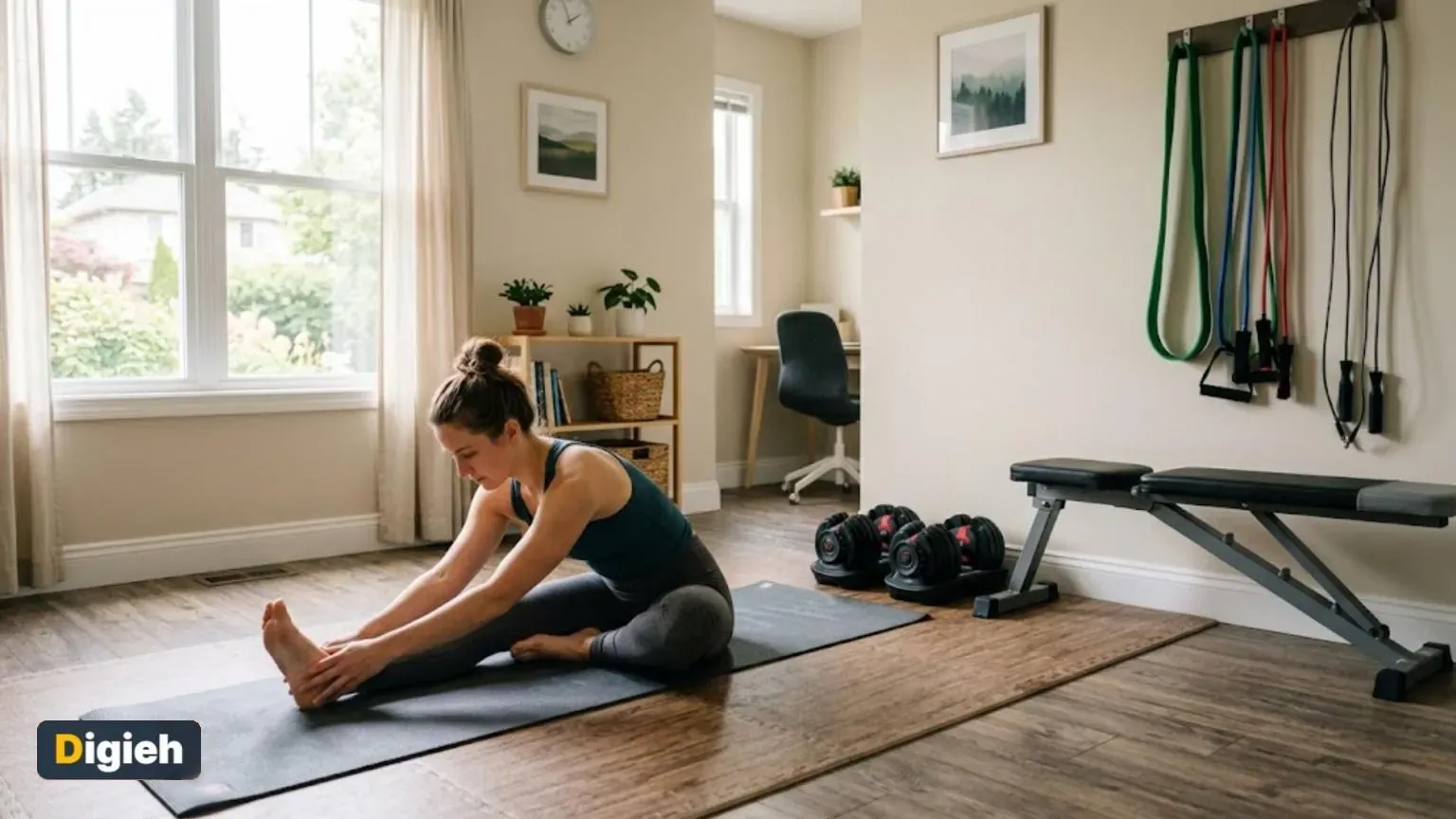
Keep a water bottle and towel nearby. A wall clock helps you time rest breaks. Everything in reach means less time searching and more time training.
Winter Workouts at Home
Short days and icy sidewalks make outdoor exercise harder in winter. A home gym keeps you moving through the coldest months.
Pair indoor strength days with brief outdoor walks on milder afternoons. Fresh air and daylight can lift your mood during dark weeks.
Set up near a sunny window for morning workouts when you can. Natural light helps set your body clock. Even ten minutes of movement there can make a gray day feel brighter.
Building Strength Over Time
As you grow stronger, increase the challenge slowly. Add a few more repetitions, a heavier weight or an extra set.
Our guide to strength training at home shares more exercises and progression tips.
Rest days matter too. Muscles grow stronger while you recover, not just while you train.
This article shares general fitness information, not medical advice. Check with a health professional before starting a new exercise program.
Try this today. Measure the space where your home gym could go. Then do one round of squats, push-ups and a plank to see how it feels.
Frequently Asked Questions
What equipment do I need for a basic home gym?
Start with an exercise mat, resistance bands, adjustable dumbbells and a jump rope. These cover strength, cardio and flexibility.
How much does a budget home gym cost?
Costs vary widely. A basic setup with bands, a mat and a jump rope can cost very little. Used weights keep bigger setups affordable.
How much space do I need for a home gym?
A small corner can work for bands and dumbbells. Make sure you can lie down and move your arms freely.
Can I build muscle with resistance bands?
Yes, bands provide enough resistance for many strength exercises. Increase band strength as you get stronger.
How often should I work out at home?
Aim for strength training at least two days a week and about 150 minutes of moderate activity weekly. Build up gradually.
Conclusion
A budget home gym makes exercise easier to fit into busy days. You can start with a few simple tools and grow from there.
Plan your space, buy versatile gear and look for used deals. Then focus on building a steady habit.
The best home gym is the one you actually use. Start small, stay consistent and enjoy getting stronger.
Found this useful?
Editor’s Note
This article is accurate as of November 8, 2026. It draws on federal activity guidelines, a public university kinesiology program and a home gym buying guide. It is general fitness information, not medical advice.
Spot an error in this article? Please contact us at support@digieh.com or read our Corrections Policy.
Keep exploring
Your next read is waiting
 1SportsHow to Host the Ultimate Football Watch Party10 min read
 2Finance & MarketsRenters Insurance Explained: Simple Guide to Smart Coverage10 min read
 3Food & LifestyleEasy Pot Roast Recipe That Turns Out Tender10 min read
 4HealthWinter Asthma Triggers and Proven Ways to Cope10 min read
 5TechnologyHow to Set Up a Wireless Printer Easily11 min read
 6EntertainmentYour Nutcracker Ballet Guide: Magical Tips for First-Timers10 min read