TRENDING
Deep Fried Turkey Safety Tips to Prevent Fires

8 min read
Last updated November 9, 2026
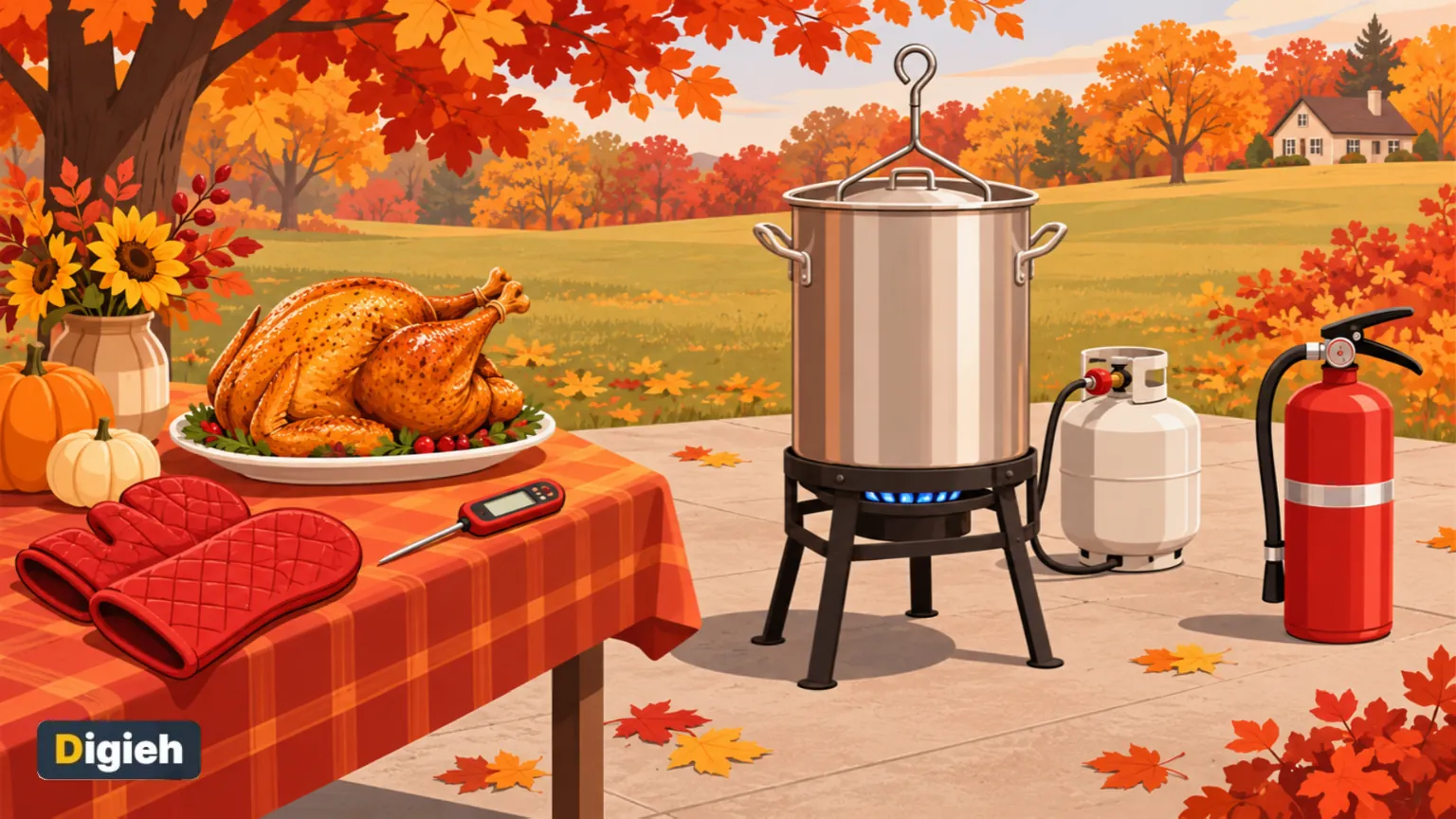
To deep fry a turkey safely, fry outdoors on a flat surface far from your home. Use a fully thawed, dry turkey and never overfill the pot with oil. Keep a fire extinguisher nearby and never leave the fryer alone.
Oil fryers carry real fire and burn risks. The National Fire Protection Association strongly discourages them and suggests oil-free fryers or a store-bought fried turkey instead.
If you still plan to fry, this guide explains every safety step. It covers everything from measuring oil to handling a grease fire.
Key Takeaways
- Thanksgiving is the top day of the year for home cooking fires.
- Never fry a frozen or wet turkey, since water makes hot oil boil over.
- Measure the oil level with water before you start.
- Set up outdoors, well away from buildings, decks and trees.
- Cook the turkey to an internal temperature of 165 degrees Fahrenheit.
Inside this guide
- Why turkey fryers are risky
- Safer alternatives
- Prepare the turkey
- Measure the oil the right way
- Set up your fryer safely
- How to fry step by step
- If a fire starts
- Check the turkey with a thermometer
- Frequently asked questions
Why Turkey Fryers Are Risky
A turkey fryer holds gallons of oil heated far above boiling. If oil spills onto the burner, it can catch fire in seconds.
Thanksgiving is already a risky day in the kitchen. The fire safety group reported an estimated 1,446 home cooking fires on Thanksgiving Day 2023. That is about 4.9 times the daily average, as Security Sales and Integration reported.
Unattended cooking is the leading cause of home cooking fires, the group says. With fryers, a few moments of distraction can lead to disaster.
1,446Thanksgiving Day 2023 home cooking fires, nearly five times a normal day, per Security Sales.
Safer Alternatives to Oil Frying
The fire safety group strongly discourages oil turkey fryers. It suggests safer ways to enjoy fried turkey.
- Buy a fried turkey from a grocery store or restaurant.
- Use an oil-free fryer that uses hot air instead.
- Roast or smoke the turkey for a crispy, flavorful result.
- Fry smaller pieces, like wings or breast, in an air fryer.
Our easy air fryer Thanksgiving recipes offer crispy results with far less risk. For roasting tips, see how to cook a turkey.
Good to know. Never use a turkey fryer indoors, in a garage, on a wooden deck or under a roof or awning.
Prepare the Turkey
Water and hot oil do not mix. Even a little ice or water inside the bird can make oil bubble up and spill over.
- Thaw the turkey completely before frying.
- Remove the giblets, neck and any plastic or wrapping.
- Pat the turkey dry inside and out with paper towels.
- Skip stuffing, since it slows cooking and traps moisture.
- Choose a smaller turkey, since large birds are harder to fry safely.
Thawing takes days in the fridge. Our guide on how to thaw a turkey safely shows how long to allow.
If you brine, rinse and dry the bird very well before frying. See how to brine a turkey for tips.
How are you cooking your turkey this year?
- Roasting in the oven
- Deep frying outdoors
- Smoking or air frying
- Not sure
Measure the Oil the Right Way
Overfilling is one of the most common causes of fryer fires. When the turkey goes in, the oil level rises.
- Place the thawed turkey in the empty fryer pot.
- Add water until it covers the turkey by about an inch.
- Remove the turkey and mark the water line.
- Pour out the water and dry the pot completely.
- Fill with oil only to that mark.
This simple water test shows exactly how much oil you need. Follow the fryer maker’s maximum fill line as well.
Set Up Your Fryer Safely
- Place the fryer outdoors on flat, level ground.
- Keep it far from your house, garage, deck, fences and trees.
- Keep children and pets well away from the fryer.
- Have a fire extinguisher rated for grease fires nearby.
- Wear long oven mitts, closed shoes and safety glasses.
- Never use water to cool or put out hot oil.
Check the weather. Do not fry in rain or snow, since water can splash into the hot oil.
How to Fry a Turkey Step by Step
- Heat the oil slowly to the temperature in your fryer’s instructions.
- Turn off the burner before lowering the turkey.
- Lower the turkey very slowly using the basket or hook.
- Relight the burner only after the turkey is fully in the oil.
- Watch the oil temperature and the fryer the whole time.
- Turn off the burner before lifting the turkey out.
Turning off the burner while lowering or lifting the turkey means spilled oil will not hit an open flame.
Never leave the fryer, even for a minute. Many fryers have no thermostat, so oil can overheat quickly.
If a Fire Starts
- Call 911 right away.
- Turn off the gas at the tank if you can do it safely.
- Use a fire extinguisher rated for grease fires.
- Never pour water on a grease fire.
- Keep everyone away from the fryer.
For small stovetop grease fires, the fire safety group advises sliding a lid over the pan. Then turn off the burner. A large fryer fire needs the fire department.
Check That the Turkey Is Done
Use a food thermometer in the thickest part of the thigh and breast. The Department of Agriculture’s safe temperature chart lists 165 degrees Fahrenheit for poultry.
Let the turkey rest before carving. Our guide on how to carve a turkey makes serving easy.
Free updates
Join the Digieh list
Be the first to know when our weekly brief launches.
No spam. Unsubscribe anytime. Read our Privacy Policy.
Choosing a Safer Fryer
If you buy a turkey fryer, look for safety features. They can lower the risk of spills and overheating.
- Sturdy, wide legs that keep the fryer stable
- A built-in thermostat that controls oil temperature
- A lid and a lifting hook or basket with an insulated handle
- Clear maximum fill lines inside the pot
- An automatic shutoff if the flame goes out
Read the full instructions before Thanksgiving Day. Practice setting up the fryer once without oil so you know how it works.
Frying Time Basics
Frying time depends on the size of the turkey and the fryer. Many guides suggest roughly three to four minutes per pound, but always follow your fryer maker’s instructions.
Use a thermometer rather than the clock to decide when the turkey is ready. Times are only a starting point.
Fryer Safety Rules for Hosts
- Choose one sober adult to run the fryer from start to finish.
- Set up a clear safety zone around the fryer that guests stay out of.
- Keep sports games and kids’ play far from the frying area.
- Have a phone nearby in case you need to call for help.
A calm, focused cook is the best safety tool. Save the celebration for after the turkey is out and the burner is off.
Keep Kids and Pets Safe
Children and pets move fast and do not understand the danger of hot oil. Keep them well away from the fryer at all times.
- Mark a no-go zone with chairs or cones.
- Ask another adult to watch kids.
- Keep pets indoors while you fry.
After Frying
Hot oil stays dangerous for hours. Let it cool completely before moving or storing it.
- Keep the fryer out of reach until the oil is cold.
- Strain and store cooled oil in a sealed container if you plan to reuse it.
- Never pour oil down the drain, where it can clog pipes.
- Check local rules for disposing of used cooking oil.
Many towns collect used cooking oil after the holidays for recycling. Small amounts can go in a sealed container in the trash once cool.
Clean the fryer pot and basket with hot soapy water once everything is cold. Store the fryer dry to prevent rust before next year.
More Thanksgiving Kitchen Safety Tips
- Stay home while the turkey cooks and check on it often.
- Use timers for long cooking times.
- Keep towels, mitts and paper three feet from heat.
- Test your smoke alarms before the holiday.
Food safety matters too. Read how to prevent food poisoning during holiday meals.
Your Turkey Fryer Safety Checklist
- The turkey is fully thawed and dry
- I measured the oil with the water test
- The fryer sits outdoors on flat ground, away from buildings
- A grease-rated fire extinguisher is nearby
- I will never leave the fryer alone
- I have a food thermometer ready
Try this today. Check that your fire extinguisher is charged and not expired before Thanksgiving week.
Test Yourself
Why should you never fry a frozen turkey?
- It takes too long
- Ice and water make hot oil boil over and can cause fires
- It tastes bland
Water turns to steam instantly in hot oil, causing dangerous boil-overs.
What internal temperature should fried turkey reach?
- 125 degrees Fahrenheit
- 145 degrees Fahrenheit
- 165 degrees Fahrenheit
The agriculture department lists 165 degrees Fahrenheit for poultry.
Frequently Asked Questions
Can I fry a turkey in my garage?
No. Fry outdoors only, far from buildings, garages and decks.
How big a turkey can I fry?
Follow your fryer’s limits. Smaller turkeys fry more evenly and safely.
What kind of extinguisher do I need?
Use one rated for grease and cooking oil fires. Never use water.
Is an oil-free fryer safer?
Yes. The fire safety group suggests oil-free fryers as a safer choice.
Conclusion
Deep-fried turkey is tasty, but oil fryers carry serious risks. Consider safer options like oil-free fryers or a store-bought fried turkey.
If you fry, thaw and dry the bird, measure the oil, set up outdoors and never leave the fryer alone.
Found this useful?
Editor’s Note
This guide is accurate as of November 9, 2026. It draws on National Fire Protection Association data and the Department of Agriculture safe temperature chart.
Always follow your fryer maker’s instructions and local fire rules.
Spot an error in this article? Please contact us at support@digieh.com or read our Corrections Policy.
Keep exploring
Your next read is waiting
 1MedicinesDaily Aspirin: Who Should Take It and Why9 min read
 2FashionHow to Clean White Sneakers So They Shine9 min read
 3Fruits & VegetablesPineapple Health Benefits and How to Cut It9 min read
 4Travel & TourismHow to Pack a Carry-On for a Week9 min read
 5Science & DiscoveriesQuadrantid Meteor Shower 2027: Best Time to Watch9 min read
 6AI & TechHow to Use AI for Smarter Holiday Shopping9 min read