TRENDING
Pomegranate Health Benefits and the Easy Opening Trick

8 min read
Last updated November 10, 2026
Pomegranates give you fiber, potassium, folate and vitamin C in a sweet, juicy package. Research hints that the juice may help blood pressure a little, but more studies are needed.
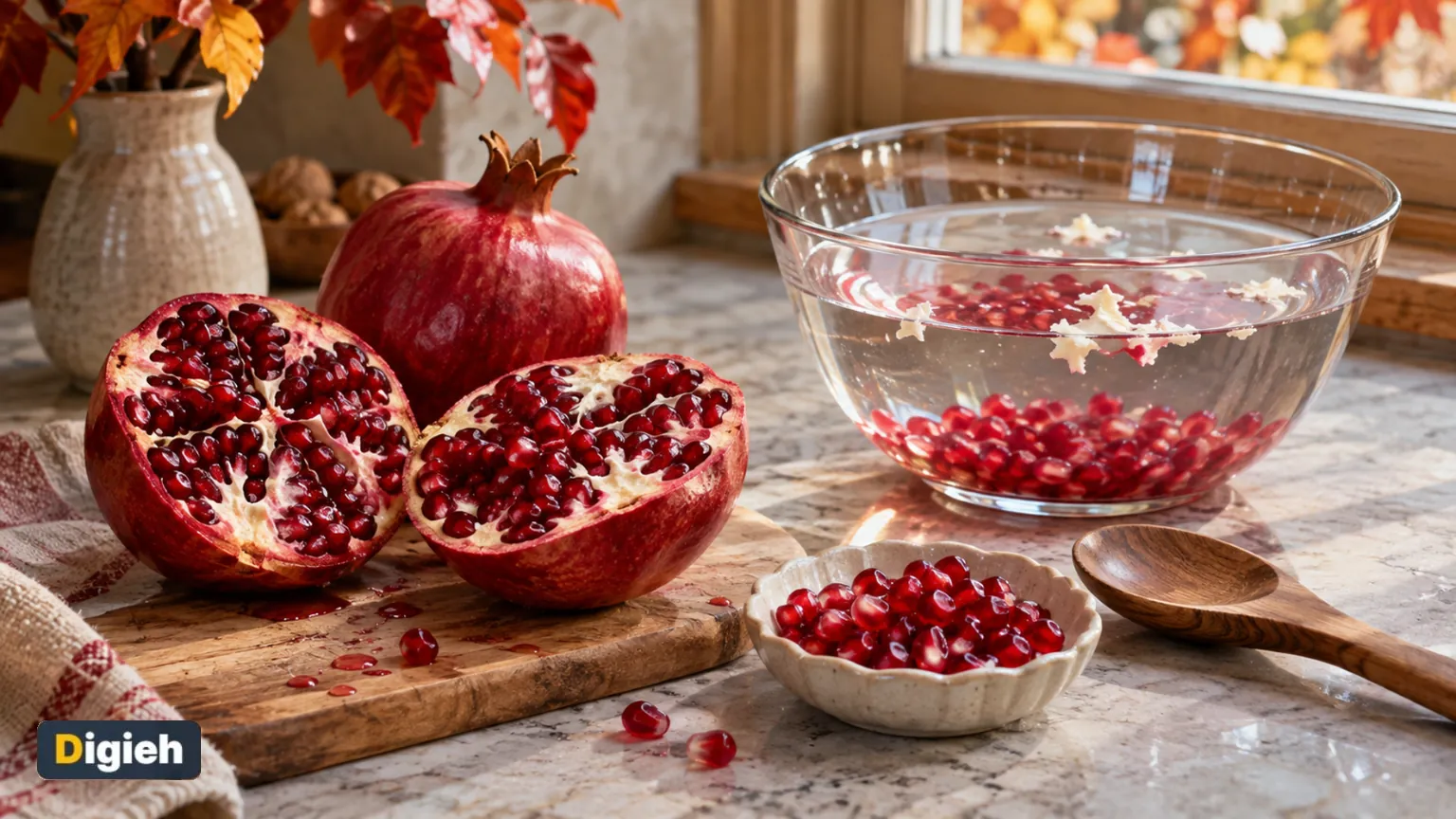
The hard part is getting the seeds out. The easiest trick is to score the fruit and pull it apart in a bowl of water. The seeds sink and the white pith floats.
This guide covers pomegranate nutrition and what science really says. It also shows how to pick a good one and open it without mess.
Key Takeaways
- Pomegranates are in season in fall and winter.
- Each 100 grams of raw fruit has about 83 calories and 4 grams of fiber.
- Pomegranate juice may help lower blood pressure slightly, but evidence is still limited.
- Open the fruit in a bowl of water to keep juice off your clothes and counters.
- Whole fruit keeps up to two months in the refrigerator.
Jump to a section
- Pomegranate nutrition facts
- Health benefits, explained
- The easy opening trick
- How to pick a ripe pomegranate
- How to store pomegranates
- Ways to eat more
- Juice or whole seeds?
- Safety and side effects
- Frequently asked questions
Pomegranate Nutrition Facts
The edible part of a pomegranate is the arils. These are the small, jewel-like seeds wrapped in sweet red juice.
The USDA SNAP-Ed seasonal produce guide lists the nutrition for 100 grams of raw pomegranate. That is a little less than one cup of arils.
| Nutrient | Amount per 100 grams |
|---|---|
| Calories | 83 |
| Carbohydrates | 19 grams |
| Sugars | 14 grams |
| Fiber | 4 grams |
| Protein | 2 grams |
| Vitamin C | 10 mg |
| Vitamin K | 16 mcg |
| Folate | 38 mcg |
| Potassium | 236 mg |
The crunchy seed inside each aril holds most of the fiber. So eating whole arils gives you far more fiber than drinking the juice.
200 to 1,400The number of arils in one pomegranate, according to the USDA SNAP-Ed produce guide.
Pomegranate Health Benefits, Explained
Pomegranates have a big health reputation. Here is what the evidence supports and what still needs proof.
1. Fiber for Digestion
Four grams of fiber per 100 grams is a solid amount for a fruit. Fiber helps keep you full and supports regular digestion.
2. Potassium for Your Heart
Illinois Extension calls pomegranates an excellent source of potassium. Potassium helps balance the effects of salt in your diet.
3. A Possible Blood Pressure Boost
The NIH National Center for Complementary and Integrative Health reviewed the research. It says pomegranate juice or extract may help lower blood pressure, but more studies are needed.
4. A Small Effect on Blood Sugar
The same NIH review says pomegranate may lower blood sugar to a small extent. It found no clear effect on cholesterol.
5. Antioxidants and Vitamins
Pomegranates contain antioxidants plus vitamin C, vitamin K and folate. These support normal body functions, though no single fruit works like medicine.
Good to know. Claims that pomegranate cures disease go far beyond the evidence. Enjoy it as part of a varied diet, not as a treatment.
How do you usually eat pomegranate?
- Fresh seeds by the spoon
- On salads or yogurt
- As juice
- Not sure, I rarely buy it
The Easy Pomegranate Opening Trick
Pomegranate juice stains everything it touches. The water bowl method from Illinois Extension keeps the mess contained.
- Fill a large bowl with cool water.
- Slice off the top about half an inch below the crown.
- Score the skin from top to bottom into sections, about a quarter inch deep.
- Hold the fruit under the water and pull the sections apart with your hands.
- Loosen the arils with your fingers. They sink to the bottom.
- Skim off the white pith that floats to the top.
- Pour the water through a strainer, leaving just the arils.
The whole job takes about five minutes. The water also keeps juice from spraying onto your shirt.
The Wooden Spoon Method
Prefer it fast? Cut the fruit in half across the middle.
Hold one half cut side down over a bowl and tap the skin firmly with a wooden spoon. The arils fall out, though a few drops of juice may fly.
Quick tip. Wear an apron and use a plastic cutting board. Pomegranate juice can stain wood and light fabrics.
How to Pick a Ripe Pomegranate
The SNAP-Ed guide says to choose pomegranates that are plump, round and heavy for their size. Weight is the best clue, because heavy fruit is full of juice.
- Pick fruit that feels heavy when you hold it.
- Look for firm, leathery skin without soft spots.
- Slightly flat sides are fine, since packed arils press out.
- Skip fruit with cracks that ooze or smell sour.
- Color varies by type, so do not judge by redness alone.
Pomegranate Varieties You May See
Most stores in the United States sell one main deep red variety. Farmers markets may offer more choices in fall.
Some types have pale pink arils and a milder taste. Others are very tart, which works well in sauces and dressings.
Seed softness also varies. If crunchy seeds bother you, ask the seller for a soft-seeded type.
Pomegranate for Kids
Bright arils are a fun snack for children. Serve them in a small bowl with a spoon to limit the mess.
Whole arils can be a choking risk for very young children, since they are small and round. Ask your pediatrician when to offer them, and always supervise snack time.
Free updates
Join the Digieh list
Be the first to know when our weekly brief launches.
No spam. Unsubscribe anytime. Read our Privacy Policy.
How to Store Pomegranates
Whole pomegranates last a long time. The SNAP-Ed guide says they keep up to two months in the refrigerator.
| Form | Where | How long |
|---|---|---|
| Whole fruit | Counter | About a week or two |
| Whole fruit | Refrigerator | Up to two months |
| Fresh arils | Sealed container in the fridge | About five days |
| Fresh arils | Freezer bag | Several months |
Only the refrigerator time comes from SNAP-Ed. The other times are common kitchen guidance, so use your eyes and nose too.
To freeze arils, spread them on a tray first, then move them to a bag. They stay loose instead of freezing in a clump. For more storage advice, see our guide on how to store fruits and vegetables.
Easy Ways to Eat More Pomegranate
- Sprinkle arils on oatmeal or yogurt for breakfast.
- Toss them into green salads with nuts and cheese.
- Blend them into a smoothie with banana and spinach.
- Spoon them over roasted vegetables or rice dishes.
- Add them to a holiday cheese board for color.
- Stir them into sparkling water for a festive drink.
Pomegranate also makes a bright salad dressing. Try whisking a spoonful of juice into our homemade salad dressing.
Pomegranates pair well with other cold-weather produce. Our guide to winter fruits and vegetables in season lists more ideas.
Pomegranate Juice or Whole Seeds?
Many studies on blood pressure used juice. But the juice loses the fiber found in the seeds.
| Choice | Pros | Cons |
|---|---|---|
| Whole arils | Fiber, fullness, fewer calories per bite | Takes time to open |
| 100 percent juice | Easy, used in many studies | No fiber, more sugar per glass |
| Juice blends | Cheaper | Often mixed with other juices and added sugar |
A simple rule helps here. Eat the fruit most of the time, and treat juice as an occasional drink you sip slowly with a meal.
If you buy juice, read the label and look for 100 percent pomegranate. Keep portions small, since juice sugar adds up quickly.
Safety and Side Effects
The NCCIH says pomegranate juice is believed to be safe, and the extract may be safe. Most people have no side effects, though some notice stomach upset.
Some people have had allergic reactions. Stop eating it and get help if you notice swelling, hives or trouble breathing.
The root, stem and peel may not be safe in large amounts. Stick to the arils and juice.
If you take medicine, talk to your doctor or pharmacist before using pomegranate extract or large amounts of juice. Some foods change how medicines work, like grapefruit does with certain drugs.
Your Pomegranate Checklist
- Pick a heavy, firm fruit
- Store whole fruit in the fridge
- Open it in a bowl of water
- Eat the whole arils for fiber
- Choose 100 percent juice if you drink it
- Ask a pharmacist about extracts if you take medicine
Try this today. Buy one pomegranate and try the water bowl trick. Then sprinkle the arils on tomorrow’s breakfast.
Test Yourself
When you open a pomegranate in water, what happens to the arils?
- They float to the top
- They sink to the bottom
- They dissolve
The arils sink while the white pith floats, so you can skim off the pith easily.
Frequently Asked Questions
Can you eat pomegranate seeds whole?
Yes. The whole aril, including the crunchy seed inside, is edible and holds most of the fiber.
Is pomegranate good for blood pressure?
The NIH says pomegranate juice or extract may help lower blood pressure, but more research is needed.
How long do pomegranate seeds last in the fridge?
Fresh arils usually last about five days in a sealed container in the refrigerator.
When are pomegranates in season?
Pomegranates are in season during fall and winter in the United States.
Conclusion
Pomegranates offer fiber, potassium, vitamins and a burst of flavor, with some early promise for blood pressure. The water bowl trick makes them easy to enjoy without the mess.
Grab one this week while they are in season, and add the arils to a salad or breakfast bowl.
Found this useful?
Editor’s Note
This guide is accurate as of November 10, 2026. Nutrition and storage facts come from USDA SNAP-Ed. Research findings come from the NIH NCCIH, and the opening method from Illinois Extension.
This is general information, not medical advice. Talk to a health professional about your own diet and medicines.
Spot an error in this article? Please contact us at support@digieh.com or read our Corrections Policy.
Keep exploring
Your next read is waiting
 1AI & TechClaude Fable 5.2 and Mythos 5.2: What Changed4 min read
 2Fruits & VegetablesHow to Eat a Persimmon and Pick a Ripe One9 min read
 3MedicinesDo Collagen Supplements Work for Skin and Joints?9 min read
 4FashionHow to Clean White Sneakers So They Shine9 min read
 5Science & DiscoveriesQuadrantid Meteor Shower 2027: Best Time to Watch9 min read
 6Travel & TourismHow to Pack a Carry-On for a Week9 min read