TRENDING
Water Heater Not Working? 7 Fixes to Try
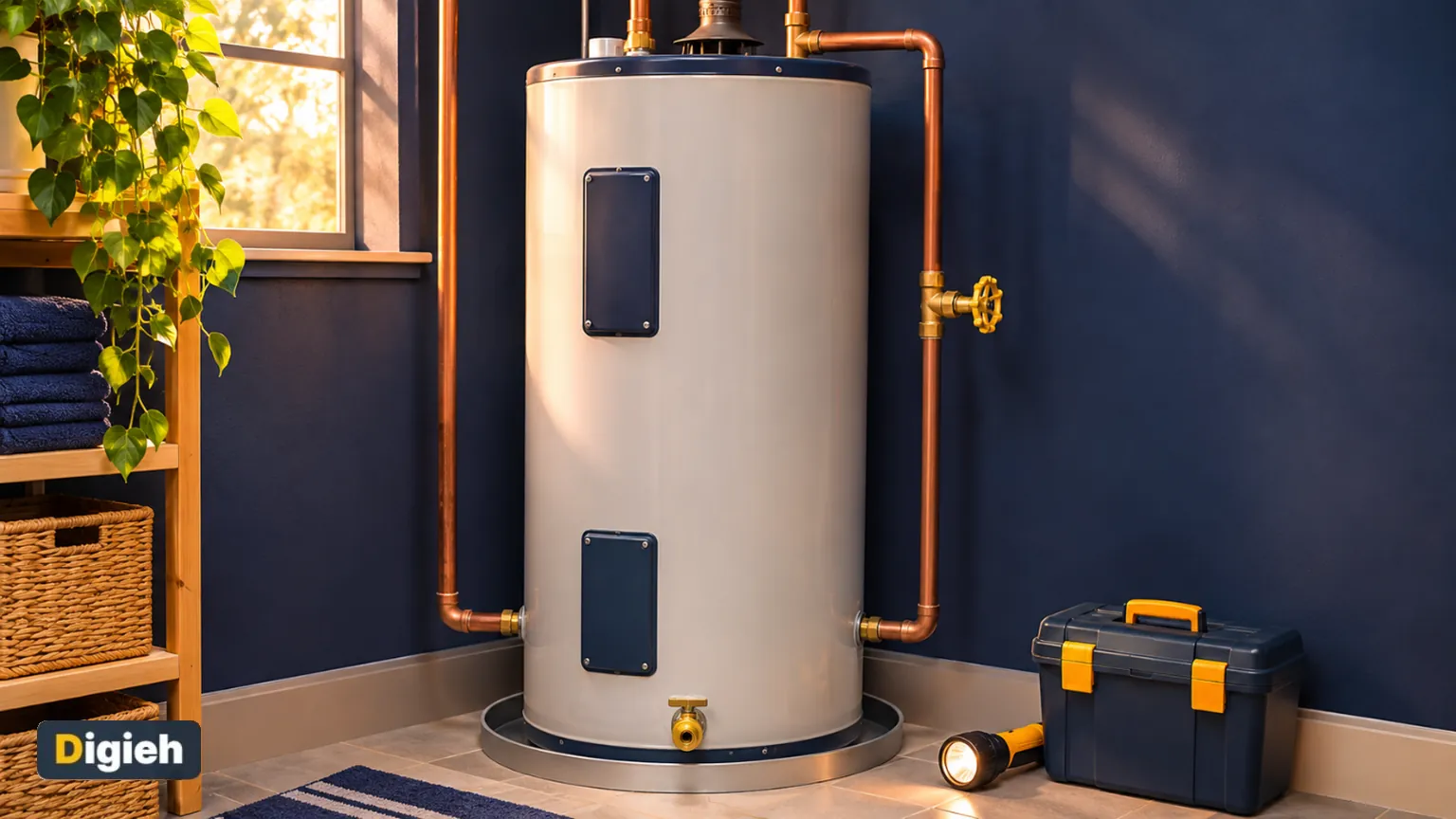
Water heater not working? Safety first, then 7 fixes for electric and gas heaters, a symptom table, leak checks, a maintenance schedule and when to replace it.

7 min read
Last updated November 20, 2026
If your water heater stops working, first check the power or gas supply. For electric heaters, look for a tripped breaker and press the reset button. For gas heaters, check that the pilot light is lit.
Those simple checks fix many no-hot-water problems. Leaks and a dripping relief valve need a plumber. A gas smell means leaving the house right away.
Key Takeaways.
- Electric: check the breaker, then the reset button on the heater.
- Gas: check the gas valve and the pilot light.
- Water from the relief valve or a gas smell is an emergency.
- Most tank water heaters last about 8 to 13 years.
Jump to a section
- The 7 fixes
- Safety first
- Symptoms and causes
- Electric heater fixes
- Gas heater fixes
- Leaks
- Noise, rust and smell
- Hot water runs out fast
- Tankless heaters
- Maintenance
- Repair or replace
- When to call a plumber
- Frequently asked questions
- Conclusion
The 7 Fixes at a Glance
- Reset a tripped breaker for an electric heater.
- Press the reset button behind the upper panel.
- Open the gas valve on the supply pipe.
- Relight the pilot light using the label steps.
- Raise the thermostat to about 120 degrees.
- Drain and flush sediment from the tank.
- Replace a worn element, thermocouple or anode rod, often with a pro.
Safety First
Stop and leave if you smell gas. Leave the house, then call the gas company and fire department from outside or a neighbor’s phone. Do not flip switches or light anything.
If the relief valve is spraying water or steam, the tank may be overheating. Turn off the breaker or gas and stay away. Then call a plumber, advises the National Board of Boiler and Pressure Vessel Inspectors.
Do not spray the tank with cold water to cool it. Let it cool on its own.
Water Heater Symptoms and Likely Causes
| Symptom | Likely cause | First thing to try |
|---|---|---|
| No hot water, electric | Tripped breaker or reset button | Reset the breaker, then the heater reset |
| No hot water, gas | Pilot light out or gas valve off | Relight the pilot using the label steps |
| Lukewarm water | Thermostat set low or a failed element | Check the setting, then the elements |
| Hot water runs out fast | Sediment, failed lower element or small tank | Flush the tank, test the element |
| Popping or rumbling | Sediment on the bottom | Drain and flush the tank |
| Rusty water | Corroding tank or worn anode rod | Have the anode rod checked |
| Rotten egg smell | Bacteria reacting with the anode rod | Flush the tank, ask about a new rod |
| Water around the base | Loose fitting, relief valve or tank leak | Find the source, call a plumber if the tank |
Source: Digieh table based on maintenance and warning signs from the National Board inspectors. Always follow your heater’s manual.
18%Share of home energy used for water heating, according to the US Department of Energy.
How to Fix an Electric Water Heater
- Check your breaker panel and reset a tripped breaker once.
- Turn the breaker off before opening any panel on the heater.
- Remove the upper access cover and press the red reset button.
- Close the cover, turn the breaker back on and wait about an hour.
- If the breaker trips again, stop. A shorted element or wiring needs a pro.
Electric heaters usually have two heating elements. If water is only warm, the upper element may work while the lower one has failed.
Testing elements needs a multimeter and live electrical work, so many people hire an electrician or plumber for this step.
How to Fix a Gas Water Heater
- Make sure the gas valve on the supply pipe is open.
- Check whether other gas appliances work, to rule out a supply problem.
- Look through the window at the bottom for the pilot flame.
- If it is out, follow the lighting steps on the label on the heater.
- If the pilot will not stay lit, the thermocouple may need replacing.
Newer gas heaters may use an electronic igniter instead of a pilot. A blinking status light often shows an error code explained in the manual.
Keep paint, gas cans and cleaners away from gas heaters. Their fumes can catch fire, the National Board warns.
What kind of water heater do you have?
- Electric tank
- Gas tank
- Tankless
- Not sure
Water Heater Leaking?
Find where the water comes from before you panic. A small drip from a fitting is very different from a leaking tank.
- Pipes on top: a loose fitting can often be tightened.
- Relief valve or its pipe: the valve may be faulty or the tank too hot.
- Drain valve at the bottom: it may need tightening or replacing.
- Tank itself: a rusted tank cannot be repaired and must be replaced.
For a tank leak, turn off the power or gas, close the cold water inlet valve and call a plumber.
Noise, Rusty Water and Bad Smells
Popping and rumbling
Sediment settles on the tank bottom and traps water that boils under it. Draining and flushing usually quiets it down.
Rusty or brown water
Rust often means the anode rod is worn out, so the tank starts to corrode. Replace the rod every two to five years, the National Board advises.
Rotten egg smell
Bacteria in the tank can react with the anode rod and make a sulfur smell. Flushing the tank and switching the rod type often helps.
Hot Water Runs Out Too Fast
If showers turn cold sooner than before, sediment may be filling the tank or the lower element may have failed.
If it has always run out fast, the tank may simply be too small for your household. The Department of Energy guide covers sizing and more efficient types.
Free updates
Join the Digieh list
Be the first to know when our weekly brief launches.
No spam. Unsubscribe anytime. Read our Privacy Policy.
What About Tankless Water Heaters?
Tankless heaters warm water only when you turn on a tap. When they fail, the cause is often different from a tank heater.
- Too many taps open at once can exceed the unit’s flow limit.
- Mineral scale can build up inside, especially with hard water.
- An error code on the display usually points to the problem.
- A clogged inlet filter can reduce flow and heat.
Most makers suggest flushing tankless units with a descaling solution on a schedule. Check your manual for the exact interval.
Water Heater Maintenance Schedule
| Task | How often |
|---|---|
| Test the relief valve | Once a year |
| Drain sediment from the tank | 2 to 4 times a year, more with hard water |
| Check or replace the anode rod | Every 2 to 5 years |
| Professional burner and vent check, gas | Once a year |
| Replace the relief valve | About every 3 years, by a plumber |
Source: National Board of Boiler and Pressure Vessel Inspectors.
Set the thermostat near 120 degrees Fahrenheit. The Consumer Product Safety Commission recommends this to prevent scalds and save energy.
At 140 degrees, hot water can cause a serious burn in about six seconds. At 120 degrees, it takes about five minutes, per the commission’s safety alert.
Repair or Replace?
A typical tank water heater lasts about 8 to 13 years, according to the National Board. Age and the type of problem decide the answer.
Usually worth repairing
- A failed element or thermostat.
- A bad thermocouple or igniter.
- A faulty relief valve or drain valve.
- A heater under about 8 years old.
Usually time to replace
- A leaking or badly rusted tank.
- A heater over 10 years old with repeat problems.
- Rusty water even after a new anode rod.
- A tank too small for your family.
Replacing an old unit is also a chance to choose a more efficient type. Our heating bill tips cover more ways to cut winter energy costs.
When to Call a Plumber
- You smell gas.
- The relief valve is releasing water or steam.
- The tank itself is leaking.
- The breaker trips again after a reset.
- The pilot will not stay lit.
- You are not comfortable working with gas or electricity.
More winter jobs? See how to unclog a drain naturally or use a space heater safely.
Try this today. Find your water heater today and note whether it is gas or electric, and its age from the label. It saves time when something goes wrong.
Test Yourself
What temperature does the Consumer Product Safety Commission recommend for home water heaters?
- 100 degrees
- 120 degrees
- 140 degrees
The commission recommends 120 degrees Fahrenheit to prevent most tap water scalds and save energy.
Frequently Asked Questions
Why is there no hot water in my house?
For electric heaters, a tripped breaker or reset button is common. For gas, the pilot light may be out.
Where is the reset button on a water heater?
On most electric tanks, it sits behind the upper access panel, near the thermostat. Turn off the power first.
How long do water heaters last?
About 8 to 13 years for a typical tank, according to the National Board.
Why does my water heater make popping sounds?
Sediment on the tank bottom traps water that boils. Flushing the tank usually helps.
Conclusion
Most no-hot-water problems start with power, gas or a tripped reset. Leaks, relief valve discharge and gas smells need a professional.
Your next step is to check your heater’s age. Then set a reminder to flush it and test the relief valve.
Editor’s Note
This article is accurate as of November 20, 2026. Safety and maintenance steps come from the National Board of Boiler and Pressure Vessel Inspectors. Temperature advice comes from the Consumer Product Safety Commission.
Spot an error in this article? Please contact us at support@digieh.com or read our Corrections Policy.
Keep exploring
Your next read is waiting
 1Pets & AnimalsWhy Do Dogs Eat Grass? What Vets Say7 min read
 2Food & LifestyleSourdough Starter From Scratch: Day by Day Guide7 min read
 3TechnologyTable Photo to Excel: Convert Printed Tables Free7 min read
 4Finance & MarketsPay Stub Explained: How to Read Every Line5 min read
 5AI & TechMicrosoft Ignite 2026: 7 Copilot Features That Matter4 min read
 6NewsWill the Grid Hold This Winter? NERC Explained5 min read
Found this useful?