TRENDING
Snow Tires vs All-Season Tires: Which Do You Need?


8 min read
Last updated November 9, 2026
Snow tires grip far better than all-season tires on snow, ice and cold pavement. They use softer rubber that stays flexible in freezing weather and deep, jagged tread that bites into snow.
All-season tires are fine for mild winters with only occasional snow. If you face regular snow, ice or long freezing spells, winter tires are the safer choice.
This guide compares the two, explains tire symbols and helps you decide what your car needs.
Key Takeaways
- Winter tires use special rubber and tread built for cold, snow and ice.
- All-season tires trade some winter grip for year-round convenience.
- The three-peak mountain snowflake symbol means a tire passed a snow traction test.
- The mud and snow marking alone does not prove winter performance.
- Fit winter tires on all four wheels, not just two.
Inside this guide
- The key differences
- Side-by-side comparison
- Tire symbols explained
- What about all-weather tires?
- Do you need snow tires?
- When to switch tires
- Costs and storage
- Tips for winter tire owners
- Frequently asked questions
The Key Differences
Rubber compound
All-season rubber gets harder as temperatures fall. A hard tire grips less, even on a dry but frozen road.
Winter tires use a softer compound that stays flexible in the cold. That flexibility helps the tire hold the road when it matters most.
Tread design
Winter tires have deeper grooves and many tiny slits called sipes. These edges bite into snow and ice, while the grooves clear slush and water.
All-season tires have shallower, smoother tread. It works well on wet and dry roads but packs with snow faster.
Stopping and turning
Grip affects more than getting moving. Good winter tires help you stop shorter and steer more reliably on slippery roads.
110Snow traction score, against a reference of 100, needed for the mountain snowflake symbol, per Tire Rack.
Side-by-Side Comparison
| Feature | Winter tires | All-season tires |
|---|---|---|
| Grip on snow and ice | Excellent | Fair to poor |
| Grip on cold dry roads | Very good | Good |
| Grip in summer heat | Poor, wears fast | Good |
| Tread depth | Deep with many sipes | Moderate |
| Year-round use | No, swap in spring | Yes |
| Best for | Regular snow and freezing temperatures | Mild winters and occasional snow |
No tire is perfect in every season. The right choice depends on where you live and how often you drive in winter weather.
What tires are on your car this winter?
- Dedicated winter tires
- All-season tires
- All-weather tires
- Not sure
Tire Symbols Explained
Mud and snow marking
Many all-season tires carry an M+S marking, short for mud and snow. Tire Rack explains that this marking reflects tread pattern shape and guarantees no level of performance.
Three-peak mountain snowflake
The mountain snowflake symbol shows a tire passed a standard snow traction test on packed snow. Tire Rack notes that every winter tire carries it, but some all-season and all-weather tires do too.
The test measures only acceleration on medium-packed snow. It does not rate braking, cornering or ice grip.
Continental calls the mountain snowflake a stricter certification in its guide to winter tire markings.
Good to know. Many trucks and sport utility vehicles come with mud and snow tires from the factory. Those tires are not true winter tires.
What About All-Weather Tires?
All-weather tires sit between the two. They carry the mountain snowflake symbol but can stay on the car all year.
They grip better than standard all-season tires in snow. However, Tire Rack says they do not replace dedicated winter tires in very cold, icy places.
All-weather tires suit drivers who see some snow but do not want to swap tires twice a year.
Do You Need Snow Tires?
Winter tires make sense if
- You live where snow and ice last for weeks or months.
- Temperatures often stay below freezing.
- You drive on hilly or rural roads that crews plow late.
- You must drive to work or school in any weather.
- Your area or route requires them.
All-season tires may be enough if
- Winters are mild with only a few snowy days.
- Crews clear main roads quickly.
- You can stay home during storms.
The National Highway Traffic Safety Administration suggests drivers consider snow tires in its winter driving tips. It also advises checking tire safety ratings before you buy.
Some places require winter tires by law. For example, Quebec requires them on passenger vehicles each winter, so check local rules if you travel.
When to Switch Tires
Many tire makers and shops suggest fitting winter tires once daily temperatures stay around 45 degrees Fahrenheit or lower. Switch back in spring when the cold weather ends.
Do not wait for the first big storm. Tire shops get very busy then, and you may wait days for an appointment.
Winter tires wear quickly on warm pavement. Leaving them on through summer wastes tread and reduces grip.
Even good tires can slide on clear ice. See how to drive on black ice safely.
Fit All Four Wheels
Always install winter tires on all four wheels. Mixing winter tires and all-season tires can make the car unstable.
If only the front has winter tires, the rear can slide out in a turn. If only the rear has them, the front may not steer or stop well.
This applies to front-wheel, rear-wheel and all-wheel-drive cars alike.
All-Wheel Drive Is Not a Substitute
All-wheel drive helps you get moving in snow. It does not help much with stopping or turning.
A front-wheel-drive car on good winter tires often stops and steers better than an all-wheel-drive car on worn all-season tires. Tires are the only parts touching the road.
Free updates
Join the Digieh list
Be the first to know when our weekly brief launches.
No spam. Unsubscribe anytime. Read our Privacy Policy.
Costs and Storage
Winter tires cost money up front, but they spread wear across two sets. Each set lasts longer because it is only used part of the year.
- Buying a second set of steel wheels makes seasonal swaps cheaper and faster.
- Store off-season tires in a cool, dry, dark place.
- Keep them away from heaters, sunlight and chemicals.
- Mark each tire with its position so you can rotate them next season.
Some tire shops offer seasonal storage for a fee. It saves garage space and the hassle of carrying heavy wheels.
Ask the shop to check wheel balance during each seasonal swap. Balanced wheels reduce vibration and help the tires wear evenly.
Quick tip. Ask your insurer whether it offers a discount for winter tires. Some insurers do in snowy regions.
Tips for Winter Tire Owners
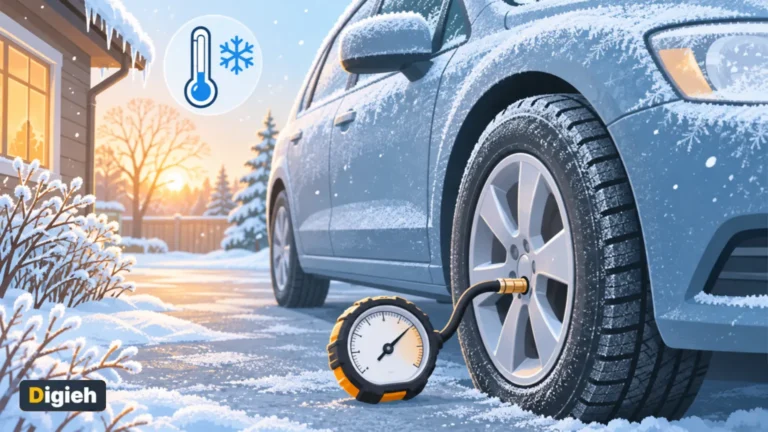
- Check tire pressure often, since cold weather lowers it.
- Check tread depth before each season.
- Replace winter tires when the tread gets low, since deep grooves matter in snow.
- Still drive slowly and leave extra space on icy roads.
Cold air drops tire pressure fast. Our guide to tire pressure in cold weather explains how to check it. For tread, try the penny test for tires.
Even the best tires need careful driving. Read our guide on how to drive in snow before the roads turn white.
Studded Tires and Snow Chains
Studded winter tires have small metal pins that dig into ice. They give extra grip on glare ice but can be noisy on dry pavement.
Many states limit studded tires to certain months, and some ban them. Check your state rules before you buy a set.
Snow chains wrap around the tires for deep snow and steep mountain passes. Some mountain roads require them during storms.
- Practice fitting chains at home before you need them.
- Drive slowly with chains, usually under the limit shown in the instructions.
- Remove chains once you reach clear pavement.
For most drivers, a good set of winter tires is enough. Chains and studs are extra tools for harsh conditions.
Electric Cars and Winter Tires
Electric cars are heavy and deliver power instantly, which can make wheels spin on snow. Good winter tires help them grip and stop.
Look for winter tires rated for your car’s weight. Our electric car vs hybrid guide covers other cold weather differences.
Your Winter Tire Checklist
- I know how often my area gets snow and ice
- I checked for the mountain snowflake symbol
- I plan to fit winter tires on all four wheels
- I booked my tire swap before the rush
- I have a place to store off-season tires
- I check pressure and tread monthly
Add the seasonal tire swap to our car maintenance checklist.
Try this today. Look at your tire sidewalls for the mountain snowflake symbol. Then decide whether your tires suit the winter ahead.
Test Yourself
What does the three-peak mountain snowflake symbol show?
- The tire is for summer use only
- The tire is for mud only
- The tire passed a snow traction test
The symbol means the tire met a minimum snow traction standard on packed snow.
How many winter tires should you fit on your car?
- All four
- Only the front two
- Only the rear two
Mixing tire types can make the car unstable, so fit all four.
Frequently Asked Questions
Are snow tires worth it?
Yes, if you face regular snow, ice or long cold spells. They improve grip, stopping and steering.
Can I use winter tires all year?
It is not a good idea. They wear fast and grip less on warm roads.
Are all-season tires safe in snow?
They work in light snow, but grip drops sharply on ice and in deep snow.
Do I need winter tires with all-wheel drive?
All-wheel drive helps you start moving, but winter tires help you stop and turn.
Conclusion
Snow tires beat all-season tires in cold, snowy and icy conditions. All-season tires suit mild winters with little snow.
Look for the mountain snowflake symbol, fit all four wheels and switch before the first storm.
Found this useful?
Editor’s Note
This guide is accurate as of November 9, 2026. It draws on the National Highway Traffic Safety Administration, Tire Rack and Continental.
Local laws and tire models change, so check your area’s rules and your tire maker’s guidance.
Spot an error in this article? Please contact us at support@digieh.com or read our Corrections Policy.
Keep exploring
Your next read is waiting
 1MedicinesDoes Zinc Help Colds? How to Use It9 min read
 2FashionHow to Layer Necklaces Without Tangles or Clutter9 min read
 3Fruits & VegetablesHow to Ripen Fruit Faster With Kitchen Tricks9 min read
 4Science & DiscoveriesQuadrantid Meteor Shower 2027: Best Time to Watch9 min read
 5Travel & TourismHow to Pack a Carry-On for a Week9 min read
 6AI & TechHow to Use AI for Smarter Holiday Shopping9 min read