TRENDING
Tire Pressure in Cold Weather: Why It Drops and What to Do

8 min read
Last updated November 9, 2026
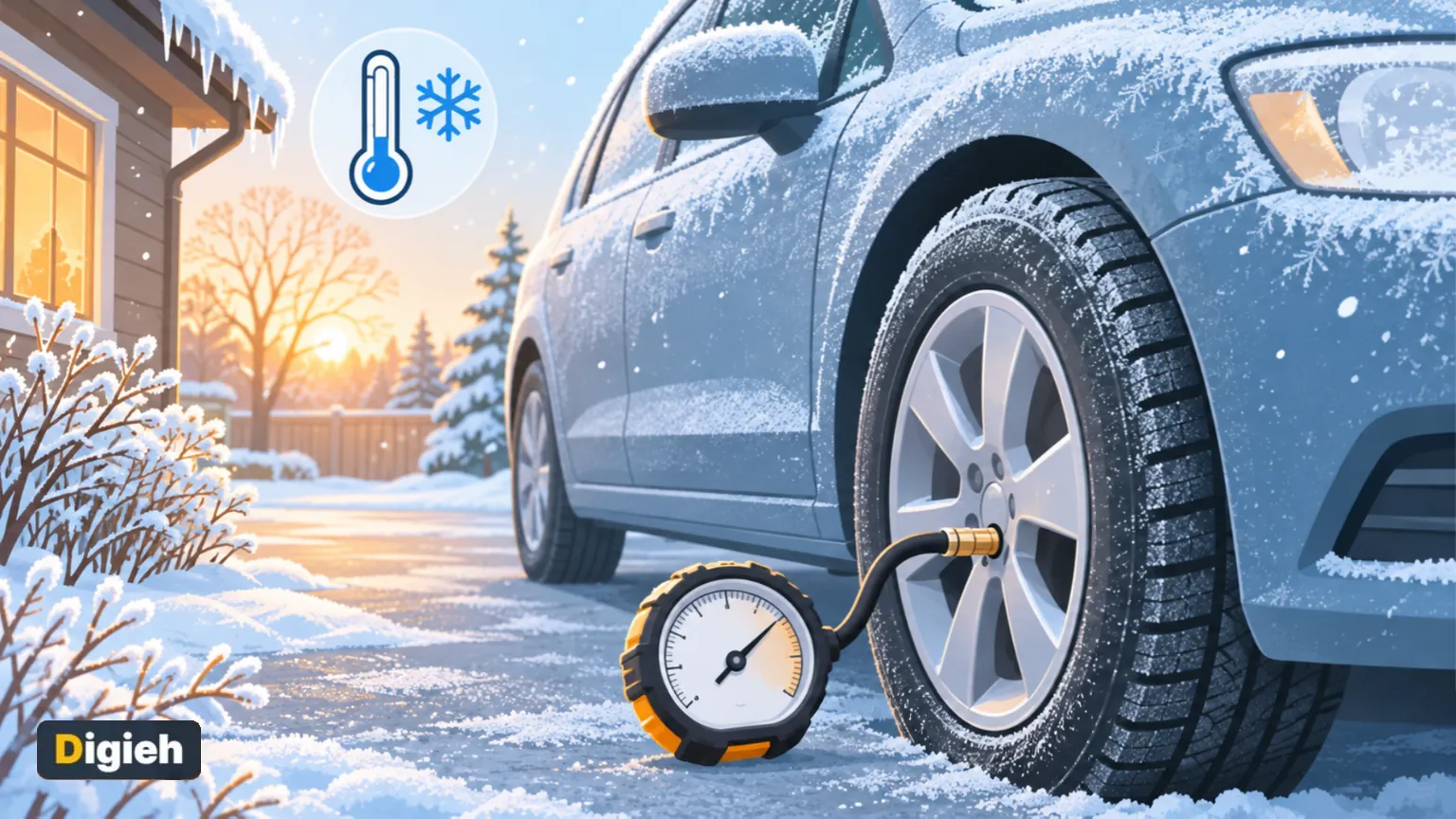
Tire pressure drops about 1 pound per square inch (PSI) for every 10 degree Fahrenheit drop in temperature. That is why the tire pressure light often comes on during the first cold mornings of the year.
The fix is simple. Check your tires when they are cold. Then fill them to the number on your door sticker, not the number on the tire.
This guide explains why cold air lowers tire pressure and how to check and fill your tires all winter.
Key Takeaways
- Tire pressure falls about 1 PSI for every 10 degree drop, according to AAA.
- A 20 to 30 degree cold snap can leave tires underinflated overnight.
- Use the pressure on the driver’s door sticker, not the maximum on the tire.
- Check pressure at least monthly with cold tires.
- The warning light comes on only when a tire is about 25 percent low.
Inside this guide
- Why cold weather lowers tire pressure
- Why the warning light comes on
- Find the right pressure
- How to check tire pressure
- How to add air in winter
- Risks of low pressure
- Winter tire pressure tips
- Electric cars in the cold
- Frequently asked questions
Why Cold Weather Lowers Tire Pressure
Air shrinks as it cools. Inside a tire, cold air takes up less space, so the pressure drops.
AAA says in its guide to temperature and tire pressure that pressure falls about 1 PSI per 10 degrees. It rises at roughly the same rate when the weather warms.
Fall and early winter bring big swings. A warm afternoon followed by a freezing night can lower pressure by several PSI before your morning drive.
1 PSITypical pressure loss for every 10 degree Fahrenheit drop, per AAA.
| Temperature drop | Approximate pressure loss |
|---|---|
| 10 degrees | About 1 PSI |
| 20 degrees | About 2 PSI |
| 30 degrees | About 3 PSI |
| 40 degrees | About 4 PSI |
Tires also lose a little air naturally over time. Combined with cold weather, that adds up fast.
Why the Warning Light Comes On
Most cars have a tire pressure monitoring system. It lights up a dashboard symbol shaped like a tire with an exclamation point.
AAA notes the system typically does not alert until a tire is about 25 percent below the recommended pressure. By then, the tire is already quite low.
The light may go off after you drive for a while, as the tires warm up. The problem has not gone away, so check and fill them anyway.
Learn what other symbols mean in our guide to dashboard warning lights.
Good to know. A flashing tire light that then stays on usually signals a problem with the monitoring system itself. Have a shop check it.
Find the Right Pressure for Your Car
The correct pressure is on a sticker inside the driver’s door frame. It is also in your owner’s manual.
The number on the tire sidewall is the maximum pressure the tire can hold. It is not the pressure you should use.
The National Highway Traffic Safety Administration gives the same advice on its tire safety page. Always use the vehicle maker’s recommendation.
Some cars list different pressures for front and rear tires. Others list a higher number for heavy loads.
How to Check Tire Pressure
- Check in the morning before driving, or after the car has sat for at least three hours.
- Remove the valve cap from one tire.
- Press a tire gauge firmly onto the valve stem.
- Read the number and compare it with your door sticker.
- Repeat for all four tires and the spare, if you have one.
- Replace every valve cap.
Warm tires give a falsely high reading. That is why checking after a long drive can hide low pressure.
Quick tip. Keep a small digital tire gauge in your glove box. It costs little and gives a clear reading in seconds.
Has your tire pressure light come on this winter?
- Yes, already
- Not yet
- My car does not have one
- Not sure
How to Add Air in Winter
- Drive to a nearby gas station with an air pump, keeping the trip short.
- Add air in short bursts.
- Check with your gauge after each burst.
- Stop when you reach the door sticker number.
- If you overfill, press the valve pin briefly to let some air out.
Tires warm slightly on the drive to the pump. Some drivers add about 1 PSI above the sticker number to make up for it. They then recheck the next cold morning.
A portable tire inflator that plugs into your car lets you fill tires at home. It is handy on freezing days.
If you park in a heated garage, check the tires before you leave. The pressure will drop once the car sits outside in the cold.
Risks of Driving on Low Tire Pressure
Underinflated tires do more than waste fuel. AAA says they lower fuel efficiency, wear the outer tread edges faster and raise the risk of a blowout.
- Longer stopping distances on wet and icy roads
- Weaker steering response
- Faster and uneven tread wear
- Higher fuel costs
- More heat buildup and a greater chance of tire failure
The highway safety agency says proper inflation can save up to 11 cents per gallon of fuel. It can also add about 4,700 miles to tire life.
Do Not Overinflate Either
Too much air is a problem too. AAA says overinflation wears the center of the tread faster and gives a harsher ride.
It also makes tires more open to damage from potholes, which are common after winter freezes. Stick to the door sticker number.
Winter Tire Pressure Tips
- Check pressure at least monthly and whenever a cold front arrives.
- Check before long winter road trips.
- Look at the spare tire, which often goes flat unnoticed.
- Keep valve caps on to block ice and dirt.
- Inspect tires for cracks, nails and bulges while you check.
Pressure checks pair well with a tread check. Try our penny test for tires at the same time.
Good tires and correct pressure make a big difference on slippery roads. Read our guide on how to drive in snow before the first storm.
Thinking about a dedicated winter set? Read our guide to snow tires vs all-season tires.
Free updates
Join the Digieh list
Be the first to know when our weekly brief launches.
No spam. Unsubscribe anytime. Read our Privacy Policy.
Electric Cars in the Cold
Electric cars follow the same rules, but tire pressure matters even more. Low pressure adds rolling resistance and cuts driving range.
Cold weather already reduces battery range, so keeping tires at the right pressure helps you get every mile possible. See how cold affects different cars in our electric car vs hybrid guide.
Tire Pressure and Winter Tires
Winter tires use softer rubber and deeper tread to grip snow and ice. They still need the correct pressure to work well.
Unless your tire maker says otherwise, inflate winter tires to the pressure on your door sticker. Check them just as often as all-season tires.
If you swap tires each season, check the pressure right after the change. Tires stored for months often lose air.
Right pressure helps, but ice still demands care. Read how to drive on black ice before cold mornings.
Common Tire Pressure Myths
Does lower pressure give better grip in snow?
Letting air out does not help on public roads. Underinflated tires handle poorly and can overheat or fail.
Can you tell tire pressure by looking?
Modern tires can look normal even when they are badly underinflated. Only a gauge gives a true reading.
Does the warning light mean you are fine until it comes on?
The light is a last warning, not a routine check. Tires can be well below the right pressure long before it turns on.
When to See a Mechanic
- One tire keeps losing air faster than the others
- The warning light stays on after filling all tires
- You see a nail, cut or bulge in the tire
- The valve stem looks cracked or leaks
Slow leaks often come from a small puncture or a worn valve. Most shops can repair a simple tread puncture quickly.
Your Cold Weather Tire Checklist
- I know the pressure on my door sticker
- I checked all four tires when cold
- I checked the spare
- I filled tires to the right pressure
- The valve caps are back on
- I checked the tread too
Add tire checks to your routine with our car maintenance checklist.
Try this today. Find the tire sticker in your driver’s door and snap a photo of it. You will always have the right number on hand.
Test Yourself
How much does tire pressure drop for every 10 degree fall in temperature?
- About 5 PSI
- About 1 PSI
- It does not change
AAA says pressure drops about 1 PSI for every 10 degree drop.
Where do you find the right tire pressure for your car?
- The number on the tire sidewall
- The gas station pump
- The sticker inside the driver’s door
The door sticker shows the maker’s recommended pressure. The sidewall shows the maximum.
Frequently Asked Questions
Should I put more air in my tires in winter?
Fill them to the door sticker number when cold. Do not go over the maximum on the sidewall.
Why does my tire light go off after driving?
Driving warms the tires and raises the pressure. Check and fill them anyway.
Is it safe to drive with the tire light on?
Drive slowly to the nearest air pump and check all tires. Do not ignore it for days.
How often should I check tire pressure in winter?
At least monthly, and after any big drop in temperature.
Conclusion
Cold weather lowers tire pressure, often enough to trigger the warning light. Check your tires when cold and fill them to the door sticker number.
A quick monthly check keeps you safer on winter roads and saves fuel.
Found this useful?
Editor’s Note
This guide is accurate as of November 9, 2026. It draws on guidance from AAA and the National Highway Traffic Safety Administration.
Always follow your vehicle maker’s recommended tire pressure.
Spot an error in this article? Please contact us at support@digieh.com or read our Corrections Policy.
Keep exploring
Your next read is waiting
 1MedicinesDoes Zinc Help Colds? How to Use It9 min read
 2FashionNew Year’s Eve Outfit Ideas for Every Party9 min read
 3Fruits & VegetablesMushroom Nutrition: Why These Fungi Are So Healthy9 min read
 4AI & TechHow to Use AI for Smarter Holiday Shopping9 min read
 5Travel & TourismHow to Pack a Carry-On for a Week9 min read
 6Science & DiscoveriesQuadrantid Meteor Shower 2027: Best Time to Watch9 min read