TRENDING
Dashboard Warning Lights Explained, What Each Means

8 min read
Last updated November 9, 2026
Dashboard warning lights tell you something in your car needs attention. Red usually means stop soon and check it. Amber or yellow means service it soon, and green or blue means a system is simply on.
This guide explains the most common lights in plain words. You will learn which ones are urgent and what to do when each one appears.
Key Takeaways
- Red lights often signal a serious problem, so pull over safely and check.
- A steady check engine light means get service soon, while a blinking one is more urgent.
- The tire pressure light means at least one tire may be low.
- Oil pressure and engine temperature lights can mean engine damage if you keep driving.
- Your owner’s manual is the final word on what each symbol means in your car.
Inside this guide
- What the colors mean
- Check engine light
- Tire pressure light
- Urgent red lights
- Amber service lights
- Green and blue lights
- What to do when a light comes on
- Frequently asked questions
What the Colors Mean
Most carmakers use a simple color system. It works much like a traffic light.
| Color | What it usually means | What to do |
|---|---|---|
| Red | Serious problem or safety issue | Stop safely and check soon |
| Amber or yellow | Something needs service | Get it checked soon |
| Green or blue | A feature is on | No action needed |
Symbols can vary between brands and models. Keep your owner’s manual in the glove box or download it from the carmaker’s website.
1 monthHow often to check tire pressure, even with a warning system, per the National Highway Traffic Safety Administration.
Check Engine Light
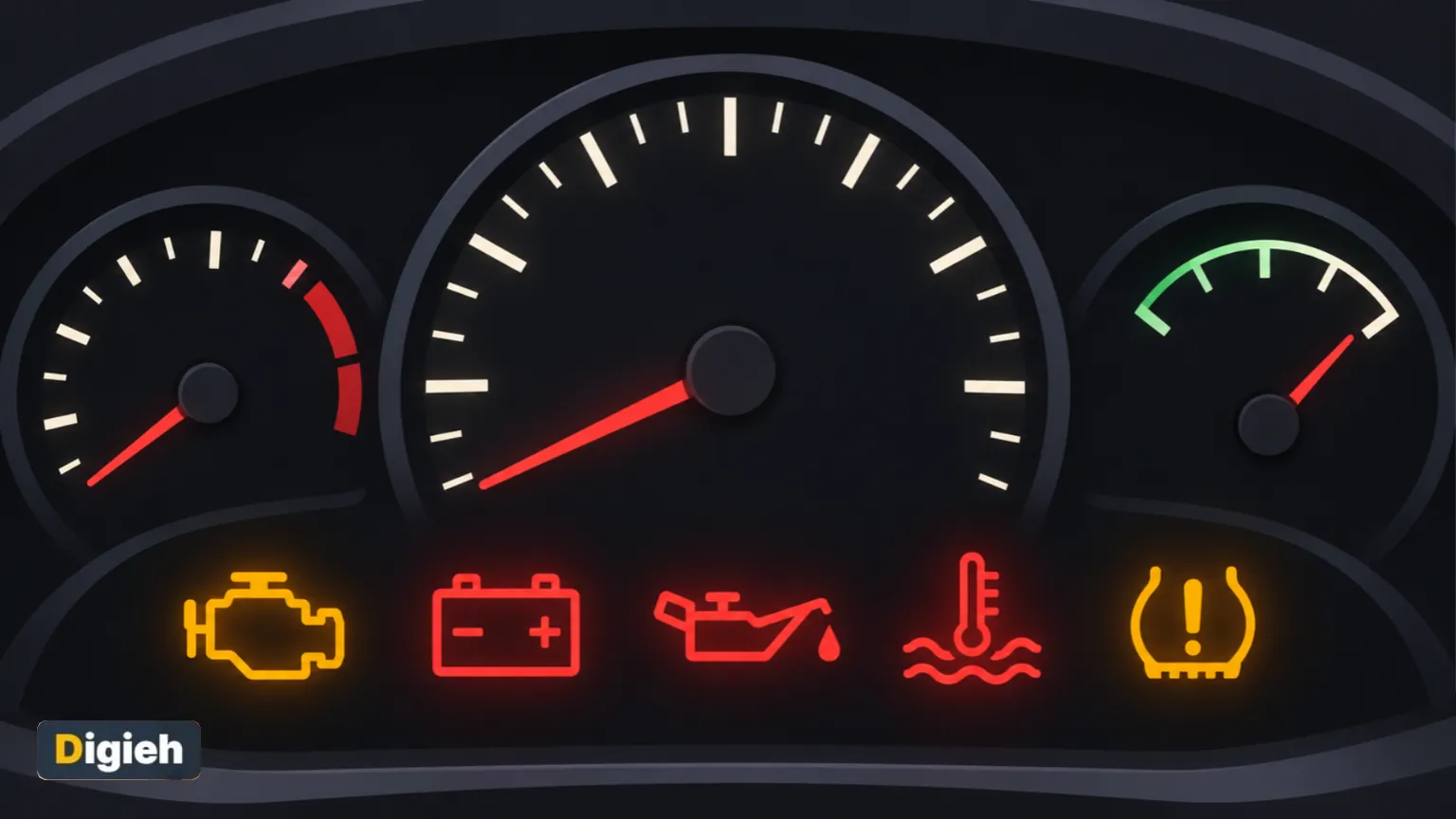
The check engine light looks like the outline of an engine. It may also say Check Engine or Service Engine Soon.
It comes from the on-board diagnostics system, which watches the engine and emissions parts. The California Air Resources Board explains this in its on-board diagnostics fact sheet.
Steady light
A steady light means the system found a problem. Most carmakers advise getting service as soon as it is convenient.
Blinking light
A blinking light is more serious. The board says it signals a problem that could damage the catalytic converter, so get service as soon as possible.
If the light blinks, reduce speed and avoid hard acceleration. Have the car checked right away.
Good to know. Any repair shop can read the stored trouble code, not just dealers. Many auto parts stores will also read codes for free.
Tire Pressure Light
This light looks like a flat tire cross-section with an exclamation mark. It comes from the tire pressure monitoring system.
The National Highway Traffic Safety Administration explains it on its tire safety page. If the light stays on, at least one tire is significantly underinflated.
- Check all tires with a gauge as soon as you safely can.
- Fill them to the pressure on the label inside the driver’s door, not the number on the tire.
- If the light flashes for about a minute and then stays on, the system may have a fault.
- A light that appears on cold mornings and then goes off usually means pressure is slightly low.
Cold air lowers tire pressure, so this light is common in winter. Check tires when they are cold, before you drive.
Did the tire light come on during a cold snap? Our guide to tire pressure in cold weather explains why.
Urgent Red Lights
Oil pressure
This light looks like an old oil can with a drip. It can mean the engine is not getting enough oil pressure.
Pull over safely and turn off the engine. Driving with low oil pressure can quickly damage the engine.
Engine temperature
A thermometer symbol in liquid warns that the engine is overheating. Stop safely and let the engine cool before you check anything.
Never open a hot radiator cap. Hot coolant can spray out and cause burns.
Battery or charging system
A battery symbol usually means the charging system is not working properly. The car may run on battery power alone and then stall.
Turn off extras like the radio and heated seats, then head to a shop. Our guide to cold-weather car battery tips explains common causes.
Brake system
A circle with an exclamation mark, or the word Brake, can mean the parking brake is on. It can also mean brake fluid is low. If the parking brake is off and the light stays on, get the brakes checked right away.
Which warning light has surprised you most while driving?
- Check engine light
- Tire pressure light
- Battery or oil light
- Not sure
Amber Service Lights
Anti-lock brakes
This light shows the letters for the anti-lock braking system inside a circle. Your normal brakes should still work, but the anti-lock feature may not, so drive with extra care.
Airbag
A seated person with a circle in front shows an airbag problem. The airbags may not work in a crash, so get it checked soon.
Also look up your car on the federal recall search. Some airbag and safety issues have free repairs.
Traction or stability control
A car with wavy lines means traction or stability control. If it flashes while driving on ice, the system is working. If it stays on, the system may be off or faulty.
Washer fluid and maintenance reminders
Some cars show a windshield symbol when washer fluid is low. A wrench symbol or message often means a routine service is due.
Low fuel
A fuel pump symbol means you are running low. Fill up soon, especially in winter when getting stranded is more dangerous.
Free updates
Join the Digieh list
Be the first to know when our weekly brief launches.
No spam. Unsubscribe anytime. Read our Privacy Policy.
Green and Blue Information Lights
These lights show that a feature is active. They do not signal a problem.
- Headlights or fog lights are on
- High beams are on, usually shown in blue
- Cruise control is active
- Turn signals are blinking
Turn off high beams when other cars approach. They can blind oncoming drivers.
What to Do When a Light Comes On
- Stay calm and note the color and symbol.
- If the light is red, find a safe place to stop soon.
- Check your owner’s manual for the exact meaning.
- Look for simple fixes, such as a loose fuel cap or low tire.
- Call roadside help if the car feels unsafe to drive.
- Book a repair for any light that stays on.
Keep a winter kit in the car in case you get stuck. Our winter car emergency kit list covers what to pack.
Quick tip. Take a photo of the dashboard when a light appears. It helps the mechanic and reminds you what you saw.
Lights You See When You Start the Car
Many lights flash on for a second when you turn the key or press start. This is a quick self-test of the bulbs and systems.
They should go off within a few seconds. If one stays on after the engine starts, pay attention to it.
This self-test is also a good way to learn the symbols. Watch the dashboard each time you start the car for a week.
Warning Lights in Electric and Hybrid Cars
Electric and hybrid cars have some different lights. You may see a symbol for the high-voltage system, low charge or a power limit mode.
A turtle symbol in some cars means reduced power to protect the battery. Read your manual and follow its advice, since these systems vary by brand.
Shopping for a new car? Read our electric car vs hybrid comparison first.
Do Not Ignore Small Problems
A small fault can turn into a costly repair if you wait. A failing sensor, for example, can hurt fuel economy over time.
Regular maintenance helps prevent many warning lights. A well-kept car can also help when you shop for coverage, as our guide to lowering car insurance explains.
If your battery dies after a warning light, you may need a jump. Learn how to jump-start a car safely.
Prevent many warning lights with our simple car maintenance checklist.
Your Warning Light Checklist
- I know where my owner’s manual is
- I know red means stop and amber means service soon
- I check tire pressure monthly
- I keep a tire gauge in the car
- I checked my car for open recalls
- I book repairs when a light stays on
Try this today. Start your car and watch the lights during the self-test. Then look up any symbol you do not recognize in the manual.
Test Yourself
What does a blinking check engine light usually mean?
- The gas tank is full
- A routine service is due
- A serious problem that could damage the catalytic converter
Air quality regulators say a blinking light signals a problem that could damage the converter.
Where do you find the right tire pressure for your car?
- The label inside the driver’s door
- The number on the tire
- Any gas station sign
Federal safety officials say to use the vehicle label, not the tire sidewall.
Frequently Asked Questions
Can I drive with the check engine light on?
If it is steady and the car feels normal, get it checked soon. If it blinks, get service right away.
Why does my tire light come on in cold weather?
Cold air lowers tire pressure. Check and fill your tires when they are cold.
Do all cars use the same symbols?
Many symbols are similar, but they vary by brand. Check your owner’s manual.
Conclusion
Dashboard warning lights are your car’s way of asking for help. Red means stop soon, amber means service soon and green or blue means a feature is on.
Learn the main symbols now, and you will react calmly when one appears. A quick check today can prevent a costly repair later.
Found this useful?
Editor’s Note
This guide is accurate as of November 9, 2026. It draws on the National Highway Traffic Safety Administration and the California Air Resources Board.
Symbols differ between vehicles, so always follow your owner’s manual.
Spot an error in this article? Please contact us at support@digieh.com or read our Corrections Policy.
Keep exploring
Your next read is waiting
 1Fruits & VegetablesHow to Store Fruits and Vegetables So They Last8 min read
 2BikesMotorcycle Winter Storage, Easy Step by Step Guide8 min read
 3CarsCar Maintenance Checklist, Simple Monthly Guide8 min read
 4Science & DiscoveriesWinter Solstice 2026, Date, Time and Meaning8 min read
 5HealthFull-Fat Dairy Did Not Raise Cholesterol in New Study4 min read
 6Food & LifestyleChristmas Gift Ideas for Dad He Will Actually Use8 min read