TRENDING
How to Jump-Start a Car Safely, Step by Step

8 min read
Last updated November 9, 2026
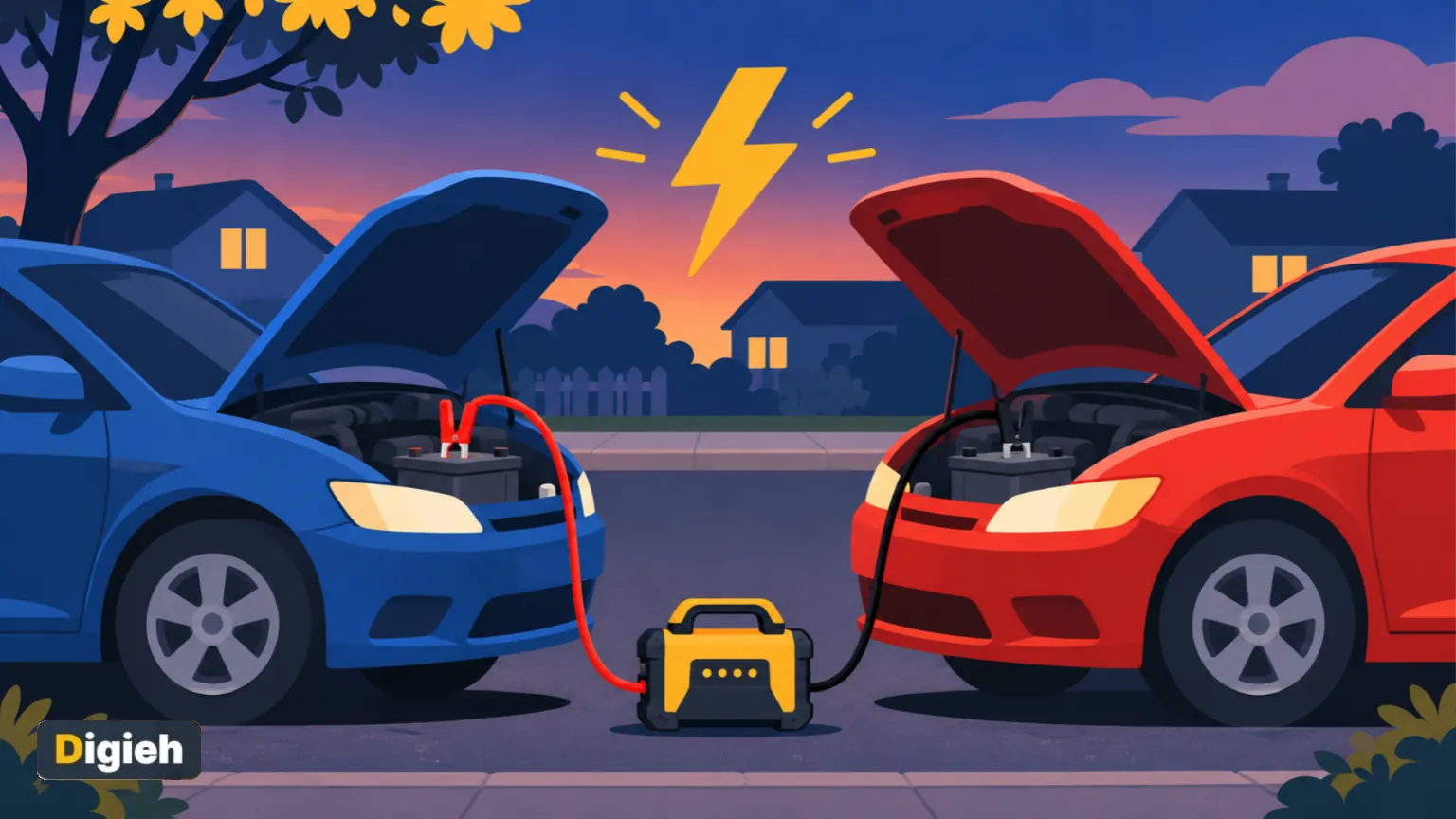
To jump-start a car, connect red to the dead battery’s positive post, then to the good battery’s positive post. Next, connect black to the good battery’s negative post and to bare metal on the dead car.
Start the helper car, wait a few minutes, then start the dead car. This guide explains each step safely, plus what to do with a portable jump starter.
Key Takeaways
- Wear eye protection, because batteries contain acid and give off flammable gas.
- Connect positive to positive first, then negative to bare metal on the dead car.
- Never let the clamps touch each other while the cables carry power.
- Check your owner’s manual first, especially for hybrids and electric cars.
- If the car dies again soon, the battery or charging system may need a check.
Inside this guide
- What you need
- Safety first
- How to jump-start a car step by step
- Using a portable jump starter
- If the car still will not start
- What to do after a jump
- Hybrids and electric cars
- Frequently asked questions
What You Need
- A set of jumper cables in good condition, or a charged portable jump starter
- A working car with a battery of the same voltage, usually 12 volts
- Safety glasses or goggles
- Gloves, if you have them
- Your car’s owner’s manual
Check the cables before you start. Prevent Blindness warns against using cables with rust, corrosion or exposed wires.
12Volts, the battery system most cars use. Kia warns a 24-volt source can damage parts, per its owner’s manual.
Safety First
Car batteries give off hydrogen gas, which can explode if a spark or flame reaches it. Battery acid can also burn skin and eyes.
The Oregon Department of Transportation explains these risks in its battery charging safety talk. It advises goggles or a face shield and good airflow.
- Wear safety glasses or goggles the whole time.
- Do not smoke or use a flame near the battery.
- Never let the red and black clamps touch.
- Do not jump a cracked, leaking or frozen battery.
- Keep hands, hair and loose clothing away from moving engine parts.
The eye health group Prevent Blindness recommends splash-proof goggles. It also says to call a professional if you are unsure.
Good to know. Some newer cars have the battery in the trunk or under a seat. They often provide special jump points under the hood instead.
How to Jump-Start a Car Step by Step
1. Position the cars
Park the helper car close enough for the cables to reach, but do not let the cars touch. Turn both cars off and set the parking brakes.
2. Turn off extras
Switch off headlights, the radio, heat and other electrical loads in both cars. This reduces strain on the batteries.
3. Find the battery terminals
Open both hoods and locate the batteries or jump points. The positive terminal has a plus sign and often a red cover.
4. Connect the red cable
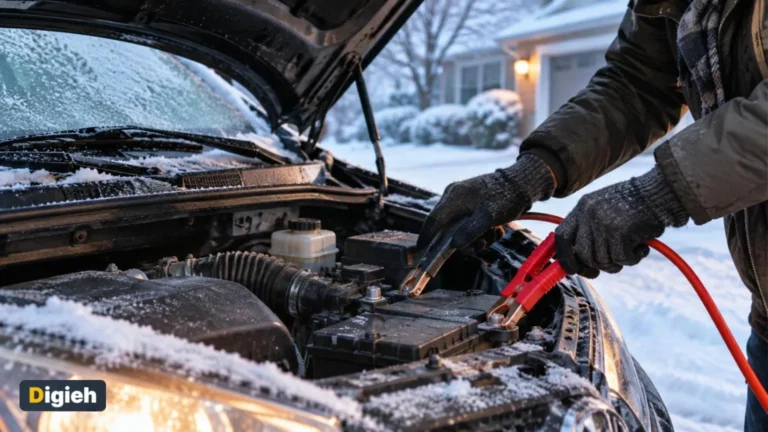
Clamp one red end to the positive terminal of the dead battery. Clamp the other red end to the positive terminal of the good battery.
5. Connect the black cable
Clamp one black end to the negative terminal of the good battery. Clamp the last black end to clean, bare metal on the dead car’s engine, away from the battery.
Kia’s jump-starting steps warn against using the dead battery’s negative post. Choose a solid metal point that will not move when the engine cranks.
6. Start the helper car
Start the working car and let it run for a few minutes. This sends some charge to the weak battery.
7. Start the dead car
Try to start the car with the dead battery. If it does not start, wait a few more minutes and try again.
8. Remove the cables in reverse order
Take off the black clamp on bare metal first, then the black clamp on the good battery. Remove the red clamps last, and keep all clamps apart.
Have you ever jump-started a car yourself?
- Yes, many times
- Once or twice
- Never, but I want to learn
- Not sure
Jumper Cable Order at a Glance
| Step | Cable | Connect to |
|---|---|---|
| 1 | Red | Dead battery, positive terminal |
| 2 | Red | Good battery, positive terminal |
| 3 | Black | Good battery, negative terminal |
| 4 | Black | Bare metal on the dead car |
Remember the order with a simple phrase. Red first, black last, and ground away from the battery.
Using a Portable Jump Starter
A portable jump starter is a small battery pack with its own clamps. It lets you start a car without a second vehicle.
- Make sure the jump starter is fully charged.
- Turn off the car and all its electrical loads.
- Connect the red clamp to the positive terminal.
- Connect the black clamp to bare metal or the spot the maker suggests.
- Turn on the jump starter and start the car.
- Turn off the unit and remove the clamps, black first.
Always follow the instructions for your model. Charge the pack every few months so it is ready in an emergency.
Quick tip. Keep a jump starter or cables in your trunk all winter. Our winter car emergency kit list covers other essentials.
How to Choose Jumper Cables
Thicker cables carry power better. The Oregon safety talk suggests cables rated at least 10 gauge, and a lower gauge number means a thicker wire.
Length matters too. Longer cables make it easier to reach when cars cannot park nose to nose.
Look for strong clamps with good teeth and thick insulation. Store the cables in a bag so they stay clean and untangled.
Free updates
Join the Digieh list
Be the first to know when our weekly brief launches.
No spam. Unsubscribe anytime. Read our Privacy Policy.
If the Car Still Will Not Start
Do not keep cranking for a long time. Rest for a minute or two between tries to protect the starter.
- Check that every clamp has a firm, clean grip.
- Let the helper car run a little longer before you try again.
- Listen for clicking, which often points to a very weak battery or bad connection.
- If you hear nothing at all, the problem may be the starter or a fuse.
If the car still will not start after a few tries, call roadside help or a mechanic. Forcing it can damage parts.
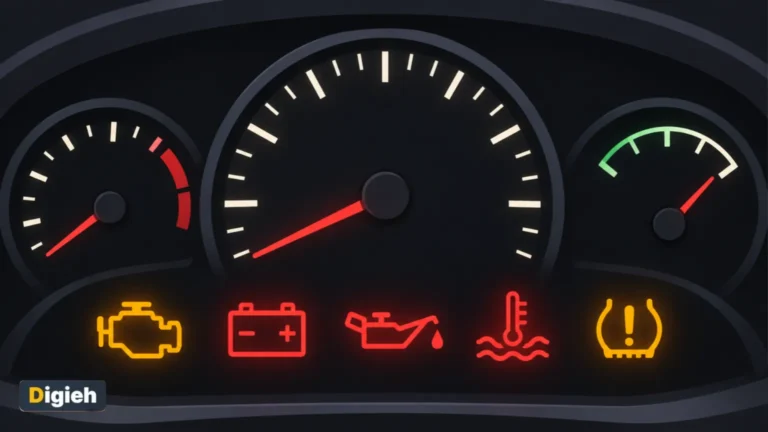
Not sure why your car would not start? Our guide to dashboard warning lights explained helps you read the signs.
What to Do After a Jump
Drive the car for at least 20 to 30 minutes if you can. That gives the alternator time to recharge the battery.
Avoid turning the car off right away. A short trip may not restore enough charge to start again.
Have the battery tested soon, since many auto parts stores check batteries for free. A battery that keeps dying may need replacement.
Our guide to cold-weather car battery tips explains warning signs and how long batteries usually last.
Hybrids and Electric Cars
Most hybrids and electric cars still have a small 12-volt battery that runs the lights and computers. If it dies, the car may not turn on.
Many of these cars can receive a jump to the 12-volt system, but the steps vary. Some makers warn against using them to jump other cars.
Always read the owner’s manual before you jump a hybrid or electric car. When in doubt, call roadside help.
Common Mistakes to Avoid
- Connecting black to the dead battery’s negative post
- Letting clamps touch while the cables are live
- Jumping a frozen or cracked battery
- Removing cables in the wrong order
- Shutting the car off right after it starts
Taking a few extra seconds at each step keeps you safe. Most problems come from rushing.
Prevent a Dead Battery
Turn off lights and accessories when you park. Even a small interior light can drain a battery overnight.
Drive at least once a week if you can, especially in winter. Short trips alone may not keep the battery charged.
Keep the terminals clean and tight. Planning a long drive? Use our road trip checklist to check the car before you leave.
Your Jump-Start Checklist
- Both cars off with parking brakes set
- Safety glasses on
- Red to dead positive, then good positive
- Black to good negative, then bare metal
- Helper car running a few minutes
- Cables removed in reverse order
Try this today. Open your hood and find the battery and positive terminal. Then check your trunk for jumper cables or a charged jump starter.
Test Yourself
Where should the last black clamp go?
- The dead battery’s negative post
- Bare metal on the dead car, away from the battery
- The good battery’s positive post
Grounding away from the battery keeps sparks away from battery gas.
Which cable do you connect first?
- Red, to the dead battery’s positive terminal
- Black, to bare metal
- Black, to the good battery
Start with red on the dead battery’s positive terminal.
Frequently Asked Questions
How long should I leave the cables on?
Let the helper car run a few minutes before you start the dead car. Remove the cables once it starts.
Can I jump-start a car in the rain?
It is possible with care, but keep clamps dry and avoid standing water. If you feel unsafe, call roadside help.
Does it matter which car is running?
Yes. Start the helper car first, then try the car with the dead battery.
Conclusion
Jump-starting a car is simple once you know the order. Wear eye protection, connect red first, ground the black cable on bare metal and remove everything in reverse.
Keep cables or a charged jump starter in your car, and you will be ready for the next cold morning.
Found this useful?
Editor’s Note
This guide is accurate as of November 9, 2026. It draws on Kia owner’s manual steps, Oregon Department of Transportation safety guidance and Prevent Blindness.
Every car is different, so always follow your owner’s manual.
Spot an error in this article? Please contact us at support@digieh.com or read our Corrections Policy.
Keep exploring
Your next read is waiting
 1FashionWinter Work Outfits for Women That Stay Polished9 min read
 2MedicinesDoes Phenylephrine Work? The Truth About Cold Medicine9 min read
 3Fruits & VegetablesHow to Eat a Persimmon and Pick a Ripe One9 min read
 4Food & LifestyleEasy Oven Roasted Vegetables Recipe With Crispy Edges8 min read
 5Travel & TourismHow to Pack a Carry-On for a Week9 min read
 6AI & TechHow to Use AI for Smarter Holiday Shopping9 min read