TRENDING
Penny Test for Tires: How to Check Tread Depth

8 min read
Last updated November 9, 2026
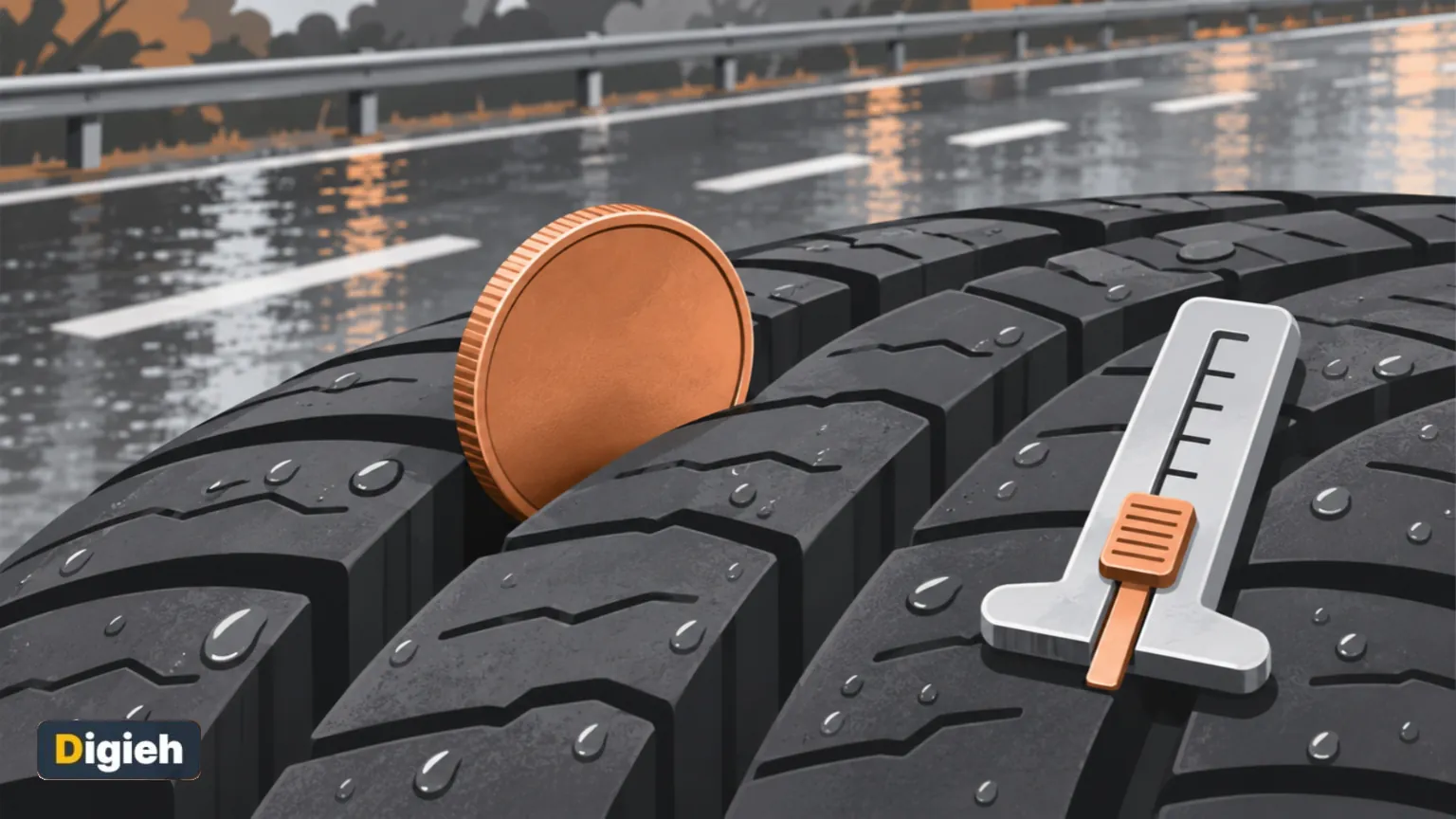
To do the penny test, put a penny into a tire groove with Lincoln’s head upside down. If you can see the top of his head, the tread is at 2/32 of an inch or less. That means it is time for new tires.
Checking tread takes two minutes and could prevent a crash on wet or snowy roads. This guide explains the penny test, the built-in wear bars, tread gauges and other signs your tires need replacing.
Key Takeaways
- The National Highway Traffic Safety Administration says to replace tires at 2/32 of an inch of tread.
- If you see the top of Lincoln’s head in the penny test, replace the tires.
- Raised wear bars between the grooves show when tread is too low.
- Check tread and tire pressure at least once a month.
- Some makers suggest replacing tires after 6 to 10 years, even with good tread.
Inside this guide
- Why tread depth matters
- How to do the penny test
- Check the wear bars
- Use a tread depth gauge
- Signs of uneven wear
- How old are your tires?
- Tread for winter driving
- Make tires last longer
- Frequently asked questions
Why Tread Depth Matters
Tread grooves push water, slush and snow away from the tire. That keeps the rubber in contact with the road.
As tread wears down, the tire grips less, especially in rain. Worn tires take longer to stop and are more likely to hydroplane.
The highway safety agency reports that 511 people died in tire-related crashes in 2024. Its tire safety page urges drivers to check their tires every month.
2/32″Tread depth at which the highway safety agency says to replace tires, per its tire guide.
How to Do the Penny Test
The penny test is a quick, free way to check tread at home. All you need is a single penny.
- Park on a flat surface and turn off the engine.
- Hold a penny with Lincoln’s head pointing down into the tire.
- Push the penny into one of the main grooves.
- Look at how much of Lincoln’s head you can see.
- Repeat in several spots across each tire, including the inner and outer grooves.
What the result means
| What you see | What it means | What to do |
|---|---|---|
| The groove covers part of Lincoln’s head | Tread is deeper than 2/32 of an inch | Keep checking monthly |
| You can see the top of his head | Tread is at or below 2/32 of an inch | Replace the tires soon |
Check more than one spot. Tires often wear unevenly, so one groove may pass while another fails.
Quick tip. Many drivers try a quarter for an earlier warning. If you see the top of Washington’s head, the tread is getting low, especially for rain and snow.
When did you last check your tire tread?
- This month
- This year
- Never
- Not sure
Check the Built-In Wear Bars
Every tire has small raised bars inside the grooves. Their proper name is treadwear indicators.
When the tread wears down level with these bars, the tire has reached the replacement point. The agency says to replace the tires at that stage.
Look for small arrows or marks on the tire shoulder. They often point to where the wear bars sit.
Use a Tread Depth Gauge
A tread depth gauge gives an exact reading. It costs only a few dollars at auto parts stores.
- Push the gauge pin into a main groove until the base sits flat on the tread.
- Read the number, usually shown in 32nds of an inch.
- Check the inner, center and outer grooves on each tire.
- Write down the readings so you can track wear over time.
| Tread depth | Condition |
|---|---|
| 10/32 or more | Like new |
| 6/32 to 8/32 | Good for most driving |
| 4/32 | Getting low for rain and snow |
| 2/32 or less | Replace now |
The table shows common rules of thumb. Your tire maker and local laws may have their own guidance.
Signs of Uneven Wear
How a tire wears can point to other car problems. Look at the whole tread, not just one spot.
- Worn center only, which often means too much air pressure
- Worn on both edges, which often means too little air pressure
- Worn on one edge, which can point to an alignment problem
- Patchy or cupped wear, which can mean worn suspension parts
- Bulges, cracks or cuts in the sidewall, which need attention right away
If you see uneven wear, ask a mechanic to check alignment, balance and suspension. Fixing the cause protects your new tires.
Good to know. A bulge or bubble in the sidewall means the tire is damaged inside. Do not drive on it longer than needed to reach a shop.
How Old Are Your Tires?
Rubber ages even when tires sit unused. Old tires can crack and fail even with deep tread.
The agency notes that some vehicle makers recommend replacing tires that are 6 to 10 years old, regardless of tread. Check your owner’s manual for your car’s advice.
How to find the date
Look for the Tire Identification Number on the sidewall. The last four digits show the week and year of manufacture.
For example, 0308 means the third week of 2008. A tire with that code is far too old to trust, whatever its tread looks like.
Tread for Winter Driving
Snow and slush need deeper tread than dry roads. Tires near the 2/32 limit can feel fine in summer but slide badly in winter.
If your tread is close to 4/32 before winter, consider replacing the tires early. Dedicated winter tires offer the best grip in cold, icy weather.
Before the snow arrives, read our guide on how to drive in snow. Keep a set of jumper cables handy too, and learn how to jump-start a car.
Free updates
Join the Digieh list
Be the first to know when our weekly brief launches.
No spam. Unsubscribe anytime. Read our Privacy Policy.
Make Your Tires Last Longer
Keep them properly inflated
Check tire pressure at least monthly when the tires are cold. Use the number on the label inside the driver’s door or in the manual. Do not use the number printed on the tire.
The agency says properly inflated tires can save up to 11 cents per gallon of fuel. They can also add about 4,700 miles to tire life.
Yet only 19 percent of drivers keep their tires properly inflated, according to the same page.
Rotate them
If your car maker recommends it, rotate tires every 5,000 to 8,000 miles. Rotation helps all four tires wear evenly.
Watch your warning lights
The tire pressure light comes on only when a tire is very low. It does not replace monthly checks, as our guide to dashboard warning lights explains.
Cold mornings also lower tire pressure. Learn why in our guide to tire pressure in cold weather.
Check for Tire Recalls
Makers sometimes recall tires for safety defects. You can search for tire recalls on the highway safety agency’s website using the tire’s identification number.
Register new tires with the maker when you buy them. That way, the maker can tell you if a recall affects your set.
Penny Test vs Other Tread Checks
| Method | Cost | Best for |
|---|---|---|
| Penny test | Free | A fast check for the 2/32 limit |
| Wear bars | Free | Spotting worn tires at a glance |
| Tread gauge | A few dollars | Exact readings and tracking wear |
| Mechanic check | Often free with service | A full look at wear, damage and alignment |
Use the penny test monthly and ask for a professional check at each oil change. Together they catch most tire problems early.
When to Replace Tires
- Lincoln’s whole head shows in the penny test
- The tread is level with the wear bars
- A gauge reads 2/32 of an inch or less
- The sidewall has bulges, deep cracks or cuts
- The tires are older than your maker recommends
Replace tires in pairs or full sets when possible. Matching tires help the car handle evenly.
Your Tire Check Checklist
- I did the penny test in several grooves
- I checked the wear bars
- I looked for uneven wear and sidewall damage
- I found the tire age on the sidewall
- I checked the tire pressure when cold
- I searched for tire recalls
Add tire checks to your monthly routine with our car maintenance checklist. Heading out on a winter road trip? Use our winter packing list too.
Try this today. Grab a penny and test all four tires before your next long drive. It takes less time than filling up with gas.
Test Yourself
In the penny test, what means you need new tires?
- Lincoln’s head is fully covered
- You can see the top of Lincoln’s head
- The penny will not fit
Seeing the top of his head means tread is at or below 2/32 of an inch.
How often should you check tire pressure?
- At least once a month
- Once a year
- Only when the warning light comes on
The highway safety agency advises monthly checks with cold tires.
Frequently Asked Questions
Is the penny test accurate?
It is a good quick check for the 2/32 limit. A tread gauge gives a more exact reading.
How long do tires usually last?
It depends on driving, care and tire type. Check tread monthly and watch the tire age.
Should I replace all four tires at once?
It is best for handling, especially on all-wheel-drive cars. At minimum, replace tires in pairs.
Does tire tread matter for electric cars?
Yes. Electric cars are heavy and quick, which can wear tires faster, so check them often.
Conclusion
The penny test is the fastest way to know if your tires are safe. If you see the top of Lincoln’s head, replace them.
Check tread and pressure monthly, look for uneven wear and keep an eye on tire age.
Found this useful?
Editor’s Note
This guide is accurate as of November 9, 2026. It draws on tire safety guidance from the National Highway Traffic Safety Administration.
Always follow your vehicle and tire maker’s advice, and ask a trusted mechanic if you are unsure.
Spot an error in this article? Please contact us at support@digieh.com or read our Corrections Policy.
Keep exploring
Your next read is waiting
 1MedicinesIs Taurine Safe? The Truth About Energy Drinks9 min read
 2Fruits & VegetablesCauliflower Nutrition and Easy Ways to Eat More9 min read
 3AI & TechHow to Use AI for Smarter Holiday Shopping9 min read
 4Travel & TourismHow to Pack a Carry-On for a Week9 min read
 5FashionHow to Style a Long Coat Every Day9 min read
 6Science & DiscoveriesQuadrantid Meteor Shower 2027: Best Time to Watch9 min read