TRENDING
Ginger Health Benefits for Nausea, Digestion and Colds

9 min read
Last updated November 10, 2026
Ginger may help ease nausea and vomiting in pregnancy, and ginger supplements may reduce menstrual cramps. Evidence for motion sickness is weak, and research on colds is limited.
As a food, ginger adds warm, spicy flavor to tea, stir-fries, soups and baking. It is safe for most people in normal food amounts.
This guide explains what the research shows and how to use and store fresh ginger. It also covers who should check with a doctor before taking supplements.
Health note. This article shares general information, not medical advice. Talk with your doctor before using ginger supplements, especially during pregnancy or if you take other medicines.
Key Takeaways
- Research suggests ginger may help pregnancy nausea, says NCCIH.
- Most studies have not shown ginger helps motion sickness.
- Ginger supplements may ease menstrual cramp severity.
- Side effects can include heartburn, stomach upset and diarrhea.
- Fresh ginger keeps about four to six weeks in the fridge.
Jump to a section
- What research shows
- Ginger for nausea
- Pregnancy
- Digestion
- Colds
- Safety
- How to use ginger
- Buying and storing
- When to get help
- Frequently asked questions
What Ginger Is
Ginger is the knobby underground stem, called a rhizome, of a tropical plant. People have used it in cooking and traditional medicine for centuries.
You can buy it fresh, dried, ground, candied or as tea and supplements. Fresh ginger has the brightest, spiciest flavor.
4 to 6 weeksHow long fresh ginger keeps in the fridge, per Iowa State University Extension.
What the Research Shows
The National Center for Complementary and Integrative Health summarizes the science on ginger. Here is what it reports.
| Use | What the evidence says |
|---|---|
| Pregnancy nausea and vomiting | Research suggests ginger may help |
| Motion sickness | Most studies have not shown a benefit |
| Chemotherapy nausea | Unclear whether ginger adds to standard treatment |
| Nausea after surgery | Unclear whether ginger adds to standard treatment |
| Menstrual cramps | Supplements may reduce cramp severity |
| Knee osteoarthritis | Might help, but much research is poor quality |
Many studies use concentrated supplements. Ginger in food is usually a smaller amount.
Quick tip. Enjoy ginger for flavor first. Any health benefit is a bonus, not a replacement for medical care.
Ginger for Nausea
Nausea is the most studied use of ginger. Results depend on the cause of the nausea.
NCCIH says research supports ginger for pregnancy nausea. For motion sickness, most studies have not found it helpful.
For nausea from chemotherapy or surgery, NCCIH says it is uncertain whether ginger adds benefit to standard medicines. Patients should follow their care team’s plan.
If you get queasy on car rides or boats, ask a pharmacist about proven options before your trip. Simple steps help too. Sit facing forward, look at the horizon and keep fresh air flowing. Small, plain snacks may also settle your stomach.
Ginger During Pregnancy
Morning sickness is common in early pregnancy. Poison Control notes that the American College of Obstetricians and Gynecologists lists ginger as a first-line non-drug option.
Poison Control explains that ginger comes as tea, candy or pills. Vitamin B6 is another first-line option that pregnant people can discuss with their doctor.
NCCIH says ginger supplements during pregnancy may be safe, but it advises talking with a health care provider first.
Call your doctor right away for nonstop vomiting, weight loss or signs of dehydration during pregnancy, as Poison Control advises.
How do you usually use ginger?
- Ginger tea
- Fresh in cooking
- Ground in baking
- Not sure
Ginger for Digestion
Ginger has a long history of use for indigestion and stomach discomfort, NCCIH notes. Modern research on everyday digestion is limited.
Many people enjoy a warm cup of ginger tea after meals. If it helps you feel better, it is a gentle habit for most adults.
NCCIH lists heartburn and stomach discomfort as possible side effects, so ginger may not suit everyone.
Ginger for Colds
People often sip ginger tea when they have a cold. NCCIH mentions traditional use for flu but does not report strong research for colds.
A warm drink can soothe a sore throat and help you stay hydrated. That comfort is real, even if ginger does not cure the cold.
For coughs, compare an expectorant vs cough suppressant. Read our guide on supporting your immune system this winter for daily habits.
Ginger for Menstrual Cramps and Joints
NCCIH says ginger supplements may reduce the severity of menstrual cramps. It also notes that ginger supplements might help knee osteoarthritis symptoms, though much of that research is poor quality.
NCCIH adds that studies of ginger applied to the skin found no clear help for knee pain.
Safety and Side Effects
| Concern | What NCCIH says |
|---|---|
| General safety | Used safely in many studies when taken by mouth |
| Side effects | Stomach discomfort, heartburn, diarrhea, mouth or throat irritation |
| Medicines | Talk with a provider, since some herbs interact with drugs |
| Pregnancy | Supplements may be safe, but ask a provider |
| Breastfeeding | Little is known about safety |
Tell your doctor about any supplements you take. This matters most if you take blood thinners or other daily medicines.
How to Use Fresh Ginger
- Peel the skin with the edge of a spoon.
- Grate it finely for dressings and marinades.
- Slice thin coins for tea and soups.
- Mince it with garlic for stir-fries.
- Add it near the end of cooking for a stronger kick.
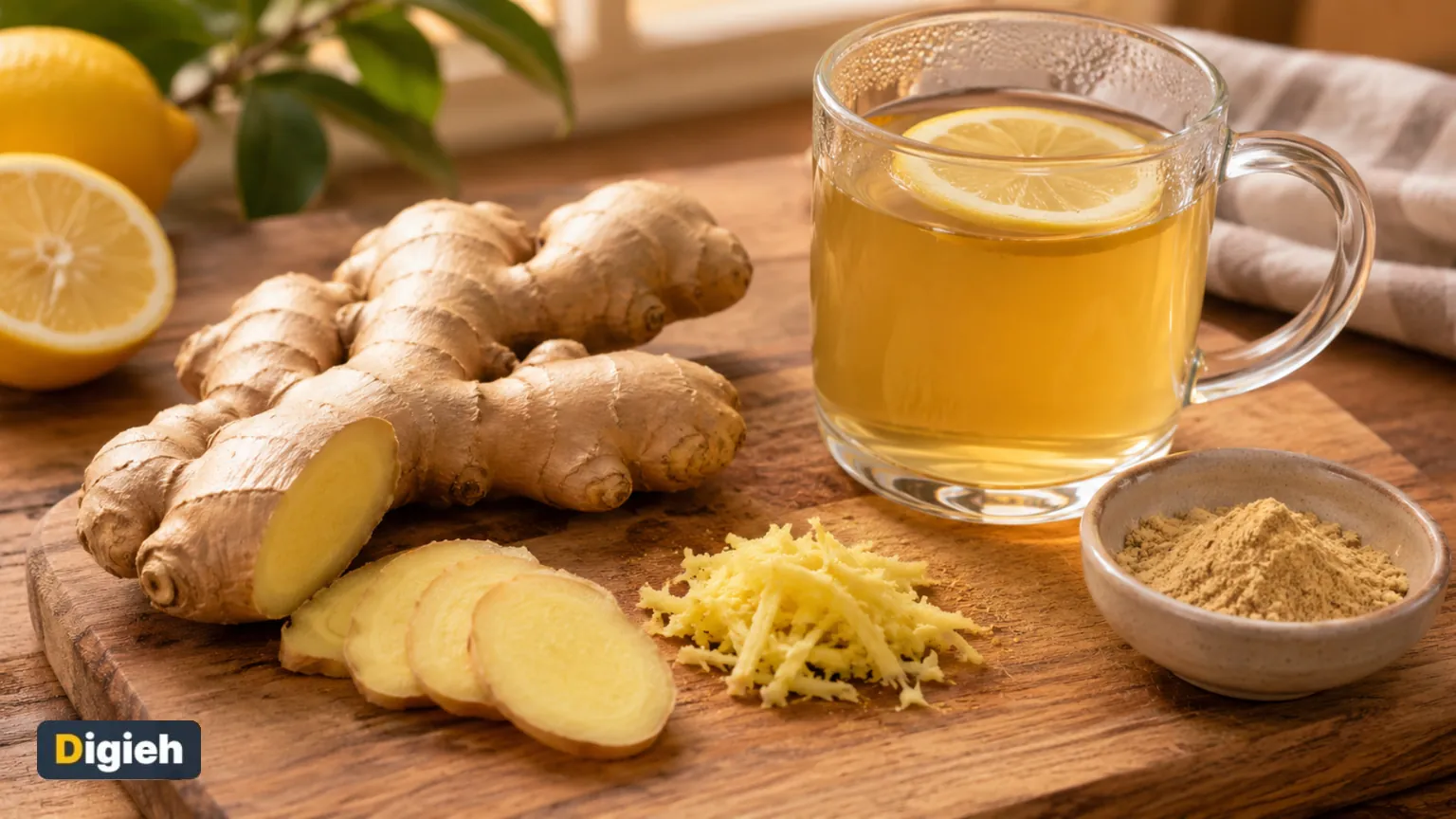
Simple Ginger Tea
- Slice a small piece of fresh ginger into thin coins.
- Add the slices to a mug or small pot.
- Pour in hot water and steep for five to ten minutes.
- Add lemon or a little honey if you like.
- Strain and sip slowly.
Do not give honey to babies under one year old.
Cooking With Ginger
| Dish | How to use ginger |
|---|---|
| Stir-fry | Mince with garlic and add at the start |
| Soup | Simmer slices in broth, then remove |
| Roasted vegetables | Toss carrots with grated ginger and oil |
| Baking | Use ground ginger in cookies and breads |
| Smoothies | Blend a small piece with fruit |
Ginger pairs beautifully with garlic. Read about garlic health benefits, or try ginger on our roasted vegetables recipe.
Buying and Storing Ginger
Iowa State University Extension suggests choosing firm ginger with light brown skin. Young ginger has thin skin and a milder taste.
- Unpeeled ginger keeps about one to two weeks at room temperature.
- In the fridge, store it in an airtight bag in the crisper for four to six weeks.
- Wrapped peeled ginger lasts about two to three weeks in the fridge.
- Throw out ginger that is moldy, soft or smells off.
See our guide on how to store fruits and vegetables for more tips.
Free updates
Join the Digieh list
Be the first to know when our weekly brief launches.
No spam. Unsubscribe anytime. Read our Privacy Policy.
Freezing Ginger
Iowa State Extension suggests scraping off the skin, then slicing or grating the ginger. Freeze small portions on parchment or in ice cube trays, then move them to a freezer bag.
Frozen ginger keeps best quality for about three months. You can grate it straight from the freezer.
Ginger Forms Compared
| Form | Best for | Note |
|---|---|---|
| Fresh | Tea, stir-fries, dressings | Brightest flavor |
| Ground | Baking, spice rubs | Milder and convenient |
| Candied | Snacks | Contains added sugar |
| Pickled | Sushi and rice bowls | Often sweetened |
| Supplements | Targeted use | Ask your doctor first |
Easy Ginger Recipes
- Carrot ginger soup blended until silky
- Ginger garlic chicken or tofu stir-fry
- Lemon ginger salad dressing
- Ginger and honey glazed salmon
- Warm oatmeal with ground ginger and cinnamon
- Sparkling water with fresh ginger slices and lime
Start with a small amount, then add more slowly to suit your own taste. Fresh ginger can be surprisingly strong.
Ginger for Kids
Small amounts of ginger in food are common in family meals around the world. Ginger cookies and mild ginger soups are kid favorites.
Talk with your pediatrician before giving ginger supplements or strong ginger remedies to children. Do not use ginger to treat a child’s vomiting or dehydration without medical advice.
Ginger Myths and Facts
| Myth | Fact |
|---|---|
| Ginger cures colds | Strong research for colds is lacking |
| Ginger always stops motion sickness | Most studies have not shown a benefit |
| More ginger is always better | Large amounts can cause heartburn and stomach upset |
| Supplements are the same as food | Supplements are more concentrated |
Ginger on a Budget
A small piece of fresh ginger goes a long way. Buy only what you will use soon, as Iowa State Extension suggests, and freeze the rest.
Ground ginger is cheap and lasts a long time in the pantry. Keep both forms on hand for cooking and baking.
Spices That Pair With Ginger
| Spice or flavor | Great in |
|---|---|
| Garlic | Stir-fries and marinades |
| Turmeric | Curries, lentils and golden milk |
| Cinnamon | Baking and oatmeal |
| Lemon or lime | Tea, dressings and fish |
| Soy sauce | Noodles and glazes |
Mixing ginger with other warm spices builds flavor without extra salt or sugar. It is an easy way to make simple meals feel special.
Growing Ginger at Home
You can sprout ginger from a fresh piece with visible buds. Plant it shallowly in a pot of loose soil and keep it warm and lightly moist.
Ginger grows slowly and loves warmth, so it usually does best indoors in cooler climates. After several months, you can harvest small pieces from the edge of the pot.
Who Should Be Careful
- People taking blood thinners or other daily medicines
- Anyone pregnant or breastfeeding who wants to take supplements
- People with frequent heartburn
- Anyone scheduled for surgery
Ginger in normal food amounts is safe for most people. Concentrated supplements deserve more care.
When to Get Help
- Vomiting that will not stop or signs of dehydration
- Nausea with severe stomach pain or fever
- Blood in vomit or stool
- Nausea during pregnancy with weight loss
Call 911 for chest pain, trouble breathing or confusion.
Your Ginger Checklist
- Choose firm ginger with light skin
- Store it in an airtight bag in the fridge
- Freeze extra in small portions
- Use it in tea, soups and stir-fries
- Ask your doctor before supplements
- Watch for heartburn or stomach upset
Try this today. Grate fresh ginger into a stir-fry or brew a mug of ginger tea with lemon.
Test Yourself
Which use of ginger has the most research support, according to NCCIH?
- Curing colds
- Motion sickness
- Pregnancy nausea
NCCIH says research suggests ginger may help nausea and vomiting in pregnancy. Most studies have not shown it helps motion sickness.
Frequently Asked Questions
Does ginger help nausea?
It may help pregnancy nausea. Evidence for motion sickness is weak.
Is ginger tea safe every day?
For most adults, ginger tea in normal amounts is safe. Watch for heartburn.
Can I take ginger while pregnant?
Ginger may be safe, but talk with your provider first.
How long does fresh ginger last?
About four to six weeks in the fridge, Iowa State Extension says.
Conclusion
Ginger is a flavorful root with some real research behind it, especially for pregnancy nausea. It is not a cure-all, and supplements deserve a chat with your doctor.
Enjoy fresh ginger in tea and meals, store it well and watch for side effects. A little goes a long way in winter cooking.
Found this useful?
Editor’s Note
This guide is accurate as of November 10, 2026. It draws on the National Center for Complementary and Integrative Health, Iowa State University Extension and Poison Control.
Talk with your doctor about your own health needs.
Spot an error in this article? Please contact us at support@digieh.com or read our Corrections Policy.
Keep exploring
Your next read is waiting
 1Fruits & VegetablesCauliflower Nutrition and Easy Ways to Eat More9 min read
 2MedicinesDaily Aspirin: Who Should Take It and Why9 min read
 3AI & TechClaude Fable 5.2 and Mythos 5.2: What Changed4 min read
 4FashionHow to Style a Long Coat Every Day9 min read
 5Science & DiscoveriesQuadrantid Meteor Shower 2027: Best Time to Watch9 min read
 6Travel & TourismHow to Pack a Carry-On for a Week9 min read