TRENDING
Winter Bird Feeding Guide: Best Foods, Feeders and Tips

8 min read
Last updated November 9, 2026
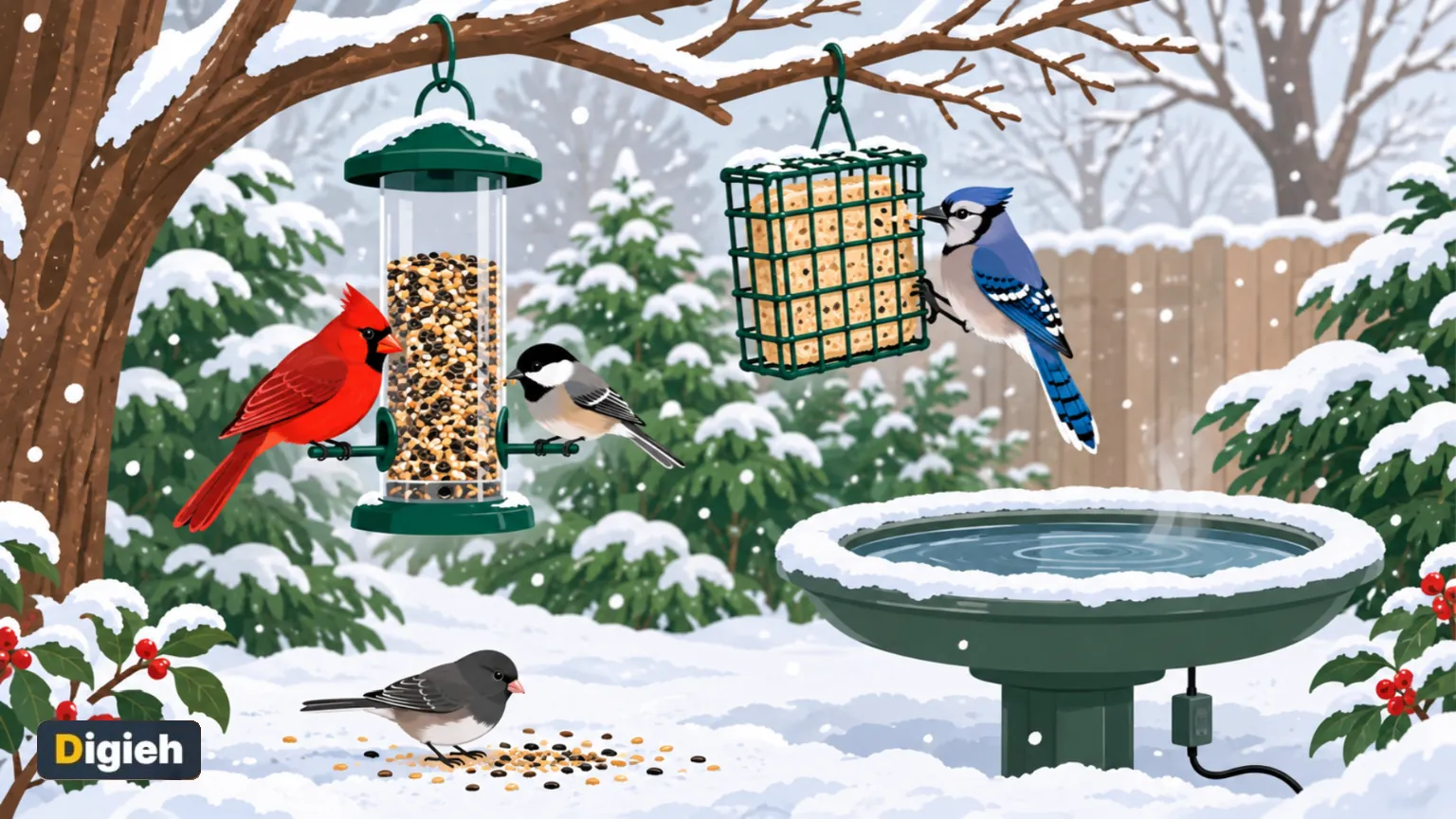
Winter is the best season to start feeding birds. Natural food gets scarce, and a well-stocked feeder can bring cardinals, chickadees and woodpeckers right to your window.
This guide explains which foods birds love in cold weather and which feeders to buy. It also covers where to hang them and how to keep birds safe.
Key Takeaways
- Black-oil sunflower seed attracts the widest range of winter birds.
- Suet gives birds the fat they need to stay warm.
- Hang feeders near shelter, but not so close that cats can hide.
- Place feeders within 3 feet of a window, or more than 30 feet away.
- Clean feeders regularly to prevent the spread of disease.
Inside this guide
- Why feed birds in winter
- Best winter bird foods
- Choosing feeders
- Where to hang feeders
- Water in winter
- Keeping feeders clean
- Keeping birds safe
- Birds you may see
- Frequently asked questions
Why Feed Birds in Winter
Small birds burn a lot of energy just to stay warm on cold nights. Insects disappear, and snow can bury seeds on the ground.
A feeder gives them a reliable source of high-energy food. It also gives you a front-row seat to some of the most colorful birds of the year.
Jenna Mertz works at the University of Wisconsin-Madison Division of Extension. She shares five tips for winter bird feeding, and one is to stay consistent.
Birds learn where food is. Once you start, keep feeding through late winter and early spring, when food is hardest to find.
Do you feed birds in your yard?
- Yes, all year
- Only in winter
- Not yet, but I want to
- Not sure
The Best Winter Bird Foods
Skip cheap seed mixes. According to the Wisconsin guide, they often contain fillers like milo and oats that many birds toss aside.
| Food | Why birds like it | Common visitors |
|---|---|---|
| Black-oil sunflower seed | High in fat with thin, easy-to-crack shells | Chickadees, cardinals, nuthatches, finches |
| Suet | Pure fat for energy on cold days | Woodpeckers, nuthatches, chickadees |
| Thistle seed | Tiny seed loved by small finches | Goldfinches, siskins |
| Peanuts | Protein and fat | Jays, woodpeckers, titmice |
| Safflower seed | Many squirrels and some larger birds avoid it | Cardinals, chickadees |
| Millet scattered on the ground | Good for ground feeders | Juncos, sparrows, doves |
Black-oil sunflower is the best single choice if you only buy one food. It attracts more species than almost any other seed.
Foods to avoid
- Bread and crackers, which fill birds up without real nutrition
- Salty or seasoned foods
- Moldy or spoiled seed
- Cooking grease and bacon fat, which can smear feathers
5-6 ftRecommended height for hanging feeders above the ground, per the Wisconsin extension guide.
Choosing the Right Feeders
Different feeders attract different birds. Offering a few styles reduces crowding and brings in more species.
| Feeder type | Best for | Tip |
|---|---|---|
| Hopper feeder | Sunflower and mixed seed | Pick one with a roof to keep seed dry |
| Tube feeder | Sunflower or thistle | Use small ports for thistle |
| Suet cage | Suet cakes | Hang it at least 5 feet high |
| Platform feeder | Ground feeders like juncos | Choose one with drainage holes |
Look for feeders with a roof or drainage holes. Wet seed turns moldy fast and can make birds sick.
Where to Hang Your Feeders
Placement keeps birds safe from predators and windows. The Wisconsin guide offers clear distances.
- Hang feeders 5 to 6 feet above the ground.
- Place them near trees or shrubs, where birds can flee from hawks.
- Keep them about 10 feet from that cover so cats cannot ambush birds.
- Set feeders within 3 feet of a window, or more than 30 feet away.
Why the window rule works
A feeder very close to a window means birds cannot build up speed if they fly into the glass. A feeder far away keeps birds from confusing reflections with open sky.
In a 2011 article for the National Audubon Society, bird expert Steve Kress tackled this problem. He estimated that windows kill about one billion birds a year in the United States. Decals or netting on the outside of the glass can help.
Stopping squirrels
Mount feeders on a pole with a cone-shaped baffle. The Audubon guide suggests a baffle at least 17 inches wide. Place the pole about 10 feet from trees or structures.
Give Birds Water in Winter
Birds need water even in freezing weather. They drink it and use it to clean their feathers, which helps them stay warm.
- A heated birdbath keeps water open all winter.
- Without a heater, refill a shallow dish with warm water each morning.
- Keep the water shallow, about an inch or two deep.
- Never add antifreeze or salt to bird water.
Open water can attract birds that never visit feeders, such as robins and bluebirds.
Feeding Ground Birds
Some favorite winter birds rarely use hanging feeders. Juncos, sparrows and doves prefer to eat on the ground.
- Scatter a little millet or sunflower chips on a cleared patch of snow.
- Use a low platform feeder to keep seed off wet ground.
- Offer only what birds finish in a day, so leftovers do not attract rodents.
- Place ground food near shrubs, so birds can dash to cover.
Feeding Birds on a Budget
Bird food can get pricey in a long winter. A few habits stretch your budget.
- Buy black-oil sunflower in large bags, which usually cost less per pound.
- Skip mixes with filler seeds that birds throw away.
- Use feeders with small ports to cut waste.
- Plant native shrubs that hold berries into winter.
- Let some garden plants go to seed in fall.
Natural food sources also help birds in years when you cannot keep feeders full.
Dealing With Bully Birds
Sometimes large flocks of starlings or grackles take over a feeder. Small birds may give up and leave.
- Offer safflower seed, which many of these larger birds tend to skip.
- Use tube feeders with short perches that suit small birds.
- Try cage-style feeders that let only small birds reach the seed.
- Spread out several feeders so no flock can guard them all.
A little patience helps too. Most flocks move on after a few days.
Keep Feeders Clean
Dirty feeders spread disease among birds. Clean them whenever you see wet seed, mold or droppings.
- Empty the feeder and throw out old seed.
- Scrub it with hot, soapy water.
- Soak it in a solution of one part non-chlorine bleach to nine parts water.
- Rinse well and let it dry fully before refilling.
- Rake up spilled seed and shells under the feeder.
Store seed in a metal container with a tight lid in a cool, dry place. That keeps out mice, moisture and mold.
Free updates
Join the Digieh list
Be the first to know when our weekly brief launches.
No spam. Unsubscribe anytime. Read our Privacy Policy.
Keep Birds Safe
Keep cats indoors
The Audubon guide notes that cats kill hundreds of millions of birds in the United States each year. Bells on collars usually do not help, so keeping cats indoors is the best fix.
Watch for sick birds
A bird that looks puffed up, sluggish or has crusty eyes may be sick. Take feeders down for a week and clean them well to stop the spread.
Offer shelter
Evergreen trees, shrubs and brush piles give birds a place to hide and roost on cold nights. Leaving some dead plant stems standing also offers seeds and cover.
Common Winter Birds You May See
| Bird | How to spot it | Favorite food |
|---|---|---|
| Northern cardinal | Bright red male, brown female with red tints | Sunflower and safflower |
| Black-capped chickadee | Black cap and bib, white cheeks | Sunflower and suet |
| Dark-eyed junco | Gray back and white belly | Millet on the ground |
| Blue jay | Large, blue and noisy | Peanuts and sunflower |
| Downy woodpecker | Small, black and white, with a red patch on males | Suet |
| White-breasted nuthatch | Climbs headfirst down tree trunks | Sunflower and suet |
Which birds you see depends on where you live. A field guide or bird app can help you learn your local species.
New to birding? Our guide to bird watching for beginners covers binoculars, bird songs and identification tips.
Photograph Your Feeder Birds
A busy feeder is a great place to practice bird photography. You do not need expensive gear to get good shots.
- Shoot through a clean window from inside a dark room to reduce glare.
- Set a natural perch, like a branch, near the feeder for prettier photos.
- Use your phone in burst mode to catch quick movements.
- Try early morning light for soft, warm colors.
Share your best photos with family or a local birding group. It is a fun way to learn which species visit most often.
Keep a list of the species you photograph. Over a few winters, you may spot patterns in who visits and when.
A Simple Winter Feeding Routine
| How often | Task |
|---|---|
| Daily | Check seed levels and refill as needed |
| Daily in freezing weather | Refresh water or check the heater |
| Weekly | Clear snow from feeders and platforms |
| Every two weeks | Clean feeders, or sooner if wet or moldy |
| Monthly | Rake spilled seed and hulls |
Feeding is busiest early in the morning and before a storm. Fill feeders the evening before snow is forecast.
Join a Winter Bird Count
Watching your feeder can help science. Several community bird counts take place during winter, and anyone can join.
You simply count the birds you see for a set time and report your results. Scientists use the data to track how bird populations change.
It is a fun way to involve kids, too. Keep binoculars and a notebook by the window. Check on the birds while you tend your winter houseplants.
Test Yourself
Which single seed attracts the most kinds of winter birds?
- Black-oil sunflower
- Milo
- Cracked corn
Its high fat and thin shells make it a favorite of many species.
How close to a window should a feeder be to reduce collisions?
- About 10 feet
- About 20 feet
- Within 3 feet
Birds cannot gain enough speed to get hurt from that short distance.
Frequently Asked Questions
Is it bad to stop feeding birds in winter?
Birds adapt, but try to stay consistent until spring.
Do birds need water in winter?
Yes. Open water is often hard for them to find.
What is the best feeder for beginners?
A roofed hopper feeder filled with black-oil sunflower seed.
How do I keep squirrels off my feeder?
Use a pole with a wide baffle placed away from trees.
Conclusion
Winter bird feeding is simple and rewarding. Offer black-oil sunflower and suet, hang feeders near shelter and keep water open.
Clean feeders often, keep cats indoors and place feeders wisely near windows. Your backyard birds will thank you with color and song all season long.
Found this useful?
Editor’s Note
This guide is accurate as of November 9, 2026. It draws on winter feeding advice from University of Wisconsin-Madison Division of Extension and the National Audubon Society.
Spot an error in this article? Please contact us at support@digieh.com or read our Corrections Policy.
Keep exploring
Your next read is waiting
 1SportsHow to Do a Plank: Perfect Form, Hold Times and a 4-Week Plan8 min read
 2FashionHow to Choose a Winter Coat That Keeps You Warm8 min read
 3MedicinesHow to Read a Drug Facts Label on Over-the-Counter Medicine8 min read
 4Food & LifestyleEasy Lasagna Recipe: Classic, Cheesy and Make-Ahead8 min read
 5Finance & MarketsIndex Fund Investing for Beginners: A Simple Guide8 min read
 6Travel & TourismREAL ID Explained: What You Need to Fly in 20268 min read