TRENDING
Geminid Meteor Shower 2026, Peak Date and Tips

8 min read
Last updated November 9, 2026
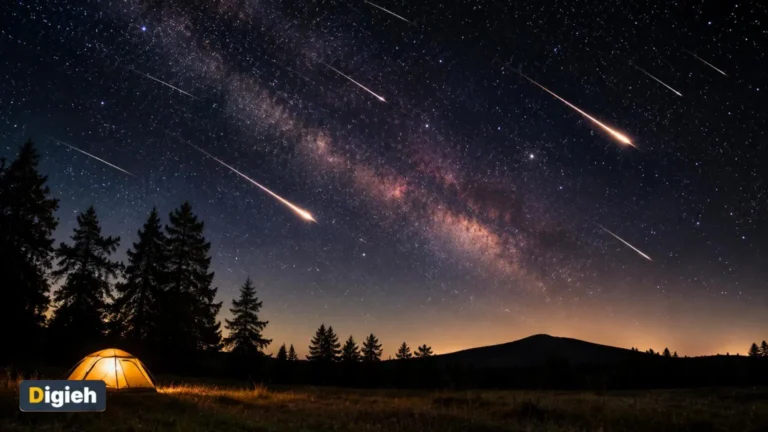
The Geminid meteor shower peaks on the night of December 13 to 14, 2026. Under dark skies, you could see up to about 120 meteors an hour at the best time.
The Moon will be a thin crescent that sets early, leaving dark skies for most of the night. This guide explains when and where to look, plus easy tips for a great night of stargazing.
Key Takeaways
- Peak night is December 13 to 14, 2026.
- The space agency says rates can reach up to 120 meteors an hour at peak in ideal conditions.
- Start watching around 9 or 10 pm, and keep going until dawn.
- A thin crescent Moon sets early, so skies should be dark.
- The Geminids come from an asteroid called 3200 Phaethon, not a comet.
Inside this guide
- When to watch in 2026
- What the Geminids are
- Where to look
- How to watch step by step
- The Moon this year
- Photographing meteors
- Watching with kids
- Frequently asked questions
When to Watch in 2026
The Geminids are active from about December 4 to December 17, 2026. That timing comes from the National Aeronautics and Space Administration. The peak falls on the night of December 13 to 14.
The nights just before and after the peak can also be good. If clouds block the main night, try December 12 or 14.
120Meteors per hour possible at peak under ideal dark skies, per the space agency.
| Detail | 2026 Geminids |
|---|---|
| Active dates | About December 4 to 17 |
| Peak night | December 13 to 14 |
| Best start time | Around 9 or 10 pm local time |
| Peak rate | Up to about 120 per hour in ideal skies |
| Moon | Thin crescent that sets early |
What the Geminids Are
Meteors are bits of space debris that burn up as they hit Earth’s atmosphere. We see them as bright streaks, often called shooting stars.
Most meteor showers come from comets. The Geminids are unusual because they come from an asteroid called 3200 Phaethon.
The space agency notes that Phaethon may be a rock comet or a dead comet. Its dusty trail crosses Earth’s path every December.
Geminid meteors travel about 35 kilometers, or 22 miles, per second. They are often bright and slow compared with other showers.
Where to Look
The meteors seem to come from the constellation Gemini, which rises in the east in the evening. But you can see them anywhere in the sky.
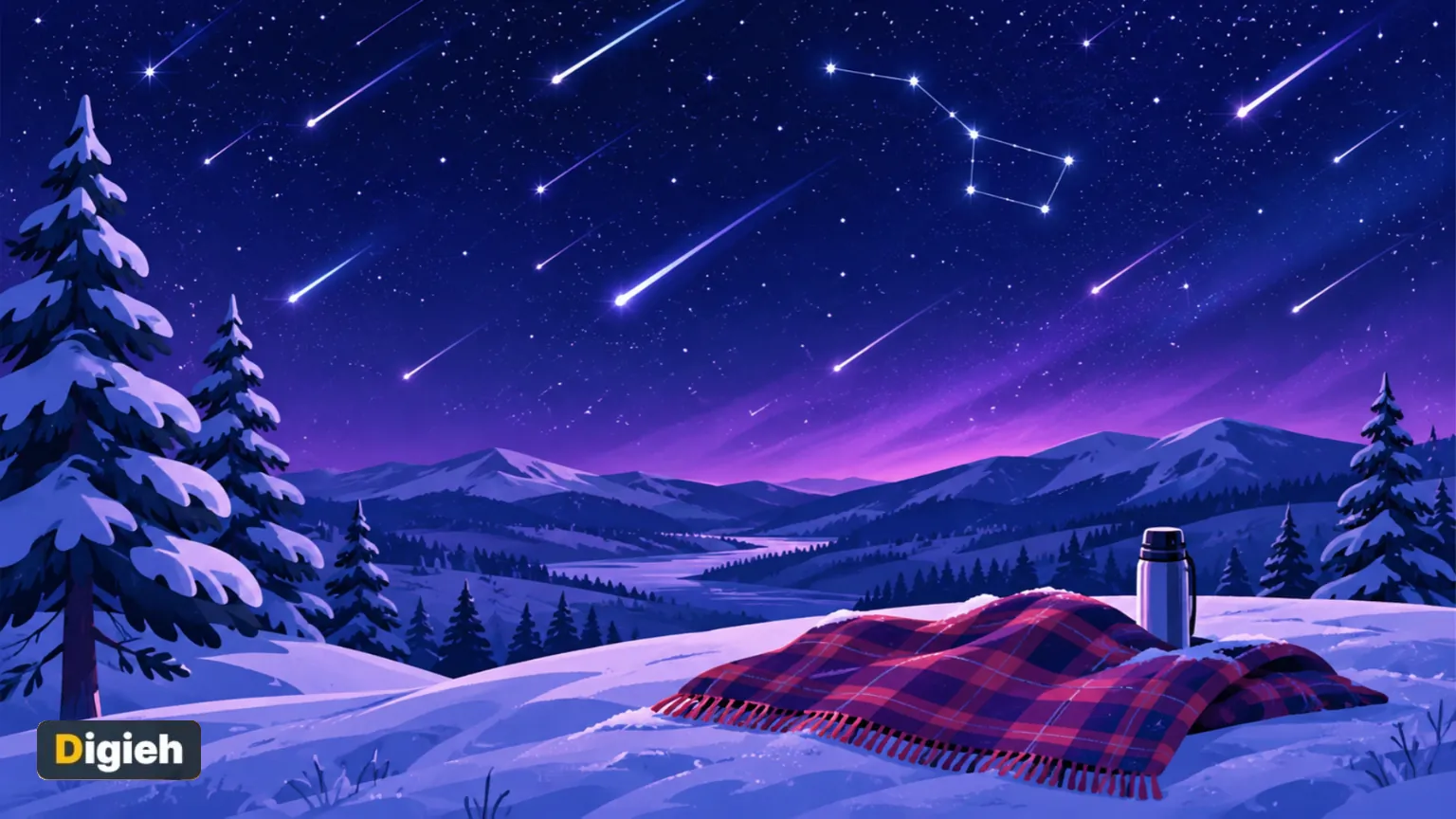
The agency suggests lying on your back with your feet pointing south. Then look up and take in as much sky as possible.
Good to know. You do not need a telescope or binoculars. Your eyes give the widest view, which is best for spotting meteors.
How to Watch Step by Step
- Check the weather forecast for clear skies.
- Find a spot far from city and street lights.
- Bring a reclining chair or blanket and warm layers.
- Put your phone away so your eyes can adjust.
- Give your eyes about 30 minutes to adjust to the dark.
- Watch for at least an hour, since meteors come in bursts.
Dark skies make a big difference. The Farmers’ Almanac Geminid guide says rural skies may show 75 to 150 meteors an hour. Suburban skies may drop to 25 to 50.
National parks are among the darkest places to watch. The National Park Service works to protect natural night skies, as its night skies page explains.
Will you watch the Geminids this year?
- Yes, from my backyard
- Yes, I will drive to a dark spot
- Probably not
- Not sure
The Moon This Year
Moonlight can wash out faint meteors. In 2026 the timing is good.
The Farmers’ Almanac notes the Moon will be a thin crescent at the peak. That is about five days after the December 8 new moon. It should set by around 9 pm, leaving the rest of the night dark.
That makes 2026 a strong year for the Geminids. Missed November’s sky show? See our guides to the Leonid meteor shower and the Beaver Moon.
Stay Warm and Safe
December nights are cold, so dress like you are going to stand still in the snow. Wear layers, a hat, gloves and warm boots.
Bring a thermos of hot cocoa or tea and a blanket. Tell someone where you are going if you drive to a remote spot.
Use a red flashlight to find your way. Red light protects your night vision better than white light.
Bringing your dog? Our winter dog walking safety tips help keep pets warm too.
Photographing Meteors
Catching a meteor on camera takes patience. Use a camera on a tripod with a wide lens pointed at a dark part of the sky.
Set a long exposure of several seconds and take many shots in a row. Some phones have a night mode that can catch bright meteors too.
Our tips for holiday photos on your phone can help you get sharper night shots.
Watching With Kids
The Geminids are great for families because they start early in the evening. Kids can watch for an hour before bed.
Turn it into a game by counting meteors or making a wish on each one. Bring snacks and sleeping bags for comfort.
Meteors, Meteoroids and Meteorites
These three words sound alike but mean different things. A meteoroid is a small piece of rock or dust in space.
A meteor is the streak of light you see when that piece burns up in the air. A meteorite is a piece that survives and lands on the ground.
Almost all Geminid meteors burn up high in the sky. They pose no danger to people on the ground.
Free updates
Join the Digieh list
Be the first to know when our weekly brief launches.
No spam. Unsubscribe anytime. Read our Privacy Policy.
Watch for Fireballs
Some meteors shine brighter than any planet. Astronomers call these fireballs, and the Geminids often produce them.
Fireballs can leave a glowing trail that lingers for a second or two. If you see one, note the time and direction, since astronomers collect such reports.
Fight Light Pollution
City lights hide most faint meteors. Even a short drive away from town can double what you see.
If you must watch from home, turn off porch and garden lights. Stand where buildings block street lamps.
Look at the darkest part of the sky, away from any glow on the horizon. Patience pays off as your eyes adjust.
Use a Sky App
Free stargazing apps can show where Gemini rises and when the Moon sets. Turn on red night mode so the screen does not ruin your night vision.
After you find your direction, put the phone away. Meteors are easy to miss while you look at a screen.
Keep a Simple Meteor Log
Counting meteors makes the night more fun and teaches you about the shower. Note the start time, how long you watched and how many meteors you saw.
Write down any bright fireballs and their colors. Over the years, your notes show which nights and places worked best.
Kids especially enjoy keeping tally marks. It keeps them watching the sky instead of a screen.
Other Winter Sky Sights
While you wait for meteors, look for bright winter star patterns. Orion, with its three-star belt, climbs in the east during December evenings.
Bright planets often shine steadily without twinkling, which helps you tell them from stars. A sky app can name them for you.
About a week later comes the longest night of the year. See our guide to the winter solstice 2026.
Why Meteor Showers Repeat Each Year
Earth passes through the same debris trail at the same time every year. That is why the Geminids always return in mid December.
The exact peak shifts a little from year to year. Moonlight and weather decide how good the show looks.
What if It Is Cloudy?
Clouds are the biggest problem for skywatchers. Check a cloud forecast and be ready to try another night near the peak.
Some observatories and astronomy clubs host viewing events or live streams. Look for local clubs in your area.
Your Geminid Watching Checklist
- Peak night marked for December 13 to 14
- Dark spot chosen away from lights
- Warm clothes, blanket and chair packed
- Red flashlight ready
- Phone put away for 30 minutes
- Backup night planned in case of clouds
Try this today. Find the darkest spot within a short drive of your home. Save it on your map so you are ready on December 13.
Test Yourself
What is the parent body of the Geminid meteor shower?
- Halley’s Comet
- The Moon
- Asteroid 3200 Phaethon
The space agency says the Geminids come from asteroid 3200 Phaethon.
When do the Geminids peak in 2026?
- December 13 to 14
- November 17 to 18
- January 3 to 4
The space agency lists the peak on the night of December 13 to 14, 2026.
Frequently Asked Questions
What time is best to see the Geminids?
Start around 9 or 10 pm and keep watching until dawn. Rates are often highest after midnight.
Do I need a telescope?
No. Your eyes alone give the best wide view.
Can I see the Geminids from the Southern Hemisphere?
Yes, but fewer meteors appear because Gemini sits lower in the sky there.
Conclusion
The 2026 Geminids peak on December 13 to 14 with dark, moonless skies for most of the night. Find a dark spot, dress warmly and give your eyes time to adjust.
With a little patience, you could see dozens of bright shooting stars. Mark your calendar now so you do not miss it.
Found this useful?
Editor’s Note
This guide is accurate as of November 9, 2026. It draws on the National Aeronautics and Space Administration, the Farmers’ Almanac and the National Park Service.
Meteor rates vary with sky conditions and location.
Spot an error in this article? Please contact us at support@digieh.com or read our Corrections Policy.
Keep exploring
Your next read is waiting
 1LaptopsHow to Choose the Best Laptop for Students in 20268 min read
 2PhonesPhone Not Charging? How to Fix It Step by Step8 min read
 3Science & DiscoveriesCold Moon December 2026, the Year’s Last Supermoon8 min read
 4FashionHow to Care for Cashmere and Wool So They Last8 min read
 5Food & LifestyleChristmas Gift Ideas for Dad He Will Actually Use8 min read
 6CarsDashboard Warning Lights Explained, What Each Means8 min read