TRENDING
High Fiber Fruits and Vegetables for Better Digestion

9 min read
Last updated November 10, 2026
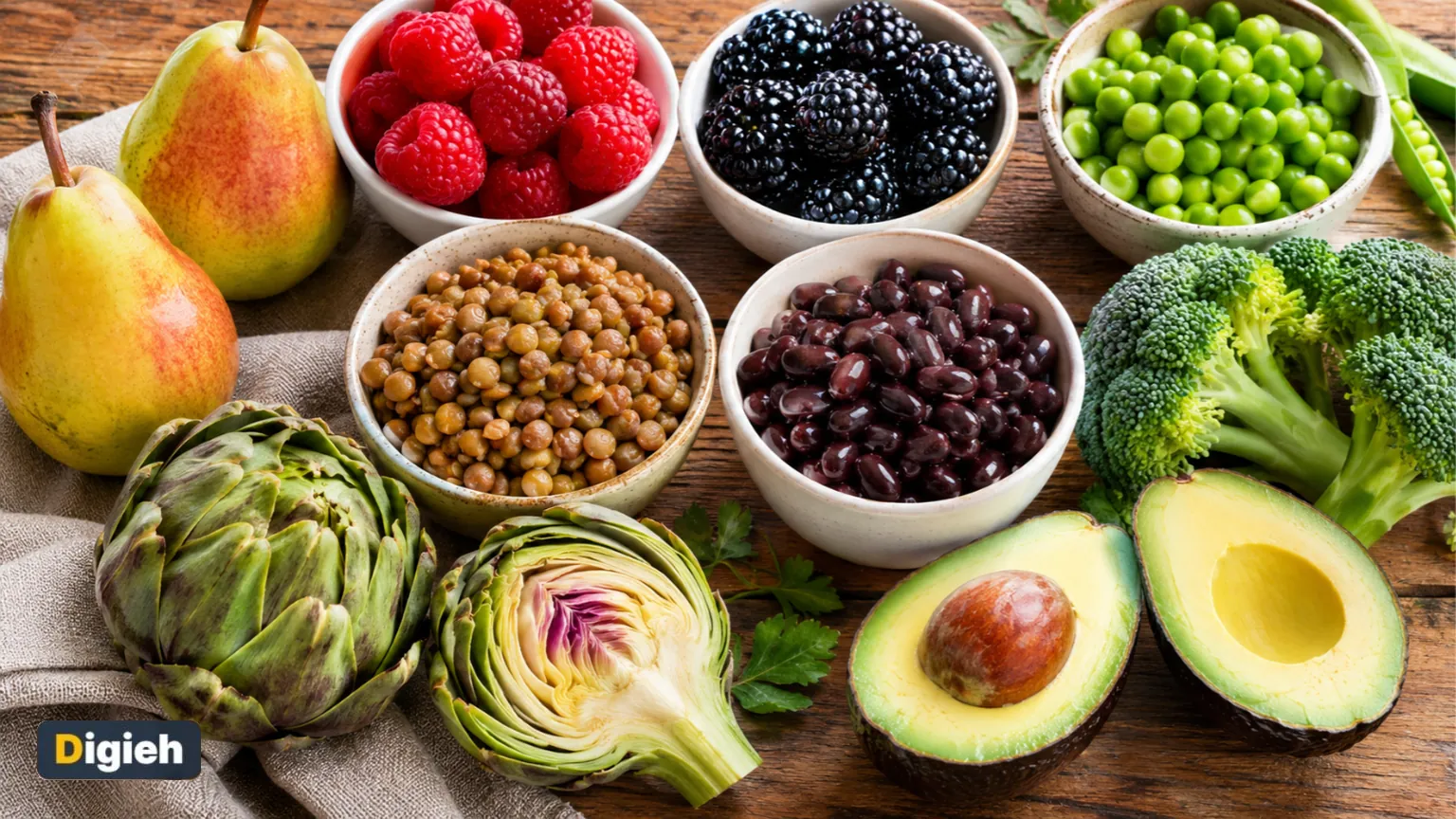
Raspberries, pears, artichokes, green peas and beans are among the highest-fiber fruits and vegetables. Adding a few of them each day can make a big difference.
MedlinePlus lists daily fiber needs for adults ages 19 to 50. Men need about 38 grams and women about 25 grams. Most Americans fall well short.
This guide lists high-fiber fruits and vegetables with real numbers. It also explains the two types of fiber and easy ways to eat more.
Health note. This article shares general nutrition information. If you have a digestive condition, ask your doctor or dietitian before making big diet changes.
Key Takeaways
- Raspberries and blackberries have about 8 grams of fiber per cup.
- Artichokes and green peas are top fiber vegetables.
- Beans and lentils are some of the richest fiber foods of all.
- Add fiber slowly and drink plenty of fluids.
- Eat the skins of fruits and vegetables when you can.
Jump to a section
- Why fiber matters
- Two types of fiber
- High-fiber fruits
- High-fiber vegetables
- Beans and lentils
- Easy ways to eat more
- Add fiber slowly
- Sample day
- Who should be careful
- Frequently asked questions
Why Fiber Matters
Fiber is the part of plant foods your body cannot fully digest. It moves through your gut and supports regular bowel movements.
MedlinePlus says fiber can help with weight management, blood sugar control, constipation, diarrhea and cholesterol. It also helps you feel full.
Yet most people do not get enough. USDA research found the average American diet provided only about 58 percent of the recommended fiber in 2017 to 2018.
8.1 gAverage fiber per 1,000 calories in U.S. diets, compared with a goal of 14 grams, per USDA Economic Research Service.
Soluble vs Insoluble Fiber
| Type | What it does | Good sources |
|---|---|---|
| Soluble | Turns to gel and slows digestion | Oats, beans, apples, citrus |
| Insoluble | Adds bulk and helps food move through | Whole grains, vegetables, skins |
MedlinePlus explains that soluble fiber attracts water and turns to gel during digestion. Research shows it helps lower cholesterol.
Insoluble fiber adds bulk to stool and helps food pass more quickly through the gut. Most fruits and vegetables contain a mix of both.
Quick tip. Keep the skin on apples, pears and potatoes. Much of the fiber is in or just under the skin.
High-Fiber Fruits
The Dietary Guidelines for Americans publishes a list of food sources of dietary fiber based on USDA data. These fruits rank near the top.
| Fruit | Portion | Fiber |
|---|---|---|
| Guava | 1 cup | 8.9 g |
| Raspberries | 1 cup | 8.0 g |
| Blackberries | 1 cup | 7.6 g |
| Asian pear | 1 medium | 6.5 g |
| Persimmon | 1 fruit | 6.0 g |
| Pear | 1 medium | 5.5 g |
| Kiwifruit | 1 cup | 5.4 g |
| Apple with skin | 1 medium | 4.8 g |
| Orange | 1 medium | 3.7 g |
| Banana | 1 medium | 3.2 g |
Berries are fiber superstars and easy to add to breakfast. Frozen berries work just as well and cost less in winter.
Pears and apples are great winter choices. See our guides to the best apples for baking and eating and how to eat a persimmon.
High-Fiber Vegetables
| Vegetable | Portion | Fiber |
|---|---|---|
| Artichoke | 1 cup | 9.6 g |
| Green peas | 1 cup | 8.8 g |
| Canned pumpkin | 1 cup | 7.1 g |
| Brussels sprouts | 1 cup | 6.4 g |
| Sweet potato | 1 cup | 6.3 g |
| Parsnips | 1 cup | 6.2 g |
| Winter squash | 1 cup | 5.7 g |
| Broccoli | 1 cup | 5.2 g |
| Avocado | 1 cup | 5.0 g |
| Kale | 1 cup | 4.7 g |
These values come from the Dietary Guidelines fiber list, which uses USDA FoodData Central. Cooked amounts pack more fiber per cup since vegetables shrink.
Brussels sprouts and sweet potatoes are easy wins. Try our guides on how to cook Brussels sprouts and sweet potato vs potato.
Avocado adds fiber and healthy fats. Read more in our avocado nutrition guide.
Which high-fiber food do you eat most often?
- Berries
- Beans or lentils
- Apples or pears
- Not sure
Beans, Peas and Lentils
Beans and lentils count as both vegetables and protein foods. They are some of the richest fiber sources you can eat.
| Food | Portion | Fiber |
|---|---|---|
| Navy beans | 1/2 cup | 9.6 g |
| Split peas | 1/2 cup | 8.2 g |
| Lentils | 1/2 cup | 7.8 g |
| Pinto beans | 1/2 cup | 7.7 g |
| Black beans | 1/2 cup | 7.5 g |
| Chickpeas | 1/2 cup | 6.3 g |
Canned beans are a quick, budget-friendly option. Rinse them to reduce sodium.
Dried beans cost even less. Soak them overnight, then simmer until tender, and freeze cooked beans in small portions for later.
Easy Ways to Eat More Fiber
- Add berries to oatmeal, yogurt or cereal.
- Snack on an apple or pear with the skin on.
- Toss beans into soups, salads and tacos.
- Swap white rice for brown rice or add lentils.
- Roast a big tray of vegetables for the week.
- Keep frozen peas and broccoli on hand.
Overnight oats with berries make a high-fiber breakfast in minutes. Try our easy overnight oats recipe.
Roasting brings out sweetness in fiber-rich vegetables. Our roasted vegetables recipe shows how.
Frozen produce is just as useful as fresh. Compare them in frozen vs fresh vegetables.
Add Fiber Slowly
MedlinePlus advises that you slowly increase the amount of fiber in your diet. Adding too much too fast can cause gas and bloating.
- Add one new high-fiber food every few days.
- Drink plenty of fluids as you add fiber.
- Cut back for a few days if you feel bloated.
- Increase again slowly once you feel better.
MedlinePlus also warns that not getting enough fluids can make constipation worse instead of better. Water helps fiber do its job.
A Sample High-Fiber Day
| Meal | Idea |
|---|---|
| Breakfast | Oatmeal with raspberries and chopped pear |
| Snack | An apple with skin and a handful of nuts |
| Lunch | Lentil soup with a side salad |
| Snack | Carrot sticks with hummus |
| Dinner | Black bean tacos with roasted sweet potato and broccoli |
A day like this can get many adults close to their fiber goal. Adjust portions to your needs and appetite.
Fiber, Blood Sugar and Heart Health
Fiber does more than keep you regular. MedlinePlus notes it can help people with diabetes manage blood sugar.
Soluble fiber slows how fast sugar enters the blood after a meal. That can help prevent sharp spikes and dips in energy.
Soluble fiber also helps lower cholesterol, which supports heart health. Oats, beans, apples and citrus are good sources.
- Pair fruit with protein, like an apple with peanut butter.
- Choose whole fruit instead of juice.
- Add beans to rice dishes to slow digestion.
- Start the day with oats or another whole grain.
If you have diabetes or heart disease, ask your care team how fiber fits your eating plan. A dietitian can help you build meals you enjoy.
Free updates
Join the Digieh list
Be the first to know when our weekly brief launches.
No spam. Unsubscribe anytime. Read our Privacy Policy.
Fiber and Gut Health
Fiber feeds the helpful bacteria in your gut. Some types act as prebiotics, which support those microbes.
Curious about supplements for gut health? Read our guide on whether probiotics work. Food sources of fiber are a great place to start.
Fiber Supplements vs Food
Fiber supplements like psyllium can help some people. MedlinePlus notes psyllium is a common soluble fiber supplement.
Whole foods offer more than fiber, though. Fruits and vegetables also provide vitamins, minerals and other helpful plant compounds.
Ask your doctor before starting a fiber supplement, especially if you take other medicines. Some supplements can affect how medicines are absorbed.
Reading Food Labels for Fiber
Packaged foods list fiber on the Nutrition Facts label. Look for the line called dietary fiber and its percent Daily Value.
- A higher percent Daily Value means more fiber per serving.
- Check the serving size, since it may be smaller than you eat.
- Look for whole grains as the first ingredient.
- Compare similar products side by side.
Fresh fruits and vegetables usually have no label. That is why lists like the Dietary Guidelines fiber table are so helpful.
High-Fiber Winter Meals
Cold months are perfect for hearty, fiber-rich dishes. Soups and stews make it easy to combine beans, vegetables and grains.
- Lentil and vegetable soup
- Black bean chili with squash
- Split pea soup with carrots
- Roasted root vegetables with chickpeas
- Barley and mushroom stew
Make a big pot and freeze extra portions. You will have a quick high-fiber lunch ready on busy days.
Winter produce like pears, citrus, squash and Brussels sprouts is also at its best. Leafy greens help too, so see our guide to kale vs spinach.
Fiber for Kids
Children need fiber too, though amounts vary by age. Offer a mix of fruits, vegetables, beans and whole grains every day.
- Serve berries or sliced pears at breakfast.
- Pack apple slices or carrot sticks in lunch boxes.
- Add beans to quesadillas or pasta sauce.
- Choose whole grain bread and cereals.
Add fiber gradually for kids too, along with plenty of water. A pediatrician can advise on your child’s needs.
Fiber Myths
| Myth | Fact |
|---|---|
| Juice has the same fiber as fruit | Most juice has little or no fiber |
| Only bran cereal has fiber | Fruits, vegetables and beans are rich sources |
| Fiber only helps constipation | It also supports cholesterol and blood sugar |
| More fiber is always better right away | Adding it fast can cause discomfort |
Whole foods are the simplest way to boost fiber. Small changes at each meal add up quickly.
Saving Money on High-Fiber Foods
- Buy dried beans and lentils in bulk.
- Choose frozen berries and vegetables.
- Buy fruit that is in season.
- Use canned pumpkin and beans for quick meals.
Many of the highest-fiber foods are also among the cheapest. Beans, lentils and frozen peas cost little per serving.
Who Should Be Careful
- People with inflammatory bowel disease during a flare
- People told by a doctor to follow a low-fiber diet
- People recovering from bowel surgery
- People with certain swallowing or digestive conditions
Your doctor or dietitian can tell you which fiber foods are right for you.
Common Fiber Mistakes
| Mistake | Better approach |
|---|---|
| Adding lots of fiber at once | Add it slowly over a few weeks |
| Not drinking enough water | Drink fluids throughout the day |
| Peeling every fruit | Eat skins when they are edible |
| Relying only on juice | Eat whole fruit instead |
| Skipping beans | Add them a few times a week |
Your High-Fiber Checklist
- Eat berries, pears or apples daily
- Add beans or lentils a few times a week
- Fill half your plate with vegetables
- Keep skins on when you can
- Add fiber slowly
- Drink plenty of fluids
Try this today. Add a cup of raspberries or a handful of beans to one meal. That alone can add about 8 grams of fiber.
Test Yourself
Which fruit has about 8 grams of fiber per cup?
- Banana
- Raspberries
- Grapes
The Dietary Guidelines fiber list shows about 8 grams of fiber in a cup of raspberries.
Frequently Asked Questions
What fruit has the most fiber?
Guava, raspberries and blackberries are among the highest.
What vegetable has the most fiber?
Artichokes and green peas rank near the top.
How much fiber do I need each day?
About 25 grams for women and 38 grams for men ages 19 to 50.
Why do high-fiber foods cause gas?
Adding fiber too fast can cause gas. Increase it slowly.
Conclusion
High-fiber fruits and vegetables are easy to add to everyday meals. Berries, pears, artichokes, peas and beans give you the biggest boost.
Add fiber slowly, drink plenty of fluids and enjoy a wide variety of plant foods.
Found this useful?
Editor’s Note
This guide is accurate as of November 10, 2026. It draws on the Dietary Guidelines for Americans, MedlinePlus and USDA Economic Research Service data.
Ask your doctor or dietitian about your own fiber needs.
Spot an error in this article? Please contact us at support@digieh.com or read our Corrections Policy.
Keep exploring
Your next read is waiting
 1MedicinesHydrocortisone Cream Uses: What It Treats and Avoids9 min read
 2Fruits & VegetablesCauliflower Nutrition and Easy Ways to Eat More9 min read
 3FashionHow to Hem Pants Without Sewing in Minutes9 min read
 4Science & DiscoveriesQuadrantid Meteor Shower 2027: Best Time to Watch9 min read
 5Travel & TourismHow to Pack a Carry-On for a Week9 min read
 6AI & TechHow to Use AI for Smarter Holiday Shopping9 min read