TRENDING
How to Sharpen Kitchen Knives at Home
Learn how to sharpen kitchen knives at home with a whetstone or sharpener. Find the right angle, test sharpness and keep blades sharp longer with easy tips.

8 min read
Last updated November 6, 2026
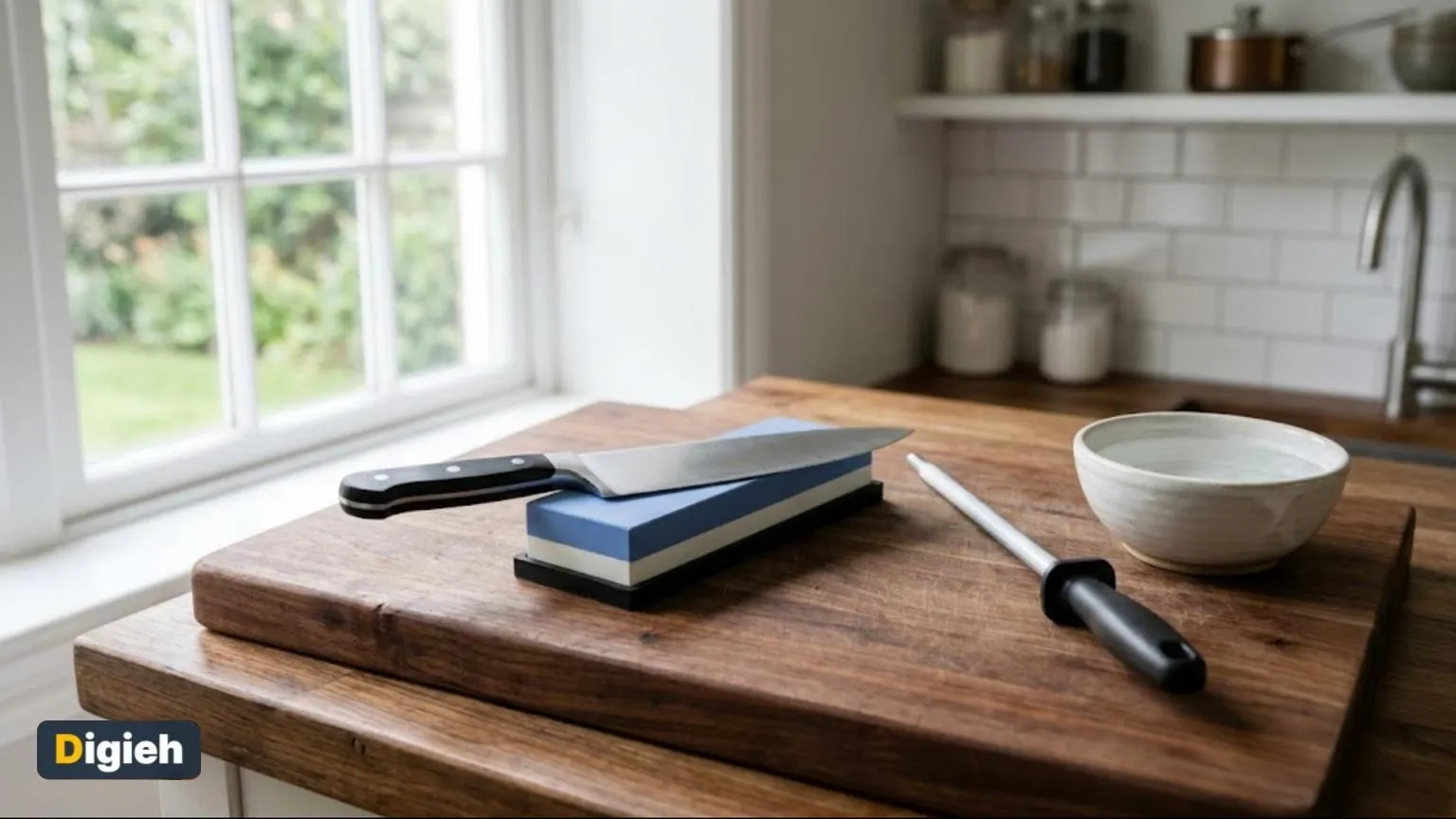
To sharpen kitchen knives, use a whetstone or a simple pull-through sharpener. Hold the blade at about a 15 to 20 degree angle and stroke evenly on both sides. Finish with a honing rod and test on a sheet of paper.
A sharp knife is safer than a dull one. It cuts cleanly and slips less, which makes holiday cooking faster and easier.
Key Takeaways
- Sharp knives are safer than dull ones.
- Keep a steady 15 to 20 degree angle.
- Sharpen both sides evenly.
- Hone often, sharpen a few times a year.
- Hand wash and dry knives right away.
On This Page
- Honing vs Sharpening
- How to Sharpen Knives Step by Step
- Sharpening Tools Compared
- How to Test Sharpness
- How to Keep Knives Sharp Longer
- Why Sharp Knives Matter
- Signs Your Knife Needs Sharpening
- Understanding Blade Angles
- Whetstone Grits Explained
- Pull-Through Sharpeners
- Electric Sharpeners
- How to Hone a Knife
- Caring for Your Knives
- Knife Safety Basics
- When to Use a Professional
- Sharpening Serrated Knives
Honing vs Sharpening
Honing straightens the edge. Do it every few uses with a honing rod.
The United States Department of Agriculture (USDA) explains why clean tools help prevent illness.
Sharpening grinds a new edge. Most home cooks need it only a few times a year.
15-20Degree angle gives most kitchen knives a sharp, lasting edge.
How to Sharpen Knives Step by Step
1. Soak the Stone
Soak a water stone for 10 minutes, or follow the maker’s directions.
2. Find the Angle
Hold the blade at about 15 to 20 degrees. Two stacked coins under the spine help you see it.
3. Sharpen One Side
Slide the blade across the stone from heel to tip. Repeat 10 times.
Quick tip. Color the edge with a marker before sharpening. When the ink is gone, you hit the right angle.
4. Switch Sides
Flip the knife and repeat with the same number of strokes.
5. Hone and Rinse
Finish with a few strokes on a honing rod. Rinse and dry the blade.
How do you sharpen your knives?
- Whetstone
- Pull-through sharpener
- Pro service
- Not sure
Sharpening Tools Compared
| Tool | Best For | Skill Level |
|---|---|---|
| Whetstone | Sharpest edge and control | Medium |
| Pull-through sharpener | Quick, easy touch-ups | Easy |
| Electric sharpener | Fast results for many knives | Easy |
| Honing rod | Daily edge care | Easy |
Use this calculator to plan your sharpening schedule.
Knife sharpening planner
Good to know. Some kitchen stores sharpen knives for a small fee. It is a good choice for serrated or expensive blades.
- Whetstone or sharpener
- Honing rod
- Damp towel
- Marker for angle check
- Sheet of paper for testing
- Clean dry cloth
How to Test Sharpness
Hold a sheet of paper up and slice down. A sharp knife cuts smoothly without tearing.
You can also try slicing a ripe tomato. A sharp blade glides through the skin.
How to Keep Knives Sharp Longer
Use wooden or plastic cutting boards. Glass and stone dull blades fast.
FoodSafety.gov explains how to clean kitchen tools between tasks.
Store knives in a block, on a magnetic strip or with blade guards.
Never put good knives in the dishwasher.
Stay Safe While Sharpening
Keep your fingers behind the edge at all times. Work slowly and on a stable surface.
The agency explains how to choose and clean cutting boards.
Place a damp towel under your stone so it does not slide.
Add to calendar
A sharp blade even means fewer tears when you chop onions, according to a 2025 Cornell study. Read more in our guide to onion health benefits.
Why Sharp Knives Matter
A sharp knife is a safer knife. It cuts with less force, so it is less likely to slip.
Sharp blades also make cooking faster and more enjoyable. You can slice tomatoes cleanly and dice onions quickly.
A dull knife crushes food instead of cutting it. Herbs bruise, and bread tears.
Signs Your Knife Needs Sharpening
Your knife will tell you when it is dull. Watch for these signs.
- It slides off a tomato skin instead of cutting.
- You need to press hard to cut.
- Onions make you cry more than usual, since the knife crushes cells.
- The blade reflects light along the edge.
- It tears paper instead of slicing it.
If honing does not help, it is time to sharpen.
Understanding Blade Angles
Each knife has a sharpening angle. Matching it helps keep the edge strong.
| Knife Style | Typical Angle | Notes |
|---|---|---|
| Western or German style | About 20 degrees | Strong and durable |
| Japanese style | About 15 degrees | Sharper but more delicate |
| Pocket and outdoor knives | 20 to 25 degrees | Built for tough tasks |
Check the maker’s instructions for your knife. Some brands list the exact angle.
To find 15 to 20 degrees by eye, start with the blade at 90 degrees. Halve it to 45, then halve it again to about 22.
Whetstone Grits Explained
Whetstones come in different grits. The number tells you how coarse or fine the stone is.
| Grit | Use |
|---|---|
| Coarse (under 1000) | Repairs chips and very dull edges |
| Medium (1000 to 3000) | Regular sharpening |
| Fine (4000 and up) | Polishes and refines the edge |
Many beginners start with a two-sided stone, such as 1000 on one side and 6000 on the other. It covers most needs.
Pull-Through Sharpeners
Pull-through sharpeners are quick and easy. They hold the blade at a fixed angle.
Pull the knife through the slot gently a few times. Follow the steps on the package.
They remove more metal than a whetstone. Use them only when the knife truly needs it.
Avoid pressing too hard. Let the sharpener do the work.
Electric Sharpeners
Electric sharpeners work fast and suit busy kitchens. They often have stages for sharpening and polishing.
They can take off a lot of metal. Use them sparingly to make your knives last.
Read the instructions carefully. Not all electric sharpeners work for Japanese knives or serrated blades.
Free updates
Join the Digieh list
Be the first to know when our weekly brief launches.
No spam. Unsubscribe anytime. Read our Privacy Policy.
How to Hone a Knife
Honing straightens the edge between sharpenings. Do it often, even every time you cook.
- Hold the honing rod upright with the tip on a towel.
- Place the heel of the blade against the rod at the right angle.
- Draw the blade down and across the rod, from heel to tip.
- Repeat on the other side.
- Do five to ten strokes on each side.
Use light pressure. Honing is about alignment, not removing metal.
Caring for Your Knives
Good care keeps knives sharp longer. Follow these habits.
- Wash knives by hand and dry them right away.
- Never put good knives in the dishwasher.
- Store them in a block, on a magnetic strip or in blade guards.
- Use wood or plastic cutting boards.
- Avoid cutting on glass, stone or metal.
Do not leave knives in a sink full of water. Someone could reach in and get cut.
Knife Safety Basics
Knives demand respect in the kitchen. A few rules prevent injuries.
- Cut away from your body.
- Curl your fingertips under when holding food.
- Keep your cutting board steady with a damp towel underneath.
- Never try to catch a falling knife.
- Keep knives away from the edge of the counter.
Teach kids knife safety with simple tasks and close supervision.
When to Use a Professional
Some knives need expert care. A professional sharpener can fix chips, broken tips and very dull blades.
Many kitchen stores and farmers markets offer sharpening services. They often cost little per knife.
Sharpening Serrated Knives
Serrated knives, like bread knives, stay sharp much longer than straight blades. The pointed teeth do most of the cutting.
When they do get dull, use a tapered sharpening rod. Sharpen each scallop one at a time on the beveled side only.
Many people send serrated knives to a professional instead. It takes patience to do well at home.
Knife Sharpening Mistakes to Avoid
Sharpening the wrong way can damage your knives. Watch out for these common mistakes.
- Pressing too hard on the blade
- Changing the angle with each stroke
- Skipping the honing step between sharpenings
- Using a glass cutting board that dulls blades fast
Use light, steady strokes and keep the same angle each time. Practice on an older knife first.
Pick the Right Cutting Board
Your cutting board affects how long your knives stay sharp. Some boards are much kinder to blades.
Wood and plastic boards are gentle on knife edges. Glass, stone and metal boards can dull blades quickly.
Clean boards well after cutting raw meat. Use a separate board for meat and produce to stay safe.
Store Knives Safely
Keep knives in a block, on a magnetic strip or in blade guards. Loose knives in a drawer get dull and can cause cuts.
Dry knives right after washing to prevent rust and spots. Never leave them soaking in a sink full of water.
Try this today. Slice a sheet of paper with your chef’s knife. If it tears instead of cuts, plan a sharpening session this week.
Test Yourself
What does a honing rod do?
- Grinds a new edge
- Straightens the existing edge
- Cleans the blade
Honing realigns the edge between sharpenings.
Which cutting board dulls knives fastest?
- Wood
- Plastic
- Glass
Hard glass wears down the edge quickly.
Frequently Asked Questions
How often should I sharpen my knives?
Two to four times a year for most home cooks.
Is a honing rod the same as a sharpener?
No. It realigns the edge but does not remove metal.
Can I sharpen serrated knives?
Yes, with a special tapered rod. Many people use a pro service.
Why are dull knives dangerous?
They need more force and slip more easily.
What grit whetstone should beginners buy?
A two-sided stone, such as 1000 and 6000 grit, covers most needs.
Can I put kitchen knives in the dishwasher?
It is better not to. Heat and rattling can dull and damage the blade.
How often should I hone my knife?
You can hone it every time you cook. It keeps the edge straight.
What angle should I sharpen my knife at?
Many Western knives use about 20 degrees. Many Japanese knives use about 15 degrees.
Wrapping Up
Hone your chef’s knife tonight and plan a full sharpening before the holidays. Cooking will feel easier right away.
Put your sharp knife to work with our guide on how to cook a turkey. Try easy recipes from our Thanksgiving side dishes.
Found this useful?
Editor’s Note
This guide is accurate as of November 6, 2026. Follow your knife maker’s care instructions.
Spot an error in this article? Please contact us at support@digieh.com or read our Corrections Policy.
Keep exploring
Your next read is waiting
 1HealthFungal Nail Infection: Signs, Treatment and Healing Time7 min read
 2Beauty & Personal CareDandruff vs Dry Scalp: Signs, Causes and Treatment7 min read
 3Pets & AnimalsCat Urinary Problems: Signs That Need Urgent Care7 min read
 4Home & KitchenFridge Without Power: How Long Food Stays Safe7 min read
 5MedicinesIs Sugar an Electrolyte? The Simple Science Answer7 min read
 6HealthHand Foot and Mouth Disease: Symptoms, Care, Spread7 min read