TRENDING
Winter Car Emergency Kit: What to Pack This Year
Build a winter car emergency kit with this simple list. Pack blankets, water, snacks, tools and jumper cables, and learn what to do if you get stuck in snow.

9 min read
Last updated November 6, 2026
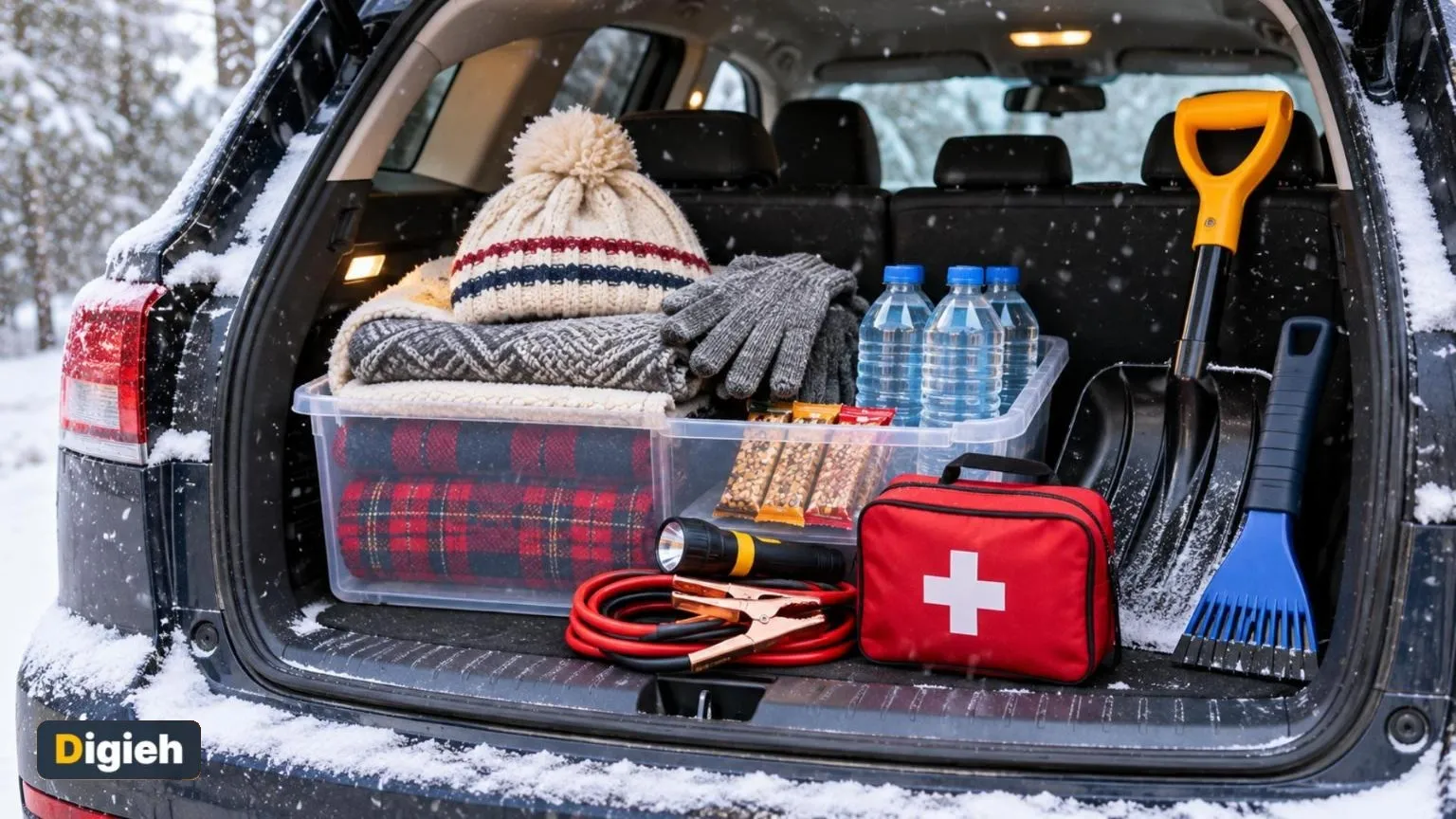
A winter car emergency kit should include blankets, warm clothes, water, snacks, a flashlight and a phone charger. Add an ice scraper, a small shovel, jumper cables and sand or kitty litter for traction. Keep it in your trunk from November through spring.
If you get stuck in snow, these items can keep you warm and safe until help arrives. Building a kit takes less than an hour.
If you get stranded, stay with your car. Keep the exhaust pipe clear of snow to prevent carbon monoxide buildup.
Key Takeaways
- Pack warmth first, like blankets, hats and gloves.
- Keep water and snacks that will not spoil.
- A charged phone and charger help you call for help.
- Traction tools can get you unstuck from snow.
- Keep your gas tank at least half full in winter.
On This Page
- What to Pack
- Tools for Snow and Ice
- Prepare Your Car for Winter
- What to Do If You Get Stuck
- Why Every Car Needs a Winter Kit
- Warmth and Comfort Items
- Food, Water and Medicine
- Light and Power
- First Aid and Safety
- Check Your Car Before Winter
- Safe Winter Driving Habits
- Plan Before Long Trips
- Restock Your Kit Each Year
- Build a Kit on a Budget
What to Pack
The City of Philadelphia shares a helpful winter car emergency kit list. Here are the basics.
Ready.gov explains how to prepare for winter storms, including in your car.
| Item | Why you need it |
|---|---|
| Blankets or sleeping bag | Keeps you warm if stranded |
| Hats, gloves and socks | Prevents heat loss |
| Bottled water | Keeps you hydrated |
| Snack bars and nuts | Gives you energy |
| Flashlight and extra batteries | Helps you see and signal |
| Phone charger | Lets you call for help |
| First aid kit | Treats small injuries |
1/2 tankKeep your gas tank at least half full during winter.
Tools for Snow and Ice
Ice Scraper and Snow Brush
Clear all windows, lights and the roof before driving.
Small Shovel
A folding shovel can dig your tires out of snow.
Quick tip. Pack your kit in a sturdy plastic bin. It keeps items dry and organized in the trunk.
Sand or Kitty Litter
Spread it under your tires for extra grip on ice.
Jumper Cables
Cold weather drains car batteries. Cables can get you going again.
Reflective Triangles or Flares
These warn other drivers if you stop on the road.
Do you keep an emergency kit in your car?
- Yes, a full kit
- Just a few items
- I do not drive
- Not sure
Prepare Your Car for Winter
A kit helps, but a well-maintained car matters too.
The National Highway Traffic Safety Administration (NHTSA) shares tips to get your car ready for winter.
- Check tire tread and pressure, since cold air lowers pressure.
- Test your battery before the first freeze.
- Fill washer fluid with a winter formula.
- Replace worn wiper blades.
- Keep your gas tank at least half full.
Use this calculator to check your kit.
Car kit checker
Good to know. The 12 key items are blankets, warm clothes, water, snacks, flashlight, charger, first aid kit, scraper, shovel, traction sand, jumper cables and reflective triangles.
Packing jumper cables? Learn how to jump-start a car safely before you need to.
Flood warning. Never drive into floodwater. See flood safety steps from the South Florida floods.
What to Do If You Get Stuck
Stay calm and stay with your car. It gives you shelter and makes you easier to find.
The Centers for Disease Control and Prevention (CDC) explains how to stay safe during a winter storm.
Run the engine for about 10 minutes each hour to stay warm. Open a window slightly and keep the exhaust pipe clear of snow.
Turn on your hazard lights and tie a bright cloth to your antenna or door so rescuers can see you.
- Pack blankets and warm clothes
- Add water and snacks
- Include flashlight and charger
- Add scraper and shovel
- Pack jumper cables
- Keep gas tank half full
Add to calendar
Why Every Car Needs a Winter Kit
Winter storms can strand drivers for hours. Roads close, cars slide into ditches and traffic stops.
A small kit keeps you warm, safe and visible until help arrives. It takes up little space in your trunk.
Even short trips can turn into long waits in bad weather. Keep the kit in your car all winter.
Warmth and Comfort Items
Staying warm is your top priority if you get stuck. Pack these items in a bag or bin.
- Wool blankets or an emergency space blanket
- Extra hats, gloves and socks
- Hand and foot warmers
- A warm coat if you drive without one
- Waterproof boots
Pack enough for everyone who often rides with you. Kids lose heat faster than adults.
Food, Water and Medicine
Pack food that does not spoil or freeze hard. Rotate it each year.
| Item | Why It Helps |
|---|---|
| Bottled water | Keeps you hydrated |
| Granola or energy bars | Quick energy |
| Nuts and dried fruit | Long-lasting calories |
| Crackers | Easy on the stomach |
| Hard candy | A small energy boost |
Keep a few days of any important medicine in your kit. Check the dates each fall.
Light and Power
Darkness falls early in winter. Light helps you see and helps rescuers see you.
- A flashlight with extra batteries
- A headlamp for hands-free use
- A phone charger and a charged portable battery
- Glow sticks
- A whistle to signal for help
Cold weather drains phone batteries fast. Keep your phone in an inside pocket to keep it warm.
First Aid and Safety
A basic first aid kit handles small injuries. Add a few winter extras.
- Bandages, gauze and tape
- Pain relievers
- Any personal medicines
- A multi-tool or pocket knife
- A bright cloth to tie on your antenna
- A list of emergency phone numbers
Write emergency numbers on paper too. Your phone may die when you need it most.
Check Your Car Before Winter
A quick inspection can prevent many winter breakdowns. Ask a mechanic if you are unsure.
| Part | What to Check |
|---|---|
| Battery | Test its charge, since cold weakens batteries |
| Tires | Check tread depth and pressure |
| Wipers | Replace worn blades |
| Washer fluid | Fill with winter fluid that will not freeze |
| Antifreeze | Check the level and mix |
| Lights | Make sure every bulb works |
| Heater and defroster | Test them before the first freeze |
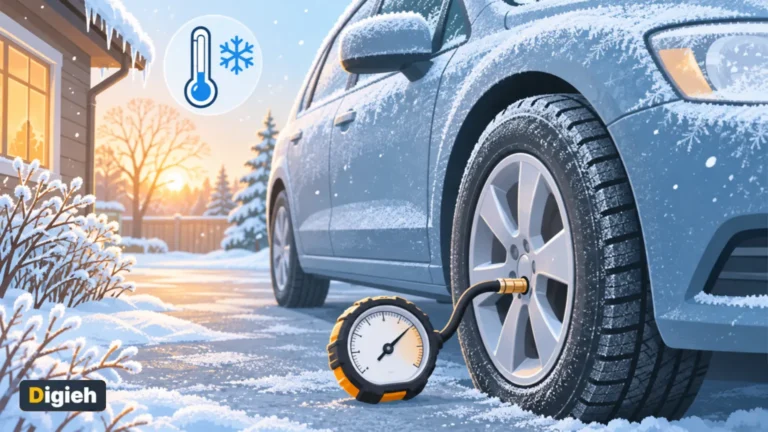
Tire pressure drops in cold weather. Check it often during winter.
Free updates
Join the Digieh list
Be the first to know when our weekly brief launches.
No spam. Unsubscribe anytime. Read our Privacy Policy.
Safe Winter Driving Habits
Your driving habits matter as much as your kit. Snow and ice call for extra care.
- Slow down and leave much more space between cars.
- Brake gently and early.
- Avoid sudden turns and lane changes.
- Clear all snow from your roof, windows and lights.
- Stay home during severe storms if you can.
Bridges and overpasses freeze first. Take extra care on them, even when other roads look clear.
On the road in a storm? Our guide on how to drive in snow covers braking, skids and hills.
Air quality alerts can affect a trip too. See our guide to the Iowa lead azide blast for safety steps from health officials.
Plan Before Long Trips
Long winter drives need extra planning. A few steps help you arrive safely.
Check the forecast and road conditions along your route. Many state transportation departments post updates online.
Tell someone your route and when you expect to arrive. Check in when you get there.
Keep your gas tank at least half full. It gives you fuel to run the heater if you get stuck.
Year-round care matters too. Follow our car maintenance checklist for monthly and seasonal checks.
Restock Your Kit Each Year
An old kit may fail you in an emergency. Check it every fall.
Replace expired food, water and medicine. Test flashlights and swap old batteries.
Make sure blankets stay dry and clean. Add any new items your family needs.
Build a Kit on a Budget
You do not need to buy an expensive ready-made kit. Many items are already in your home.
Use an old backpack or plastic bin to hold everything. Pull spare blankets, hats and gloves from your closets.
Buy a few items at a time, like a flashlight one week and hand warmers the next. Dollar stores often sell basic first aid supplies.
A complete kit can come together over a few weeks. Start with warmth, light and water first.
Car Kit Mistakes to Avoid
Some mistakes can leave your emergency kit less useful. Watch out for these common problems.
- Packing a kit once and never checking it
- Forgetting to replace expired food and water
- Leaving out a phone charger
- Storing the kit where you cannot reach it
Check your kit at the start of each winter. Replace anything that is old, used or broken.
Prepare Before Every Winter Trip
A little planning before driving in winter can keep you safe. Make these checks part of your routine.
Check the weather and road conditions before you leave. Keep your gas tank at least half full.
Tell Someone Your Plans
Share your route and arrival time with a friend or family member. They will know to check on you.
Try this today. Open your trunk today and add one blanket, one flashlight and a bag of kitty litter. Then check your spare tire.
Test Yourself
If you get stuck in snow, what should you do?
- Walk to find help
- Stay with your car
- Turn off all lights
Your car gives shelter and helps rescuers find you.
Why keep the exhaust pipe clear of snow?
- To prevent carbon monoxide buildup
- To save gas
- To keep the car clean
A blocked exhaust can push carbon monoxide into the car.
Frequently Asked Questions
What should be in a winter car emergency kit?
Blankets, warm clothes, water, snacks, a flashlight, a phone charger, an ice scraper, a shovel and jumper cables.
Should I stay in my car if I get stuck in snow?
Yes. Your car offers shelter and makes it easier for rescuers to find you.
Why keep the exhaust pipe clear?
A blocked exhaust can push carbon monoxide into the car.
How full should my gas tank be in winter?
Keep it at least half full.
Where should I keep my winter car kit?
Keep it in the trunk or under a seat. Store warm items where you can reach them from inside the car.
How often should I check my car kit?
Check it every fall. Replace expired food, water, medicine and batteries.
What food should I pack in a car kit?
Pack energy bars, nuts, dried fruit and crackers. Choose foods that do not spoil.
Why does my car battery die in winter?
Cold weather weakens batteries. Have yours tested before the first freeze.
Wrapping Up
Pack your winter car kit this weekend and keep it in your trunk until spring. A little prep can make a big difference in an emergency.
Stay ready at home too with our guide to prevent frozen pipes. Save on warmth with our tips to lower your heating bill.
Read next. Worried your car will not start? See our cold weather car battery tips that prevent breakdowns.
Found this useful?
Editor’s Note
This guide is accurate as of November 6, 2026. Follow local weather alerts and travel advice.
Spot an error in this article? Please contact us at support@digieh.com or read our Corrections Policy.
Keep exploring
Your next read is waiting
 1HealthIngrown Toenail: Home Care, Prevention and Warning Signs7 min read
 2MedicinesIs Sugar an Electrolyte? The Simple Science Answer7 min read
 3Pets & AnimalsFleas on Dogs and Cats: Treatment and Prevention7 min read
 4Beauty & Personal CareDandruff vs Dry Scalp: Signs, Causes and Treatment7 min read
 5Home & KitchenFridge Without Power: How Long Food Stays Safe7 min read
 6HealthBunions: Causes, Pain Relief and When Surgery Helps7 min read