TRENDING
Holiday Scams 2026: How to Spot Them Fast
Holiday scams 2026 are on the rise. Learn to spot fake delivery texts, fake shops, gift card tricks and fake charities, plus what to do if you get scammed.


9 min read
Last updated November 8, 2026
Holiday scams spike every November and December. The most common ones are fake delivery texts, fake social media shop ads, gift card tricks and fake charities. To stay safe, never click links in surprise texts, buy only from trusted sellers and pay with a credit card.
This guide explains the biggest holiday scams of 2026 and how to spot them fast.
This article is for general information only. If you think a scammer fooled you, contact your bank right away.
Key Takeaways
- Americans reported losing a record 15.9 billion dollars to fraud in 2025.
- Text messages were the most common way scammers reached people.
- Social media scams caused the biggest losses by contact method.
- Fake delivery texts and fake shop ads surge during the holidays.
- Credit cards give you the strongest protection if something goes wrong.
On This Page
- Why Scams Rise During the Holidays
- 8 Holiday Scams to Watch For
- Warning Signs of a Scam
- How to Protect Yourself
- What to Do if You Get Scammed
Related. Linked a bot to your bank? Read who pays when bots spend under Citi’s new terms.
Why Scams Rise During the Holidays
During the holidays, people shop more, ship more packages and give more to charity. Scammers take advantage of that rush.
The numbers keep climbing. Americans reported losing a record 15.9 billion dollars to fraud in 2025, up from 12.5 billion dollars in 2024. The Federal Trade Commission (FTC) shared the figures in testimony to Congress, as the Spokesman-Review reported.
Text messages were the most common way scammers reached people. However, scams that started on social media led to the biggest losses.
$15.9BFraud losses Americans reported in 2025, a record, per the agency’s data reported by the Spokesman-Review.
8 Holiday Scams to Watch For
The Better Business Bureau (BBB) tracks holiday scams every year. Here are the ones to watch most closely, based on its holiday scam list.
1. Fake Delivery Texts
You get a text saying the carrier could not deliver a package. It asks you to click a link to fix the address or pay a small fee.
Instead, track orders only through the retailer’s original email or app.
2. Fake Shops on Social Media
Ads show popular items at very low prices. After you pay, the item never arrives, or a cheap fake shows up.
Research any new seller before you buy. Look for reviews outside the seller’s own website.
3. Free Gift Card Offers
Pop-ups and emails claim you won a gift card. Clicking may install malware or steal your details.
Delete these messages and mark them as spam.
4. Fake Charities
Scammers pose as charities or families in need. They often push you to give right away.
Give through a charity’s official website, ideally with a credit card.
5. Fake Toll Texts
A text claims you owe an unpaid toll and includes a payment link. Real toll agencies rarely contact you this way.
Check any balance directly on your toll agency’s official website.
6. Holiday Job Scams
Seasonal job posts promise high pay for easy work. Some steal personal details or ask you to pay for training.
Be careful with any job that asks for money upfront.
7. Puppy and Pet Scams
Cute pet ads draw buyers who pay a deposit for a pet that does not exist. The Better Business Bureau (BBB) warns that many online pet ads may be fake.
Always meet the pet in person before you pay.
8. Social Media Gift Exchanges
Posts invite you to send one gift and receive many in return. These are pyramid schemes that collect your money and personal details.
Simply skip them.
Quick tip. Long-press a link on your phone to preview the real web address before you tap it. If it looks odd, do not open it.
Which scam message have you received this year?
- Fake delivery text
- Fake toll text
- Not sure
- None so far
Related read: In the United Kingdom, bank transfer scam losses rose 22 percent this year. See the latest figures and refund rules.
Warning Signs of a Scam
Most scams share the same red flags. Learn these, and you can spot almost any trick.
| Red flag | Why it matters |
|---|---|
| A surprise text or email with a link | It may open a fake site that steals data |
| Pressure to act right now | Scammers rush you so you do not stop to think |
| A deal that seems too good to be true | It usually is |
| A request for gift cards or wire transfers | Real businesses rarely ask for these |
| A website with a strange address | Fake shops often copy real store names |
When in doubt, stop and check with the real company directly.
Scam or Real?
Test your eye with three quick messages. Pick the one that is most likely a scam.
Which message is most likely a scam?
- Your order has shipped. Track it in your store account.
- Your package is on hold. Pay a 1.99 dollar fee at this link today.
- Your library book is due next week.
Real carriers do not text you a link asking for a small fee to release a package.
Which payment request is a red flag?
- A store asks you to pay by credit card at checkout.
- A charity sends a receipt after you donate on its website.
- A seller asks you to pay only with gift cards.
Scammers ask for gift cards because the money is hard to trace or get back.
Got a panicked call from a loved one? It could be cloned. See how to spot AI voice scam calls.
Read next. Follow our step by step guide on how to shop online safely this holiday season.
How to Protect Yourself
A few simple habits block most holiday scams.
First, do not click links in unexpected texts or emails. Type the store’s website address yourself instead.
Next, pay with a credit card when you shop online. Credit cards usually offer stronger fraud protection than debit cards or payment apps.
Also, turn on two-factor authentication for your email, bank and shopping accounts. That way, a stolen password alone is not enough.
Finally, check your bank and card statements often during the holidays. Report any charge you do not recognize.
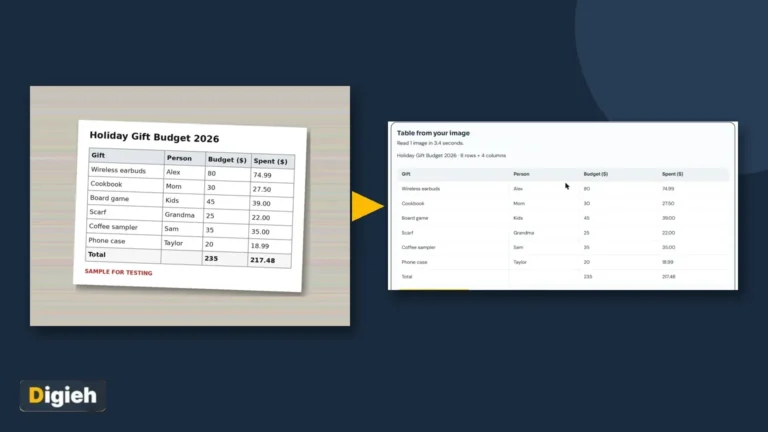
Use this tool to track your holiday budget, so odd charges stand out.
Holiday budget tracker
Good to know. Your bank will never ask for your full password or a one-time code by text or phone. Hang up and call the number on your card.
Free updates
Join the Digieh list
Be the first to know when our weekly brief launches.
No spam. Unsubscribe anytime. Read our Privacy Policy.
What to Do if You Get Scammed
Act quickly. The faster you move, the better your chance of getting money back.
- Call your bank or card company right away and explain what happened.
- Change any passwords you shared, starting with email.
- Report the scam to the agency at ReportFraud.ftc.gov.
- Keep screenshots of messages, ads and receipts.
- Warn friends and family so they do not fall for the same trick.
- Never click links in surprise texts
- Shop only on trusted websites
- Pay with a credit card
- Turn on two-factor authentication
- Check statements every week
- Report scams at ReportFraud.ftc.gov
Add to calendar
What to Do Right After You Click a Bad Link
Mistakes happen, even to careful people. Acting fast can limit the damage.
Change the password for any account you entered on the fake page. Run a security scan on your device if you downloaded anything.
Call your bank right away if you shared card details. Report the scam at ReportFraud.ftc.gov so others can be warned.
Teach Your Family About Scams
Scammers often target the people who know the least about them. A short talk can protect your whole family.
Share the warning signs with kids, teens and older relatives. Explain that real companies never demand payment in gift cards.
Create a simple family rule. Anyone who gets an urgent money request should call another family member first.
Safe Ways to Pay Online
How you pay can make a big difference if something goes wrong. Some payment types offer much better protection.
- Use a credit card for online shopping when you can.
- Avoid paying with wire transfers, gift cards or cryptocurrency.
- Turn on purchase alerts from your bank.
- Shop only on secure sites with a lock icon in the address bar.
Credit cards usually make it easier to dispute a charge. Check your statements often during the holiday season.
Protect Older Relatives
Older adults are frequent targets of phone and email scams. Scammers may pretend to be a grandchild in trouble.
Help older relatives set up call blocking on their phones. Remind them to hang up and call the person back directly.
Visit or call often during the holidays. Regular contact makes it easier for them to share anything that feels wrong.
Build Safe Habits for Next Year
Good habits protect you long after the holidays end. Make them part of your routine all year.
Use strong, unique passwords and turn on two-step sign-in. Update your phone and computer when new updates arrive.
Pause before you click any link that creates a sense of urgency. A few seconds of thought can stop most scams.
Watch your bank and card statements closely for the next few weeks.
Talk openly about scams with older relatives and teens too. Scammers often target people who are new to online shopping or less sure about technology. Share a few warning signs, like pressure to pay fast or requests for gift cards.
Agree on a simple rule for your family. Nobody sends money or codes until they check with someone they trust. Keep a list of official phone numbers for your bank and favorite stores. Then you can call them directly when a message seems strange. These small, simple habits make it much harder for scammers to win.
Try this today. Turn on two-step sign-in for your email and main shopping accounts today. It adds a strong extra lock against thieves.
Test Yourself
What was the most common way scammers contacted people in 2025?
- Phone calls
- Text messages
- Postal mail
Text messages were the most reported contact method, per the agency.
Which is a common scam warning sign?
- A store you know sends an order receipt
- A price that matches other stores
- A request to pay with gift cards
Real businesses rarely ask for payment by gift card.
Selling gifts you do not need? Read how to sell your old stuff online safely.
Frequently Asked Questions
What is the most common holiday scam?
Fake delivery texts and fake online shops are among the most common. They spike as people order more gifts.
How do I know if a delivery text is fake?
Be wary of any text with a link that asks for payment or personal details. Check your order through the retailer’s app instead.
Is it safe to pay with gift cards online?
No. Real businesses rarely ask for payment by gift card. It is a common scam sign.
Where do I report a scam?
Report it to the agency at ReportFraud.ftc.gov. Also contact your bank or card company right away.
Wrapping Up
Pause before you click, check the seller and pay with a credit card. Those three habits stop most holiday scams.
Shopping soon? Read our Black Friday 2026 guide for safe ways to find real deals.
Planning your budget? See our year-end money moves.
Read next. Smart Ways to Protect Packages From Porch Pirates
Found this useful?
Editor’s Note
This article is accurate as of November 6, 2026. Scam tactics change often, so stay alert to new tricks.
Spot an error in this article? Please contact us at support@digieh.com or read our Corrections Policy.
Keep exploring
Your next read is waiting
 1HealthBell’s Palsy: Signs, Stroke Check, Treatment and Recovery7 min read
 2MedicinesIs Sugar an Electrolyte? The Simple Science Answer7 min read
 3Home & KitchenFridge Without Power: How Long Food Stays Safe7 min read
 4Pets & AnimalsHow to Choose Dog Food: Reading the Label7 min read
 5Beauty & Personal CareDandruff vs Dry Scalp: Signs, Causes and Treatment7 min read
 6HealthTennis Elbow: Causes, Exercises and Recovery Time Explained7 min read